

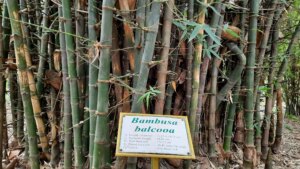
Bambusa balcooa also known as Balcooa Bamboo is a tropical clumping bamboo originating from Northeast India. This bamboo species is often used as a food source, in scaffolding, for paper pulp or wood chips.
| Attribute | Description |
|---|---|
| Scientific Name | Bambusa balcooa |
| Synonyms | Dendrocalamus balcooa |
| Common Names | Female Bamboo, Balcooa Bamboo, Balku Bamboo |
| Family | Poaceae |
| Tribe | Bambuseae |
| Genus | Bambusa |
| Height | 16 – 25 m |
| Diameter | 7 – 15 cm |
| Growth Habit | Dense Clumping |
| Climate | Tropical – Subtropical |
| Hardiness | -4°C |
| Edibility | ★★★★☆ (4 of 5) |
| Flowering Cycle | 32-45 years |
| Origin | Bangladesh, Bhutan, China, India, Laos, Myanmar, Nepal, Pakistan, Vietnam |
| Uses | Construction, Scaffolding, Basketry, Woven Mats, Fishing Implements, Paper Pulp, Edible Shoots, Fodder |
Shoots
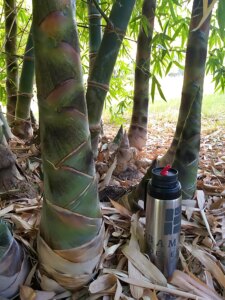
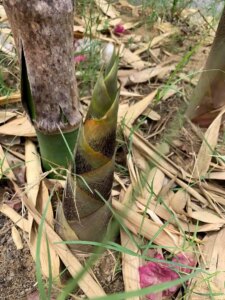
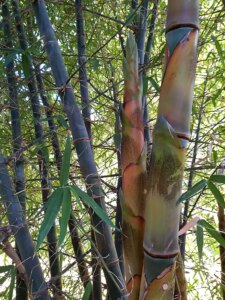
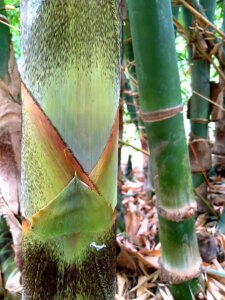
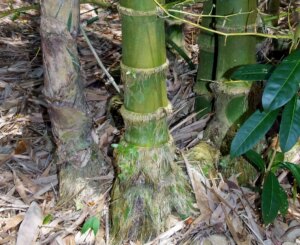
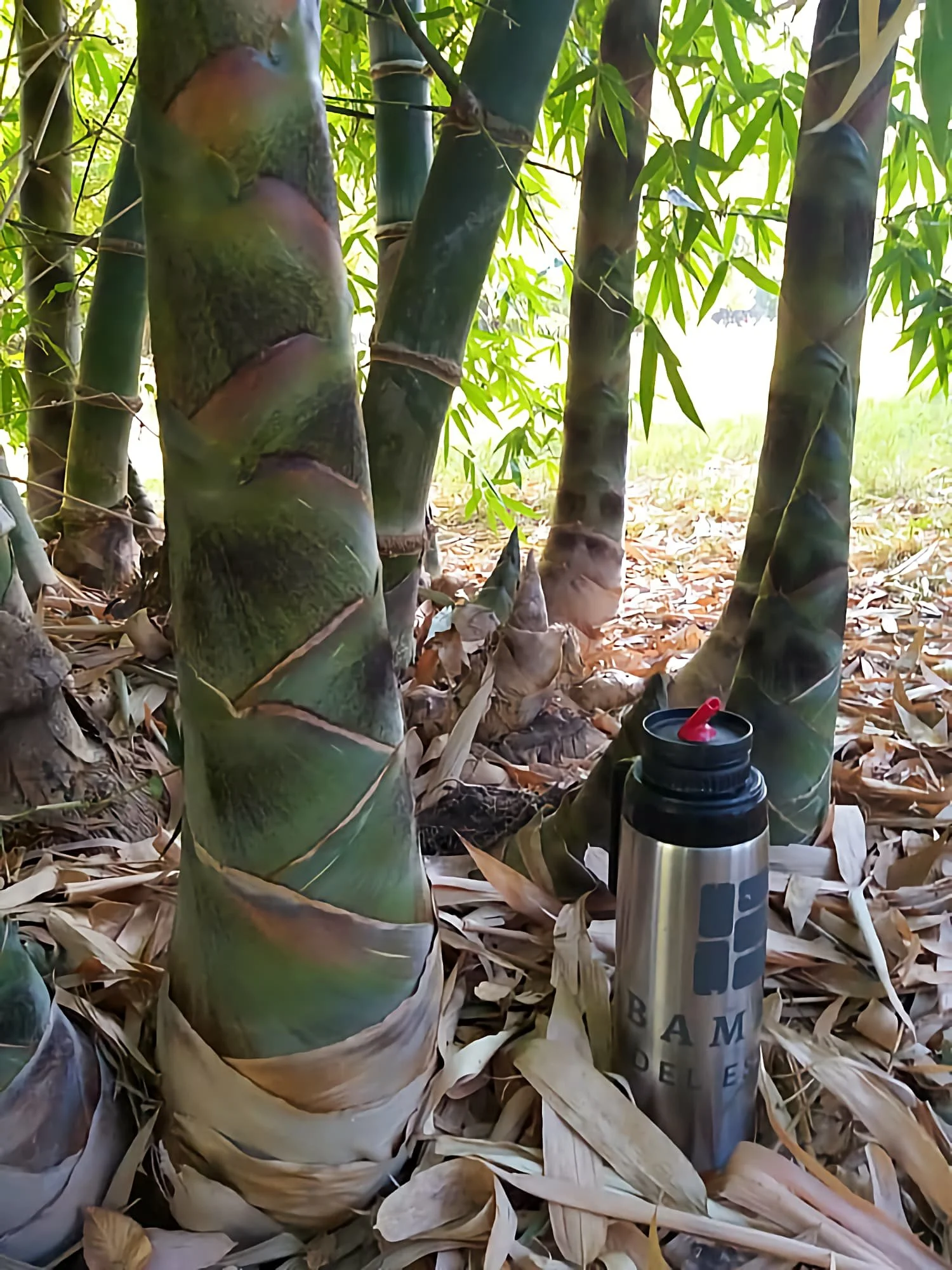
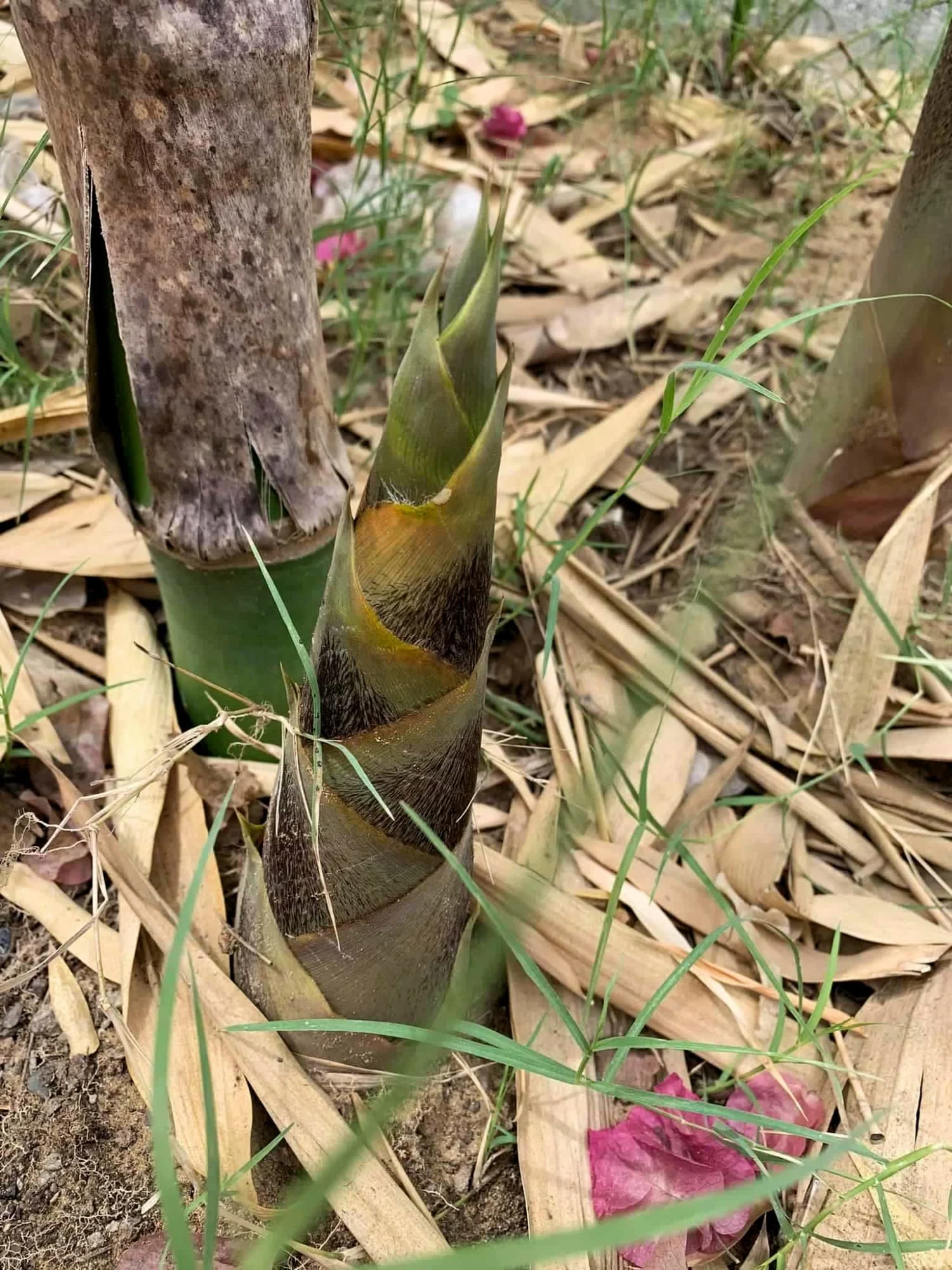
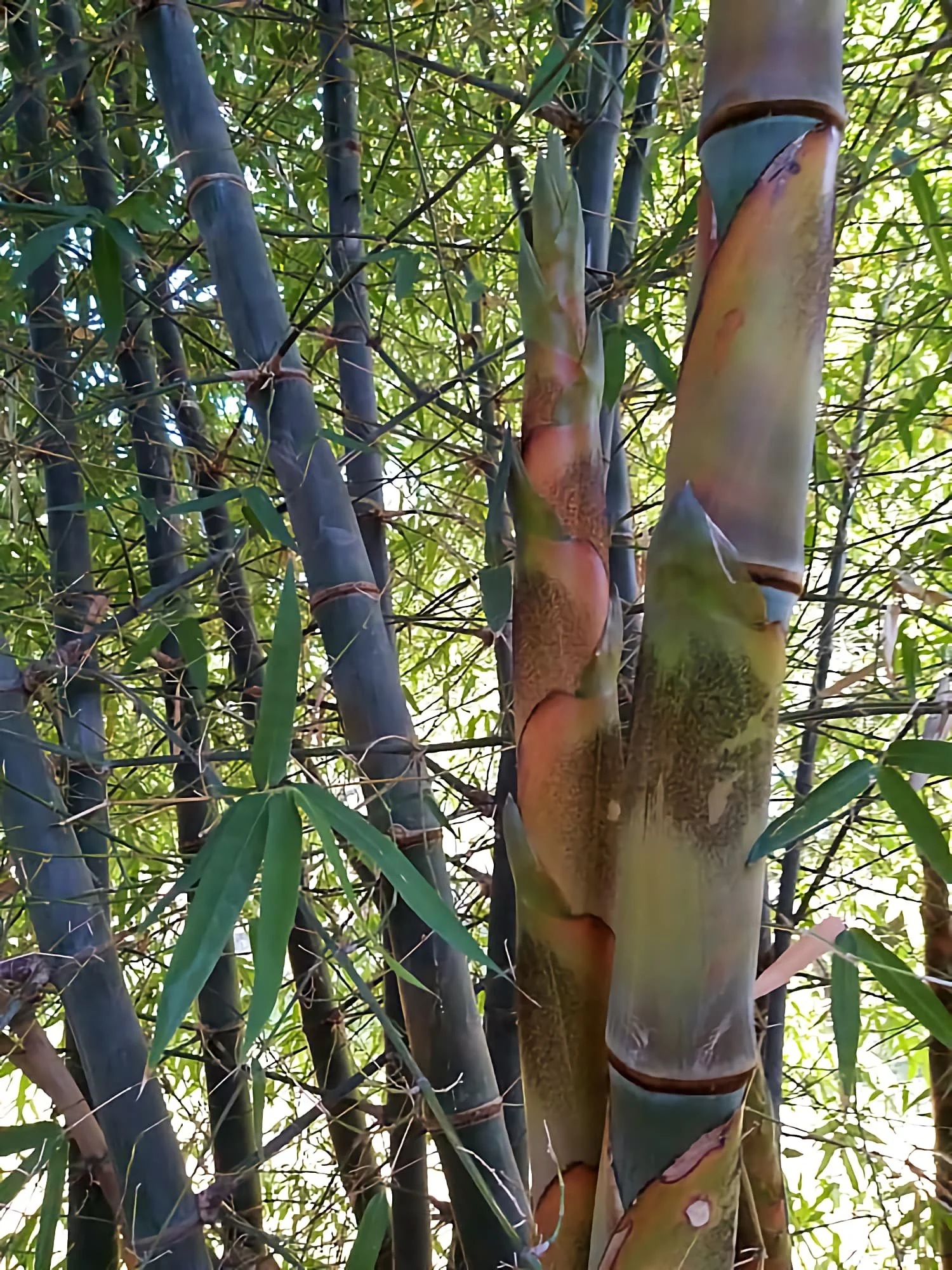
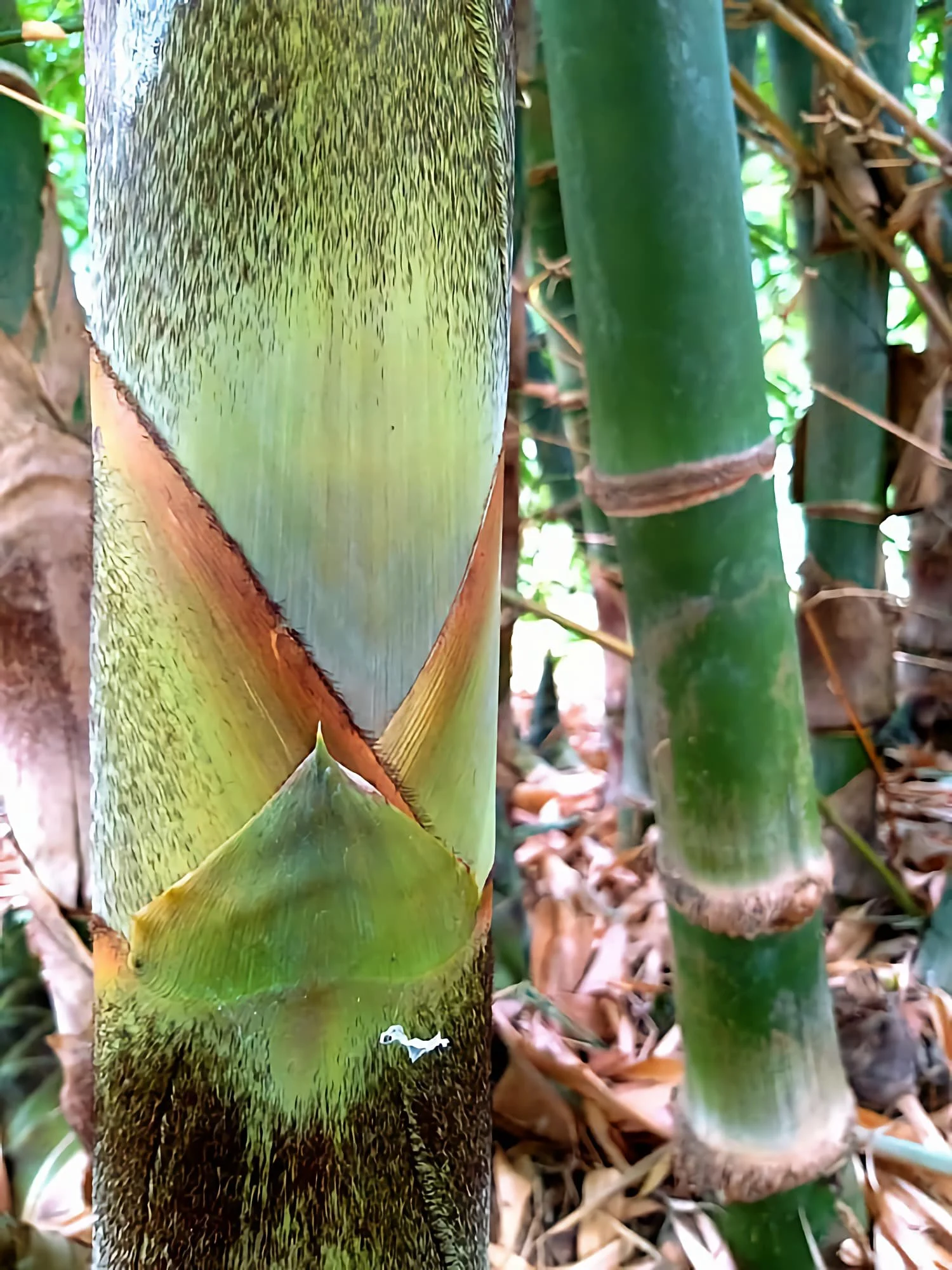
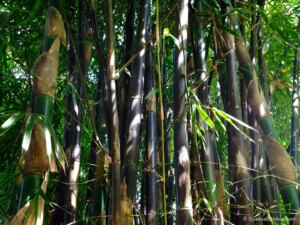
Young Bambusa balcooa shoots have a blackish-green with yellow color. Culm sheaths are brown or orange tinged, covered sparsely with dark brown hairs.
Culms
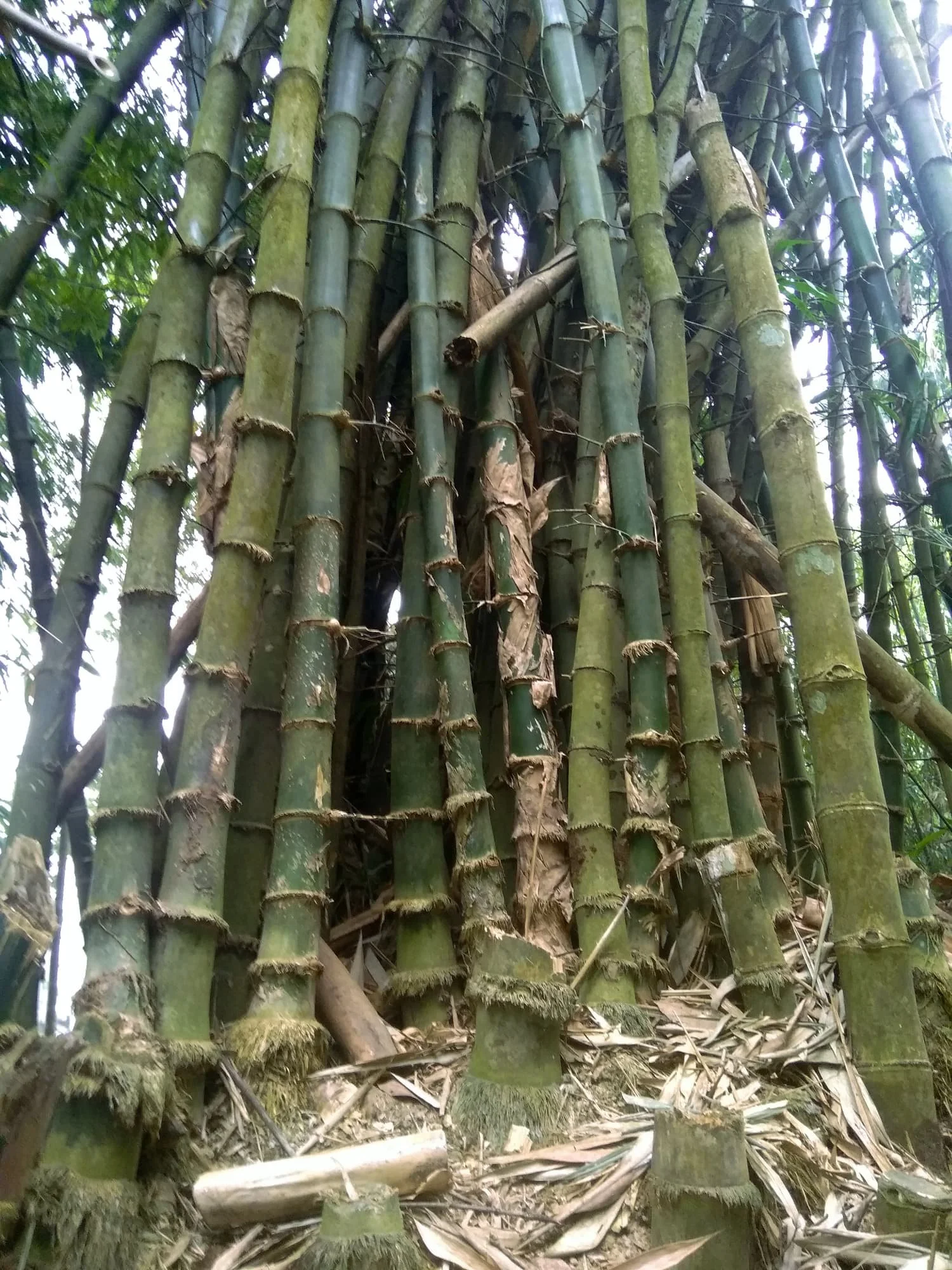
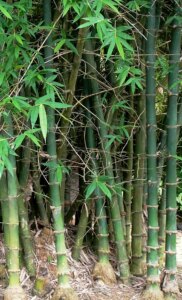
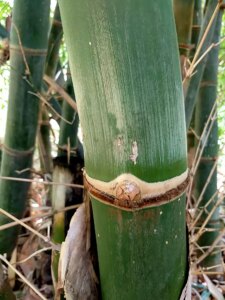
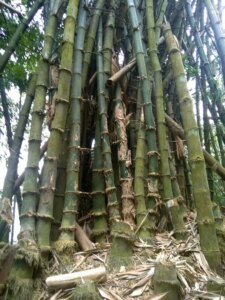
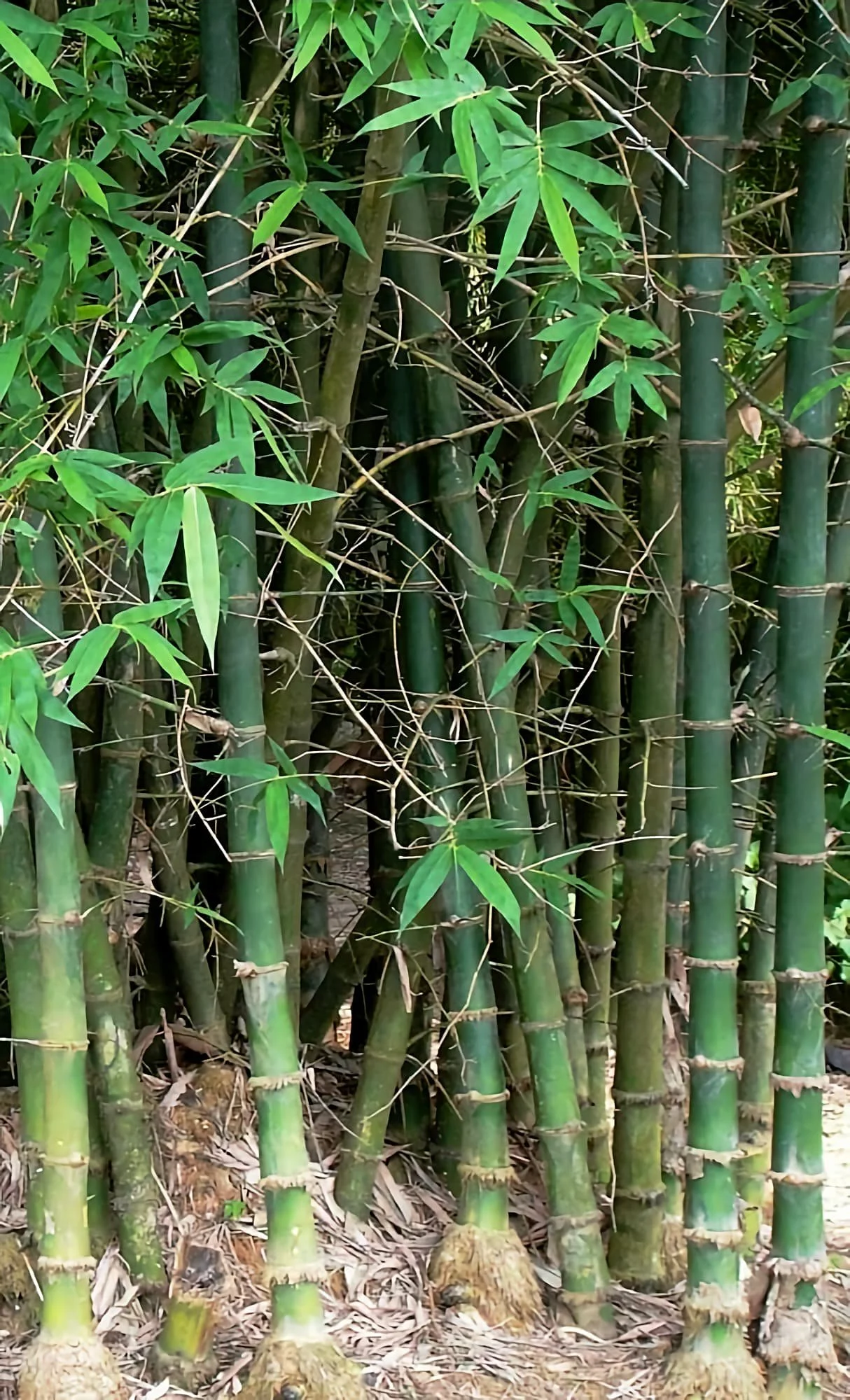
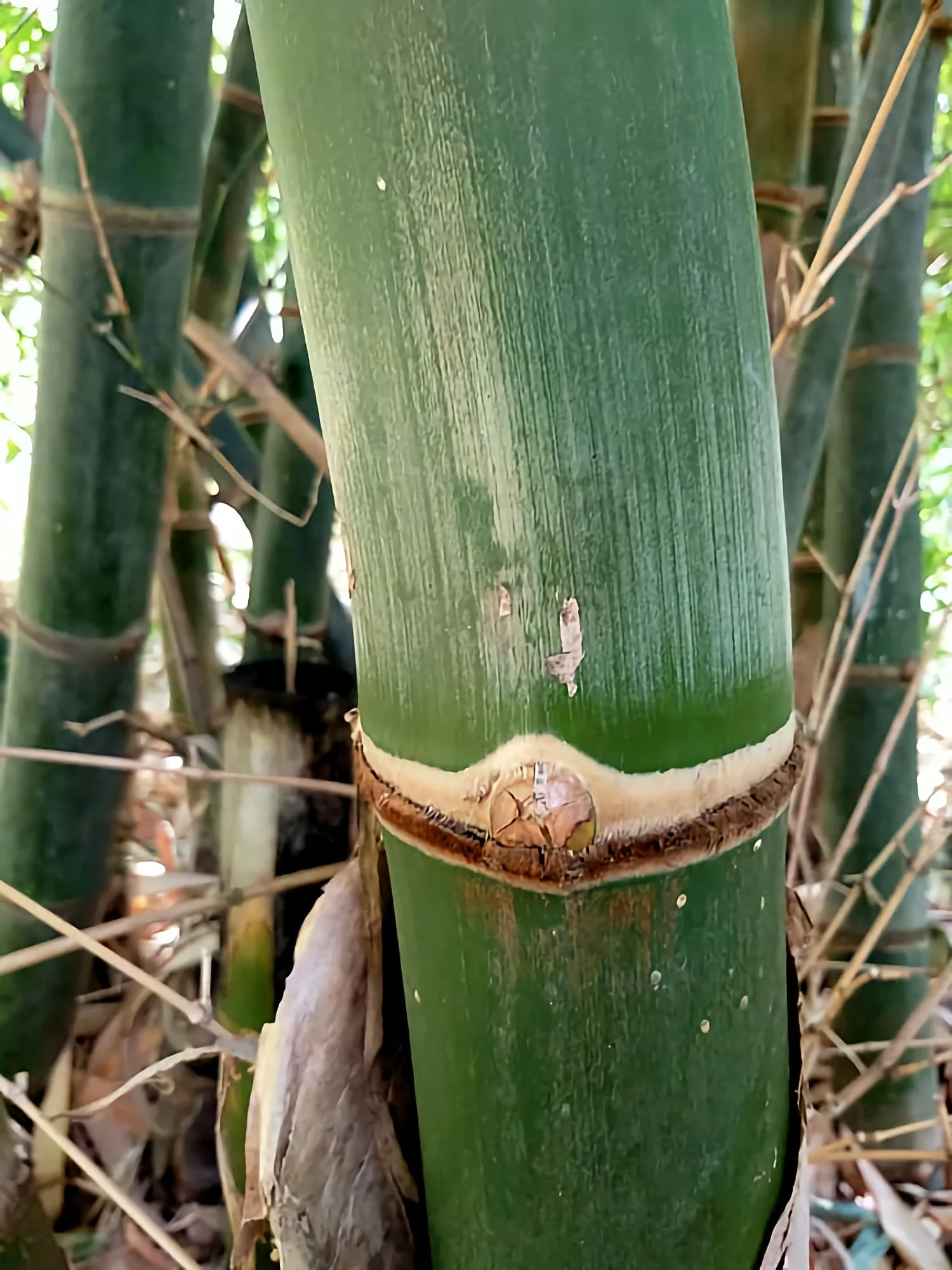
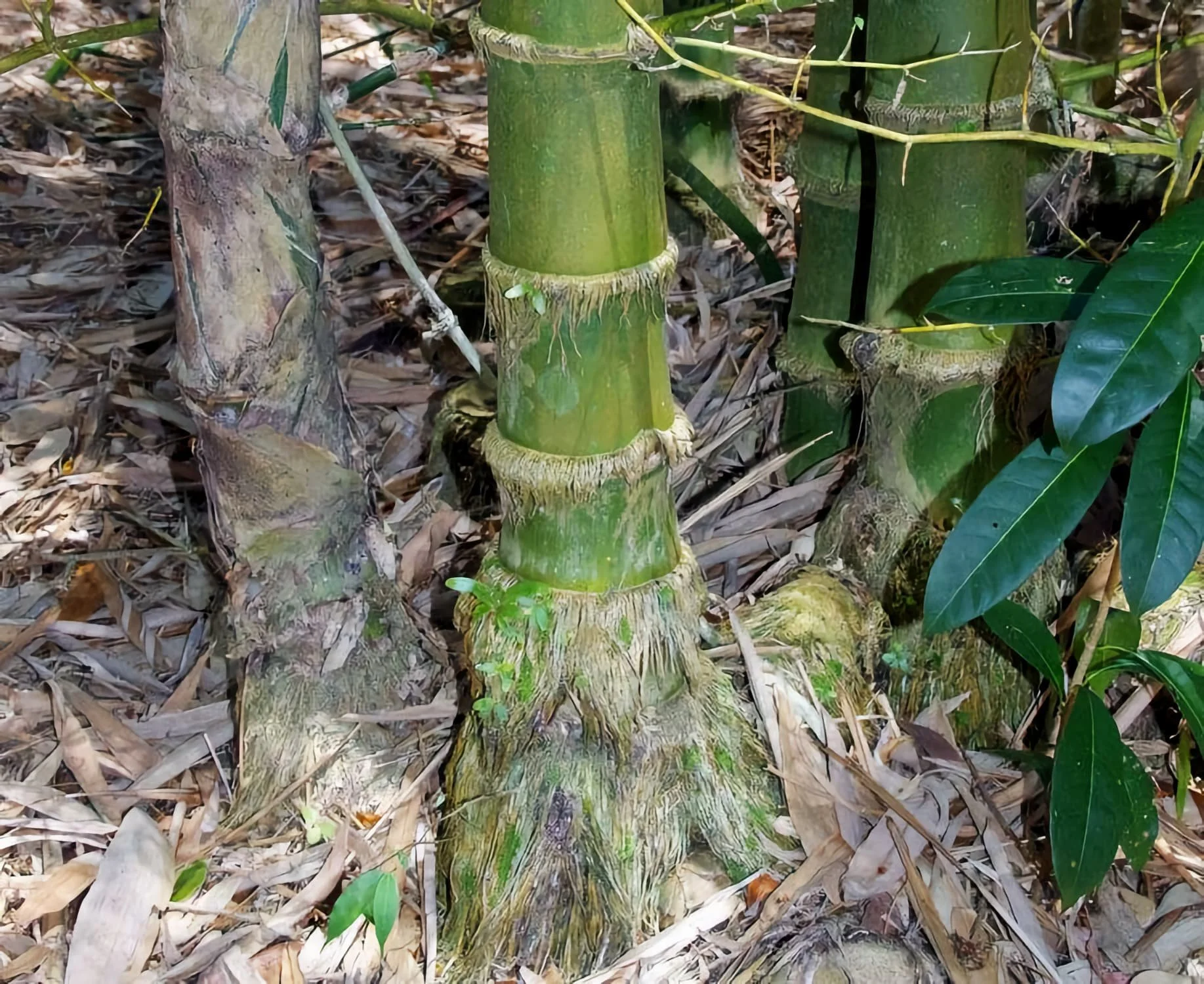
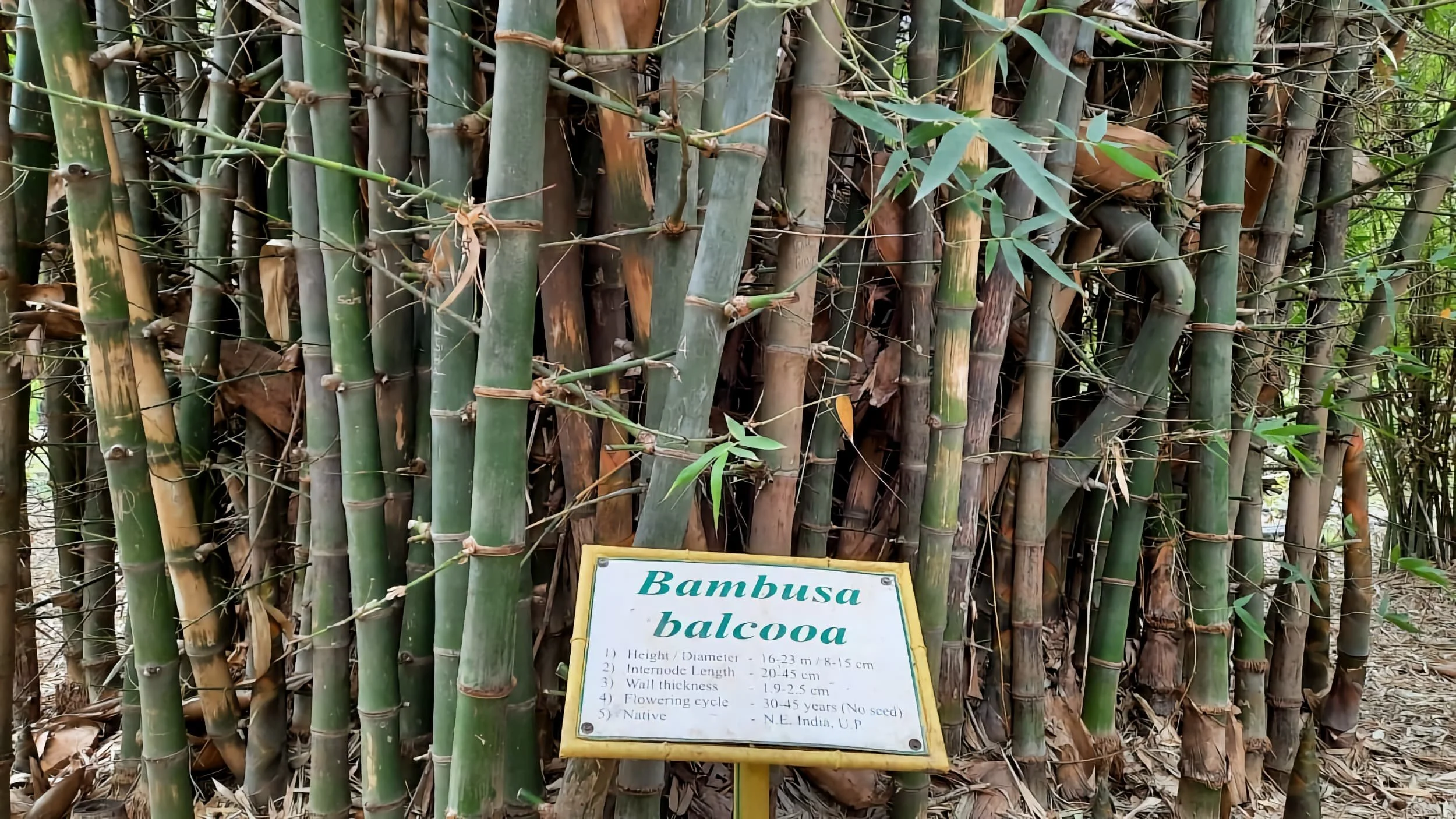
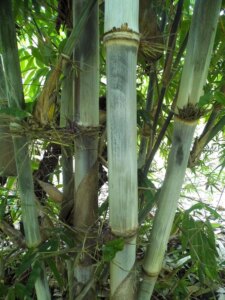
The culms of Bambusa Balcooa are on average between 16-25 m high and 7-15 cm in diameter. Culms are grayish green and thick walled, where the diameter of the cavity is about one-third of that of the culm. Nodes are thickened with a whitish ring above, and have short small hairs below. Culm internodes are on average between 20-45 cm long.
Branches
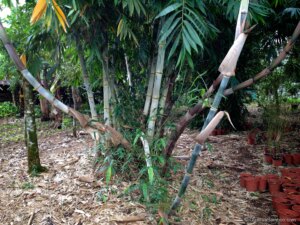
Several to many clustered branches with 1-3 larger dominant branches. Branches usually occur from middle of the culm to the top. Branches from the lower nodes are leafless and hard, and sometimes thorn-like.
Leaves
Leaves are narrow and are on average 15-30 cm long and 25-50 mm broad.
Flowering
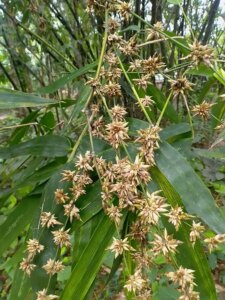
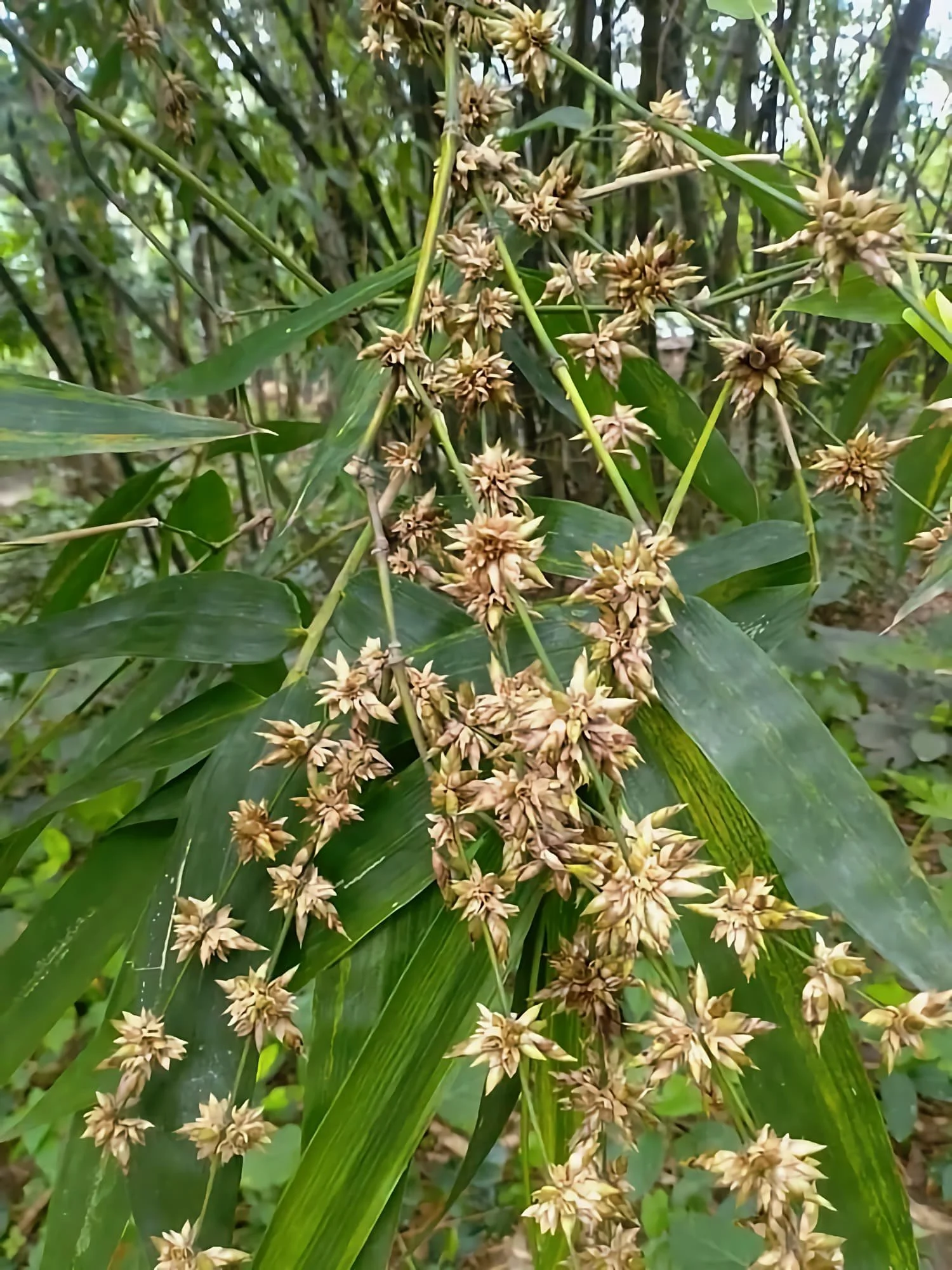
Gregarious flowering and seed-setting usually occurs every 35-45 years.
Habitat
Bambusa balcooa grows up to an altitude of 700 m in tropical monsoon climates with an annual rainfall of 2,500 – 3,000 mm. It grows on any type of soil but prefers heavy textured soils with good drainage and a low pH of about 5.5. An annual production of 1200-1700 culms/ha is reported from Bangladesh.
Mechanical Properties
The compressive strength ranges from 39.4 to 50.6 N/mm2 in green and 51.0 to 57.3 N/mm2 in air dry condition. Modulus of rupture varied between 85.0-62.4 N/mm2 in green and 92.6-69.6 N/mm2 in air dry condition. Modulus of elasticity 7.2-10.3 kN/mm2 in green, 9.3-12.7 kN/mm2 in air dry condition (Kabir et al. 1991).
Uses
Stems are used as a building material for houses, bridges, fishing floats, is much used for scaffolding, frames of rickshaw hoods, baskets, woven mats and for agricultural and fishing implements. This bamboo species also serve as a raw material for the wood chip industry, paper pulp, shoots are consumed as a vegetable and leaves are used as fodder.
Origin
Bambusa balcooa is indigenous to Bangladesh, India, Laos, Myanmar, Nepal and Vietnam where it is frequently cultivated. This bamboo is also introduced and cultivated in many other countries of South-East and East Asia, and in tropical Africa and Australia.

Bheema being supplied by Growmore biotech is found to flower and die in 1-2 years of planting . The claim that it lives for ever is false .
I am a learner about bamboos in Myanmar. If Myanmar is one of the native countries for bambusa balcooa, will there be a Myanmar name for the bamboo. Do you know it?
San Win (Professor)
ufssanwin.env@gmal.com
Gracias por difundir esta maravillosa especie. Saludos y fuerte abrazo desde Argentina. Espero pronto poder desarrollar una plantacion de esta especie en mi tierra.
Can Bambusa balcooa be used in the flooring industry?
What is the per acre selling price of Bambusa Balcooa bamboo?
Hello Stéphane, last Thursday, 15th January 2015, I photographed what appeared to be flowers among the culms of Bambusa Balcooa in the Supreme Court Gardens in Perth. It is incorrectly labelled there as Dendrocalamus giganteus, by the way.
If you send me your email address (I have just subscribed), I am happy to send you photos of the racemes I found growing from the culms.
Kindest regards.
That would be awesome Allan! You can write me through the contact page.
Would Bambusa balcooa grow well in Myanmar? Especially, Northern Shan State, Lashio area? Or is it too cold up there on the mountains? According to your map, I assume it grows naturally there? Would the yield be much better in a hotter climate? How about moisture, is the natural rainfall in Northern Shan State, Lashio area enough? Are the soil conditions all right?
You will have to do research on the average climate conditions and soils in your specific area, since it is impossible to say what soils condition there "might" be. Sometimes 500 m distance between 2 properties can make a huge difference in soil conditions. Therefore it needs to be inspected on site.
As a rule of thumb, bamboo grows faster in warmer climates but grows slightly stronger in colder climates.