
Bamboo Grading
Elevate Your Construction Projects with the Guadua Bamboo® Grading Standard
Revolutionizing the Bamboo Industry with: Graded Guadua Bamboo Poles
At Guadua Bamboo SAS, we always strive to lead the industry with innovative solutions. That is why we are proud to introduce what no other bamboo producer offers: structurally graded Guadua Bamboo poles. All our poles are individually assessed against 10 parameters and sorted into 4 grades, giving architects and engineers reliable specifications they can build on.
Bamboo’s Huge Potential Hampered by an Unreliable Supply Chain
The promise of bamboo as a sustainable construction material remains largely unrealized in mainstream engineered structures. The reason is not the material. Guadua bamboo has the structural strength to compete with timber and steel. The bottleneck is the supply chain.
Traditional bamboo suppliers operate on trust and intuition. There are no standardized specifications, no documented quality checks, and no way for an engineer to know what they are actually getting. Two poles of the same diameter and length can have meaningfully different load-bearing capacities depending on the age of the culm, the section it was cut from, and how it was dried. In an industry that demands predictable material performance, that level of uncertainty is a serious obstacle.
Grading solves it. With the Guadua Bamboo® Grading Standard, we are the first producer to apply a documented, verifiable grading system for Guadua angustifolia, transforming it from an informal forest product into a specifiable structural material with consistent, guaranteed performance. A benchmark that engineers can calculate with, and architects can specify with confidence.
What is Bamboo Grading?
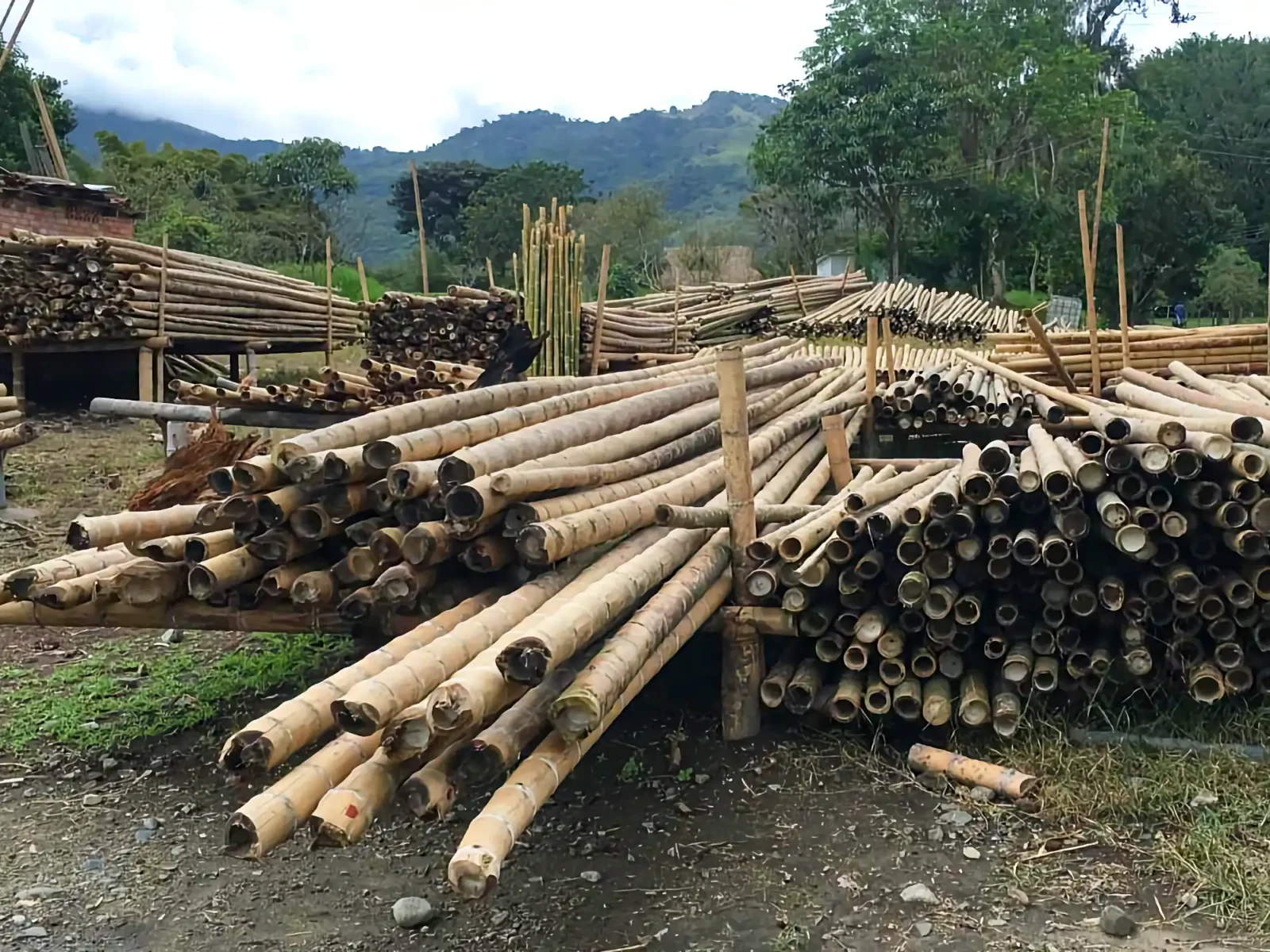
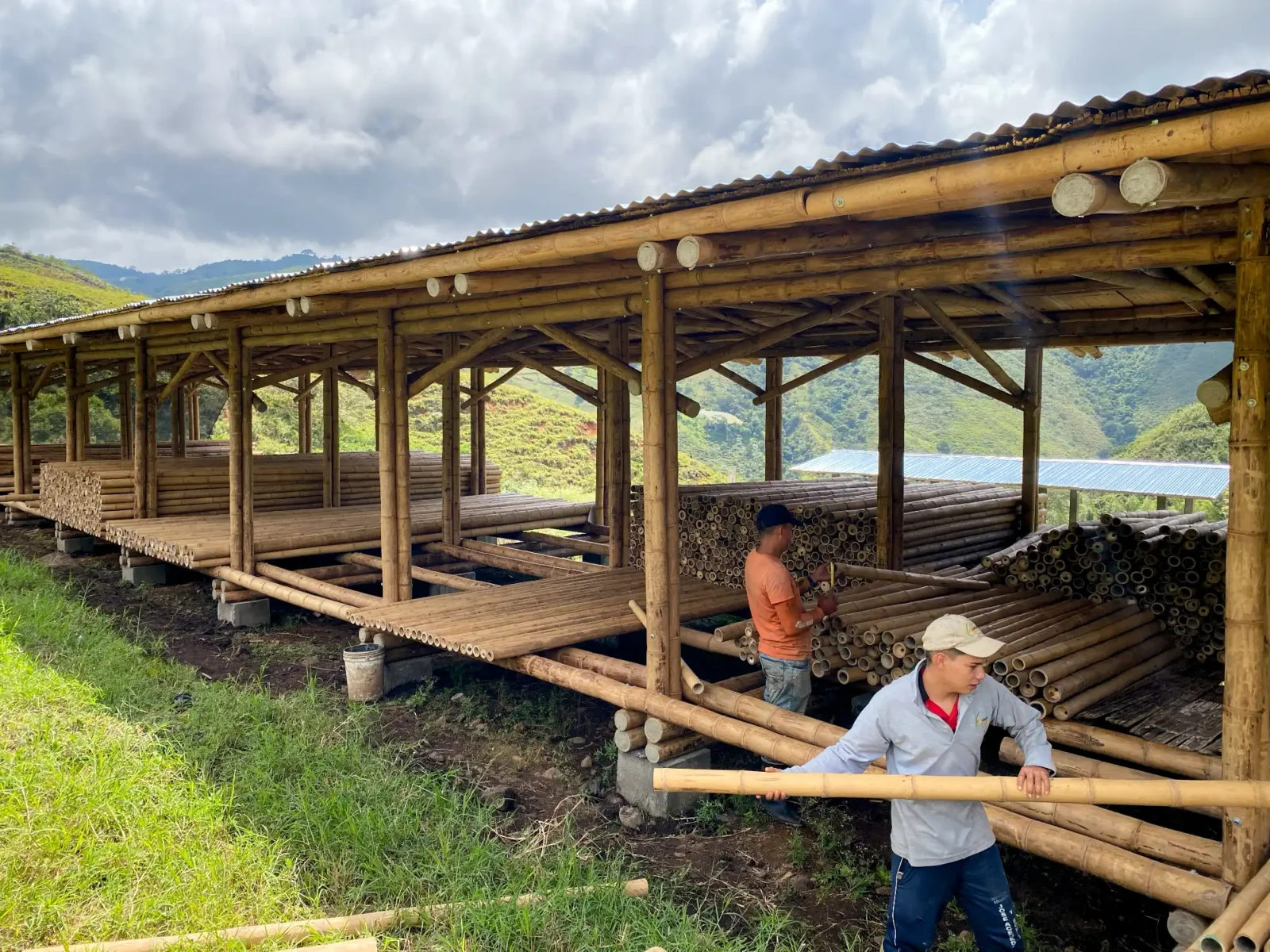
Grading is the process of sorting every bamboo pole into a quality class based on a defined set of measurable criteria. Those criteria cover the physical and mechanical properties that determine structural performance: how straight the pole is, how consistent the diameter, how thick the walls, how dry the material, and how free it is from cracks and surface defects. Aesthetic characteristics such as surface color and spot coverage are also evaluated. Essentially there are 2 types of grading methods; visual grading and machine grading. Both have their pro’s and con’s.
1. Visual Grading (Non-Destructive)
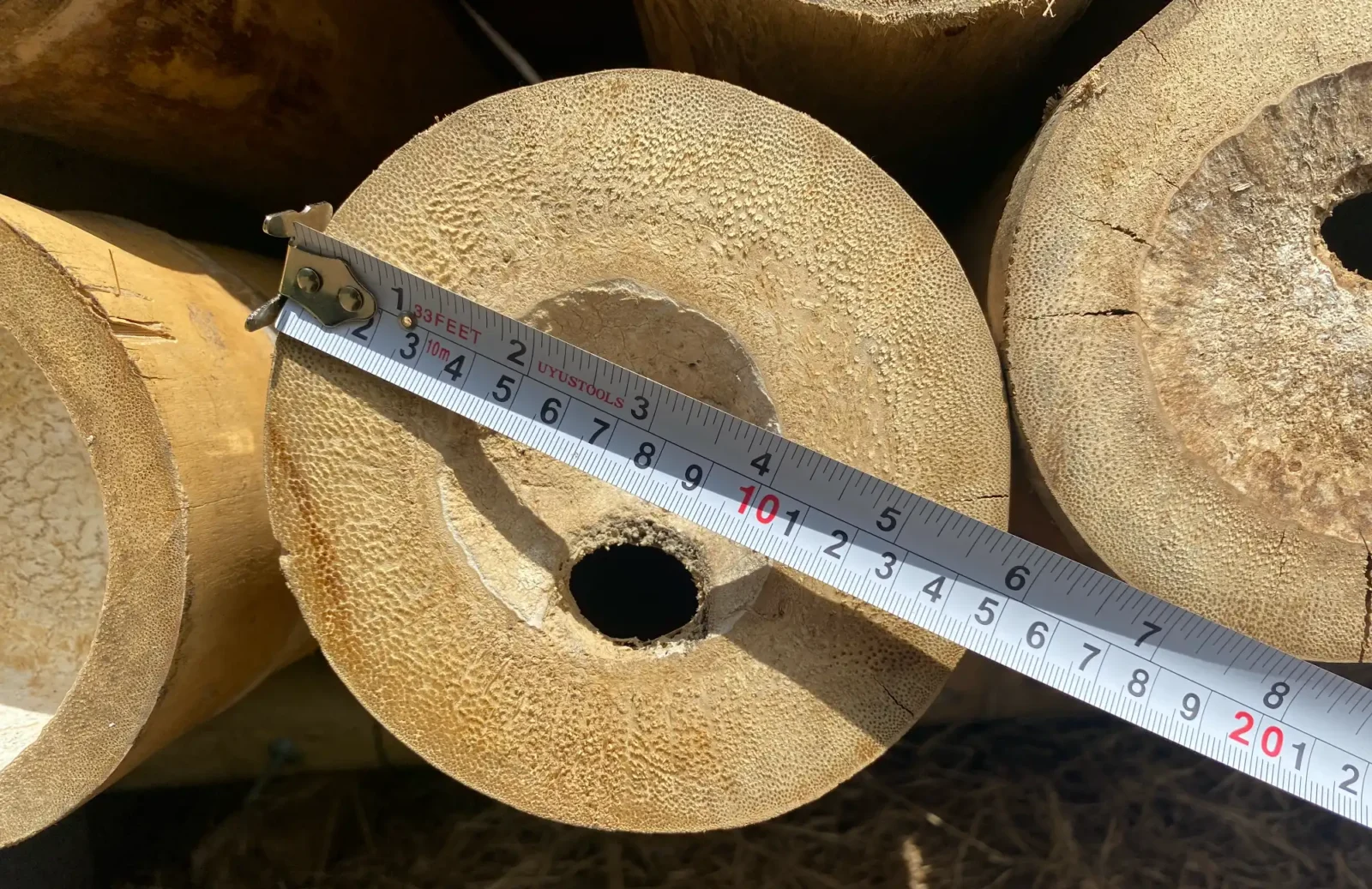
Visual grading sorts poles based on physical characteristics such as diameter, wall thickness, taper, curvature, etc. It is non-destructive, meaning every single pole that ships to a job site has been individually validated and can be re-verified at any point after grading. It does not require sophisticated machinery, but it is highly labor-intensive and demands specially trained, experienced personnel. This is the method we use.
2. Machine Grading (Destructive)
Machine grading uses equipment to test mechanical properties such as compression, bending, shear, and tension strengths directly. It is more precise but typically destroys the test piece, meaning only a sample from a batch is tested. The remaining poles are assumed to be representative based on statistical probability, provided they share the same species, age, culm part and geographical origin.
Why Grading Matters for Structural Bamboo
Structural design codes are built on reliable knowledge of material properties. Manufactured products like steel, precast concrete, and aluminium are produced under tight factory controls, so their properties are highly predictable. Natural materials like timber and bamboo have much higher inherent variability, which means engineers must apply larger safety factors when designing with them.
Graded bamboo changes that equation. When a pole carries a documented grade with known minimum properties, engineers can reduce those safety factors and design more efficiently. It gives architects and contractors a clear specification to order against rather than relying on a supplier’s word. And it gives the entire supply chain a quality benchmark that can be audited, verified, and trusted at every stage from production to installation.
Without grading, bamboo remains an informal material. Grading is what makes it a specifiable structural product.
| Manufacturing Control Tier | Material Classification Examples |
| High Control (Factory Made) | Steel, Precast Concrete, Aluminum |
| Inherent Variability (Natural Products) | Timber, Raw Ungraded Bamboo |
| Controlled Predictability (Graded Standards) | Stress-Graded Timber, Guadua Bamboo® Standard Poles |
The International Standards Gap

Currently, there is no single universal international standard that dictates fixed commercial quality grades for bamboo. While the International Organization for Standardization published ISO 19624 (Structural grading of bamboo culms for construction) in 2018, it serves primarily as a procedural framework. It details the strict statistical and mechanical guidelines for sorting, but it deliberately does not define the specific threshold values or numbers a pole must meet to qualify for any particular grade. Because physical properties are deeply species-specific and depend heavily on the geographical source region, defining those exact structural thresholds is left to national codes and pioneering individual producers.
A handful of countries have developed national standards: Colombia, China, Ecuador, India, Peru, Bangladesh, the USA, and the Philippines. In most cases these offer binary grading only: accepted or rejected. None define a multi-grade system with detailed threshold values for each physical parameter. Closing that gap required years of our own field research and direct measurement, work that became the foundation of our Guadua Bamboo® Grading Standard.
The Guadua Bamboo® Grading Standard

The Guadua Bamboo® Grading Standard is our proprietary grading system developed exclusively for Guadua angustifolia, built from years of field research and direct measurement at our own plantation and processing facility. It is the first detailed, multi-grade visual grading system for this species, and it fills the gap that ISO 19624 leaves open: the actual numbers.
The standard defines 4 grades assessed across 10 parameters. Every pole must meet the criteria for all 10 parameters to be assigned to a grade. The final grade is always determined by the weakest parameter: one parameter outside the A threshold and the pole is graded B, regardless of how it performs on the others.
| Grade | Description | Availability |
|---|---|---|
| A+ | Precision grade. Tightest tolerances on curvature, taper, diameter, and fissures. Bending stiffness testing available. | On request. Additional lead time and cost apply. |
| A | Premium structural grade. All poles we supply meet Grade A as a minimum. | In stock. Premium export quality. |
| B | Structural quality with moderate variation. Suitable for non-critical or secondary structural applications. | Available on request. |
| C | Below structural threshold. | Not supplied. |
It is important to note that the Guadua Bamboo® Grading Standard applies exclusively to Guadua angustifolia. Morphological characteristics such as internode length, wall thickness, diameter, and taper vary significantly between bamboo species. Threshold values developed for Guadua cannot be applied to other species.
The 10 Grading Parameters
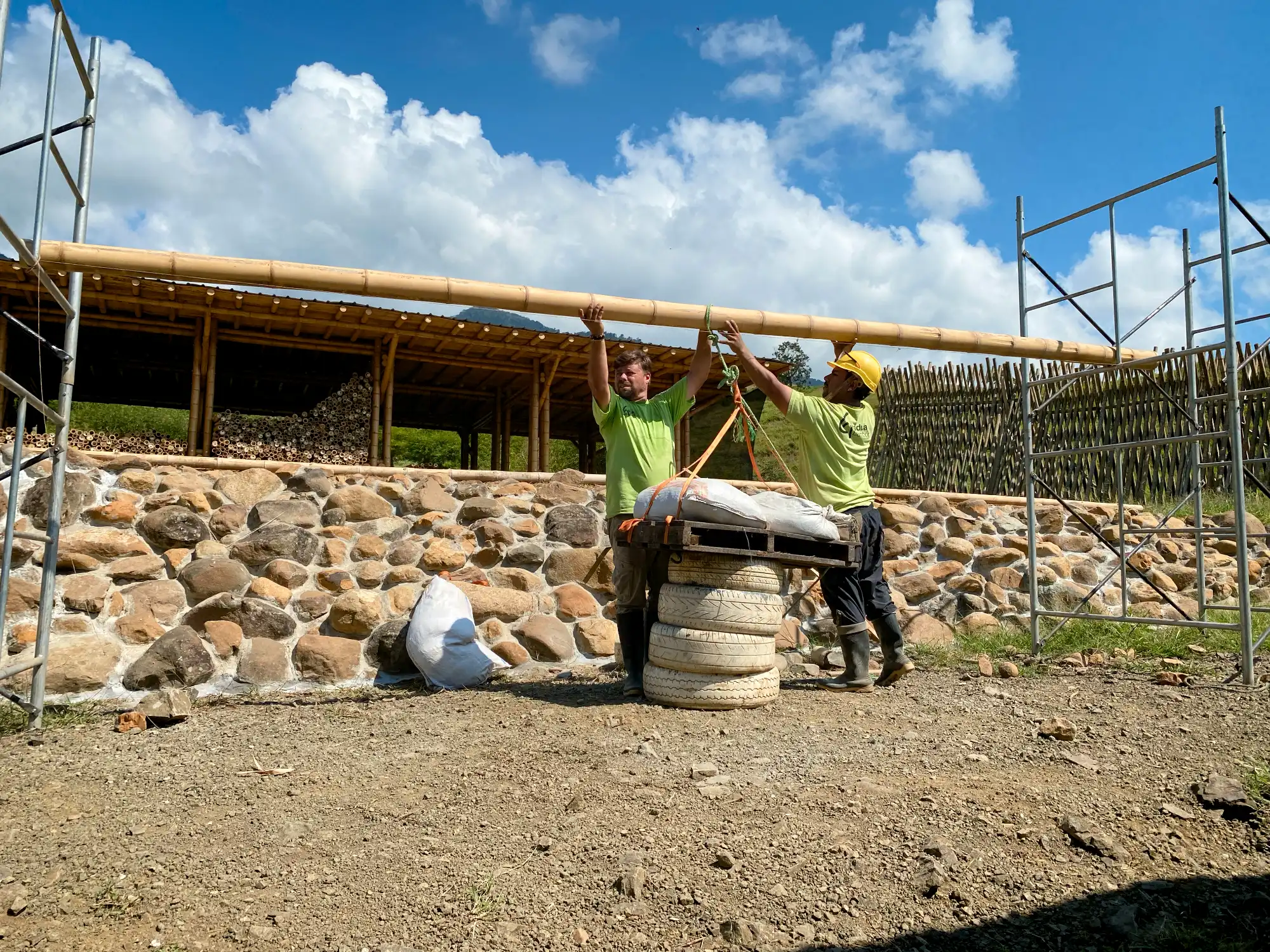
Each parameter has its own set of grading rules defining the threshold values for Grades A+, A, B, and C. These rules are the core of the Guadua Bamboo® Grading Standard. Each parameter has a dedicated article explaining what it measures, why it matters structurally, how we measure it, and what the grade ranges look like. The complete engineering threshold tables are proprietary assets reserved exclusively for our active commercial clients, structural engineers, and design partners working on project specifications.
| # | Parameter | What it grades |
|---|---|---|
| 1 | Maturity | Minimum age at harvest for peak fiber density and strength |
| 2 | Culm Sections | Wall thickness and internode length confirming structural section |
| 3 | Diameters | Dimensional classification and flexural capacity |
| 4 | External Taper | Diameter reduction along the pole and its effect on load capacity |
| 5 | Curvature | Straightness tolerance for structural and prefabricated applications |
| 6 | Fissures | Crack and split limits affecting shear, bending, and compression |
| 7 | Black Spots | Black spot extent for visible and architectural applications |
| 8 | Moisture Content | Seasoning requirements before grading and shipment |
| 9 | Bending Stiffness | Optional non-destructive EI testing for engineered projects |
| 10 | Preservation | Treatment requirements |
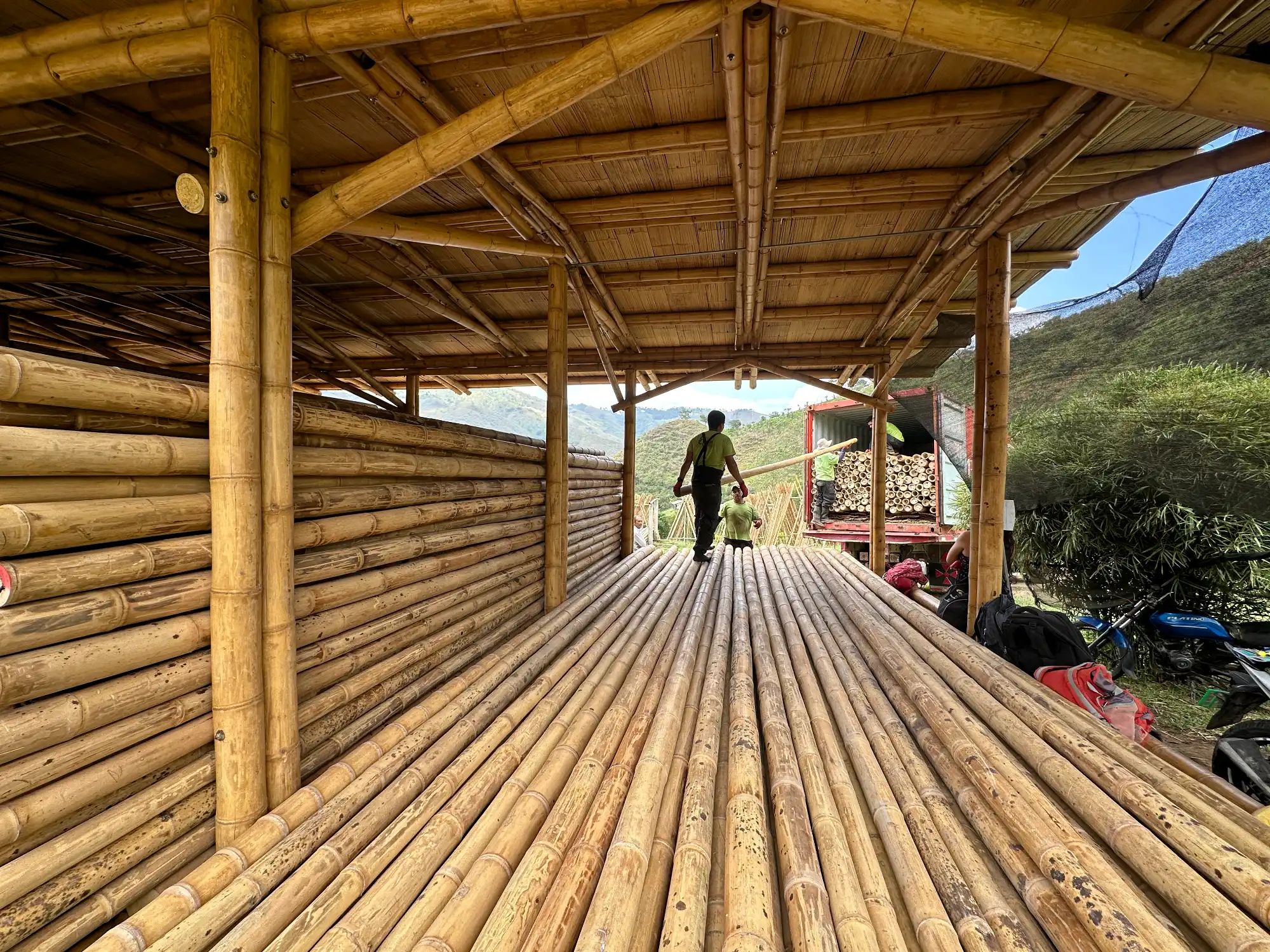
Standard Supply vs. Precision Grading
Our standard export product is Grade A poles in diameter classes of 7–15 cm, and in lengths up to 6 meters, held in permanent stock and available for export in full containers FOB Buenaventura.
- Grade A (Premium Export Quality): This grade already represents a significant step above what the traditional market typically supplies. Every single pole in this tier has been individually assessed for maturity, culm section, diameter, taper, curvature, fissures, and moisture content before it is ever accepted into our export stock.
- Grade A+ (Specific Precision Quality): Available for projects that demand absolute geometric perfection. This includes tighter curvature limits for prefabricated joinery systems, precise base diameters for fixed connector tolerances, or verified bending stiffness values for engineered structural calculations. A+ orders carry a surcharge reflecting the intensive manual selection time, higher factory rejection rates, and non-destructive testing costs.
- Grade B (Structural Budget Quality): These poles pass the exact same rigorous harvesting maturity, moisture control, and preservation treatments as our Grade A stock, guaranteeing the identical foundational wood density and structural durability. They are categorized as Grade B solely due to natural, superficial variations, such as more pronounced curvature, higher taper, or a higher percentage of natural dark spots. Grade B is the ideal choice for rustic outdoor framing, roofing rafters, hidden structural layouts, or elements intended to be painted or stained. Because these natural variations are abundant in a mature forest, Grade B offers a highly cost-effective engineering alternative without sacrificing an ounce of physical strength.
If your project has specific grading requirements, contact us with the specification and we will advise on feasibility, lead time, and pricing.
Bamboo Grading Criteria
Explore all the technical assessment factors used in our Guadua Bamboo® Grading Standard to ensure structural quality.