
Guadua Bamboo, also known as “The Strongest Bamboo in the World” or “Vegetal Steel” is a giant South American bamboo species with a higher tensile strength than mild steel. Its extraordinary load bearing capacity (MOE 17204 N/mm2) makes it the #1 preferred bamboo among visionary builders and architects specialized in green and sustainable construction around the world.
As pioneers in the industry, we have perfected the art of cultivating, harvesting and processing bamboo, ensuring that each pole meets the strictest quality standards. Our loyal base of returning customers is a testament to the trust and satisfaction they find in our products.
Guadua Bamboo Poles in Bulk
Buying bamboo poles in bulk is a significant cost saver for businesses in need of high-quality, sustainable construction materials. At Guadua Bamboo SAS, we supply graded bamboo poles that meet stringent quality standards, ensuring strength and durability for various applications, from construction to landscaping.
Sourced from our certified sustainably harvested plantations in Colombia, our bamboo not only supports responsible forestry practices but also provides a reliable option for those looking to reduce their environmental impact. Whether you are a builder, architect, or retailer, our extensive range of bamboo poles can meet the diverse needs of your projects.


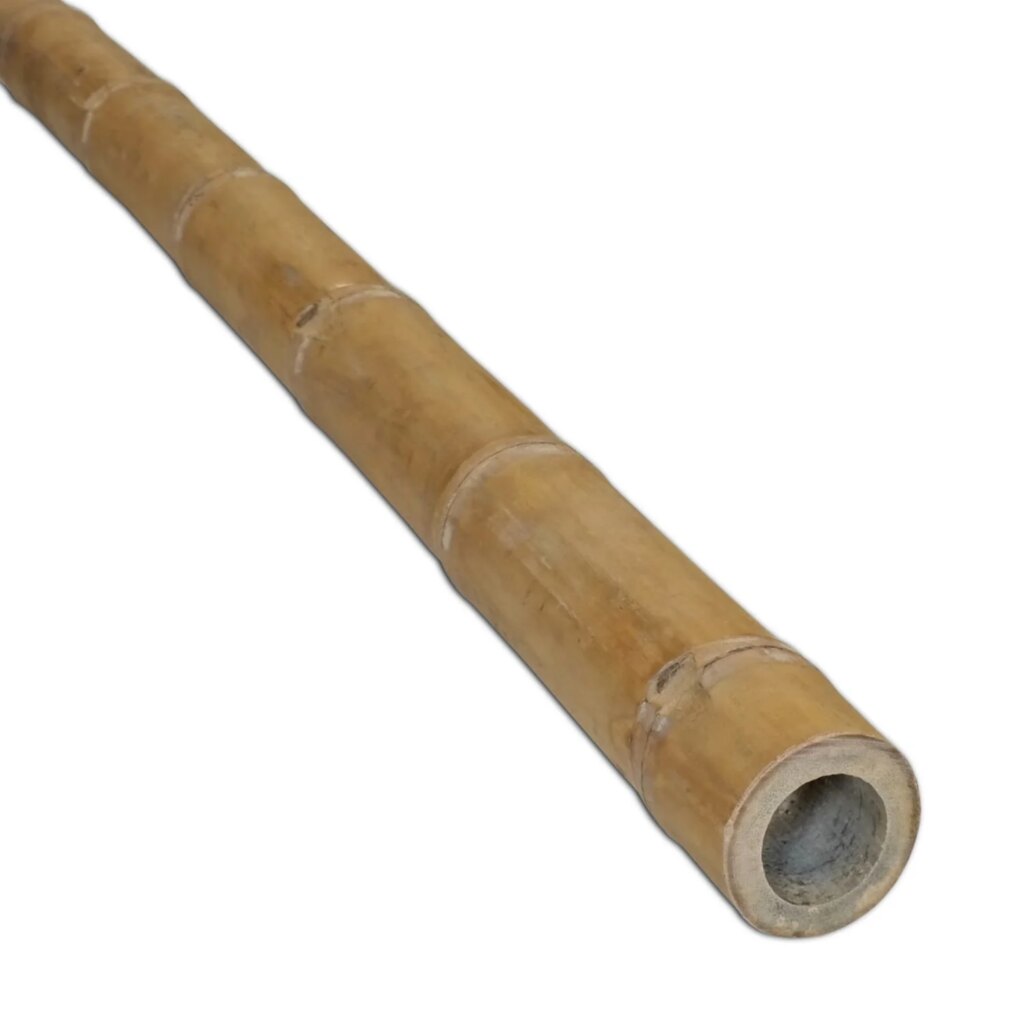
Guadua Bamboo Pole
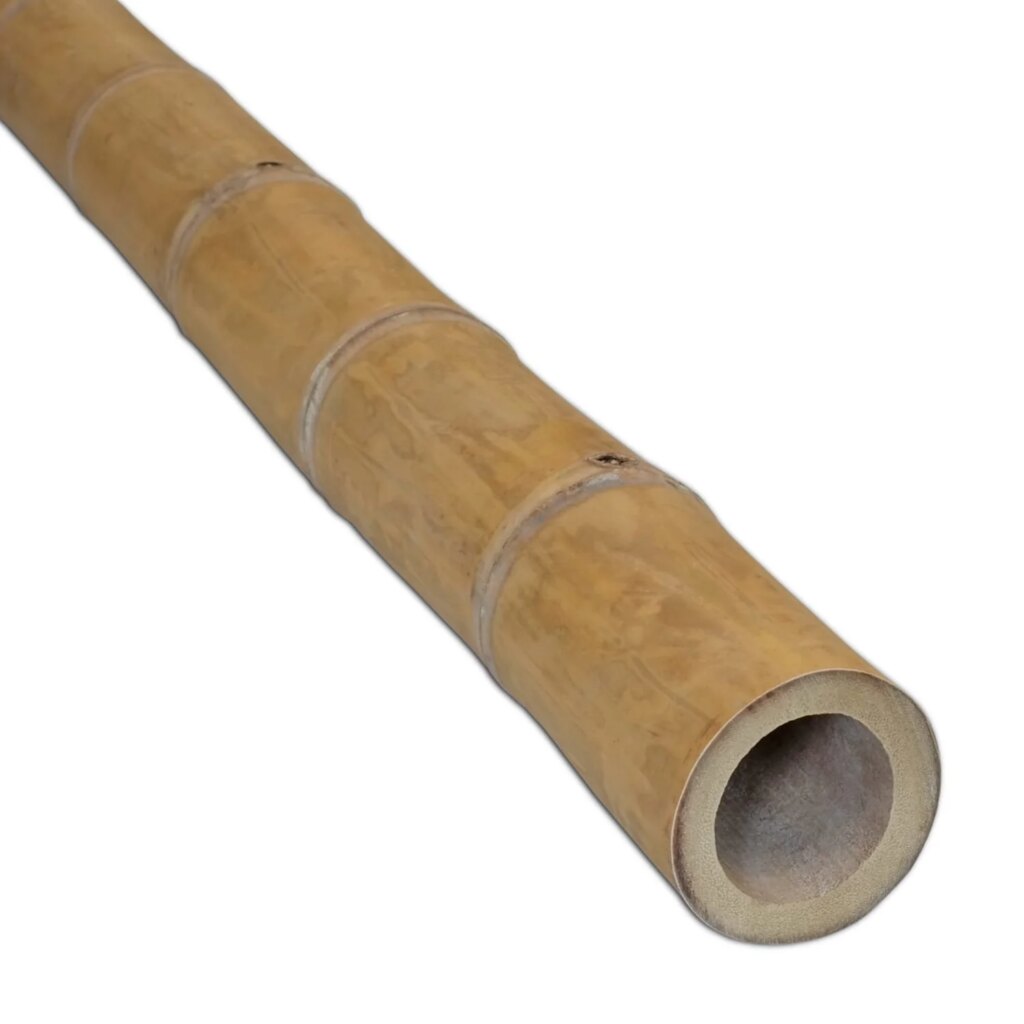
Guadua Bamboo Pole
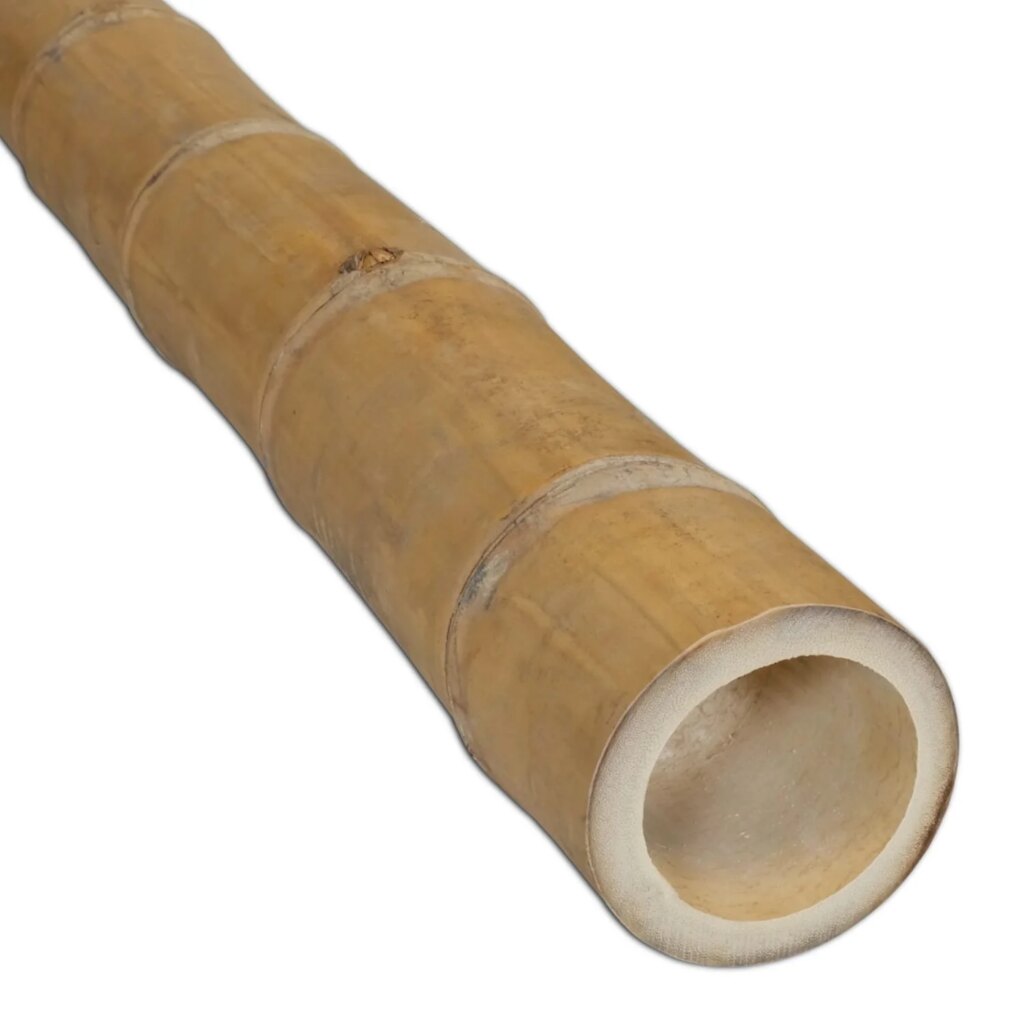
Guadua Bamboo Pole
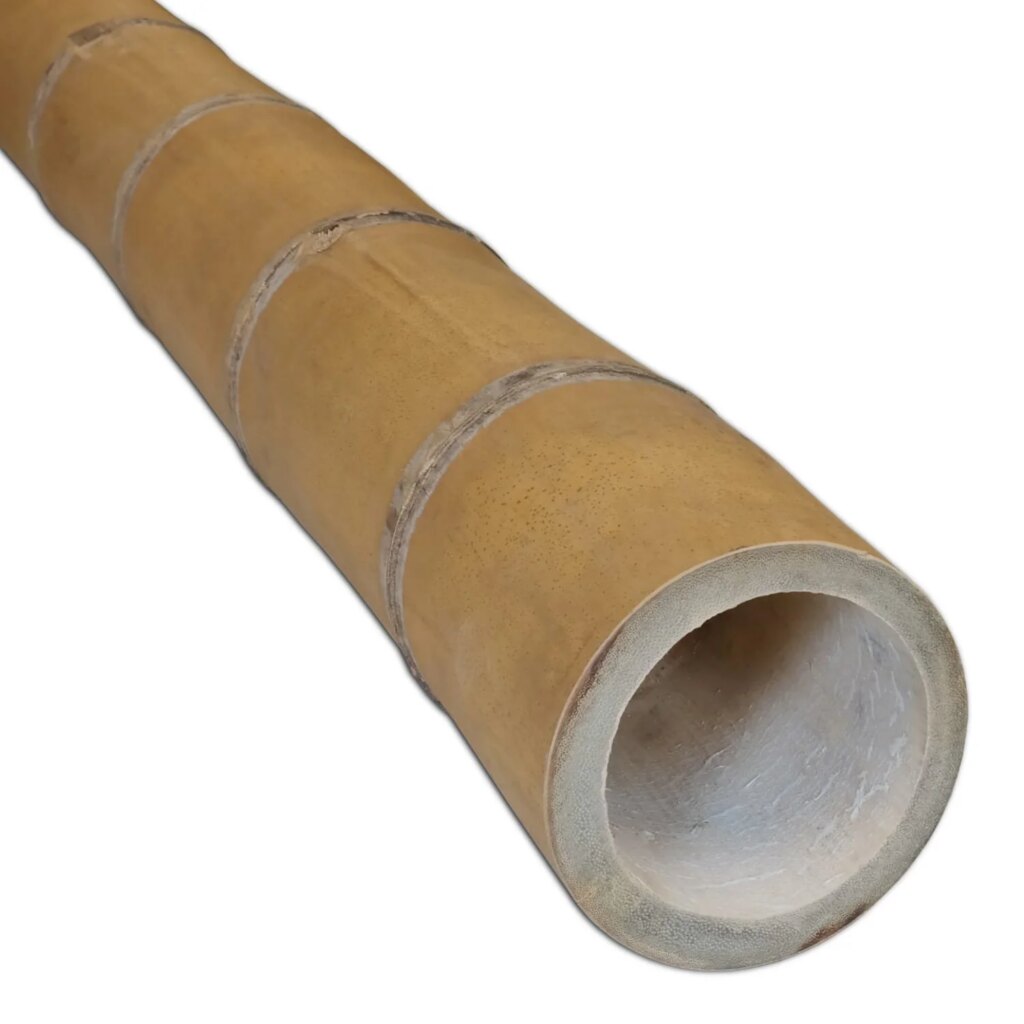
Guadua Bamboo Pole
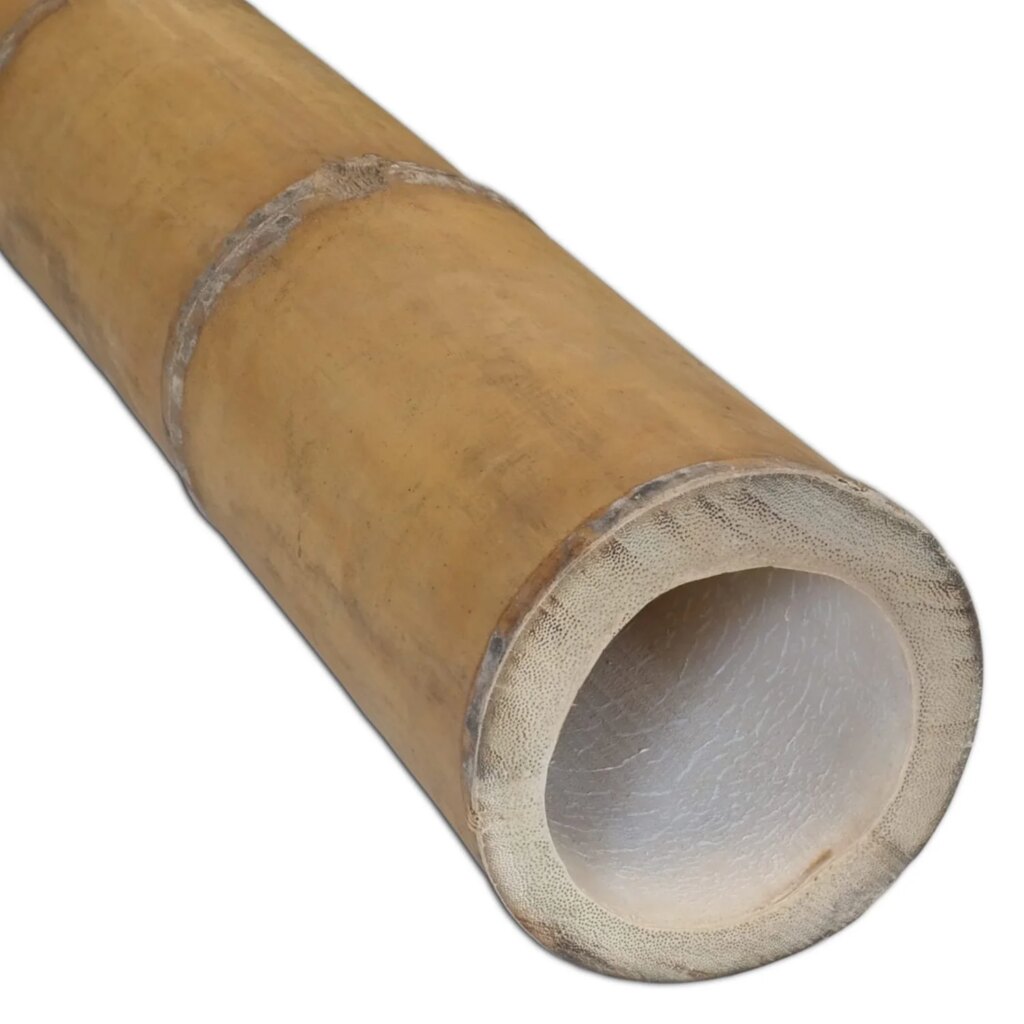
Guadua Bamboo Pole
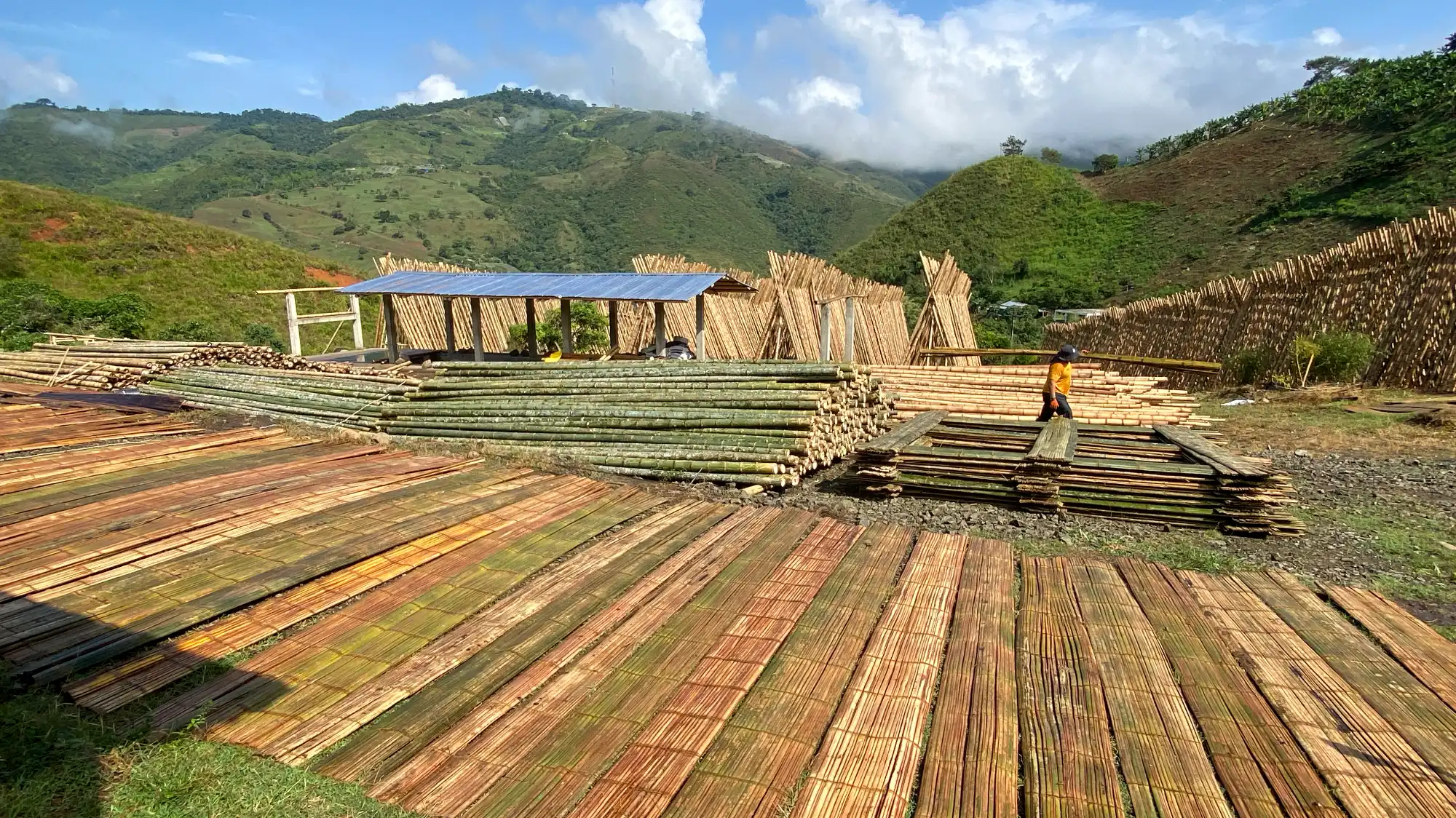
Bamboo Poles Production Process
Just as with regular wood, most bamboo species have low resistance against insects and other biological degrading organisms. Without any protective treatment, most bamboo species have an average durability of less than 2 years. Stored under cover, untreated bamboo may last 4-7 years, depending on the species, length and thickness of the stems.





Professionally harvested and treated Guadua poles on the other hand have an average service life of more than 50 years (examples of 100+ year old houses exist in Colombia). The process of producing the best construction grade bamboo poles involves many different aspects which we will explain in great detail below.
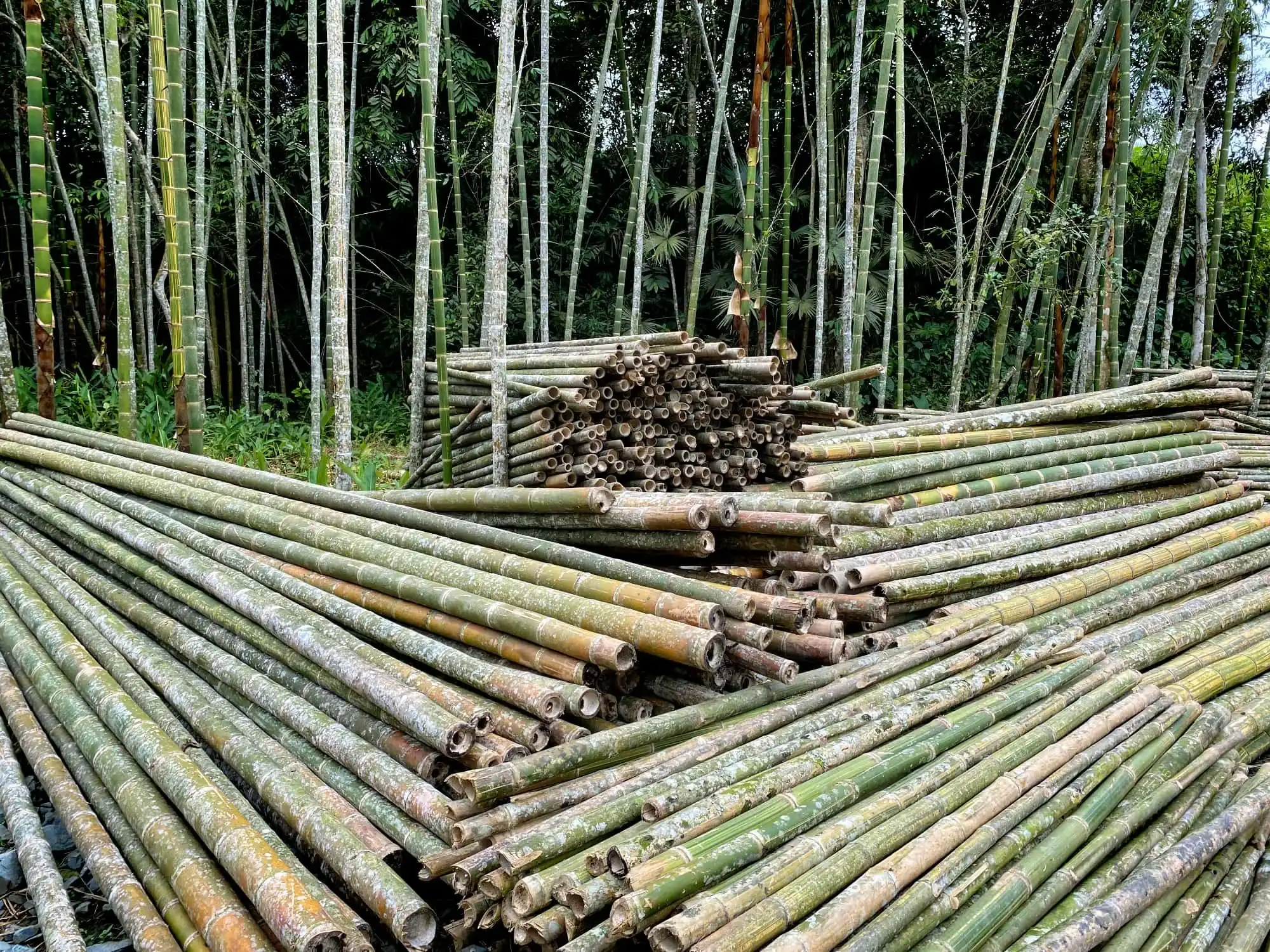
Bamboo Harvest
Only mature bamboo culms of 4-5 years old that grow on altitudes between 1,200 and 1,600 m above sea level are selected and harvested. These Guadua culms are extremely strong and hardened (lignified) which maximizes the mechanical properties for construction related applications.
Bamboo poles selected by these parameters also shrink and crack less when dry and have a higher natural resistance against future insects attacks, fungus and other microorganisms. See this article if you are interested to learn more on harvesting bamboo poles.
Bamboo Selection
Guadua angustifolia is a relatively thin walled bamboo species (on average 13 mm) except near the base where wall thickness is much greater compared to the center and top part of the bamboo stem.
In order to provide top quality poles for export, we only select the sections near the base as these are most sought after for construction. The remaining middle and top parts of the bamboo stem are transformed into flattened mats and smaller diameter poles. No part of the bamboo is wasted.
Puncturing Bamboo
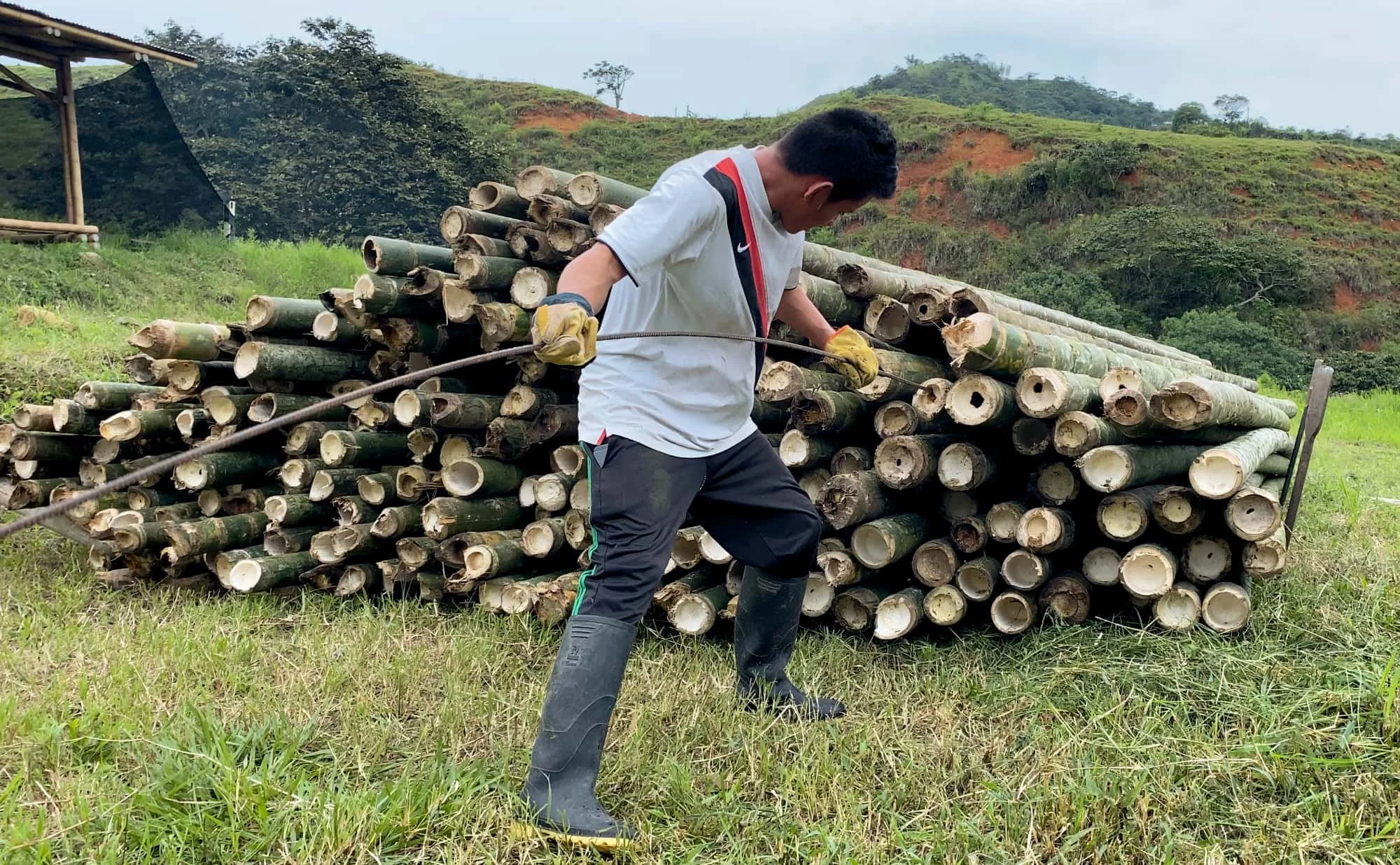
After the bamboo stems are harvested and transported to our factory they are cut to the required size and and all nodes (diaphragms) are perforated.
Because bamboo has a natural water repellent outer layer, it is impossible for preservatives to enter the bamboo fibers from the outside. Therefore, our mix of non-toxic minerals needs to be introduced from the inside where the fibers can absorb the solution.
A steel rod with a large drill bit welded to the tip is used to penetrate each node throughout the length of the Guadua pole.
Bamboo Preservation
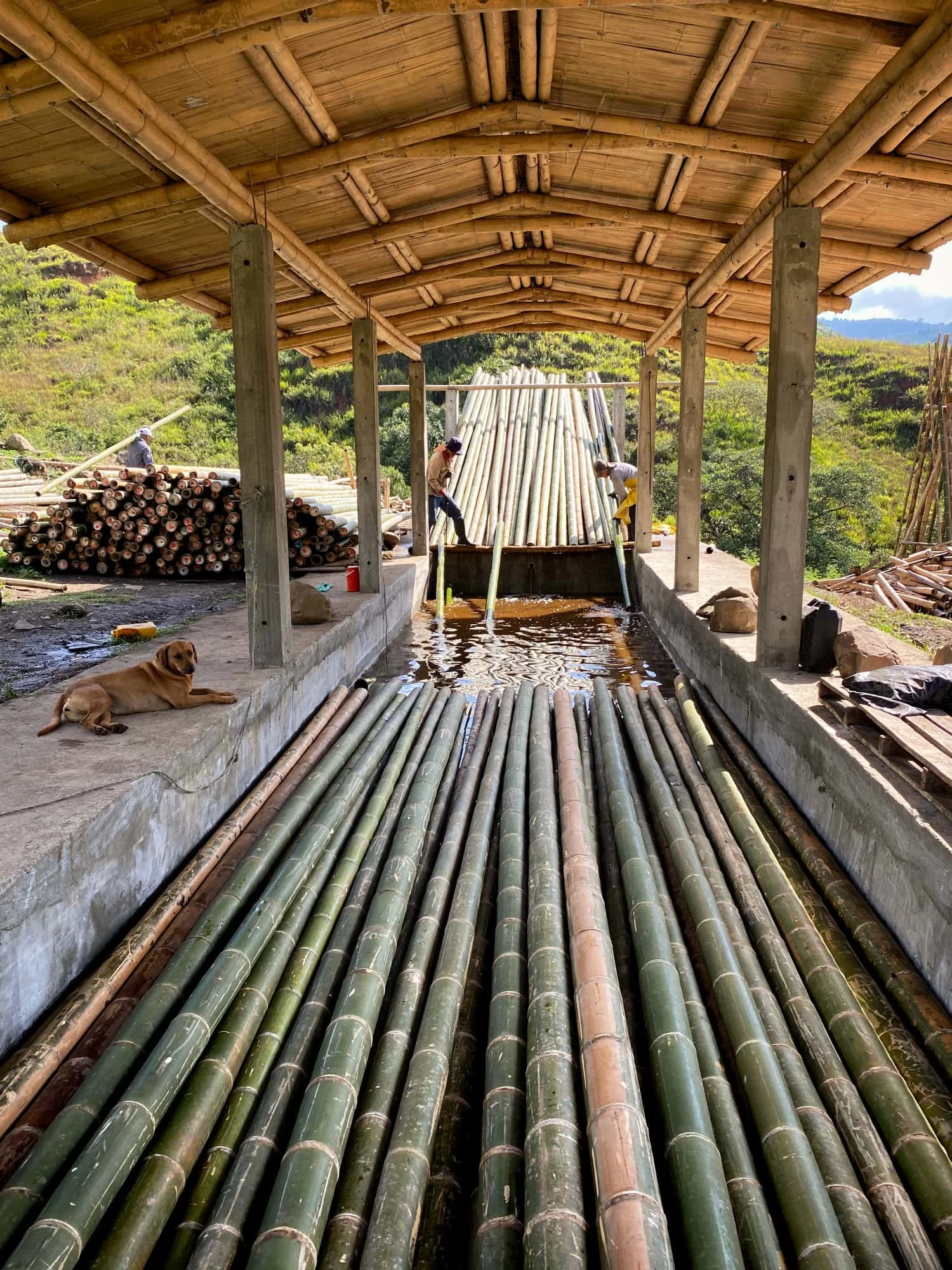
The preservation of bamboo is extremely important for the durability of the poles. We use a non-toxic boron solution which is colorless and dissolves in hot water.
Our 13 m treatment tank is equipped with a heating system that reduces the normal processing time from 4 days to only 8 hours. High temperatures also expand the bamboo fibers allowing the natural sabia to exit (due to osmotic pressure) and the solution to enter and maintain at a higher concentration, therefore guaranteeing the immunization.
The method of soaking / diffusion is ideal when Guadua poles are used for construction or further industrial processing. This treatment also allows the bamboo poles to dry faster compared to the Boucherie (sap-replacement) method.
Boron also acts as an excellent fire retardant; therefore, all of our bamboo poles have a certain degree of protection against fire compared to non-treated bamboo.
Sun Bleaching Bamboo
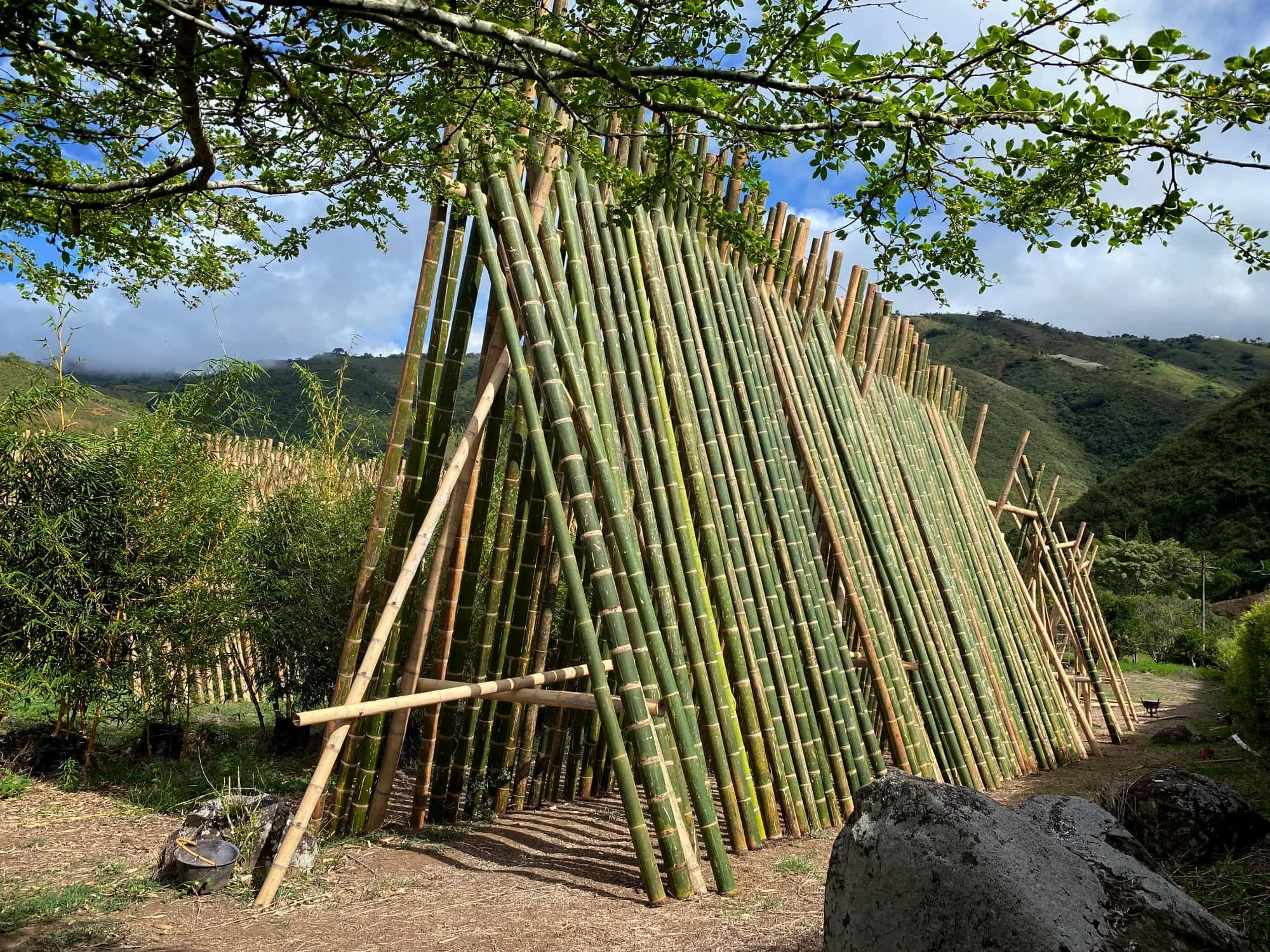
Following the treatment process, our bamboo poles undergo a sun-bleaching procedure by being exposed to open air for a period ranging from 2 to 4 weeks. In order to prevent cracking and to ensure consistent drying, the poles are rotated every 1 to 2 days.
The purpose of the sun-bleaching method is to remove the presence of chlorophyll in the outer layer of the bamboo poles. This process guarantees that the poles acquire a pleasant, uniform beige color, which is most preferred as a construction material. Moreover, this uniform color makes it easier to apply stains or paints, if required.
Washing Bamboo
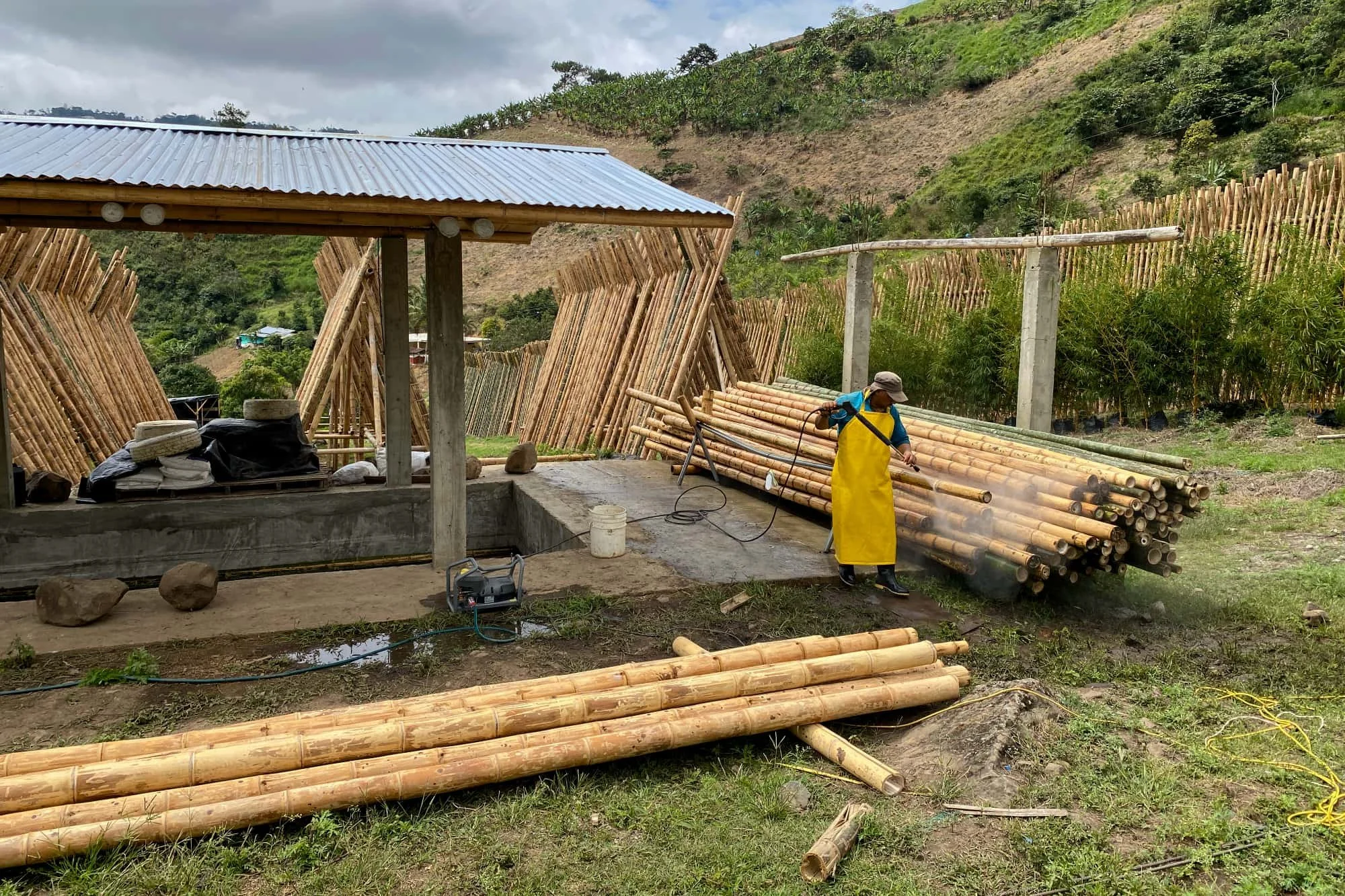
All mosses and surface stains are cleaned off with a high pressure washer, and later each node is cleaned individually by hand with a steel brush.
Cutting Bamboo
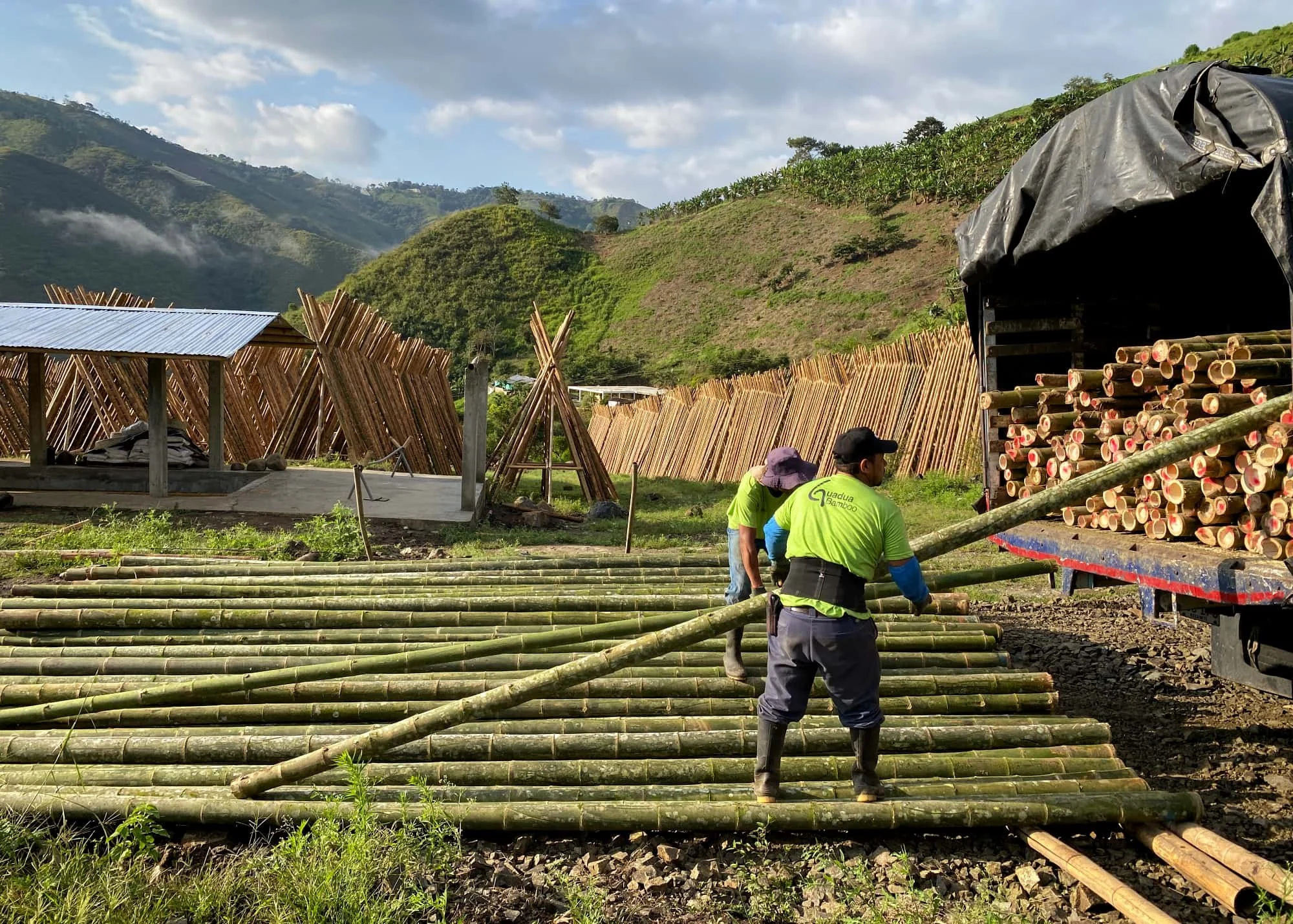
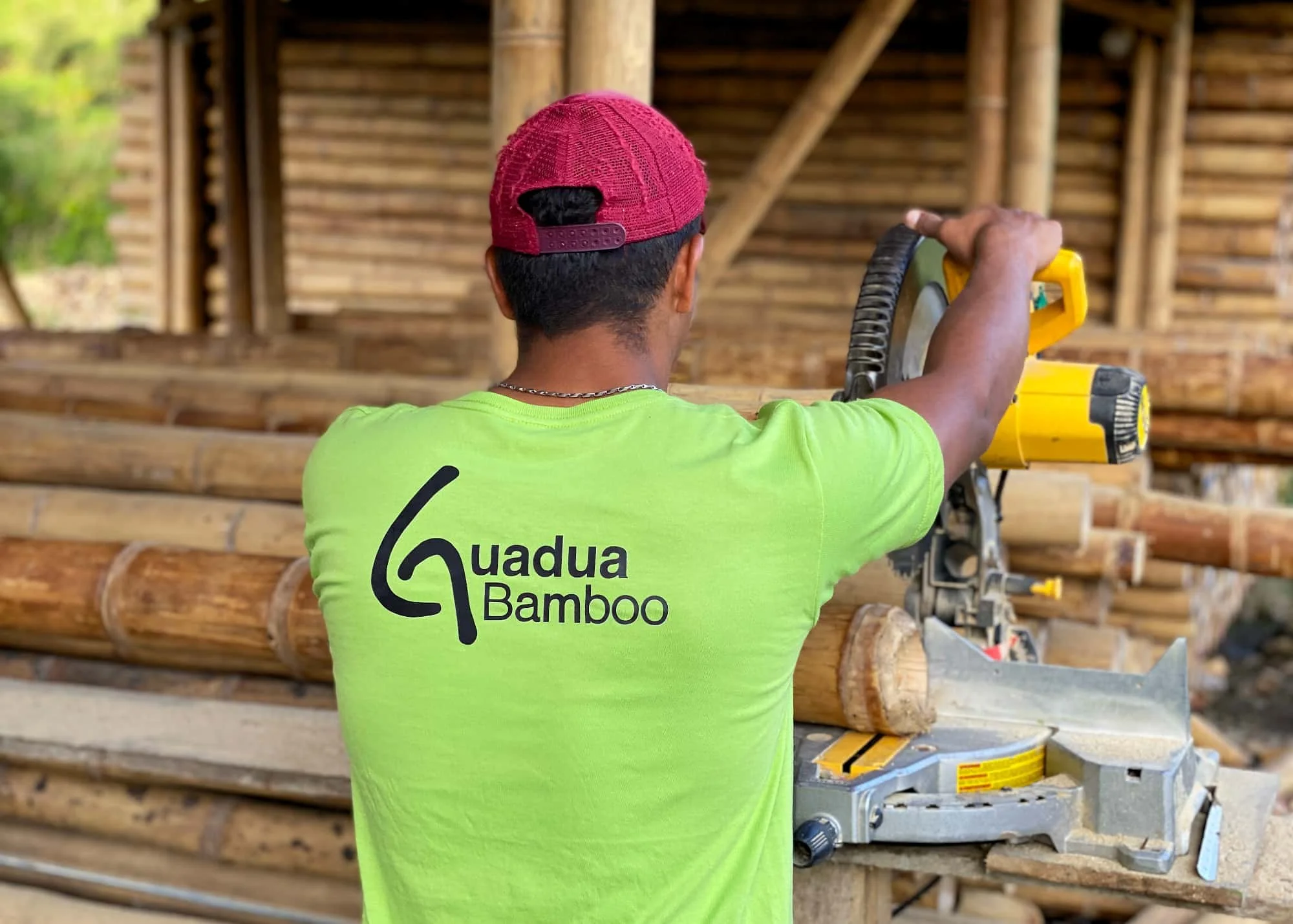
We cut all our bamboo poles to a standard 6 meter length. This length is strategically chosen, as it allows us to make the most efficient use of our shipping methods. With the majority of our orders being transported in 40 ft containers, we are able to fit two rows of these 6-meter poles. By optimizing the available space within the container, we effectively minimize the cost of shipping for our customers.
To achieve this desired length, we use two circular saws that are positioned at a fixed distance. This setup enables us to precisely cut each bamboo pole right after the node (or as close as possible). The inclusion of nodes at the ends of the poles is a deliberate choice. It serves as a protective measure during transport, preventing any potential damages that may arise from the weight of the stacked poles. Hollow ends, if present, are at risk of becoming crushed or cracked, but by incorporating nodes, we ensure the integrity of our bamboo poles throughout their journey.
Storage & Seasoning
Drying bamboo poles requires more time than wood of similar density due to its unique composition and structure of thick culm walls and dense nodes. Bamboo is a natural hygroscopic material, composed of long fibers embedded in a lignin matrix, which allows it to absorb and release moisture from the surrounding air.
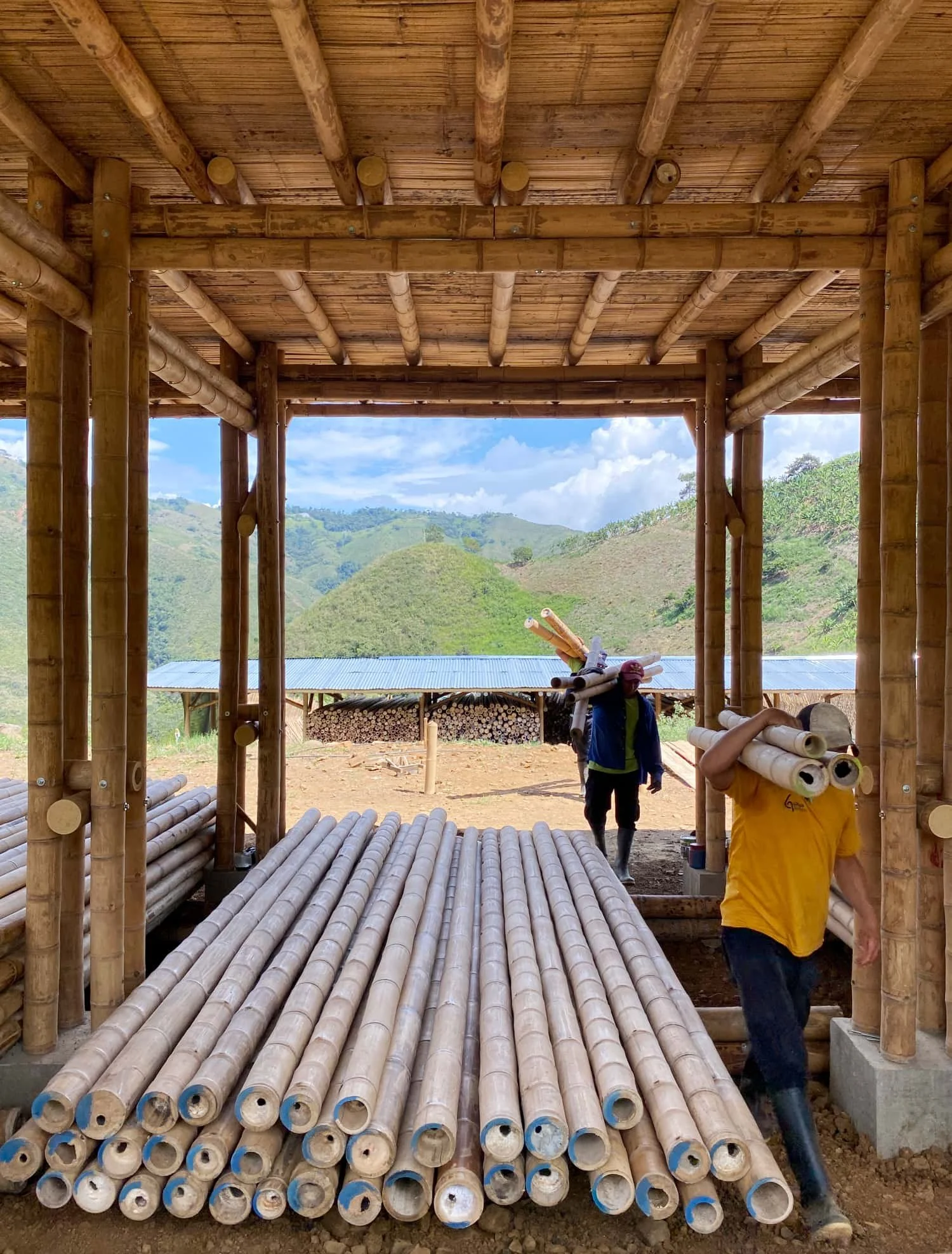
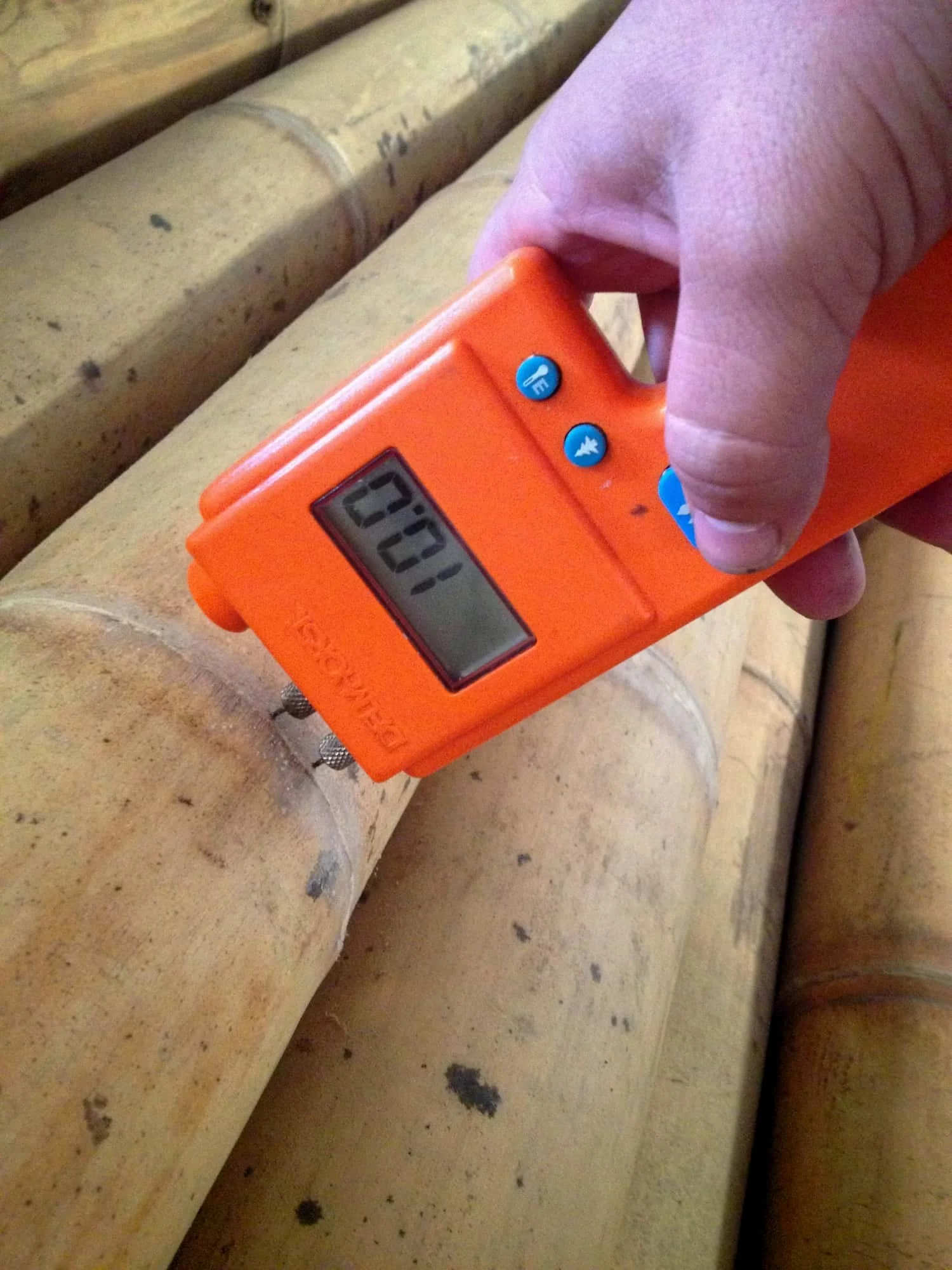
As a result, the drying process for bamboo involves stacking the poles horizontally on raised beds in a well ventilated and covered area. The seasoning process requires on average 4 months until a moisture content between 15-18% is achieved.
Properly dried bamboo poles become more stable, lighter, and less prone to cracking, ensuring their longevity and structural integrity when used in a range of projects. Well-dried guadua bamboo poles are not only aesthetically appealing but also enhanced their strength, making them an ideal choice for sustainable and eco-friendly construction.
Our factory currently counts 16 modules of which 12 modules are permanently reserved to store inventory for export. This is the equivalent of 6 x 40 ft containers.
Color Coding
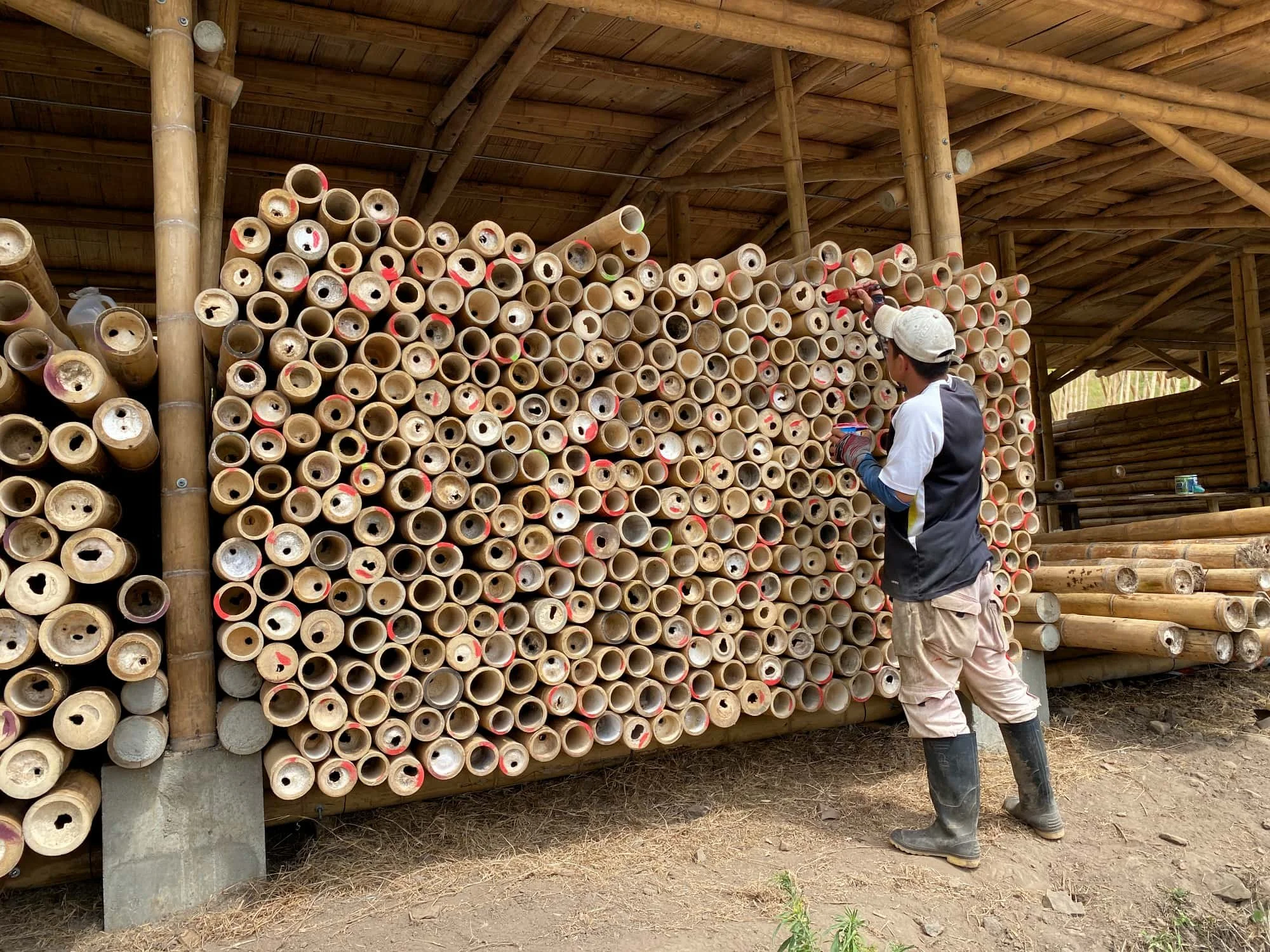
All our bamboo poles are color coded by diameter class. This allows our customers to efficiently manage and organize their stock upon unloading their container at the destination.
To determine the classification, we measure the diameter of each pole at the base, which is the widest end. For instance, our poles painted in red fall within the diameter range of 9 to 11 cm at the base.
A natural characteristic of bamboo is that they taper from one end to the other. Guadua Bamboo poles, however, are much less conically shaped than most other bamboo species. The average taper of our poles is approximately 2 cm over a 6 m length. So if the diameter of a 6 m long pole is 10 cm at the base, than the diameter at the opposite end will be around 8 cm.
Quality Statement
- Species: Guadua angustifolia
- Origin: Colombia
- Age: 4-5 years
- Part of the culm: Base (thick walled and short internodes)
- Cut: max. 20 cm after end nodes
- Treatment: 5% disodium octaborate tetrahydrate
- Fire resistance: EN 1350-1: Class ± D-s1
- Fissures: None to minimal splits
- Straightness: max. 1 slight curve per pole
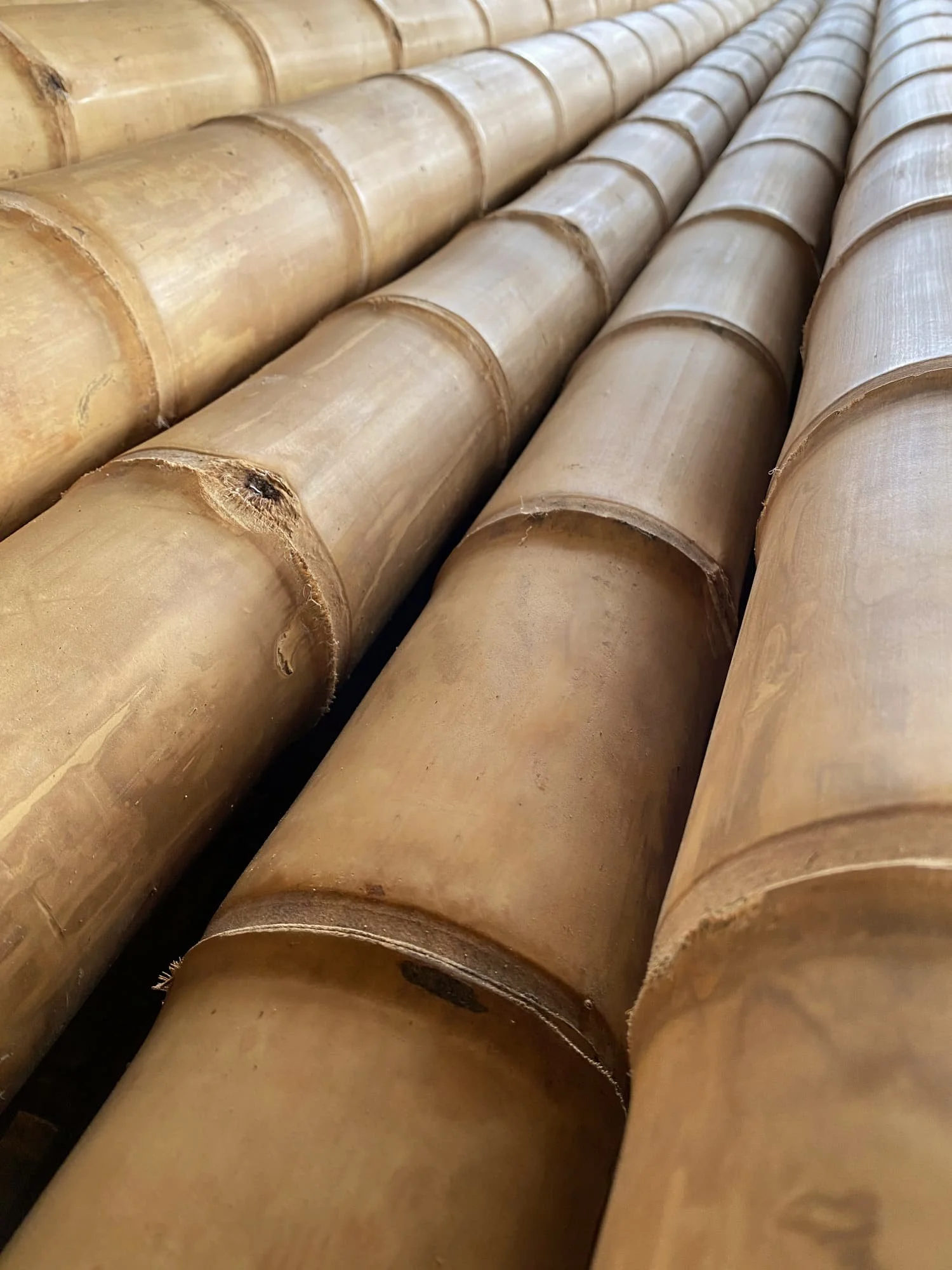
- Color: Beige / light brown, occasionally with black spots
- Drying: Sun bleached and air dried
- Moisture content: approx. 15-18% (at the time of loading in Colombia)
- Estimated durability indoor: min. 50 years
- Estimated durability outdoor: 15 years (if no direct soil contact, and regular application of UV and water repellent top coating)
- Density: 669 kg/m3 at MC: 11.2%
- Strength (Class C35): MOE: 17204 N/mm2 – MOR: 77.92 N/mm2
International Shipping
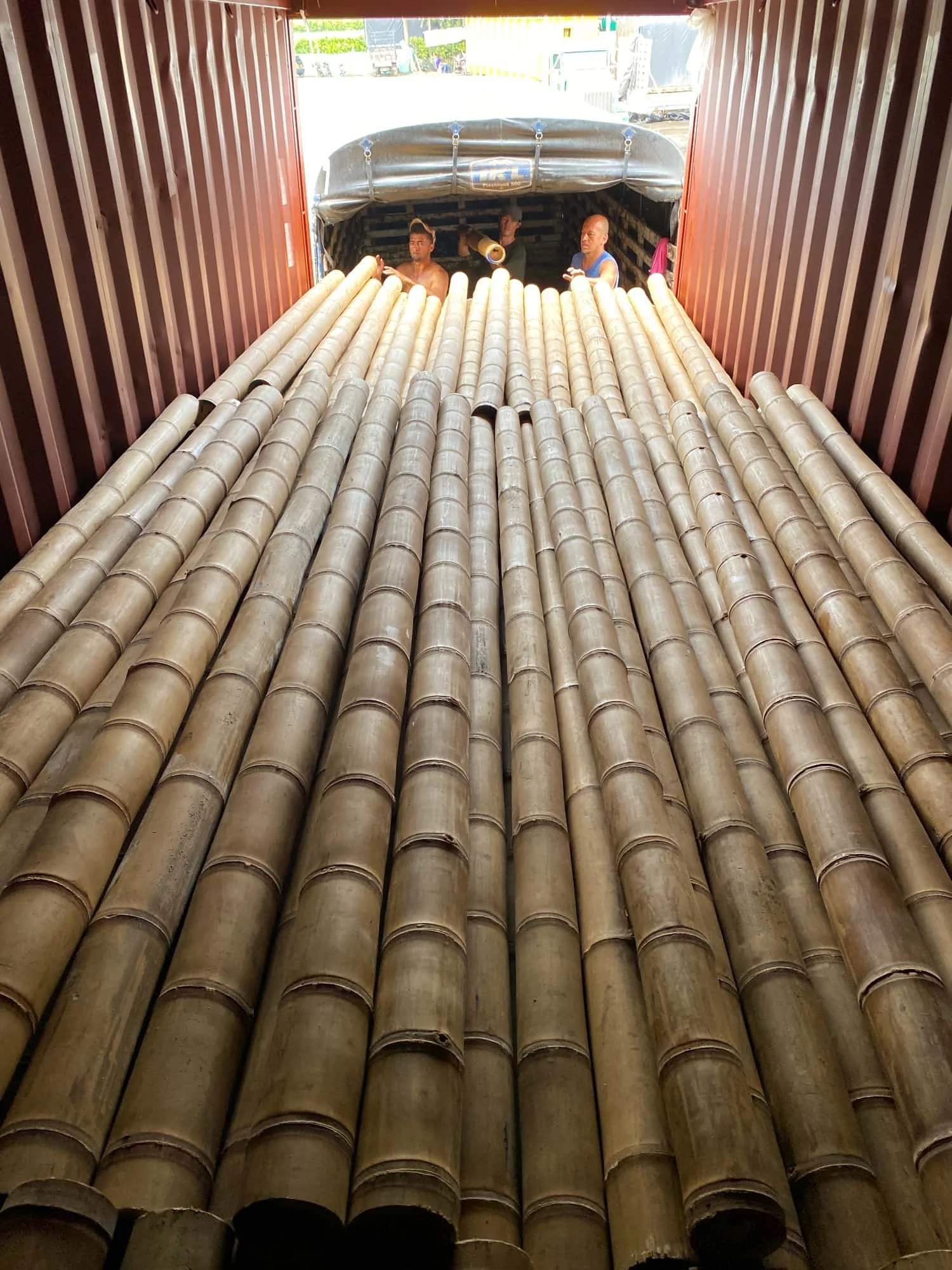
We ship our Guadua bamboo poles worldwide by either 20ft or 40ft containers, we do not export less than a full container load. Smaller quantities can be ordered directly from one of our certified distributors.
The standard length of our bamboo poles is 6 m (or 5,88 m in case of a 20ft container). Below we have compiled a chart to give you an idea of the approximate capacity of a container according to the diameter class of the bamboo poles.
Of course we can mix different diameters and length into a container. Use or special calculator or feel free to contact us for a detailed calculation and quote based on your specific needs.
| Diameter | Length | Qty (20ft) | Qty (40ft) |
|---|---|---|---|
| 7–9 cm | 6 m | 700 | 1610 |
| 9–11 cm | 6 m | 485 | 1120 |
| 11–13 cm | 6 m | 355 | 820 |
| 13–15 cm | 6 m | 270 | 630 |
Our Certification
We are often asked if our bamboo poles in Colombia are FSC certified, the answer is NO.
First and foremost, the FSC (Forest Stewardship Council) certification is primarily designed for timber-based forest products. While it is true that FSC does offer certification for some bamboo products, it is not particularly well-suited to bamboo cultivation in Colombia.
The Colombian government has established a rigorous certification system for bamboo production. This system ensures that bamboo is harvested responsibly, respecting ecological and socioeconomic principles. The certification process involves a thorough analysis of the bamboo forests prior to harvesting and includes strict audits and inspections of all aspects of the harvesting and treatment process, such as environmental impact, labor laws, conservation efforts and the needs of local communities.



Adding FSC certifications would only add unnecessary costs and redundant paperwork that would not contribute to the sustainability or quality of the product. Therefore, we focus on promoting the responsible and sustainable harvest of bamboo in Colombia through the existing certification process. Our bamboo poles are guaranteed to be of high quality, sustainably-sourced and socially responsible!
Frequently Asked Questions About Guadua Bamboo Poles
-
Can Guadua bamboo poles be used for structural construction?
Yes. Guadua angustifolia is officially recognized as a structural building material under the Colombian building code NSR-10. It is used in bridges, housing, schools, hotels, and large architectural projects worldwide. Our poles meet the material quality requirements defined in NSR-10.
-
What diameter classes and lengths do you stock?
We permanently stock 7–9 cm, 9–11 cm, 11–13 cm, and 13–15 cm poles in 6 m lengths. Smaller diameters are available on request. Custom lengths are also available.
-
What grade are your standard bamboo poles for export?
All poles meet Grade A of the Guadua Bamboo® Grading Standard as a minimum. This covers maturity, wall thickness, curvature, taper, fissures, and moisture content. Grade A+ is available on request for projects requiring tighter tolerances.
-
What preservation treatment do you use?
We treat all poles with 5% disodium octaborate tetrahydrate (boron), applied via immersion in our 13 m treatment tank. The process follows NTC 5301. Boron is non-toxic, colorless, and also provides a degree of fire retardancy.
-
How long do your treated bamboo poles last?
Properly installed and maintained Guadua poles treated with our boron solution have a minimum service life of 50+ years indoors. For outdoor use without direct soil contact and with regular UV protection applied, expect a minimum of 15 years. For maximum durability in any application, bamboo should always be protected by design: covered from direct rain, elevated from the ground, and shielded from prolonged sun exposure.
-
What moisture content do the bamboo poles have at the time of shipment?
Approximately 14–16% at the time of container loading in Colombia. All poles are sun-bleached and air-dried for a minimum of 4 months before shipment.
-
Why are the bamboo poles color coded?
Each diameter class is painted a different color at the base end, allowing you to quickly sort and identify poles when unloading at your destination.
-
Are your bamboo poles FSC certified?
No, and deliberately so. Colombian law requires bamboo producers to hold certification from the regional environmental corporations (CVC in our case). This system is more specific to bamboo than FSC, which was designed for timber. Every shipment is traceable and fully compliant with Colombian export regulations.
-
Do you provide a phytosanitary certificate?
Yes, we can provide a phytosanitary certificate issued by ICA (Instituto Colombiano Agropecuario) on request. Note that most destination countries, do not require a phytosanitary certificate for dried and treated bamboo poles as it is not a live plant material.
-
How much do Guadua bamboo poles cost?
Wholesale pricing depends on diameter class, volume, and destination port. For a direct quote, fill in our contact form and we will respond within 24 hours. If you are sourcing regularly or in early project planning, request member access for instant access to our real-time FOB pricing and Container Load Calculator.
-
What is the minimum order quantity?
We export full container loads only, either 20ft or 40ft FOB Buenaventura. Smaller quantities are available through our certified distributors. Contact us for a referral.
-
Can you mix diameters and lengths in one container?
Yes. You can mix different diameter classes, lengths, and products in one container, including poles, slats, and flattened mats. Use our Container Load Calculator to estimate quantities, or contact us for a custom calculation based on your specific mix.
-
What is the lead time for an export container?
We maintain a large permanent inventory of standard Grade A poles in our most common diameter classes, which allows us to load containers within 2 to 4 weeks from order confirmation. Custom diameter selections, Grade A+ orders, or non-standard lengths require additional time. Contact us with your specification for an accurate timeline.
-
What are the shipping terms?
We quote FOB Buenaventura, Colombia. We work with freight forwarders and can assist with connecting you to reliable shipping agents for the main destination ports.
-
How long does shipping take?
Transit times depend on destination. Europe typically 18 to 25 days. US East Coast 10 to 15 days. Asia 25 to 35 days. Your freight forwarder will confirm exact schedules based on available sailings.