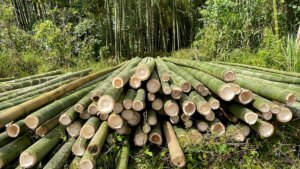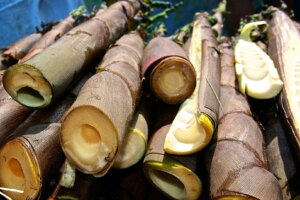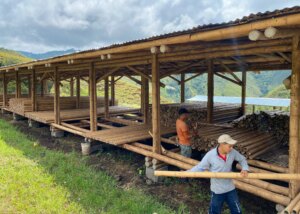

The largest bamboo species in the world include some of the most extraordinary organisms on Earth, with certain giants capable of reaching the height of a 15 story building. From the towering forests of Asia to the legendary Guadua groves of Latin America, these plants are the fastest growing and most versatile plants in the natural world.
In this article, we explore the 20 largest bamboo species ever recorded, comparing their height, diameter, and unique characteristics. While a few Asian species surpass our native bamboo in sheer height, Colombia’s famous Guadua angustifolia still ranks among the top 5 largest on Earth. More importantly, it remains the world’s strongest structural bamboo, playing a vital role in sustainable construction, reforestation, and ecological restoration.
As part of our living collection and reforestation initiatives, we currently cultivate 10 of the species featured in this ranking, including the entire top 5 largest bamboos in the world. Below is the definitive list based on botanical records and international cultivation standards.
Top 5 Giant Bamboo Species
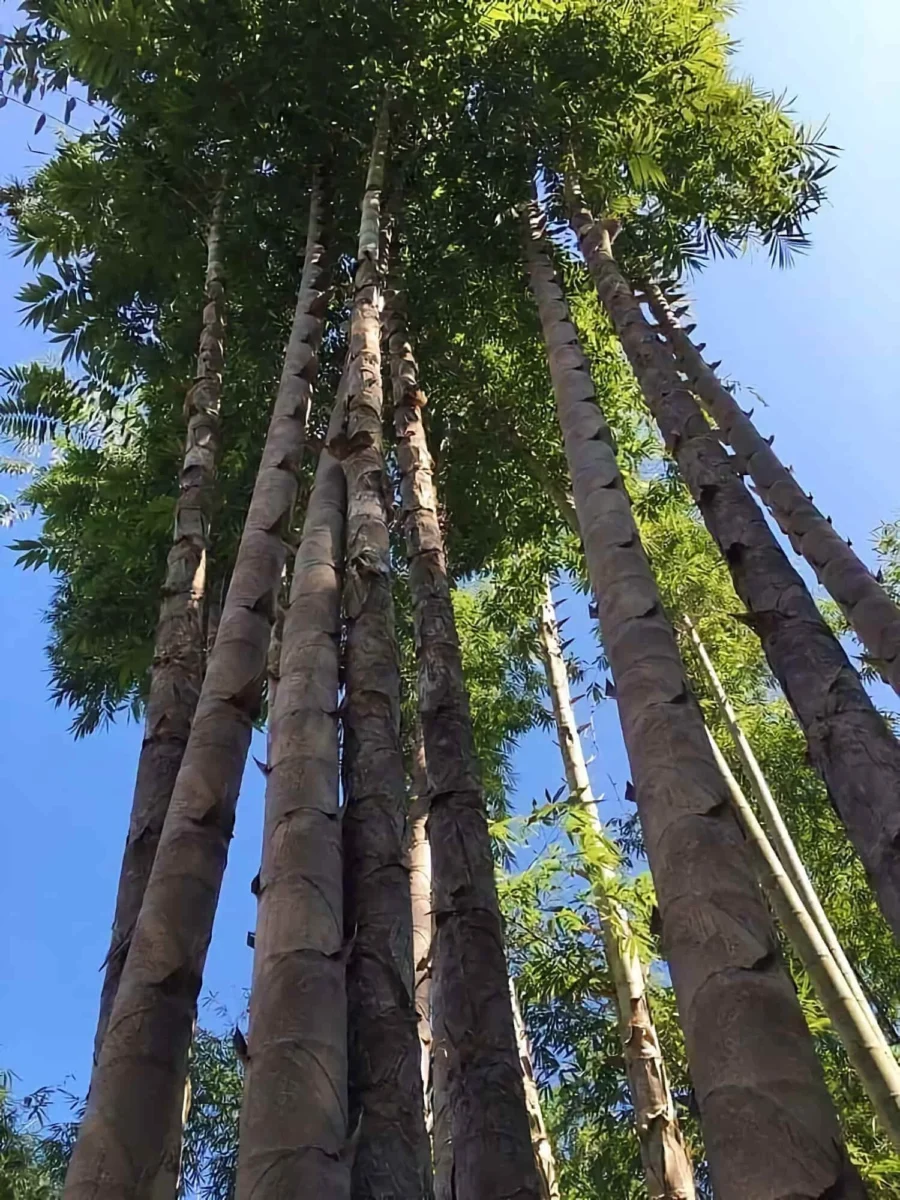
1. Dendrocalamus sinicus
(Giant Dragon Bamboo)
Maximum Height: 46 m (150 ft)
Maximum Diameter: 37 cm (14.5 in)
Origin: China / Laos
Dendrocalamus sinicus is the undisputed largest bamboo species in the world. This bamboo can reach the height of a 15 story building, with individual culms weighing up to 450 kg. It remained hidden in the remote jungles of Yunnan, China, until 1980. Traditionally, its massive internodes were used as water buckets and storage containers. Today, it is one of the most sought after bamboo species because it flowers only once every century. At Guadua Bamboo, we secured a small batch of these extremely rare seeds in 2020. This makes our farm one of the few places in the world and specifically in Latin America where this legendary species is being actively cultivated and preserved.
2. Dendrocalamus giganteus
(Giant Bamboo)
Maximum Height: 42 m (137 ft)
Maximum Diameter: 35 cm (13.7 in)
Origin: Southeast Asia
Dendrocalamus giganteus is a true symbol of tropical Asia. Under ideal conditions, it is capable of growing up to 45 cm in a single day, making it one of the fastest growing plants on Earth. This colossal bamboo forms immense forest like groves with culms reaching over 40 meters in height and up to 35 cm in diameter. In humid tropical climates, its dense canopy can significantly reduce surrounding temperatures by up to 8°C. Besides its traditional use in construction and even ship masts, its enormous edible shoots are widely consumed across Asia and can grow large enough to feed an entire family from a single harvest.
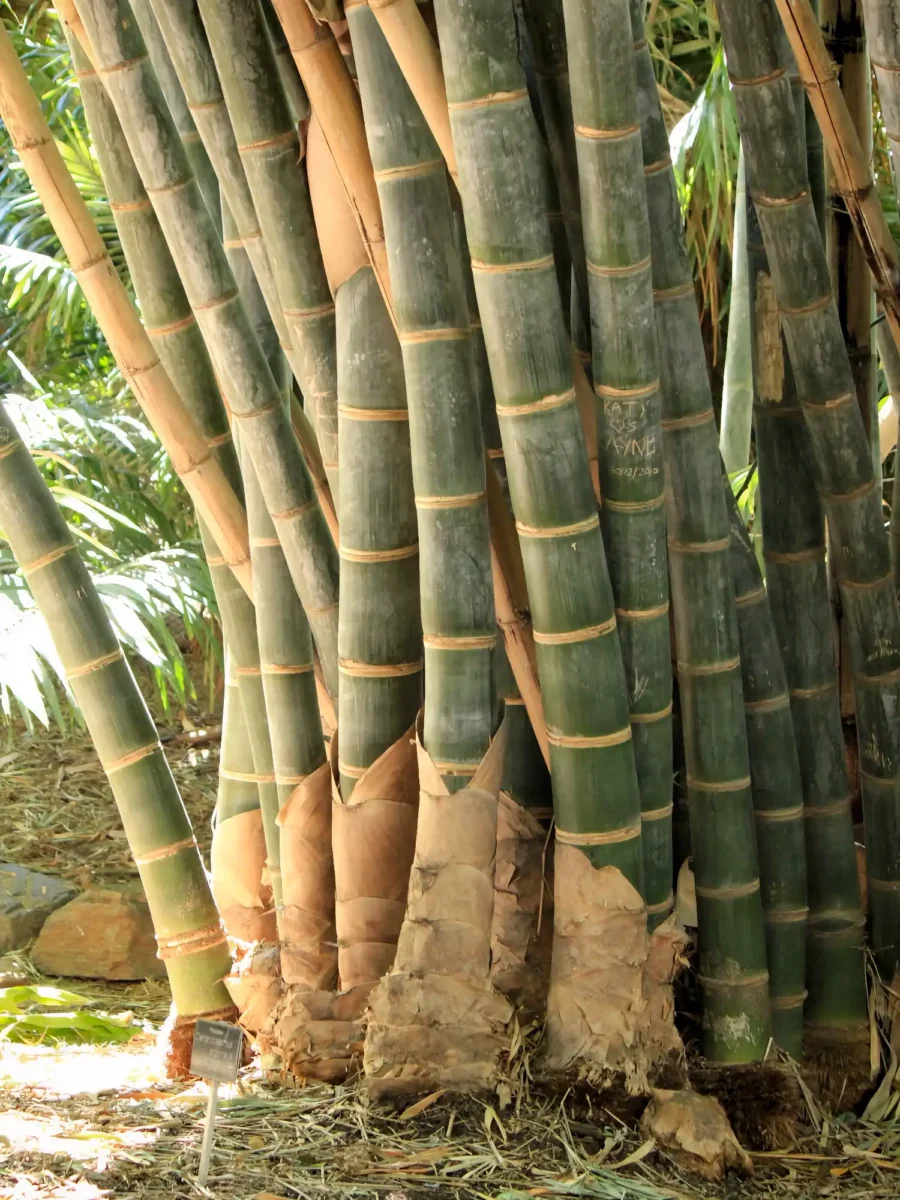
3. Dendrocalamus brandisii
(Velvet Leaf Bamboo)
Maximum Height: 36 m (118 ft)
Maximum Diameter: 30 cm (12 in)
Origin: South and Southeast Asia
Dendrocalamus brandisii is known for the softness of its young leaves and its elegant ash gray color. This impressive giant stands out for its remarkably straight culms and exceptionally thick walls, making it one of the strongest bamboo timbers for construction and luxury furniture. Thanks to its massive fiber volume, it is considered an exotic alternative that can directly compete with traditional hardwoods. In some regions, it is also known as “Teddy Bear Bamboo” because of the tiny white hairs covering its young leaves.
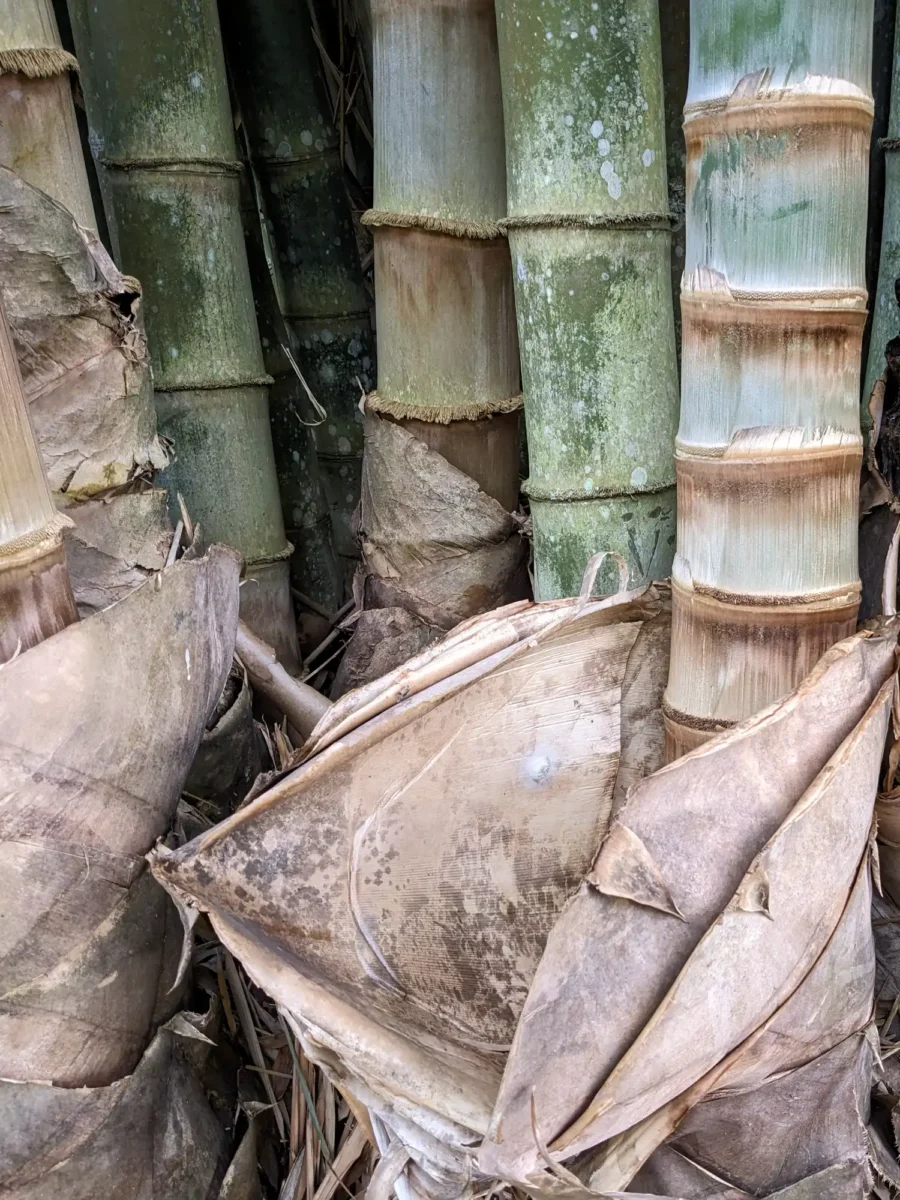
4. Dendrocalamus asper
(Rough Bamboo)
Maximum Height: 30 m (100 ft)
Maximum Diameter: 30 cm (12 in)
Origin: Southeast Asia
Dendrocalamus asper is often regarded as the great international rival of Guadua bamboo. This remarkable species is a true powerhouse, exceptionally strong, with thick walled culms ideal for heavy construction, houses, bridges, and engineered bamboo products. In some rural communities, its large upper internodes are even used as natural cooking containers, filled with rice, meat, and water before being placed directly over an open fire. Beyond its importance as one of the world’s premier structural bamboos, its edible shoots are also prized among the finest and sweetest for gourmet cuisine. Dendrocalamus asper ranks among the most versatile giant bamboo species on Earth.
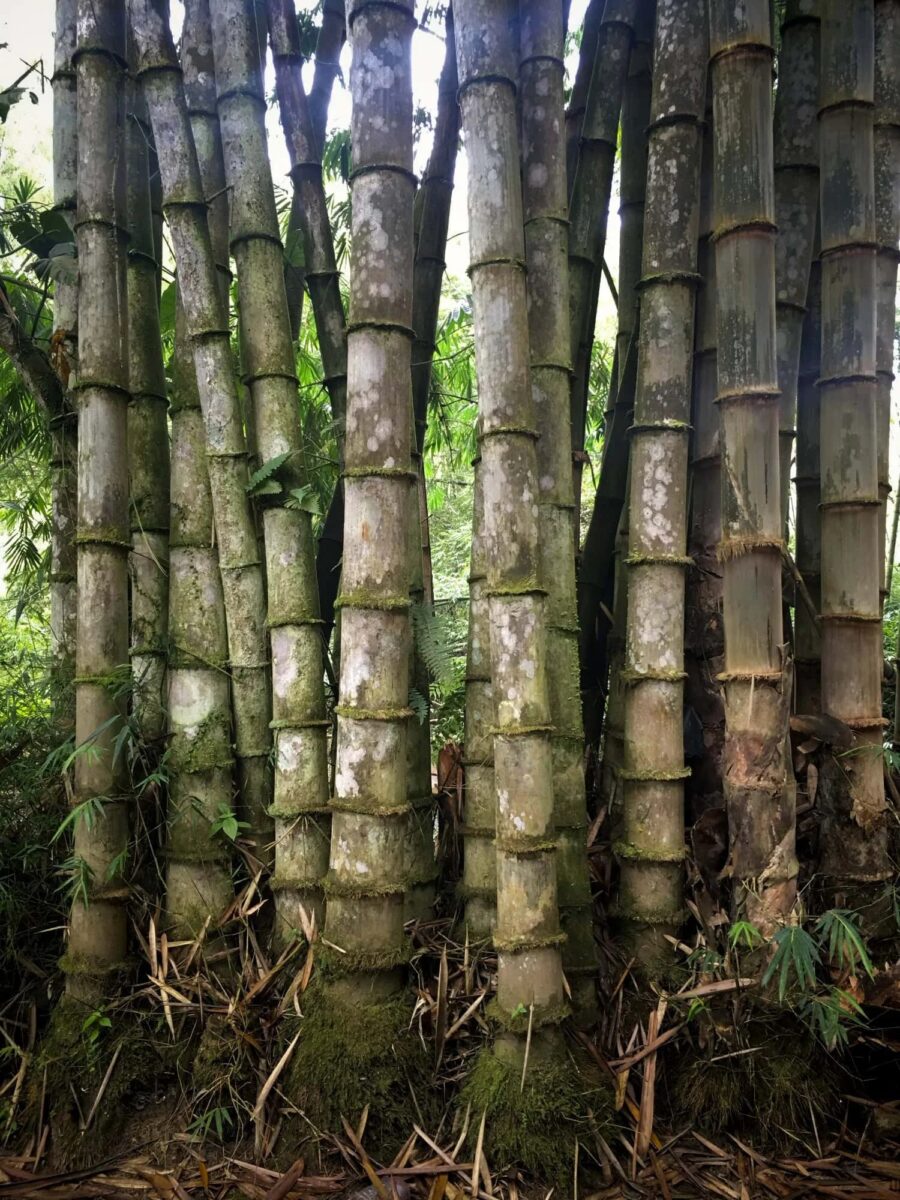
5. Guadua angustifolia
(Guadua Bamboo)
Maximum Height: 30 m (100 ft)
Maximum Diameter: 25 cm (10 in)
Origin: Colombia / Ecuador / Peru / Venezuela
Although several Asian bamboo species surpass Guadua angustifolia in height or diameter, Guadua is widely considered the strongest structural bamboo species in the world. Often referred to as the “vegetable steel” of the Americas, it has played a major role in both traditional and modern bamboo architecture throughout Latin America. Its exceptional strength to weight ratio, combined with its natural flexibility and extraordinary ability to absorb seismic energy, makes it one of the most valuable natural materials for earthquake resistant construction. Beyond its importance in sustainable architecture, Guadua forests provide major ecological benefits across tropical ecosystems.
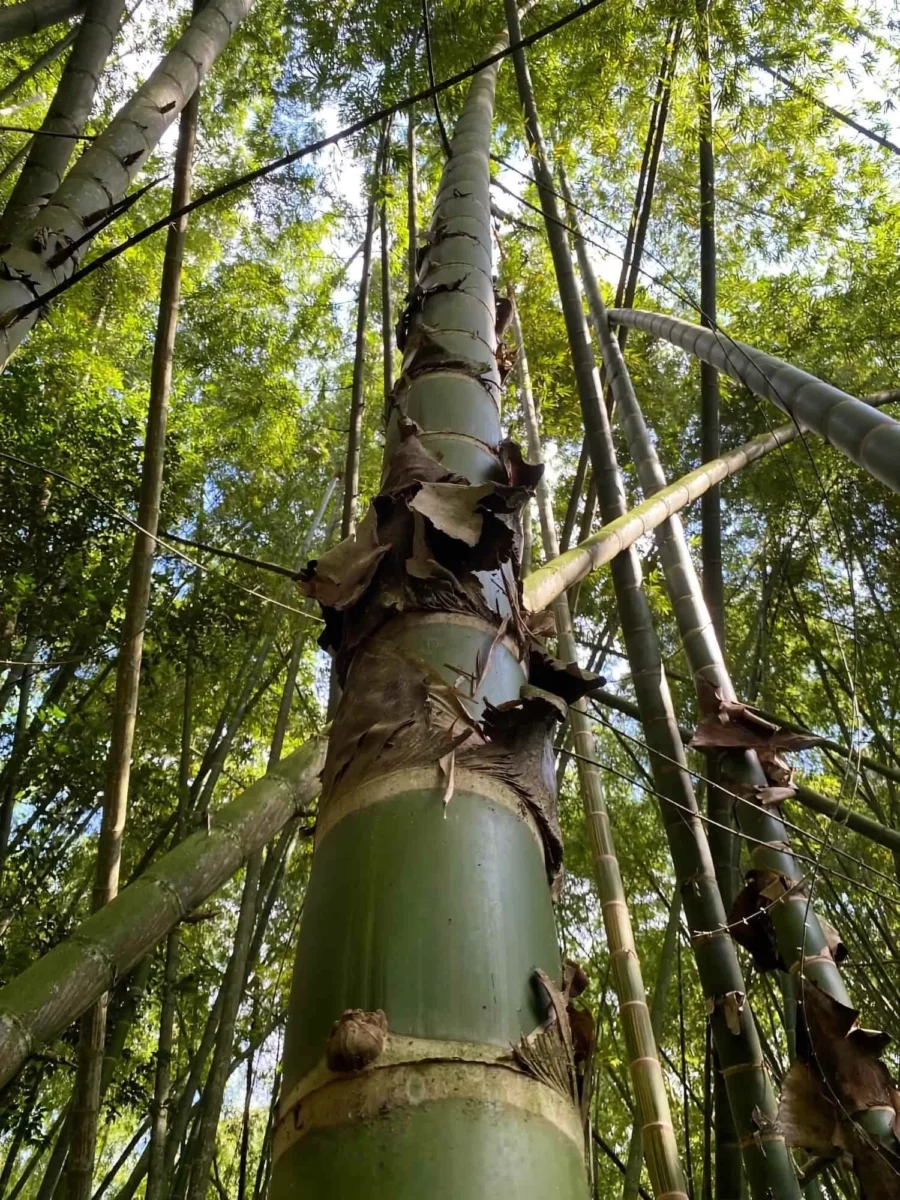
The 20 Largest Bamboo Species in the World
| Rank | Scientific Name | Max Height | Max Diameter |
|---|---|---|---|
| 1 | Dendrocalamus sinicus | 46 m | 37 cm |
| 2 | Dendrocalamus giganteus | 42 m | 35 cm |
| 3 | Dendrocalamus brandisii | 36 m | 30 cm |
| 4 | Dendrocalamus asper | 30 m | 30 cm |
| 5 | Guadua angustifolia | 30 m | 25 cm |
| 6 | Dendrocalamus yunnanicus | 30 m | 25 cm |
| 7 | Dendrocalamus latiflorus | 30 m | 24 cm |
| 8 | Dendrocalamus xishuangbannaensis | 30 m | 22 cm |
| 9 | Dendrocalamus copelandii | 30 m | 20 cm |
| 10 | Dendrocalamus detinens | 30 m | 20 cm |
| 11 | Dendrocalamus barbatus | 30 m | 20 cm |
| 12 | Dendrocalamus sikkimensis | 30 m | 20 cm |
| 13 | Dendrocalamus calostachyus | 30 m | 20 cm |
| 14 | Bambusa bambos | 30 m | 18 cm |
| 15 | Guadua chacoensis | 30 m | 18 cm |
| 16 | Bambusa balcooa | 30 m | 16 cm |
| 17 | Dendrocalamus messeri | 30 m | 15 cm |
| 18 | Guadua lynnclarkiae | 30 m | 15 cm |
| 19 | Phyllostachys edulis | 28 m | 20 cm |
| 20 | Guadua aculeata | 25 m | 25 cm |
Giant Bamboo Species of the Americas
The Guadua genus is the only bamboo group from the Americas capable of competing with the great Asian giants in both size and structural performance. While Asian species dominate the rankings in height and diameter, Guadua angustifolia stands out globally for its engineering properties and ecological importance.
Today, Guadua bamboo is increasingly recognized as one of the most promising renewable construction materials for the future, combining rapid growth, carbon capture, durability, and natural beauty.
Why Giant Bamboo Matters
Giant bamboo forests are more than botanical curiosities. They are powerful ecological systems capable of restoring degraded land, protecting watersheds, stabilizing soils, and capturing large amounts of atmospheric carbon.
Because bamboo grows extraordinarily fast and regenerates naturally after harvesting, it is considered one of the most sustainable renewable materials on Earth. Around the world, giant bamboo species are increasingly used in sustainable architecture, reforestation projects, agroforestry systems, furniture production, and ecological tourism.
As interest in regenerative agriculture and climate conscious construction continues to grow, giant bamboo may play an increasingly important role in the future of sustainable development.
Help Preserve Giant Bamboo Forests
Many of the bamboo species on this list remain little known outside their native regions, yet they play an enormous ecological role in protecting biodiversity and restoring tropical landscapes.
Through our Adopt a Bamboo reforestation program at Hacienda Guadua Bamboo in Colombia, supporters help us cultivate and preserve a living collection of giant bamboo species, including many featured in this ranking. By supporting bamboo conservation today, you help protect some of the fastest growing and most remarkable forests on Earth for future generations.
Our mission is to help preserve, cultivate, and showcase the extraordinary diversity of bamboo through conservation, education, reforestation, and sustainable land stewardship in Colombia.