

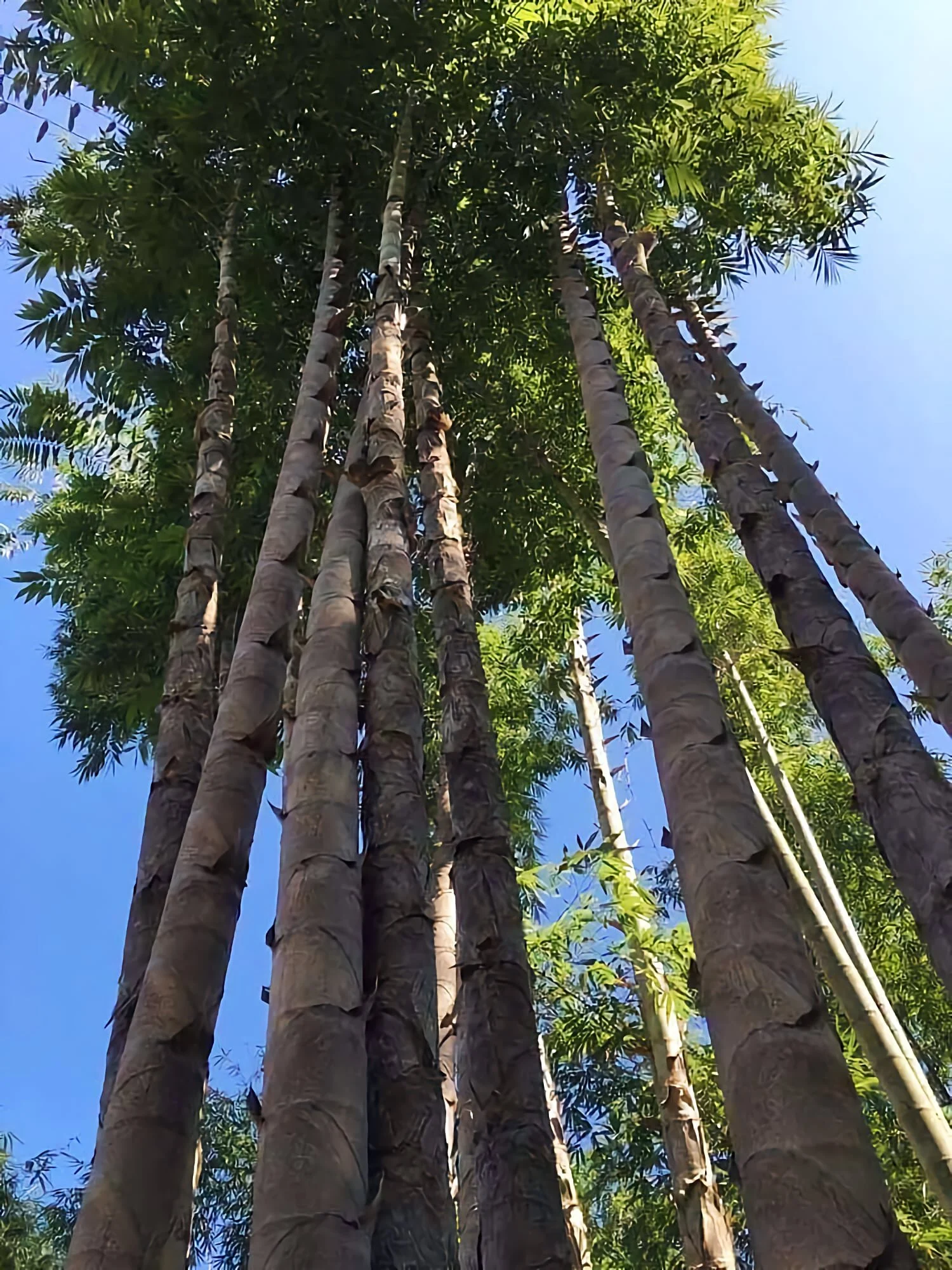
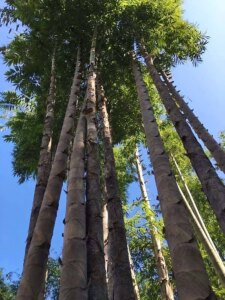
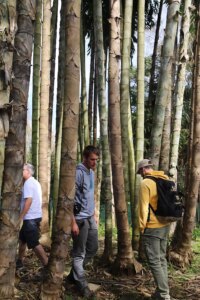
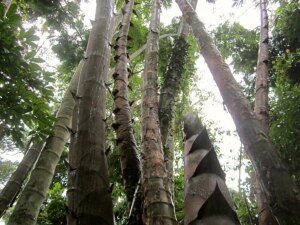
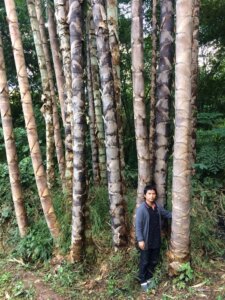
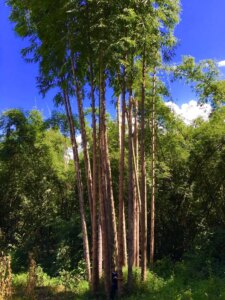
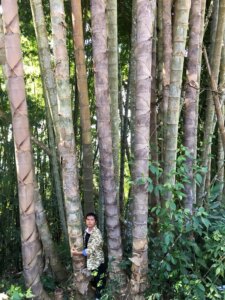
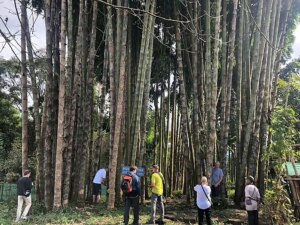
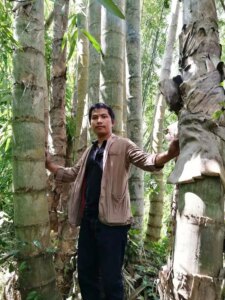
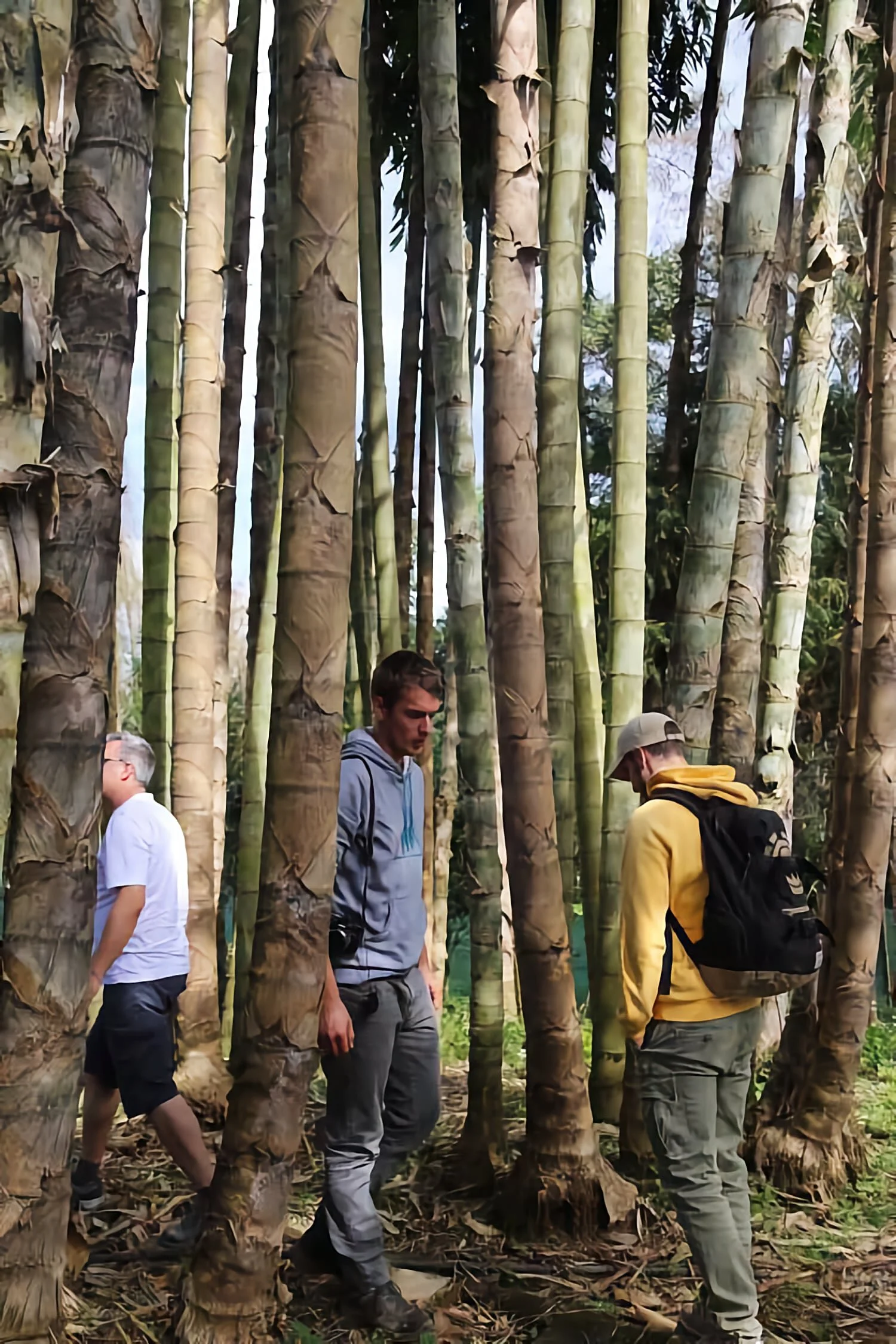
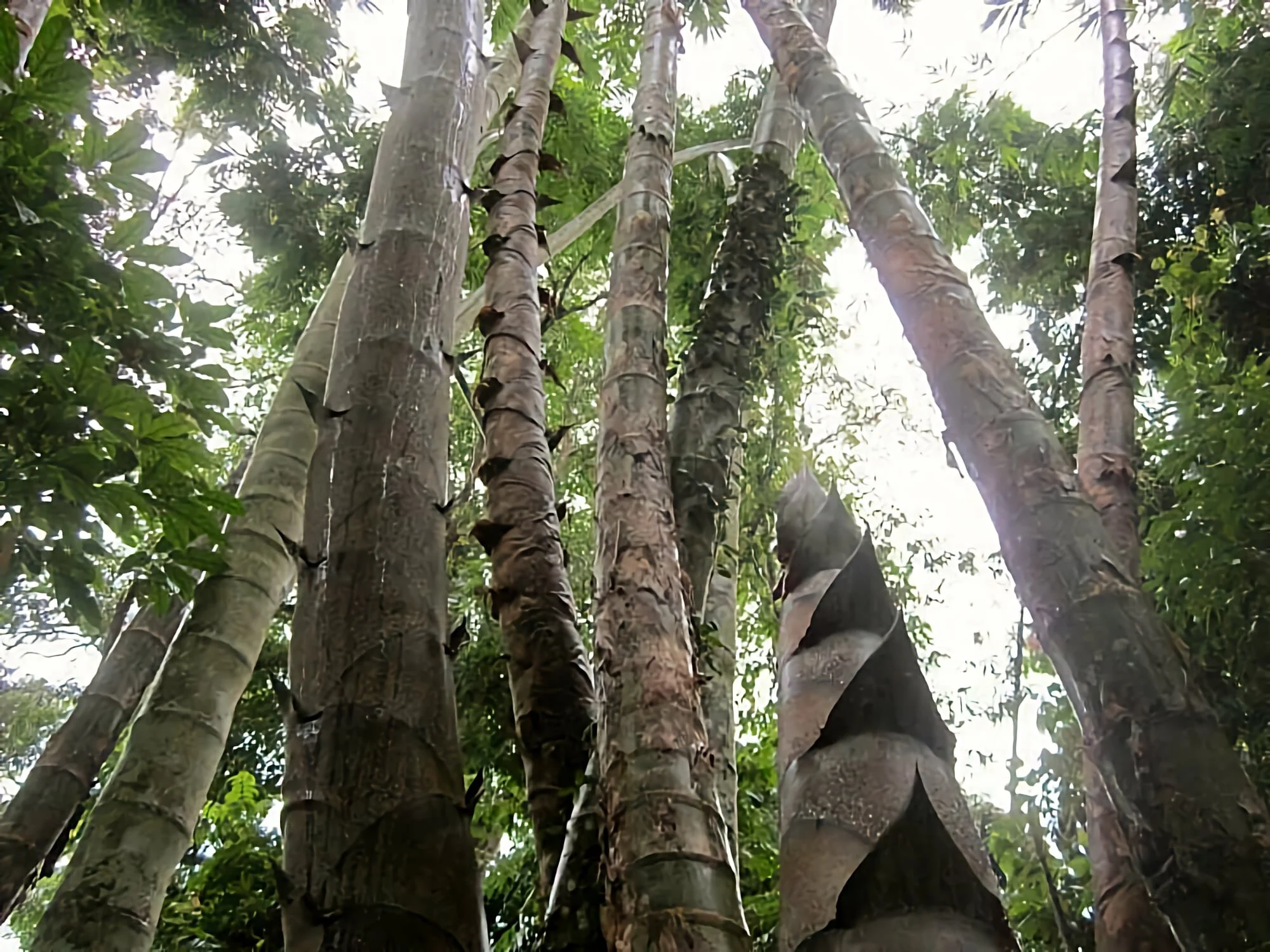
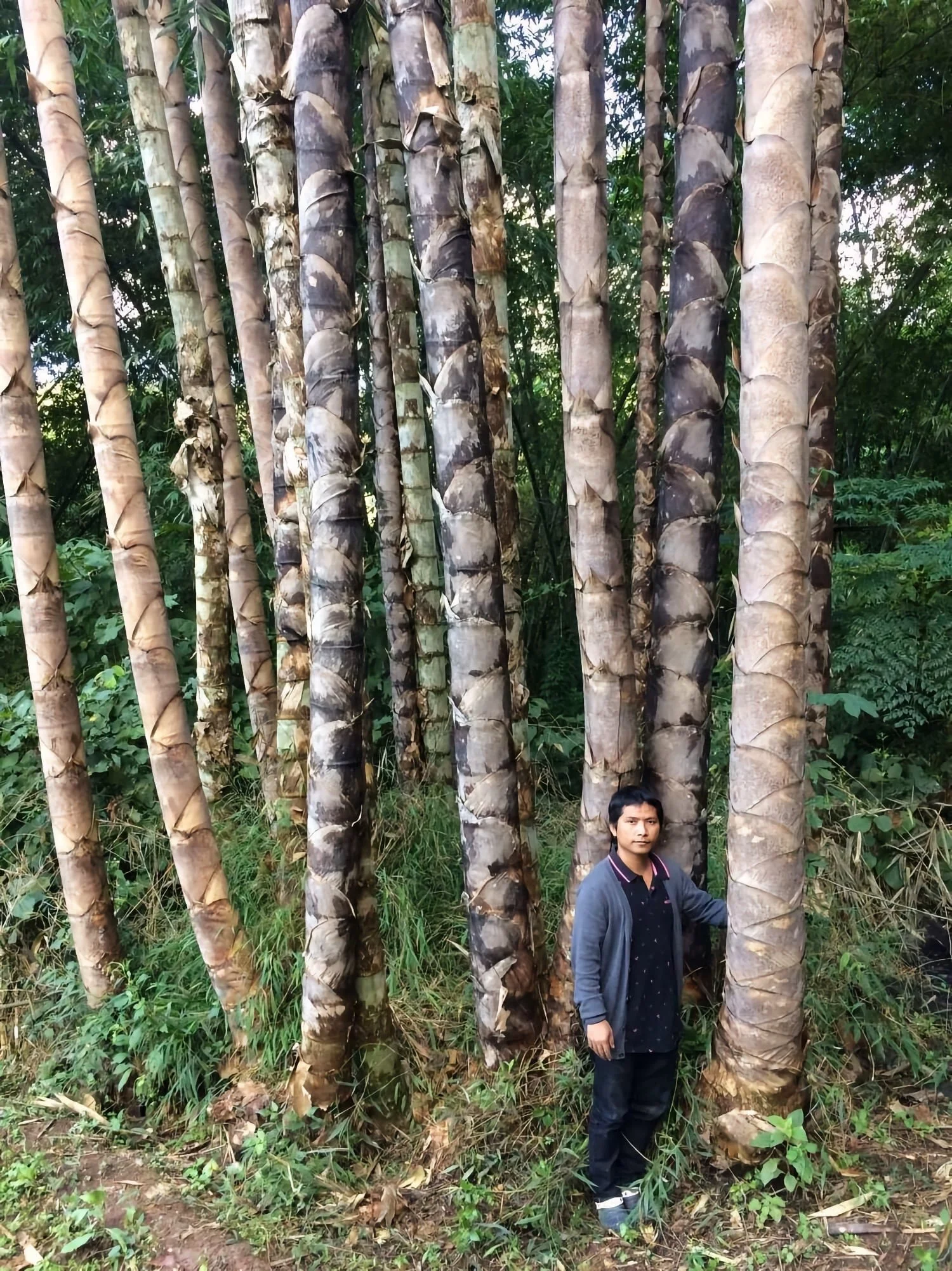
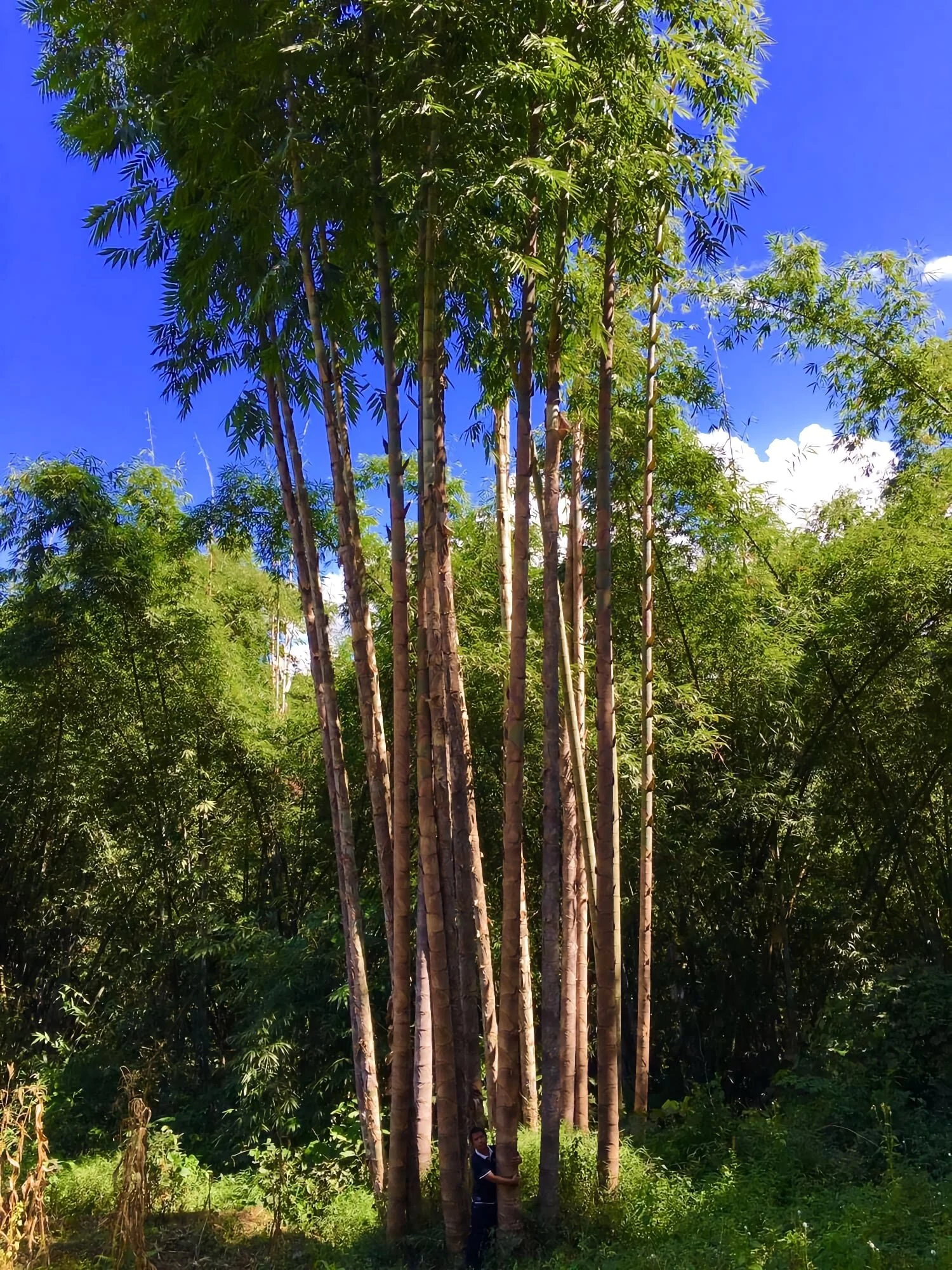
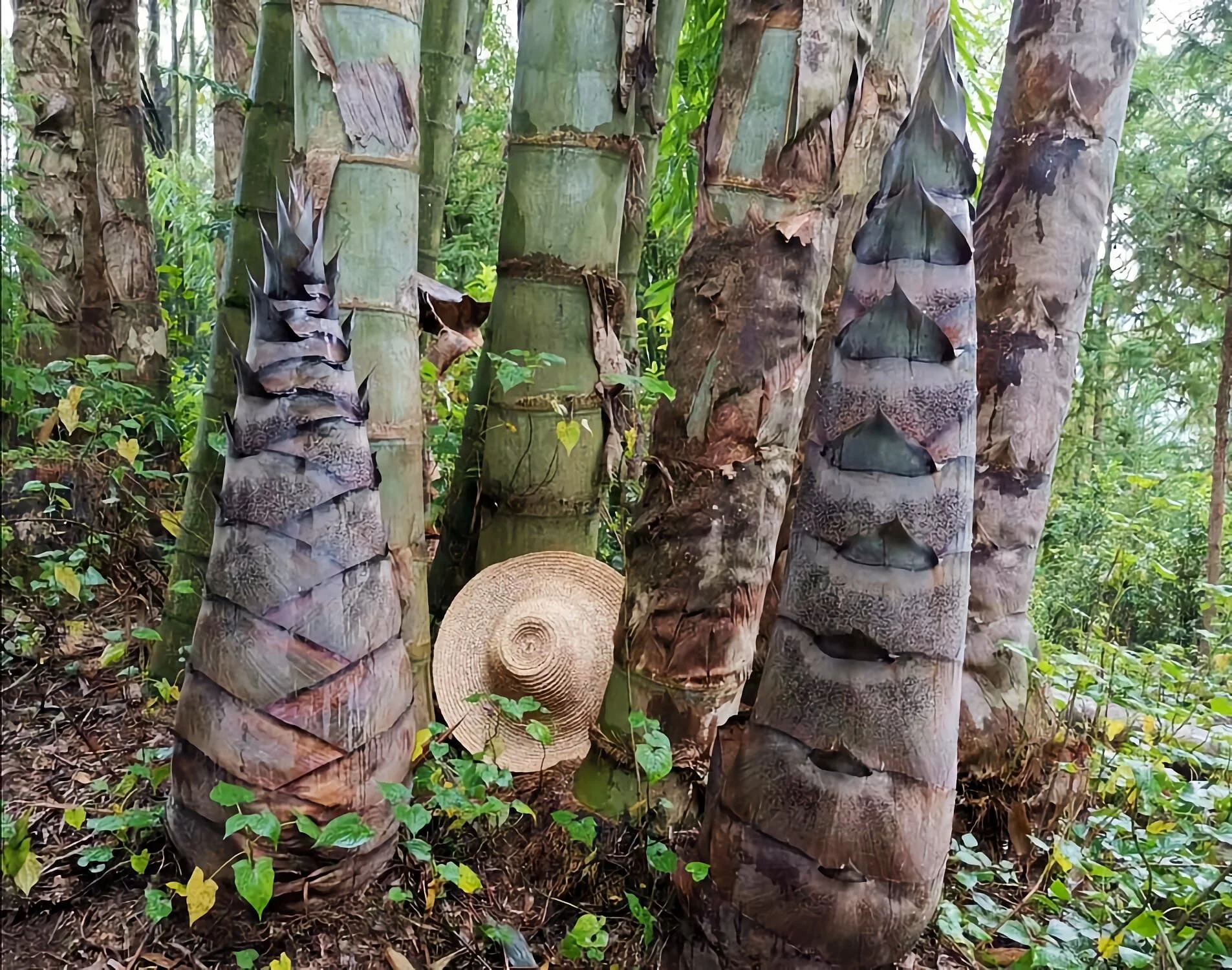
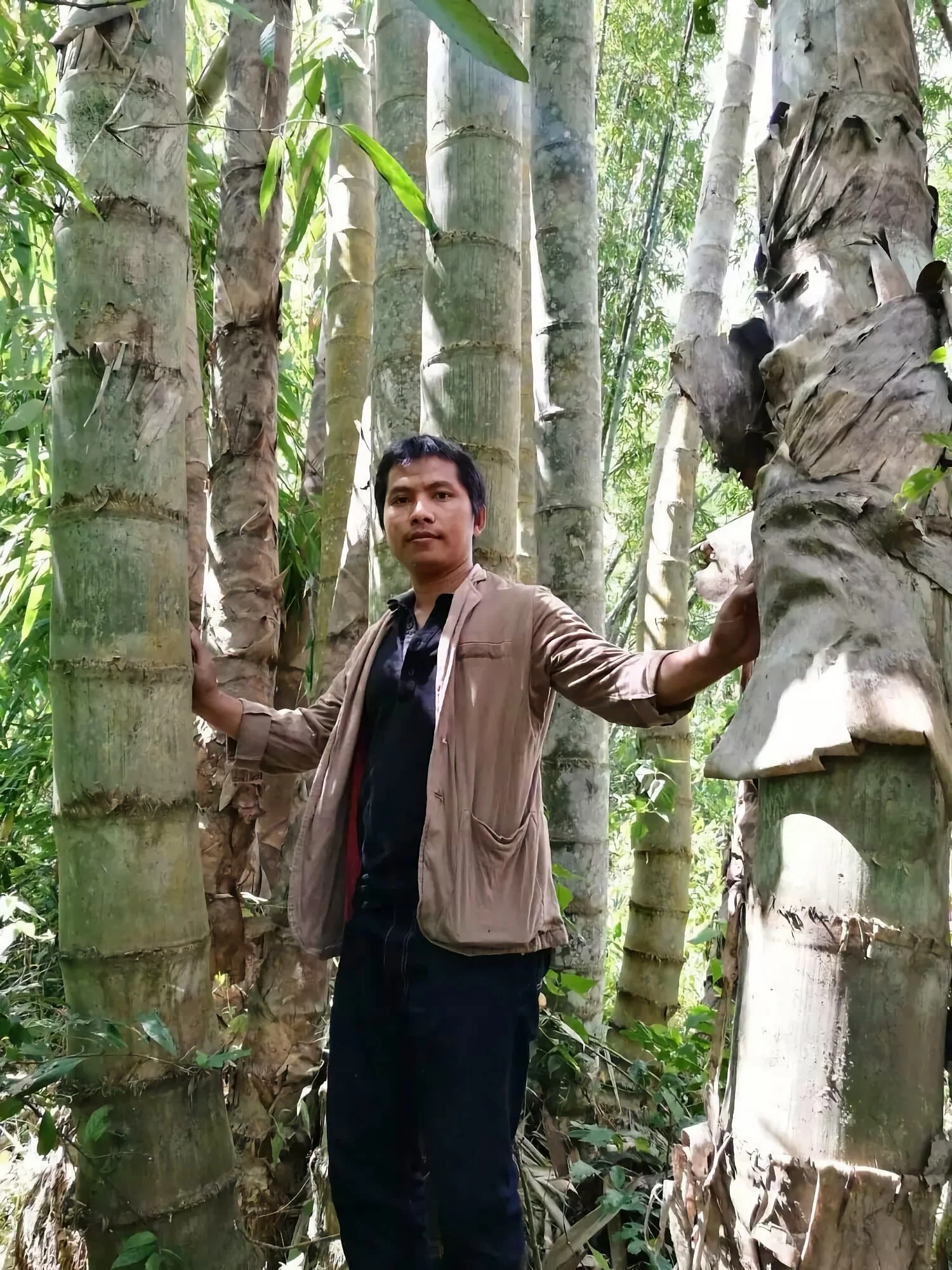
Dendrocalamus sinicus, also known as “Giant Dragon Bamboo”, is the largest bamboo in the world. It has the tallest and biggest culms of any known bamboo species which can reach up to 46 meters in height, and up to 37 cm in diameter.
This gigantic clumping bamboo is native to Laos and the Yunnan Province of China where it has long enjoyed great prominence. Its limited distribution, however, makes it a very rare species in other parts of the world. In fact, Dendrocalamus sinicus was only recently discovered by the outside world in 1982. Prior to that, it was unknown to science.
Dendrocalamus sinicus has excellent characteristics and great potential for extensive development. It is a bamboo species of high economic value with many applications in the furniture, construction, and paper and pulp industry.
| Attribute | Description |
|---|---|
| Scientific Name | Dendrocalamus sinicus |
| Synonyms | Sinocalamus sinicus |
| Common Names | Giant Dragon Bamboo |
| Family | Poaceae |
| Tribe | Bambuseae |
| Genus | Dendrocalamus |
| Height | 20 – 30 (46) m |
| Diameter | 20 – 30 (37) cm |
| Growth Habit | Dense Clumping |
| Climate | Tropical – Subtropical |
| Hardiness | -5°C |
| Edibility | ☆☆☆☆☆ (0 of 5) |
| Flowering Cycle | Sporadically |
| Origin | China, Laos |
| Uses | Construction, Furniture, Paper Pulp |
Rhizomes
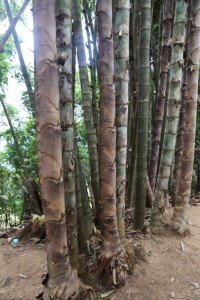
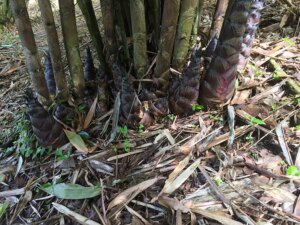
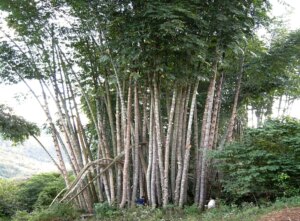
Dendrocalamus sinicus has short pachymorph rhizomes which means that it grows in densely tufted clumps.
Culms
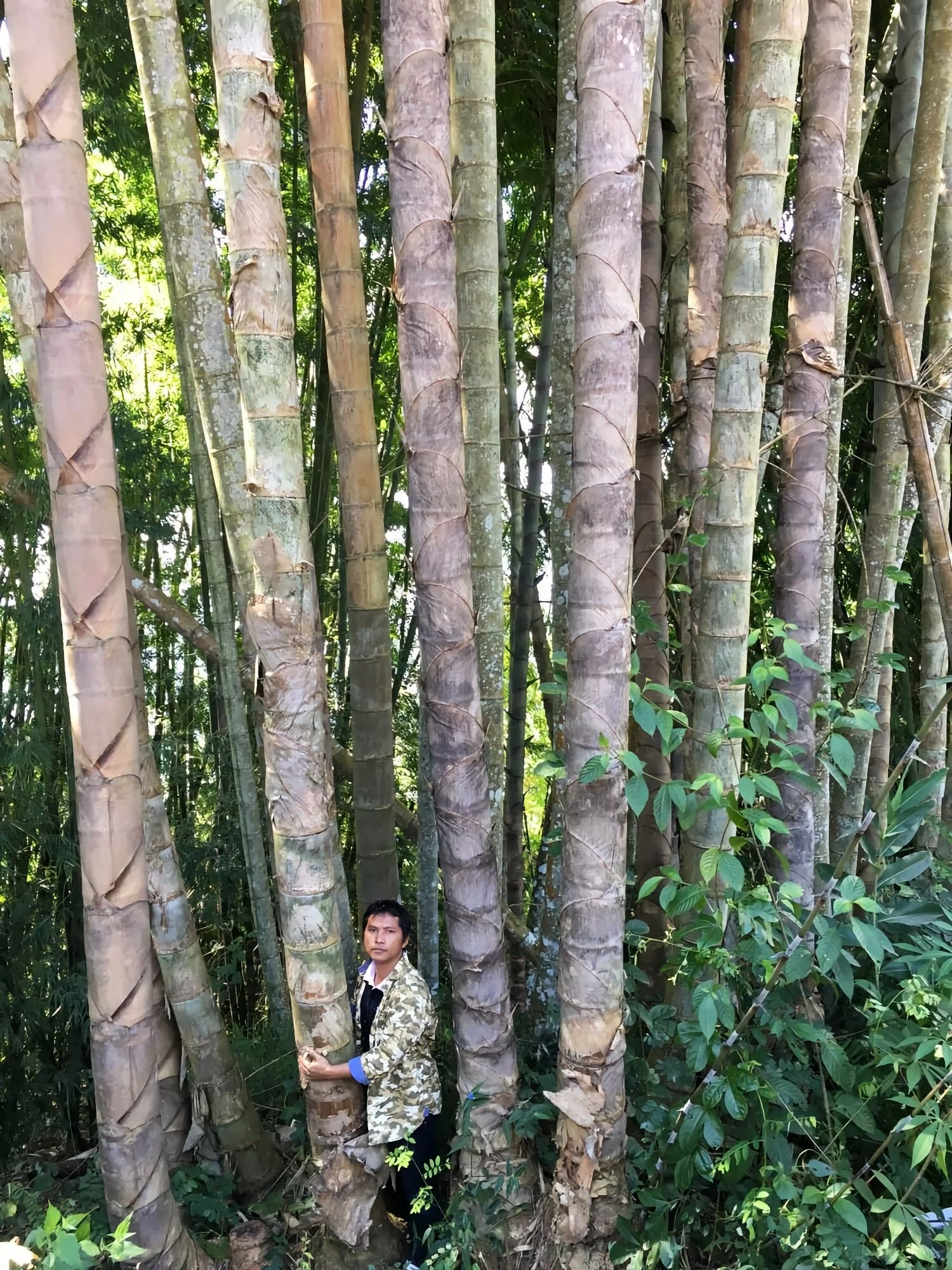
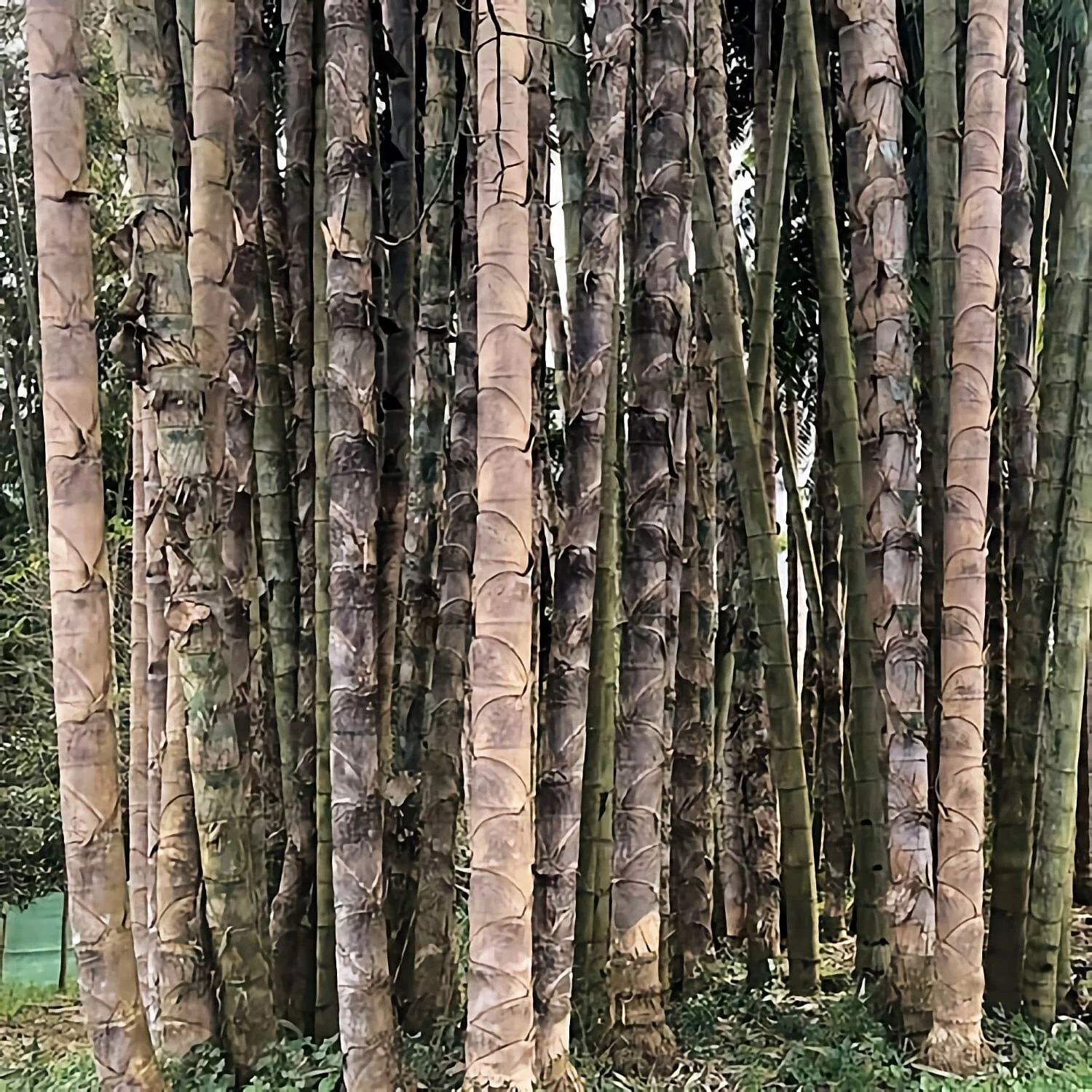
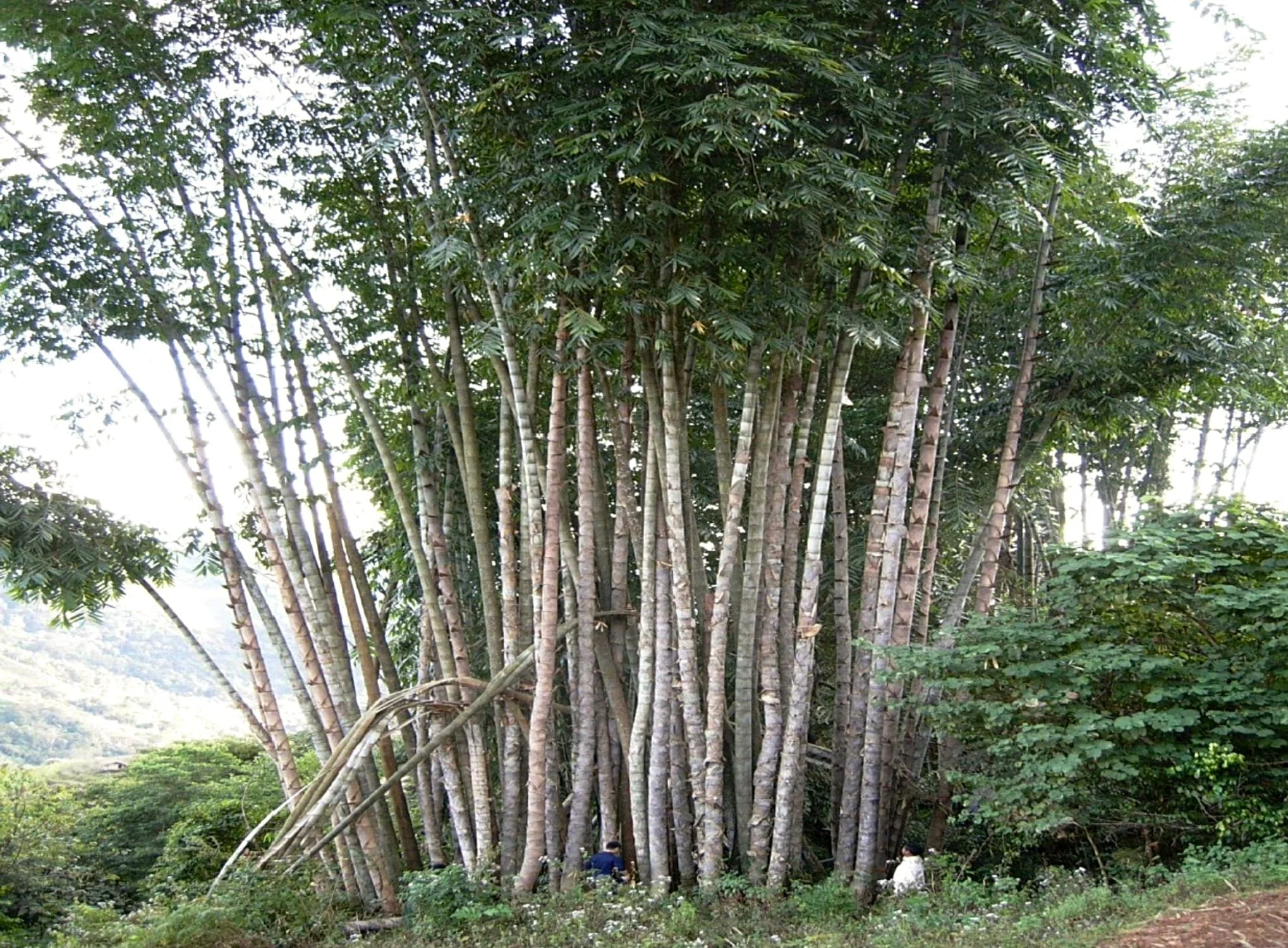
The strong woody culms of Dendrocalamus sinicus are fast growing and on average between 20-30 m tall and 20-30 cm in diameter, but culms of 46 meters and 37 cm in diameter are reported. Each culm can weigh up to 450 kg and a clump can eventually consists of about one hundred culms.
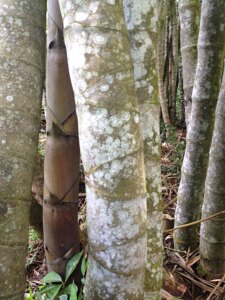
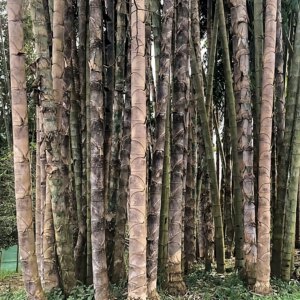
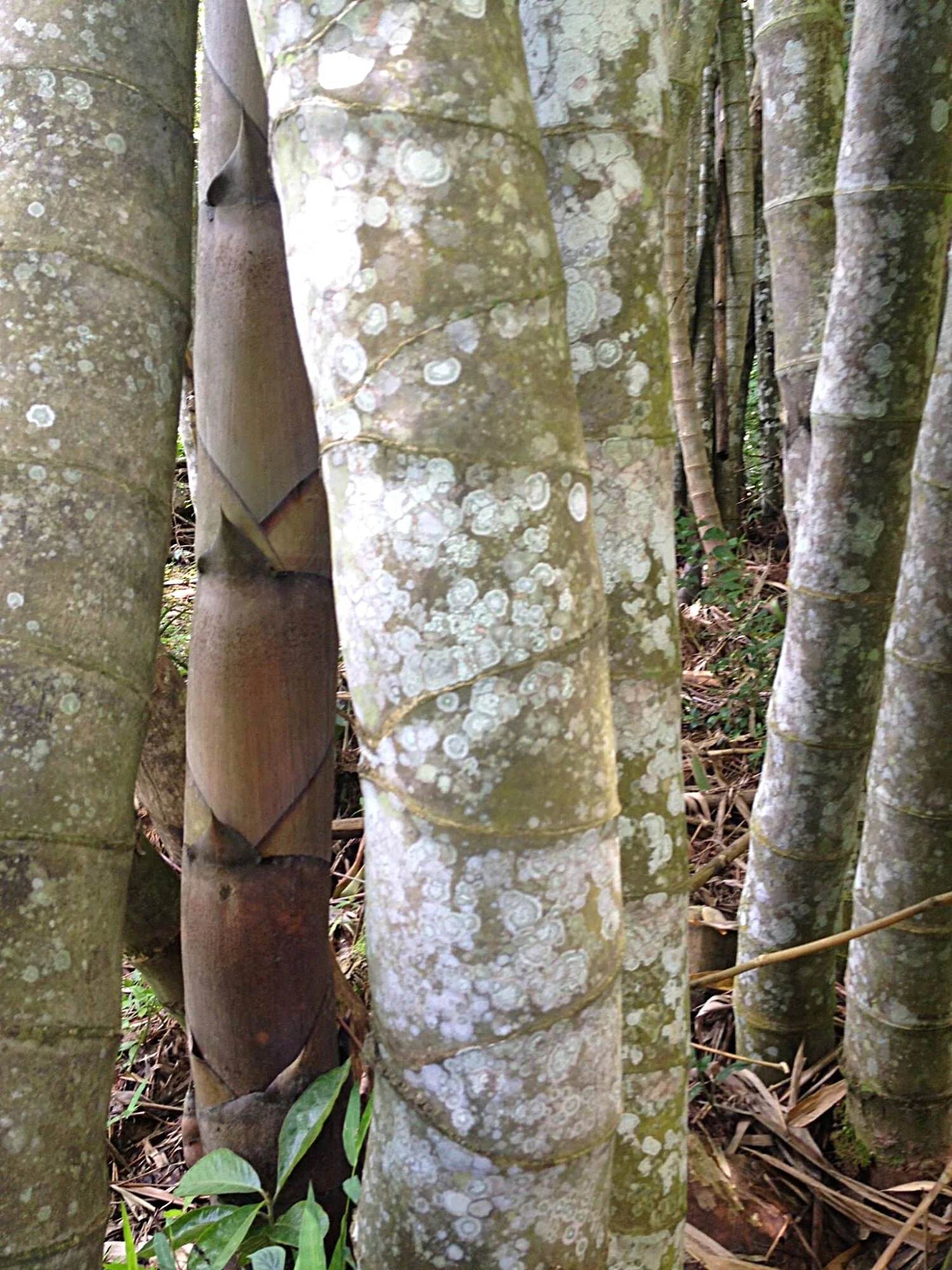
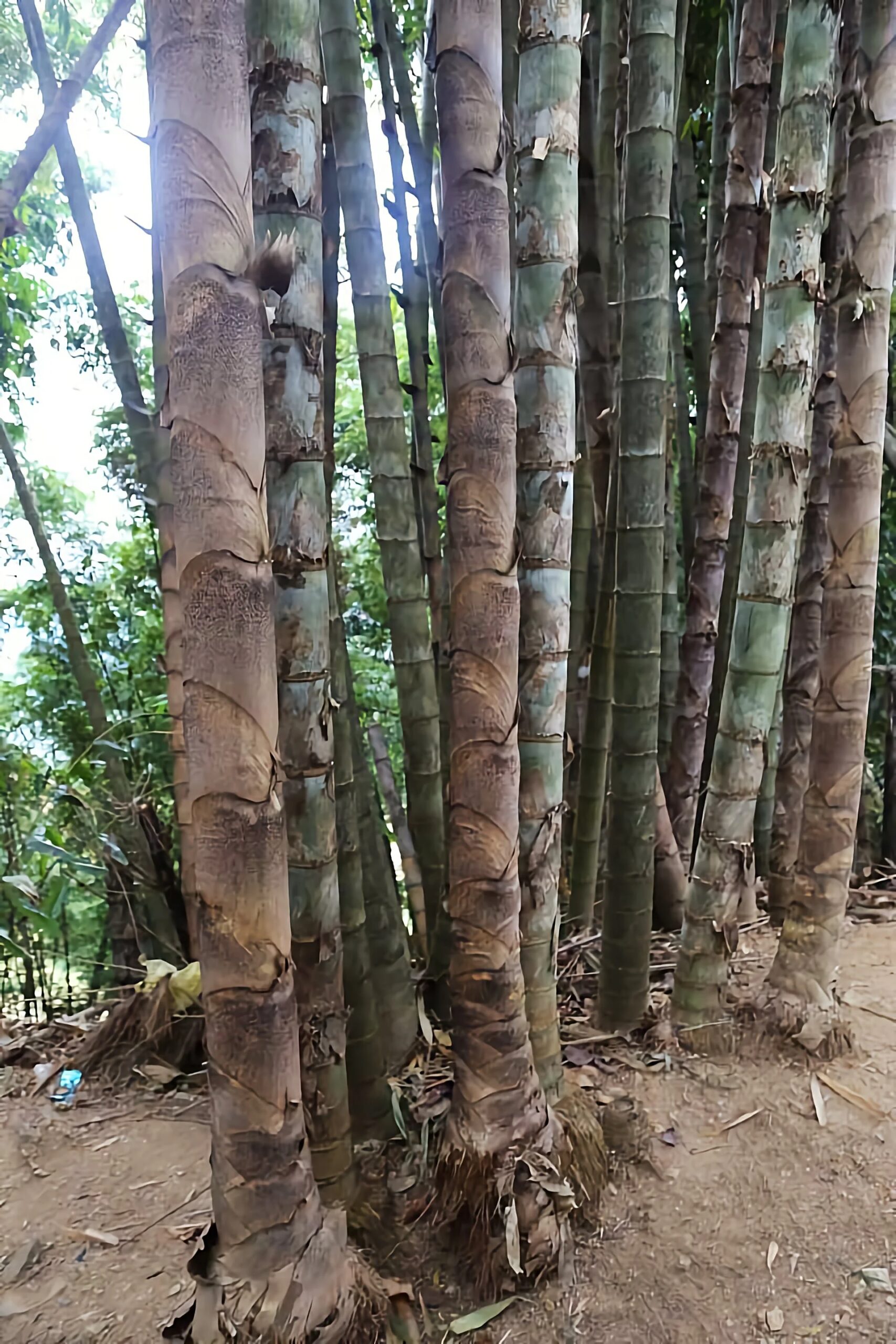
The culm internodes are on average 17-22 cm long and thick walled (up to 6 cm). Young culms are covered with white blooms which gives them a dull green color. Some basal nodes have a ring of yellowish brown silky hairs with short aerial roots.
Investigation showed that the shape of the culms can vary in different areas. Some biotypes of Dendrocalamus sinicus can produce straight, crooked, shortened of even basal internodes resembling a tortoise shell. The straight type is most suited for construction, whereas the turtle shell type has a high ornamental value.
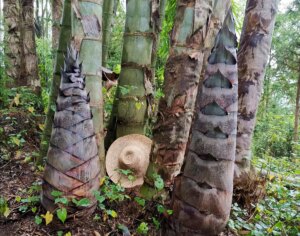
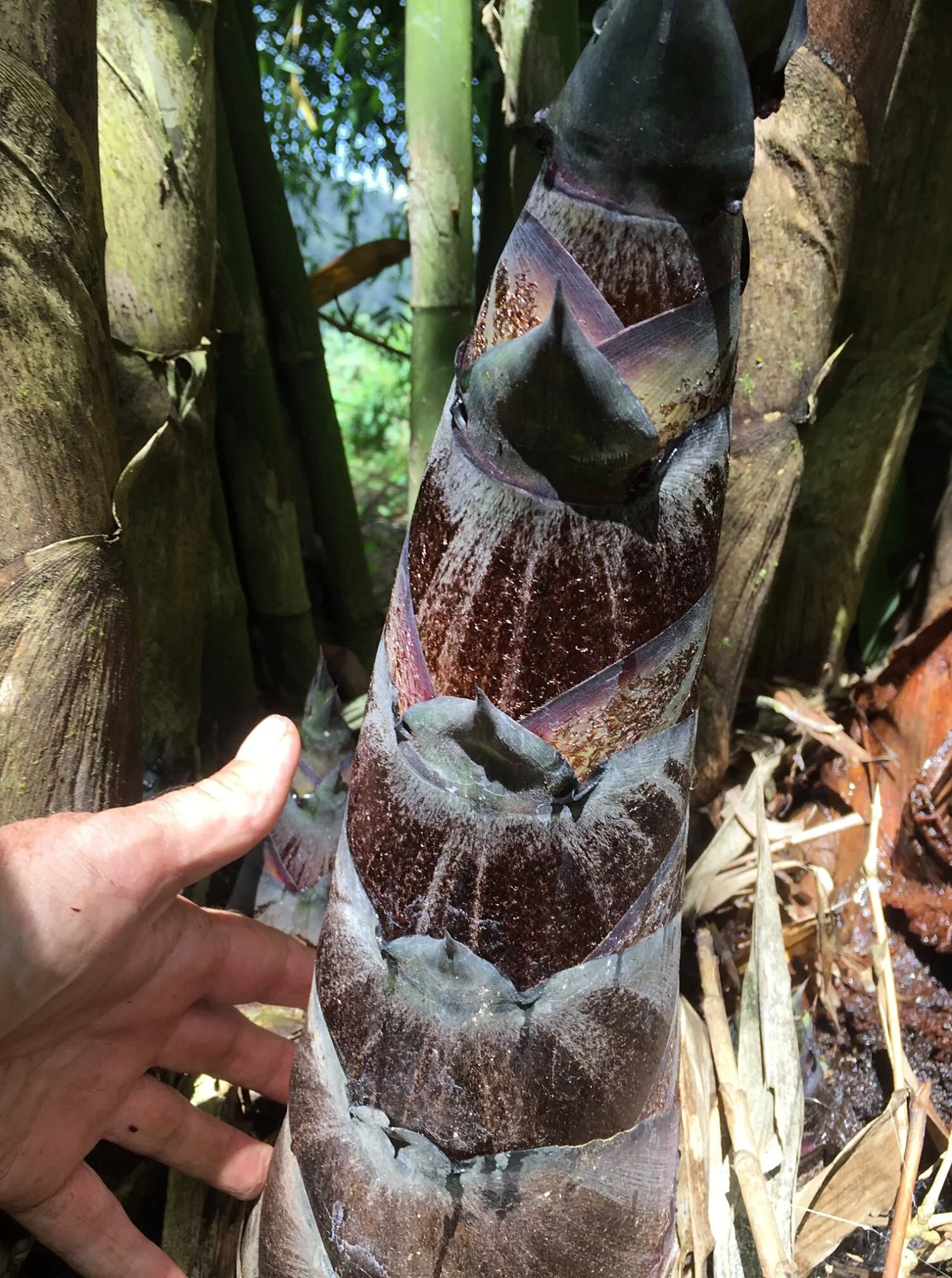
The thick and leathery culm sheaths of Dendrocalamus sinicus have a yellow-brown color with appressed dark brown hairs. They have a triangular shape, no auricles, and a sheath blade that is sprung outward. The culm sheaths remain attached to the culm for several years.
Branches
Dendrocalamus sinicus has no lower branches, lateral branches only develop from the upper part of the culm. Upper nodes contain many sub-equal branches.
Leaves
The large oval shaped leaves of Dendrocalamus sinicus are on average 20-40 cm long by 4-7 cm wide. The leaf-blade has 20-26 secondary veins with distinct cross veins, and the surface is usually hairy on both sides.
Growth
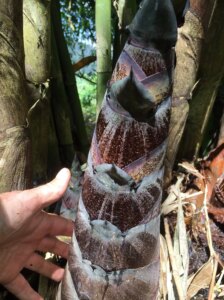
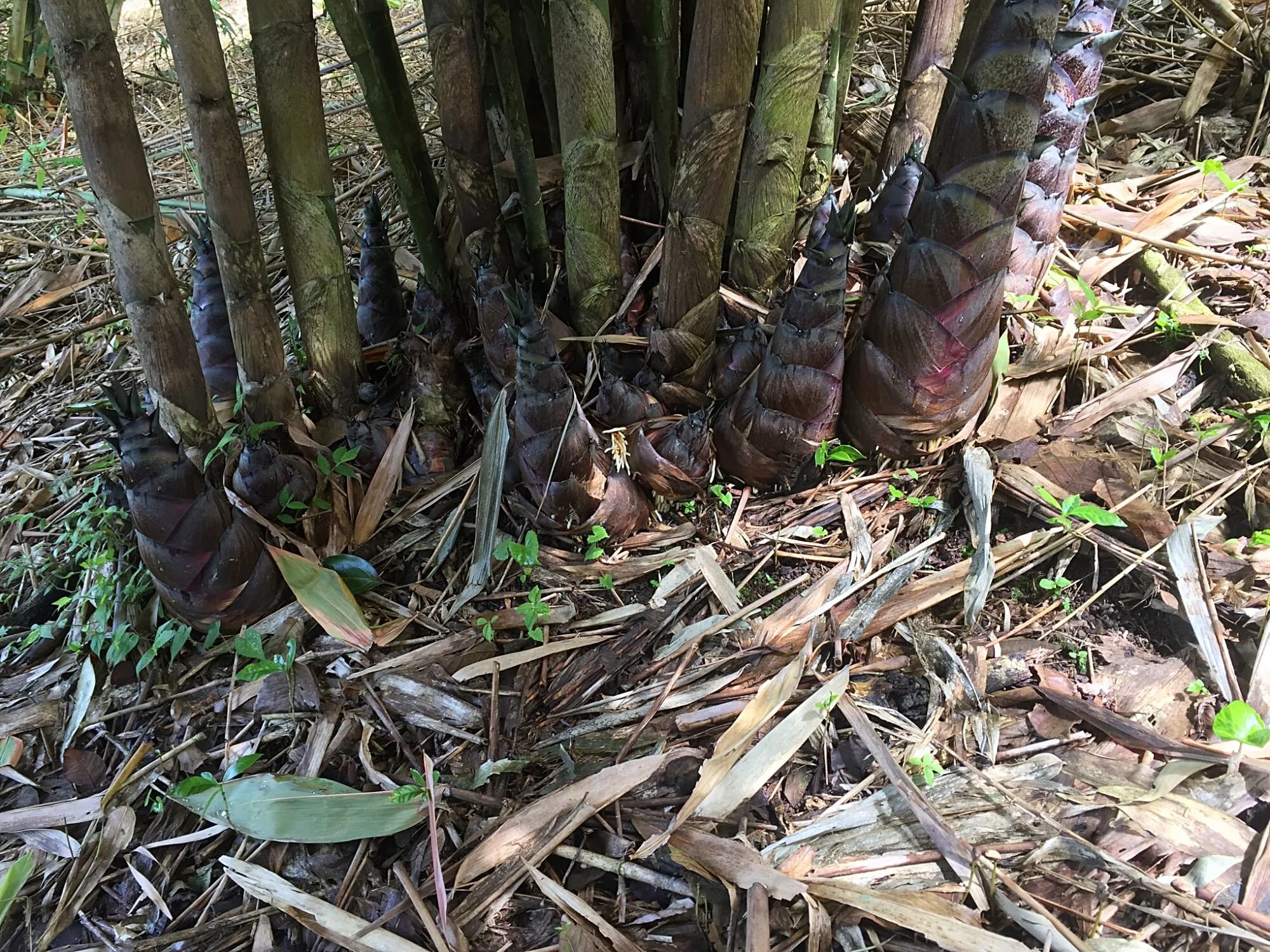
According to data analysis from fixed investigation plots in China, Dendrocalamus sinicus usually begins to produce new shoots between the end of May and the beginning of June and finishes shooting season at the end of August and the beginning of September. The total shooting period is about 65-70 days with a peak period of about 55 days between the middle of June to the middle of July.
The shoots appear earlier in sunny areas than in shaded areas, and also appear earlier at low elevations compared to high elevations. In just 3 months time, new shoots can reach the maximum height and diameter defined by the species which is 30 m tall and 30 cm in diameter. Dendrocalamus sinicus is therefore believed to be the fastest growing plant on the planet.
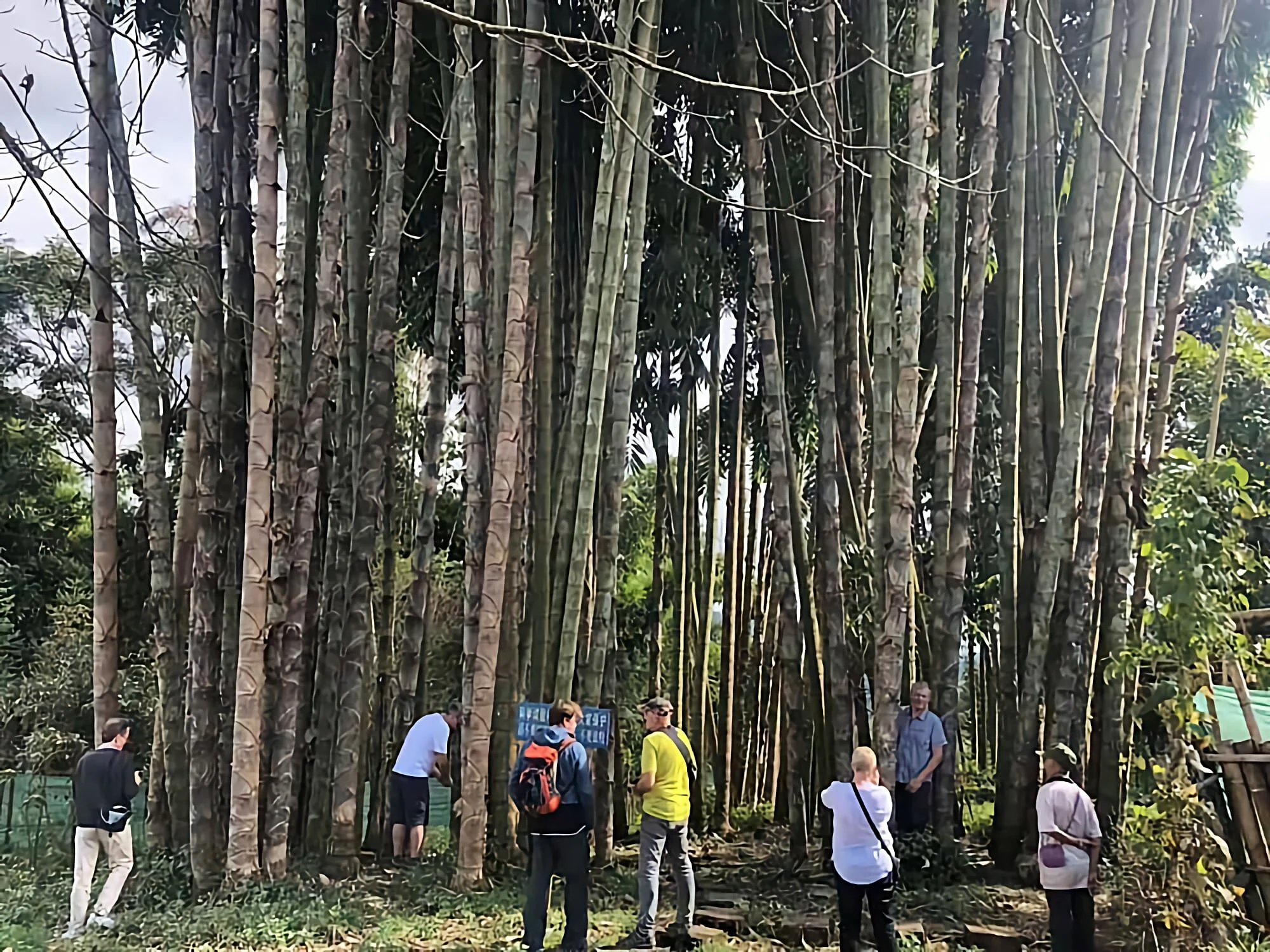
The diameter of a mature clump can reach to more than 10 meters, with an average of about 100 culms per clump.
Flowering
Dendrocalamus sinicus is rarely found flowering, but when it does flower it is sporadically rather than gregariously with a very low rate of seed setting.
As the male and female flower heads do not mature at the same time, pollination is very difficult. With a great deal of luck you may collect only a few viable seeds per plant.
Propagation
Compared with other bamboos, Dendrocalamus sinicus has a low survival rate when propagated by clump separation. Culm and branch cutting also show very limited success.
Habitat
In China (southwest areas of the Yunnan province) Dendrocalamus sinicus grows native in low hill areas, flat areas and valleys at altitudes between 500-1870 m above sea level. Its natural habitat lays within the Tropic of Cancer which is the area between the equator and 23° north of the equator. It often forms populations constituted of several scattered or dozens of clumps.
The biggest and tallest specimens are found in tropical rain forests at altitudes between 500-1200 m above sea level, with a yearly average temperature between 15 – 22°C, a lowest monthly average temperature greater than 13°C, without days of frost all year around, and an annual rain fall between 1200 – 2800 mm.
Dendrocalamus sinicus can grow at higher altitudes or in colder areas of up to 12 days of -5°C a year, but culm sizes will decrease to 20 m in height and 20 cm in diameter.
Yield
Dendrocalamus sinicus culm yield is 5–8 times more than that of Phyllostachys edulis (Moso Bamboo), which is currently the most economically important bamboo species in China.
Uses
In its native area, Dendrocalamus sinicus is a very fine timber, and an important raw material for building houses, furniture, handicrafts, and producing paper pulp. Since this bamboo is very big, it is often used for fetching water. A single internode is widely used as a stool, a food container, or as a pig trough among many other things.
Origin
China (Yunnan) and Laos.

Hello from Croatia, you say that Dendrocalamus sinicus can grow at higher altitudes or in colder areas of up to 12 days of -5°C a year, but culm sizes will decrease to 20 m in height and 20 cm in diameter. A serious bamboo grower told me that D. sinicus can’t survive above ground bellow 0°C.
I am interested where did you get this info that can survive -5 for 12 days, from Yunnan or at your place. I have planted 2 this spring in my garden in Croatia, now waiting for first winter, i am in 9b zone…
i’m planning to go to Laos, can you please let me know where i can find this bamboo species? where were these photos taken?
How many meters in diameter is the footprint of a fully grown Sinicus?
where or what environment can grow culms of 46 meters tall and 37 cm diameter?
what region or area in laos does this bamboo grow best?
I want buy seeds