Bamboo Genera
All 139 bamboo genera are listed here. Learn more about the different types of bamboo and their typical growth habits, origin and optimal climate conditions.
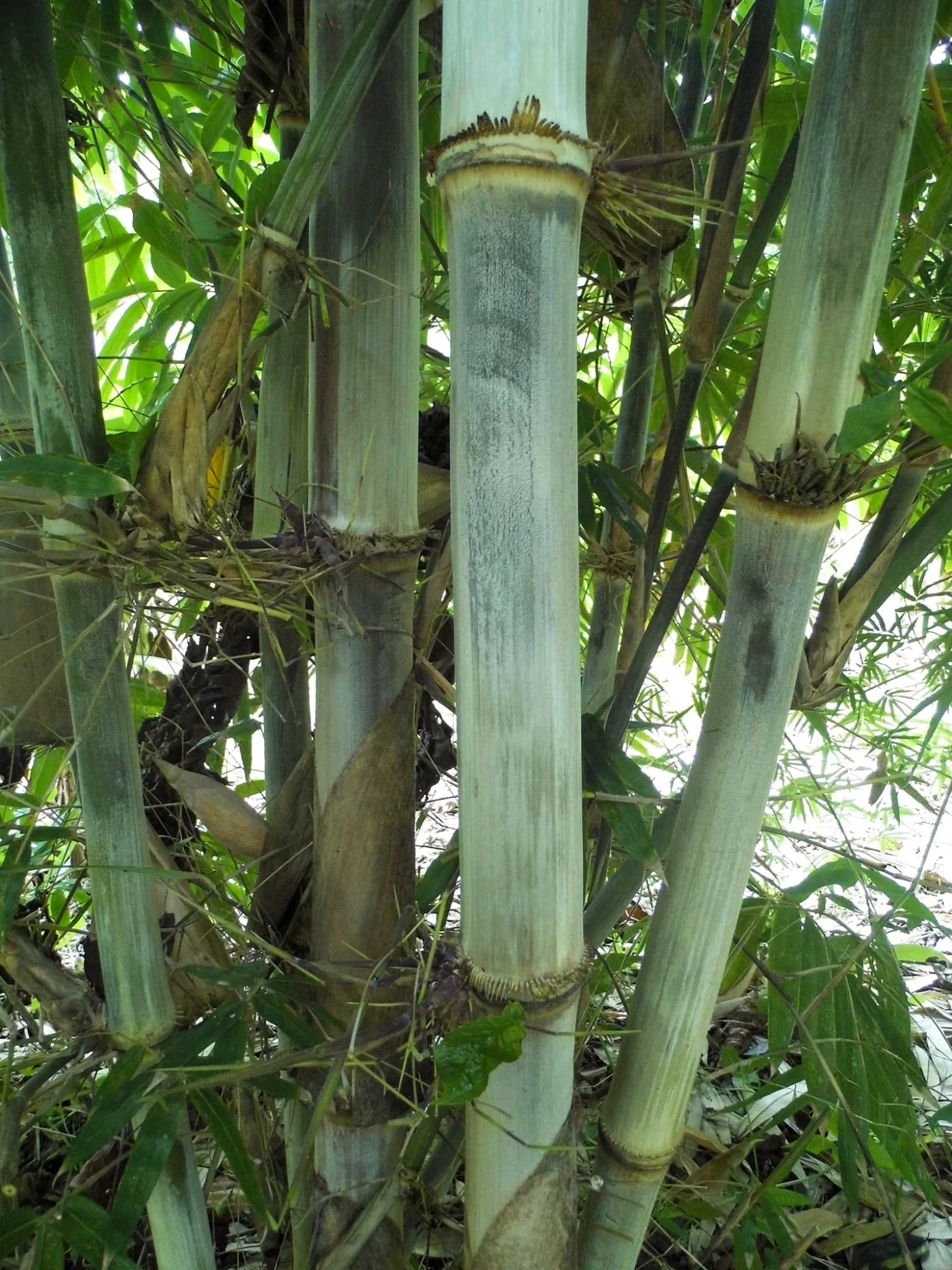
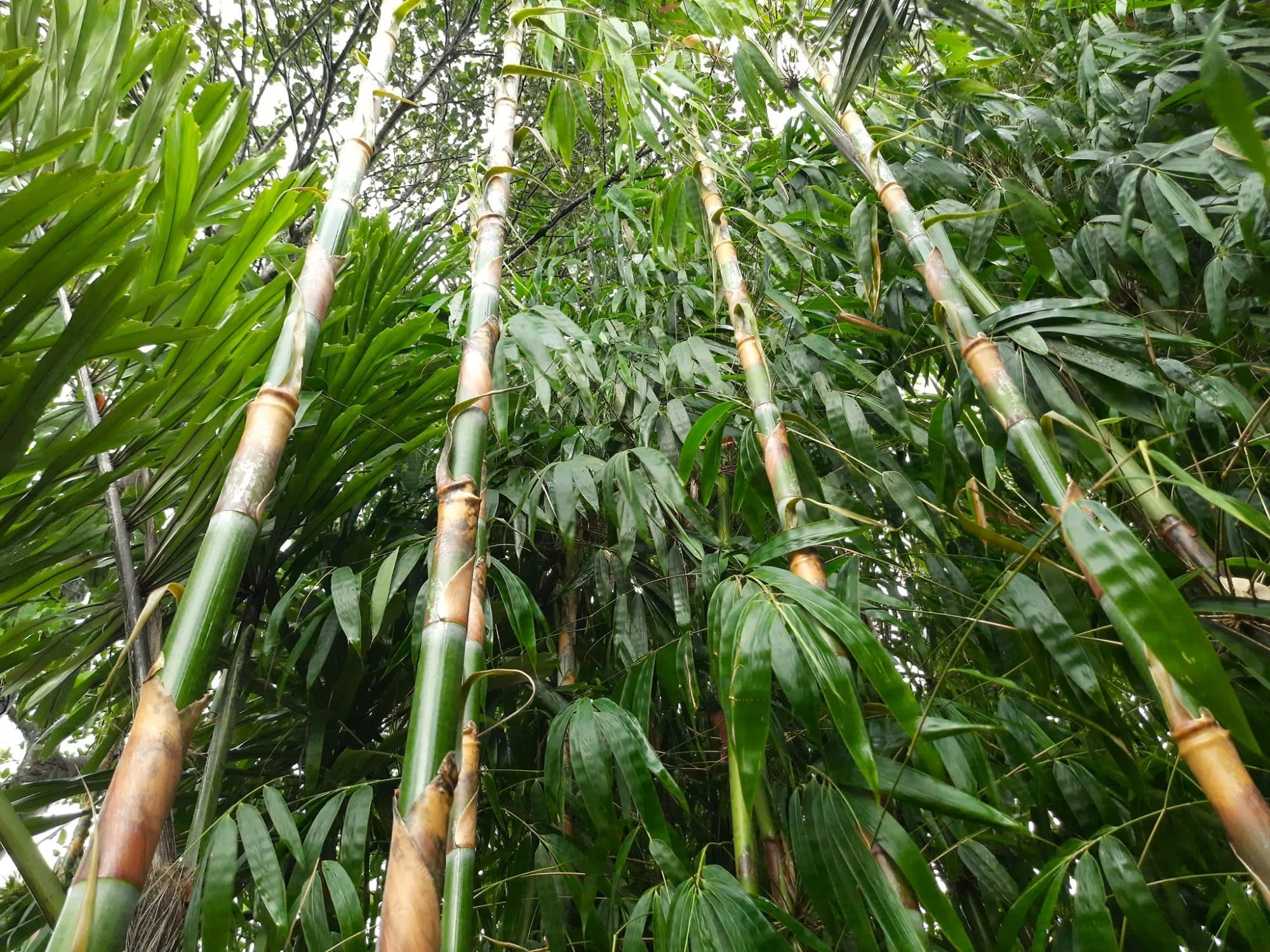
Dendrocalamus peculiaris is a large, dense tropical bamboo native to Yunnan, China. Impressive are the giant leaves, which can reach 40 cm in length. The stems of this bamboo are used as a building material, to produce paper pulp, and the shoots are used as food.
Dendrocalamus peculiaris Read more »
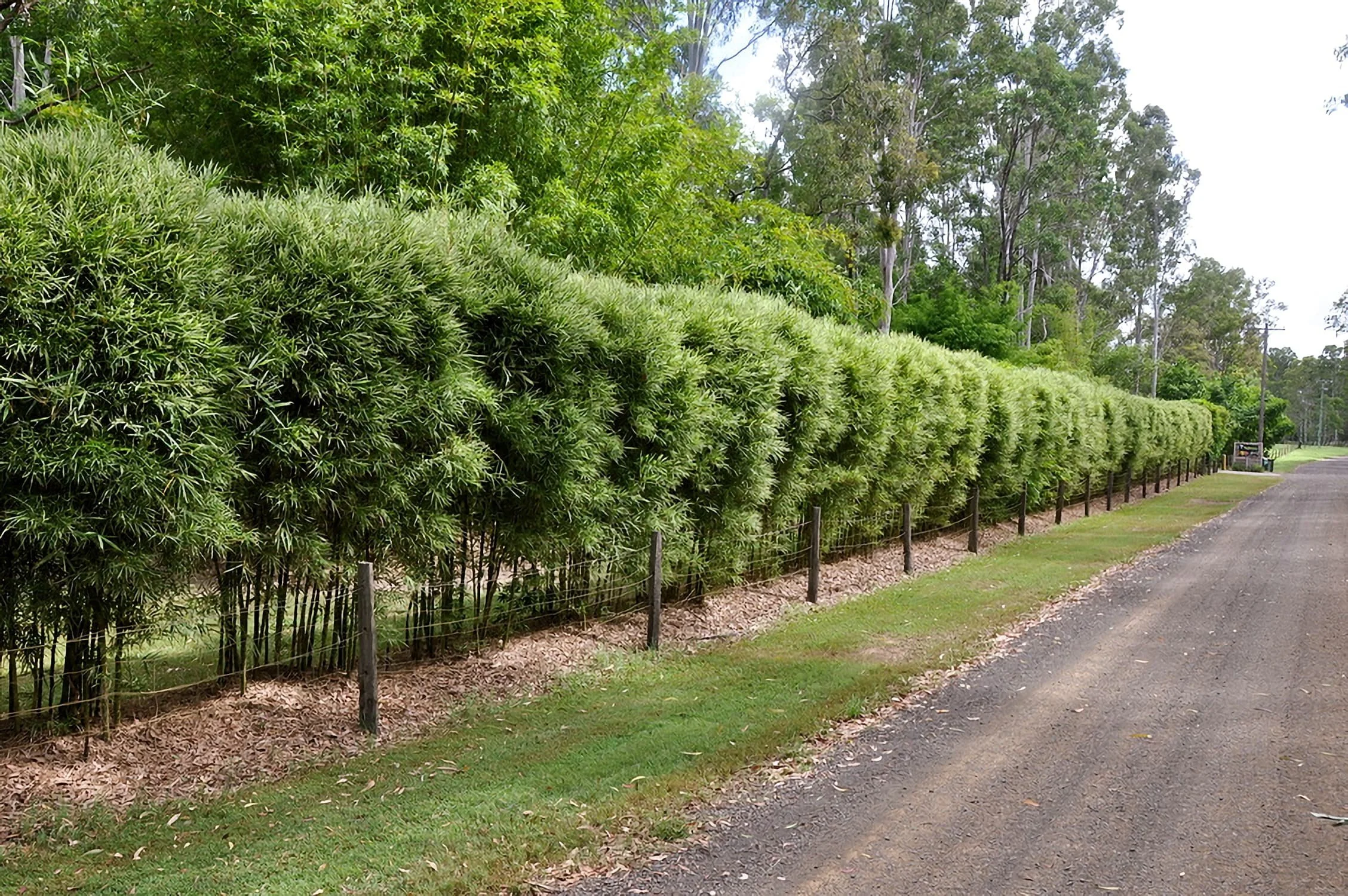
Bambusa glaucophylla or “Malay Dwarf Variegated Bamboo” is a very dense clumping bamboo native to Java, Indonesia. It has beautiful green leaves with white stripes, and is one of the best bamboos for hedges and living fences. Bambusa glaucophylla is also a very attractive ornamental plant, especially highlighted in the garden by plants with darker foliage in the background. This bamboo is very easily to trim and is drought tolerant once established.
Bambusa glaucophylla Read more »
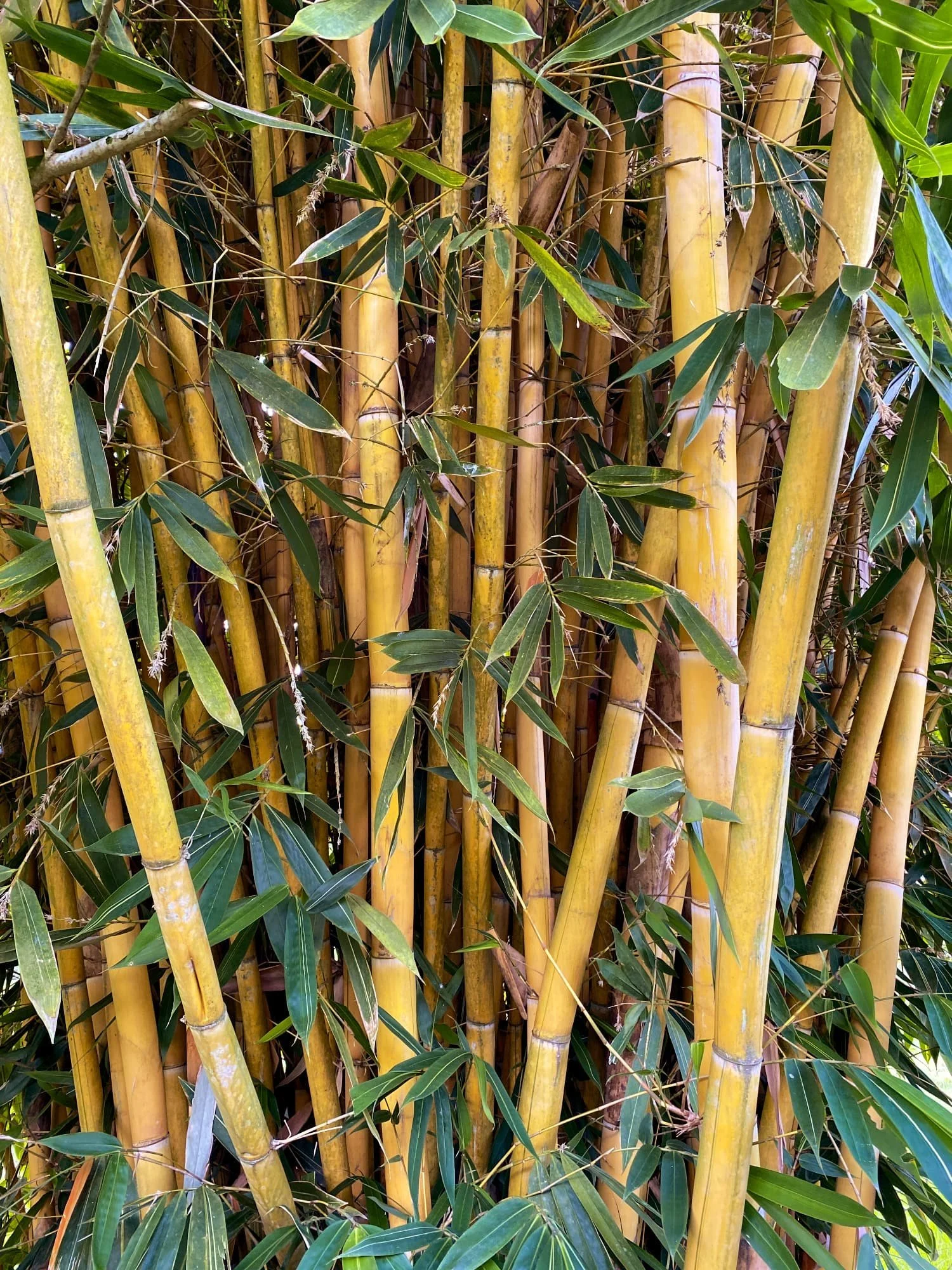
Schizostachyum brachycladum, also known as “Sacred Bali Bamboo” is a stunning medium size tropical bamboo native to Southeast Asia. Sacred Bali Bamboo has bright yellow culms with green stripes and large yellow striped leaves. Schizostachyum brachycladum is used to make crafts, basketry and as containers for cooking or carrying water. It is also a very popular ornamental bamboo for gardens, landscaping or as windbreak.
Schizostachyum brachycladum Read more »
Melocanna baccifera or “Muli Bamboo” is a tropical bamboo native to Bangladesh, Bhutan, India, Myanmar and Nepal. Melocanna baccifera is an invasive species that can occupy large areas due to its long and vigorous rhizomes and, in flowering, for its fruits that are easy to germinate. Fruits have the size and shape of a pear and are edible. Melocanna baccifera is one of the most useful bamboos within its native range, especially in Bangladesh, where stems have a wide range of uses.
Melocanna baccifera Read more »
Bambusa textilis, also known as “Weaver’s Bamboo”, is a species of bamboo native to China and Vietnam. It grows in a dense clump up to 8 – 12 meters high and has no lower branches. Bambusa textilis is very suitable for living fences or windbreaks. The stems are often used for weaving, basketry or light construction.
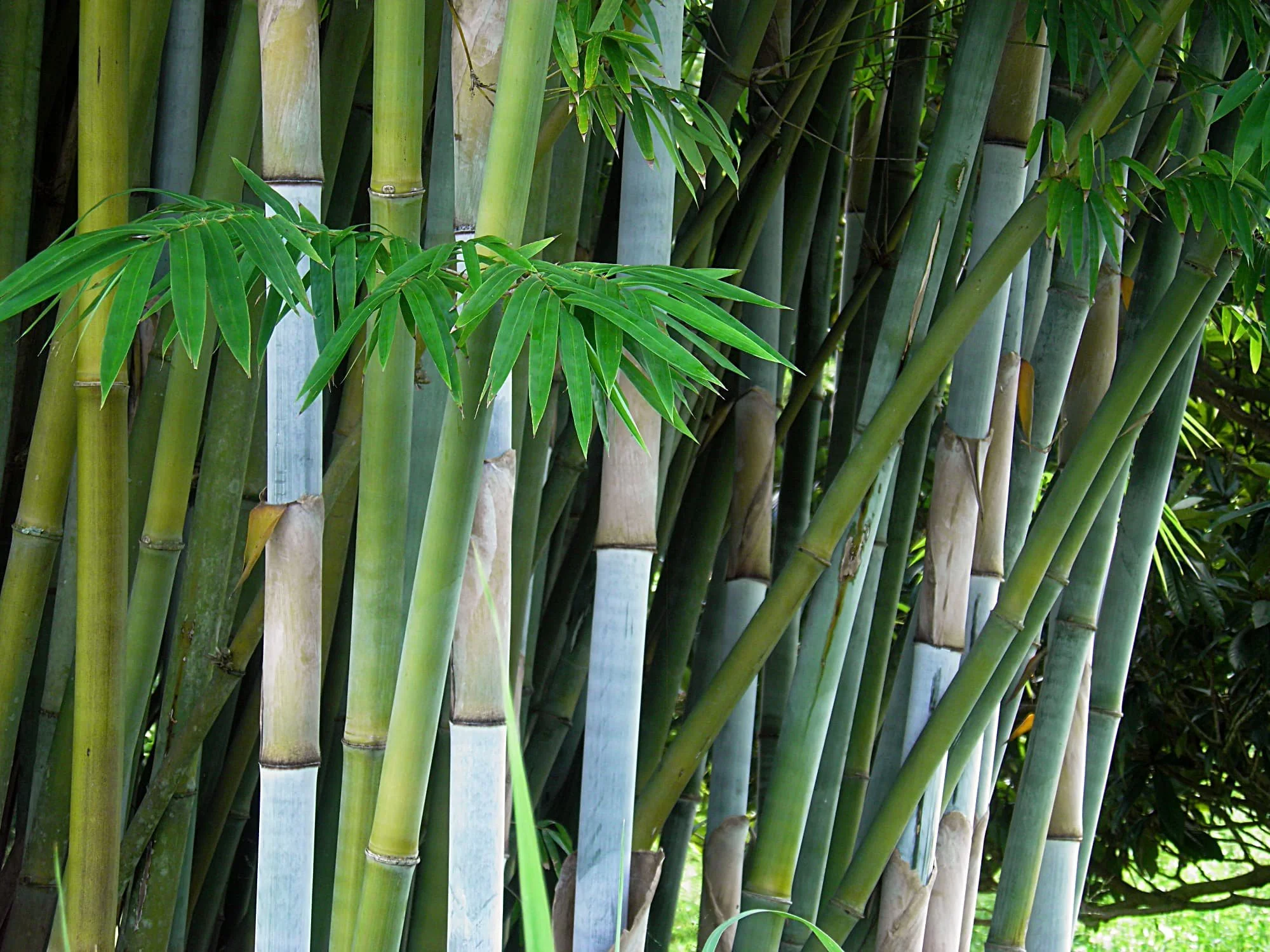
Bambusa chungii, also known as “Tropical Blue Bamboo” or “Emperor’s Blue Bamboo”, is a species of bamboo native to China and Vietnam. It grows in a dense clump up to 8 to 12 meters high and has no low branches. Bambusa chungii is very suitable for living fences or windbreaks. The stems with very long internodes are often used for weaving and basketry or for paper production.
Phyllostachys aurea or “Golden Bamboo”, is a bamboo species native to China and Vietnam. It is a graceful bamboo producing large clumps of bright green canes becoming yellowish with age and exposure. The culms are easily identified by their characteristic compressed internodes in the lower part of the canes which have a tortoiseshell-like appearance.
Phyllostachys aurea Read more »
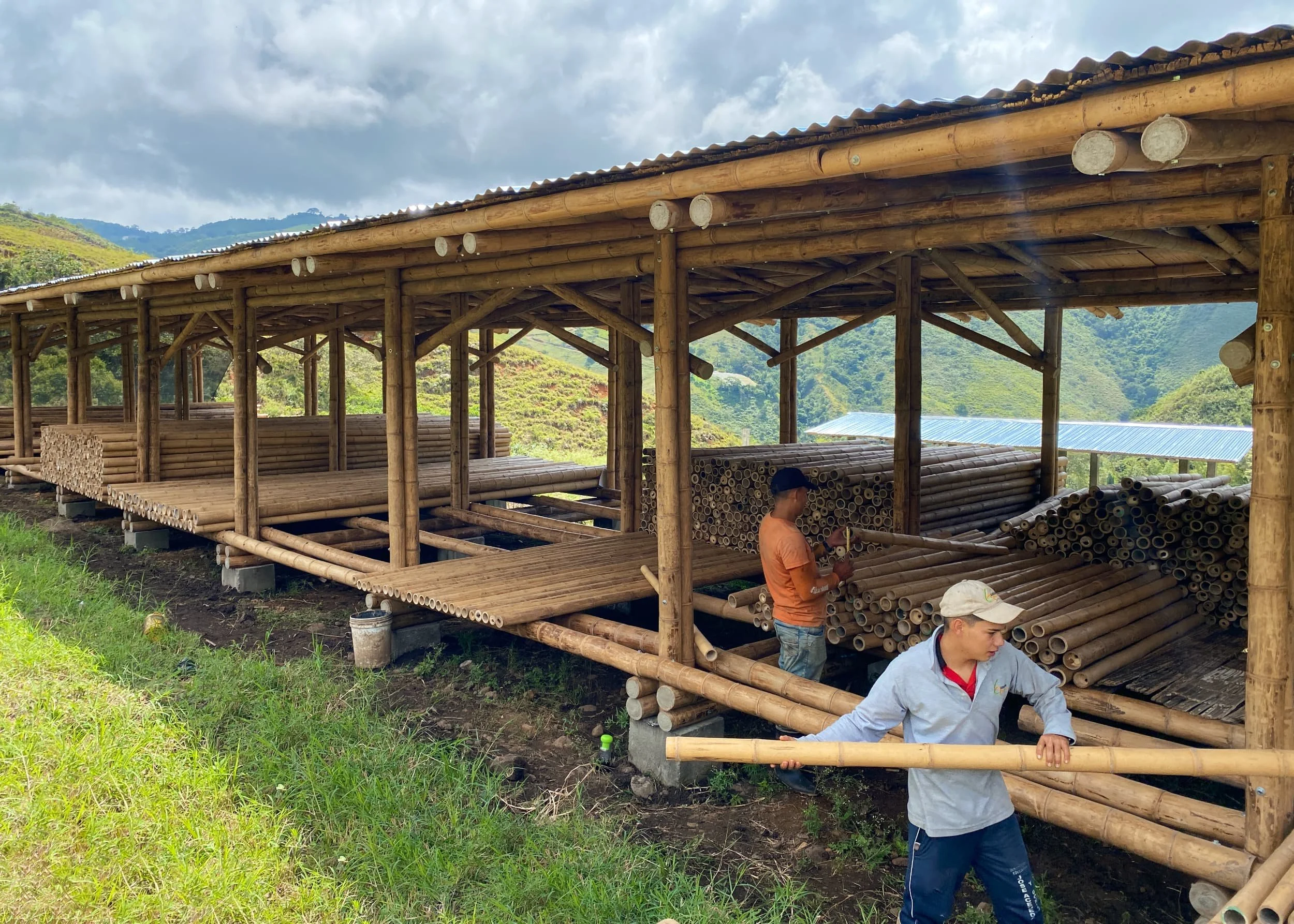
What type of bamboo is best for building? The best bamboo species for building and construction are found in the tropics, more specifically within the genera: Guadua, Dendrocalamus and Bambusa. Tropical bamboos generally grow taller and bigger than temperate bamboos and have thicker walls, which often results in better structural and mechanical properties. From the
90 Types of Bamboo used for Building and Construction Read more »
Bamboo is the fastest growing plant on earth. Some species of bamboo can grow more than 1 meter per day, which is about 4 cm per hour. No other plant grows faster. Two examples of such fast growing bamboos are Madake (Phyllostachys reticulata) and Moso (Phyllostachys edulis). A new bamboo shoot will reach its full
Bamboo is the Fastest Growing Plant on Earth Read more »
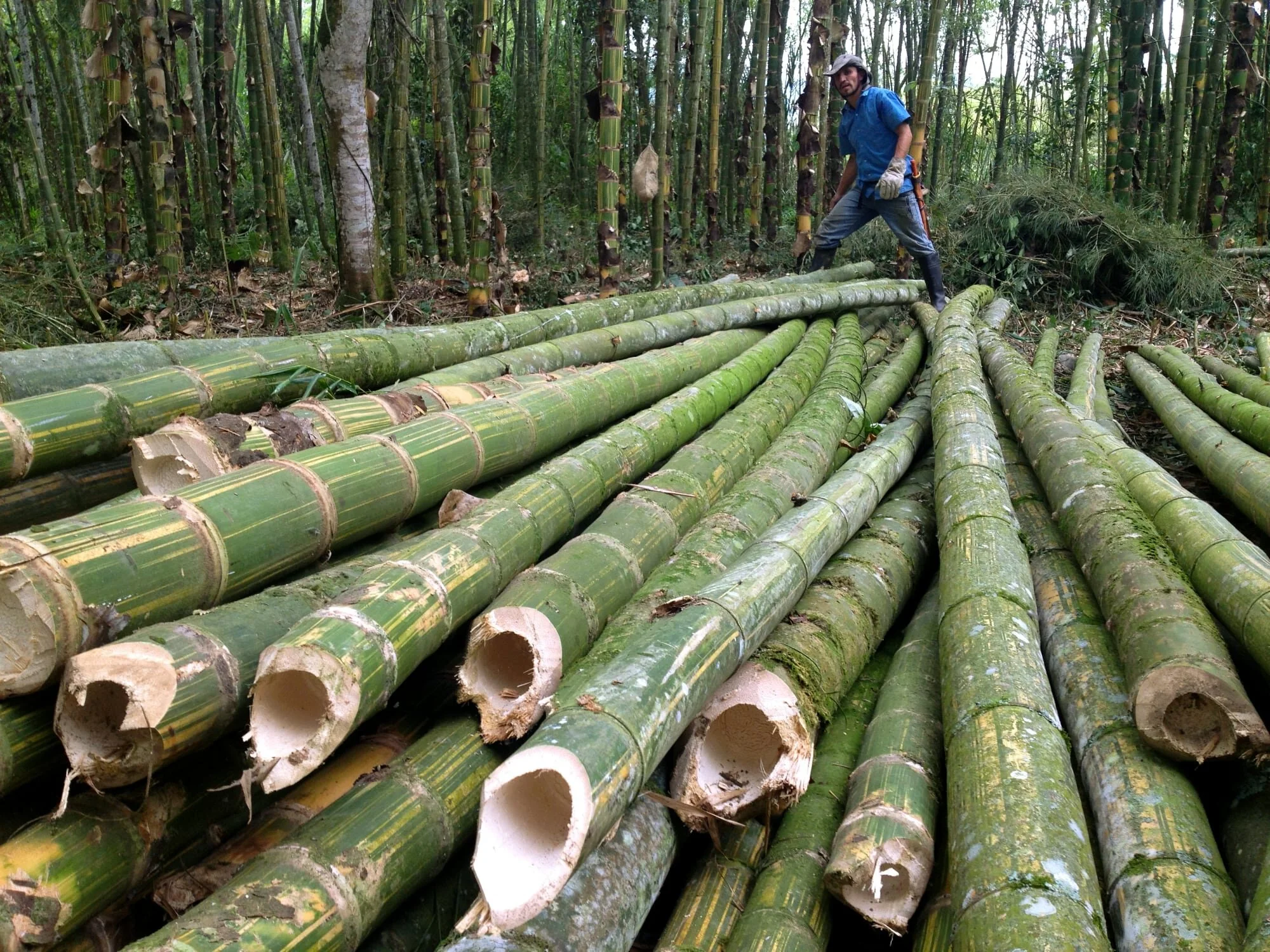
Bamboo is a sustainable and renewable resource as it continuously spreads vegetatively. A bamboo forest will therefore develop much faster than tree forests. In commercial forestry, trees have to be cut down and replanted. In bamboo plantations, only mature stems are selected for harvest while younger stems are left untouched to further mature and develop. Approximately 20%
Bamboo Provides and Endless Supply of Timber Read more »
The popular claim that bamboo produces 35% more oxygen than trees has been circulating for years, mostly on sustainability websites and in bamboo marketing. It sounds good, but where does it really come from? In most cases, it is repeated by product promoters or eco-enthusiasts pointing to bamboo’s fast growth and carbon storage potential. And
Bamboo Produces more Oxygen than Trees Read more »