

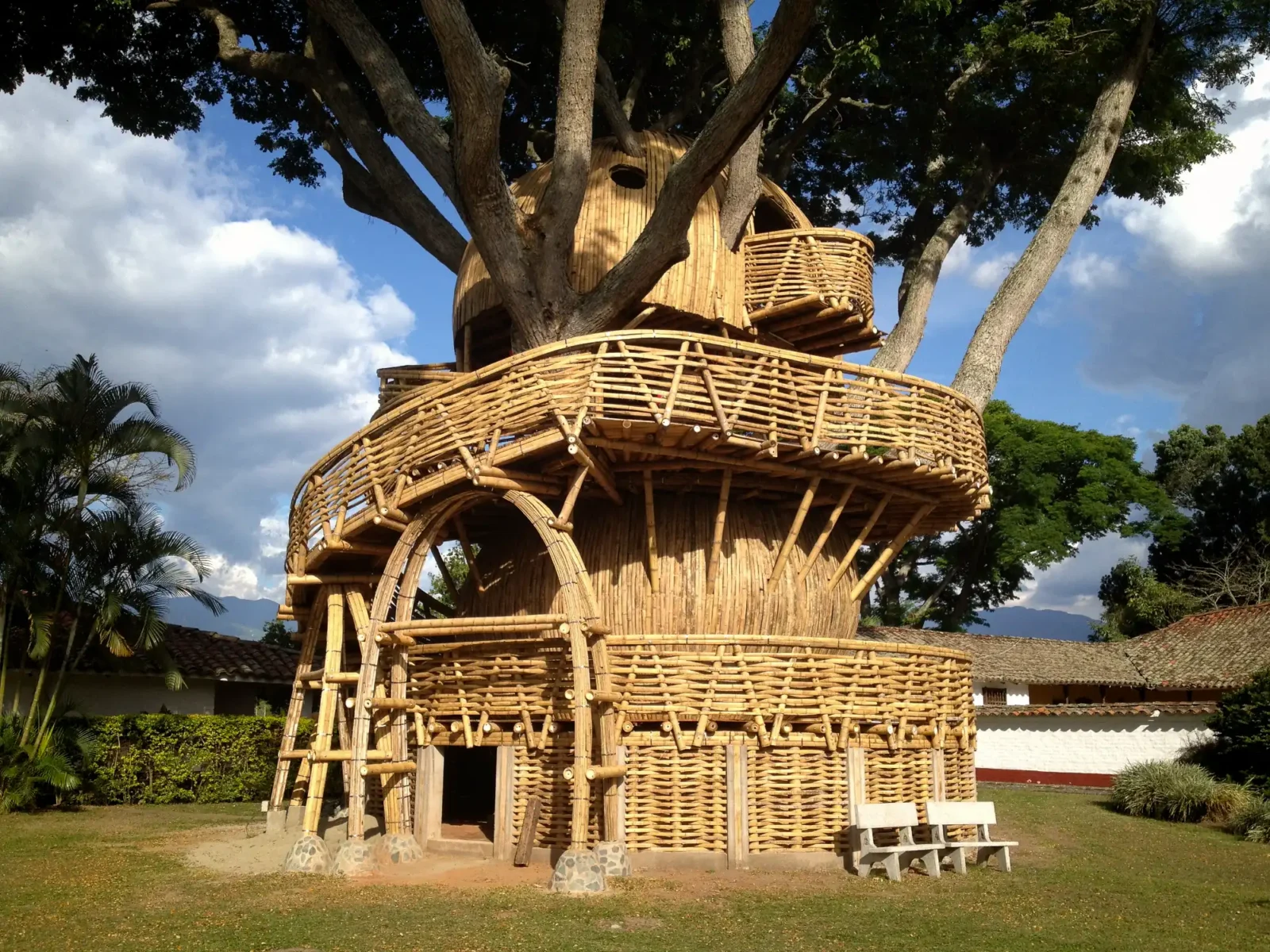
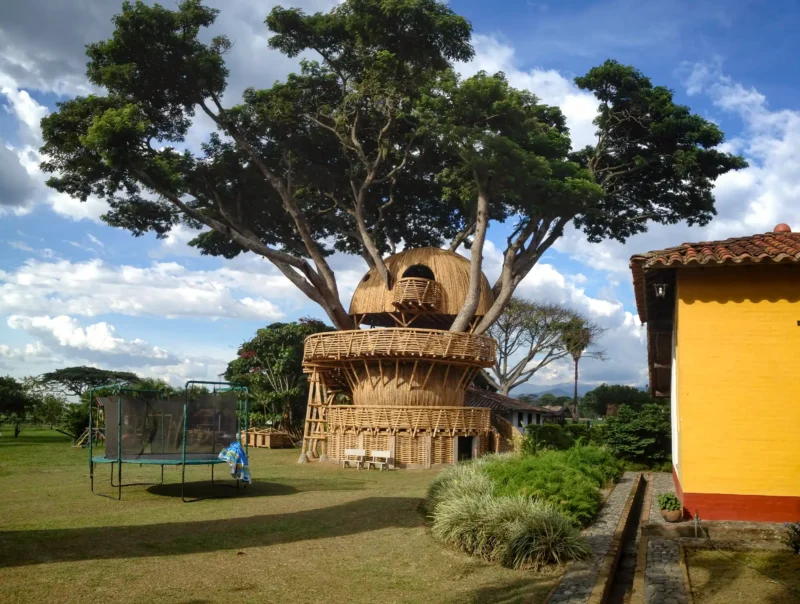
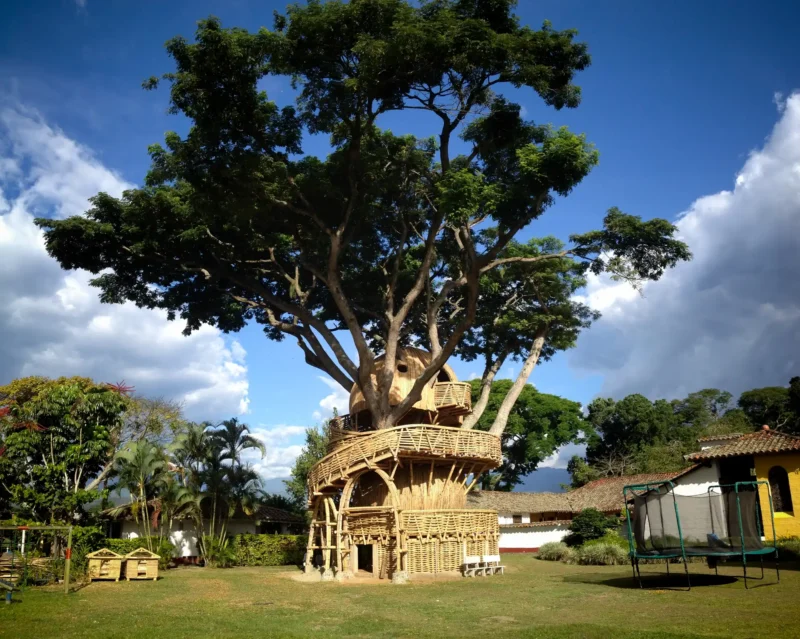
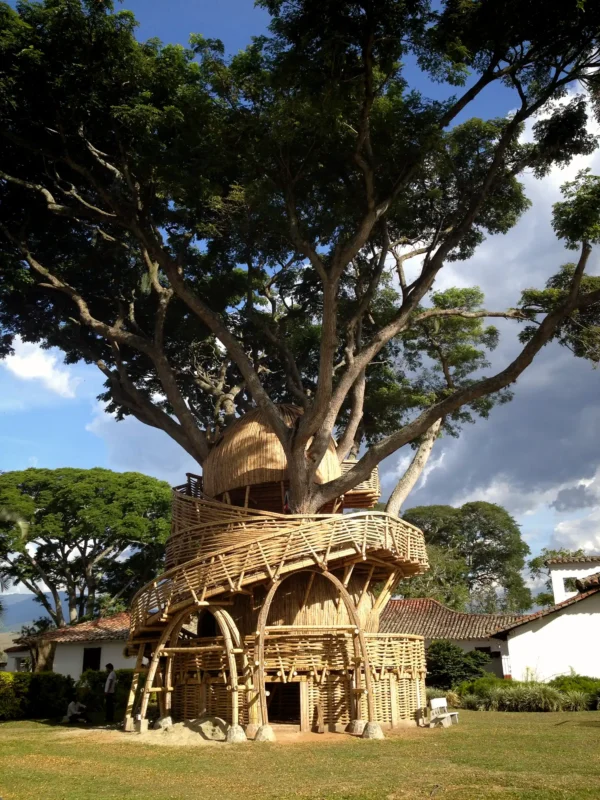
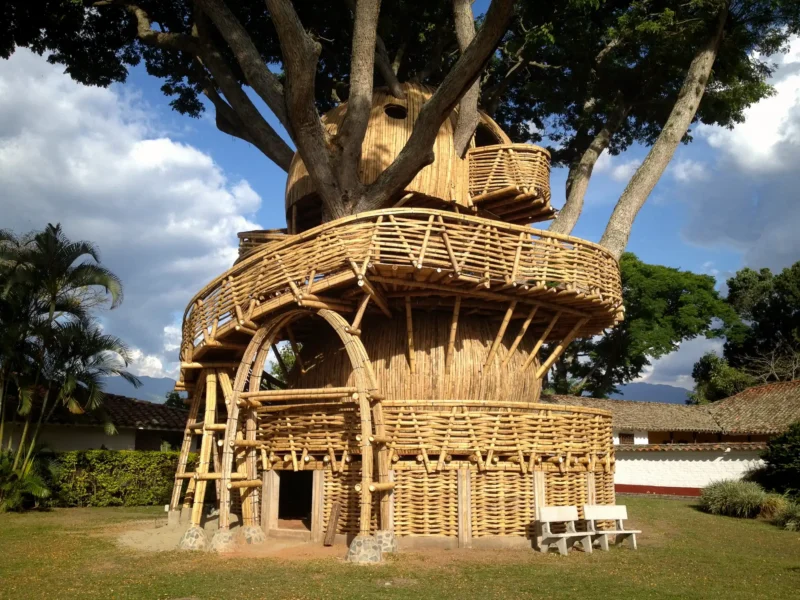
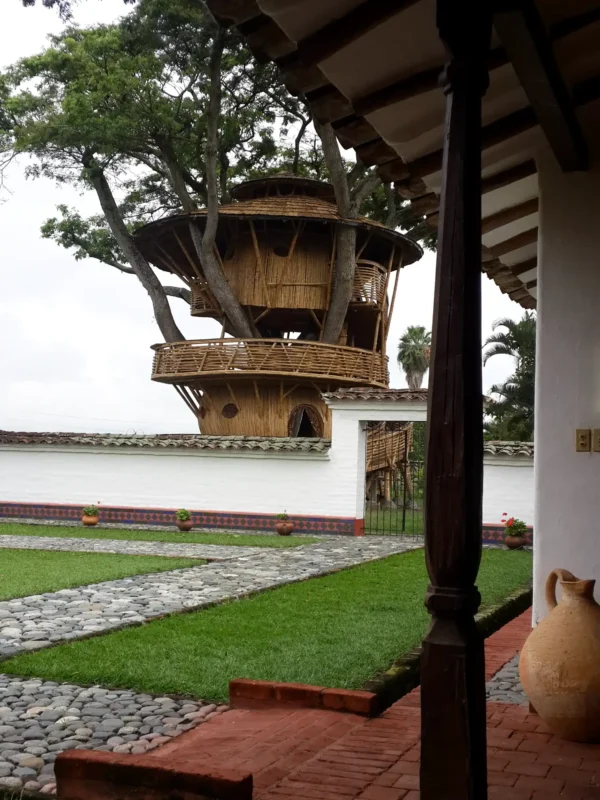
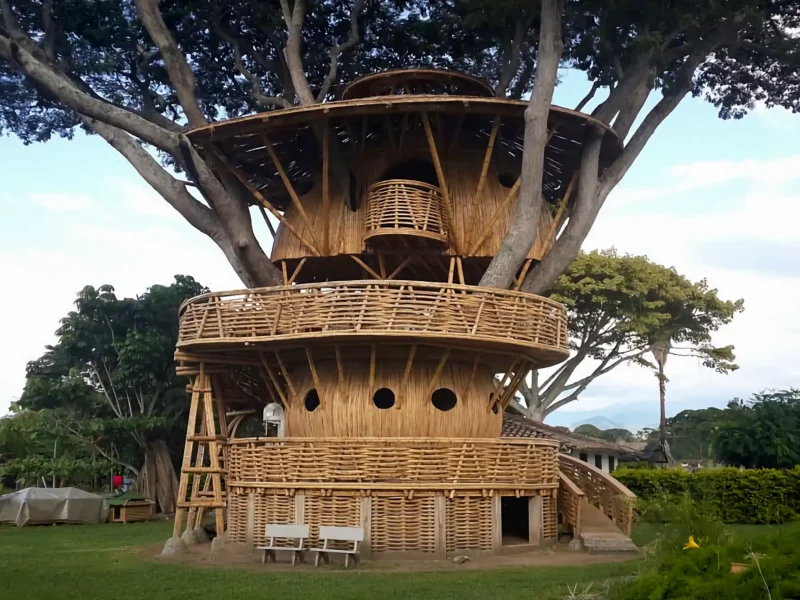
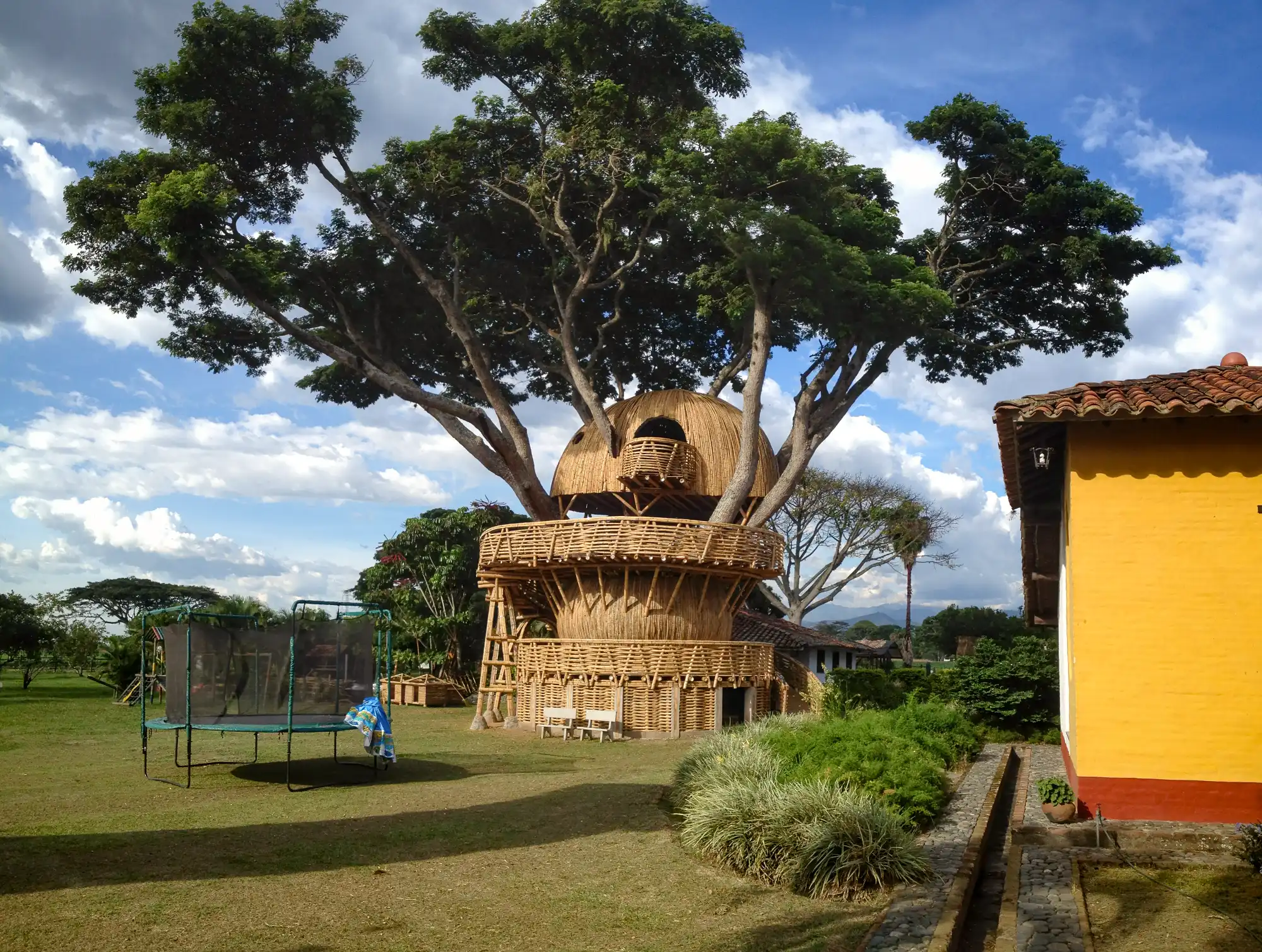
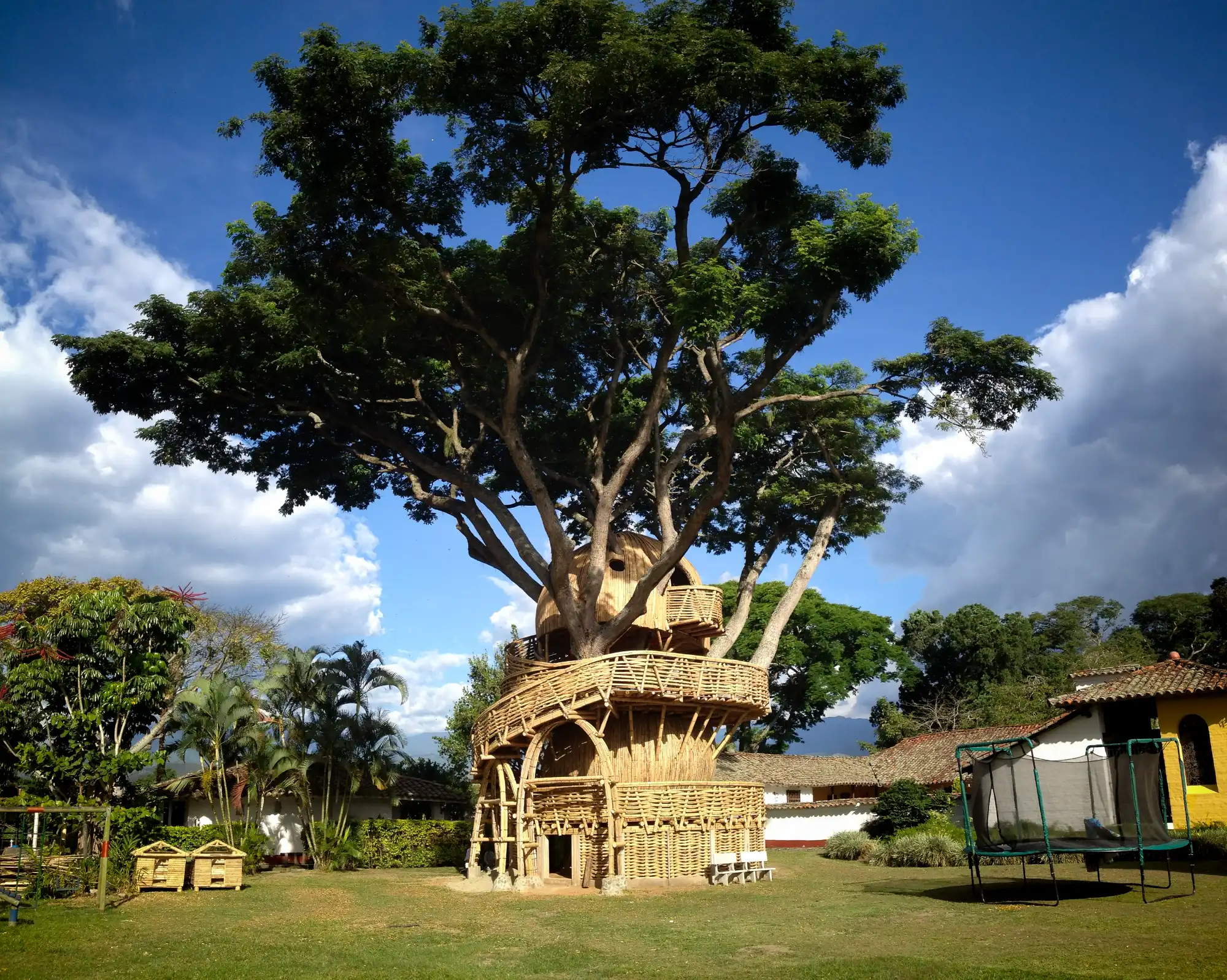
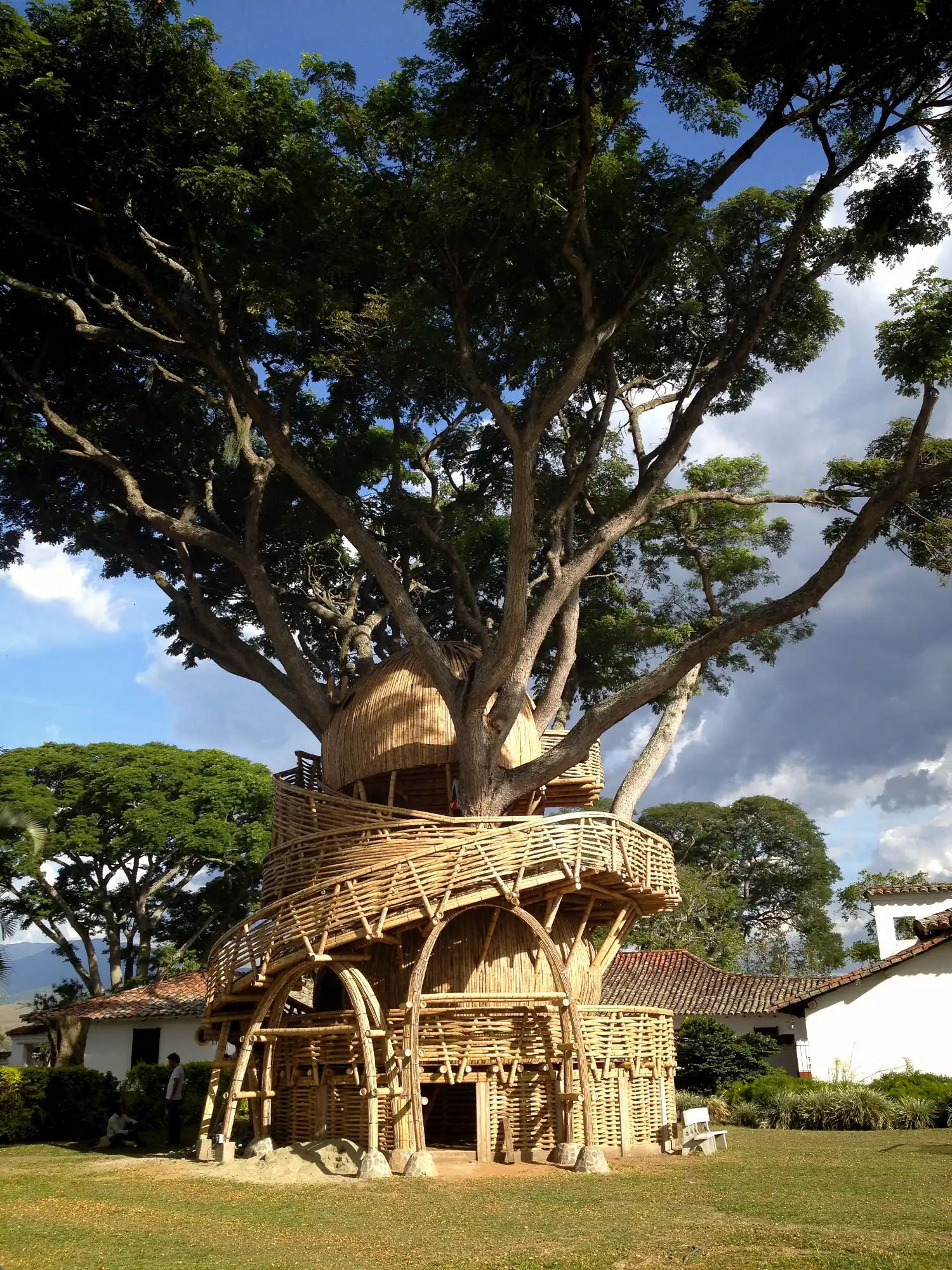
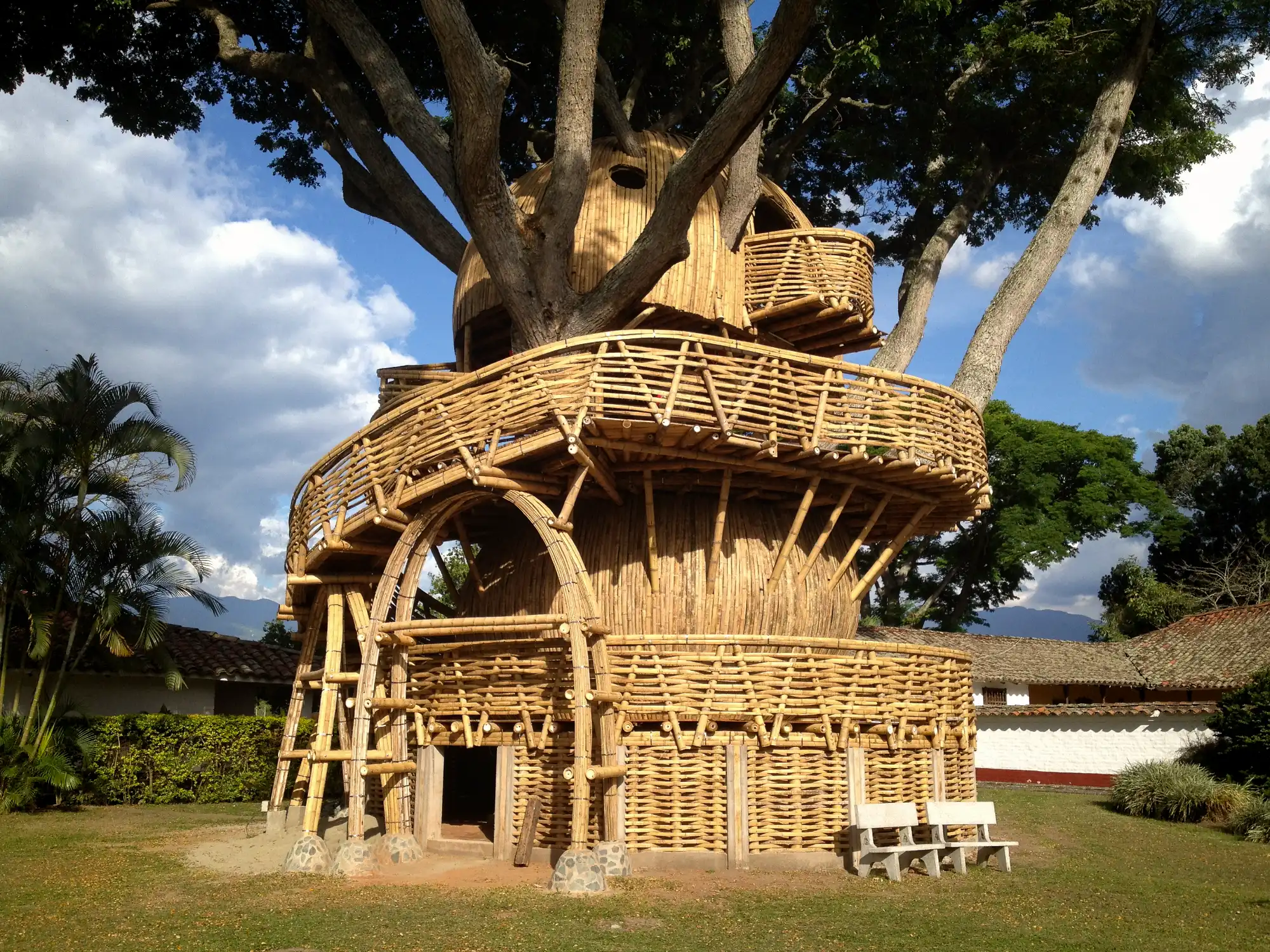
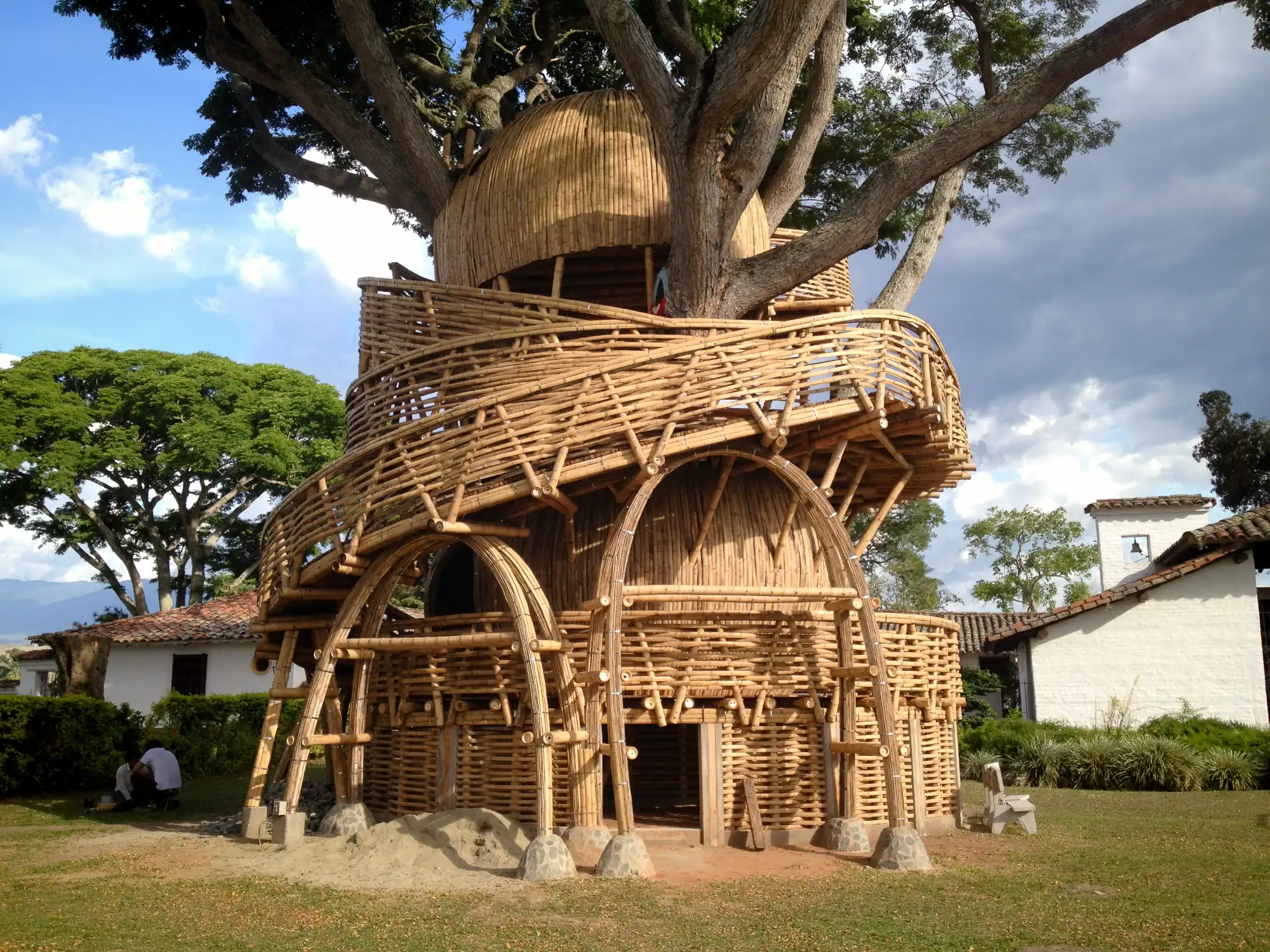
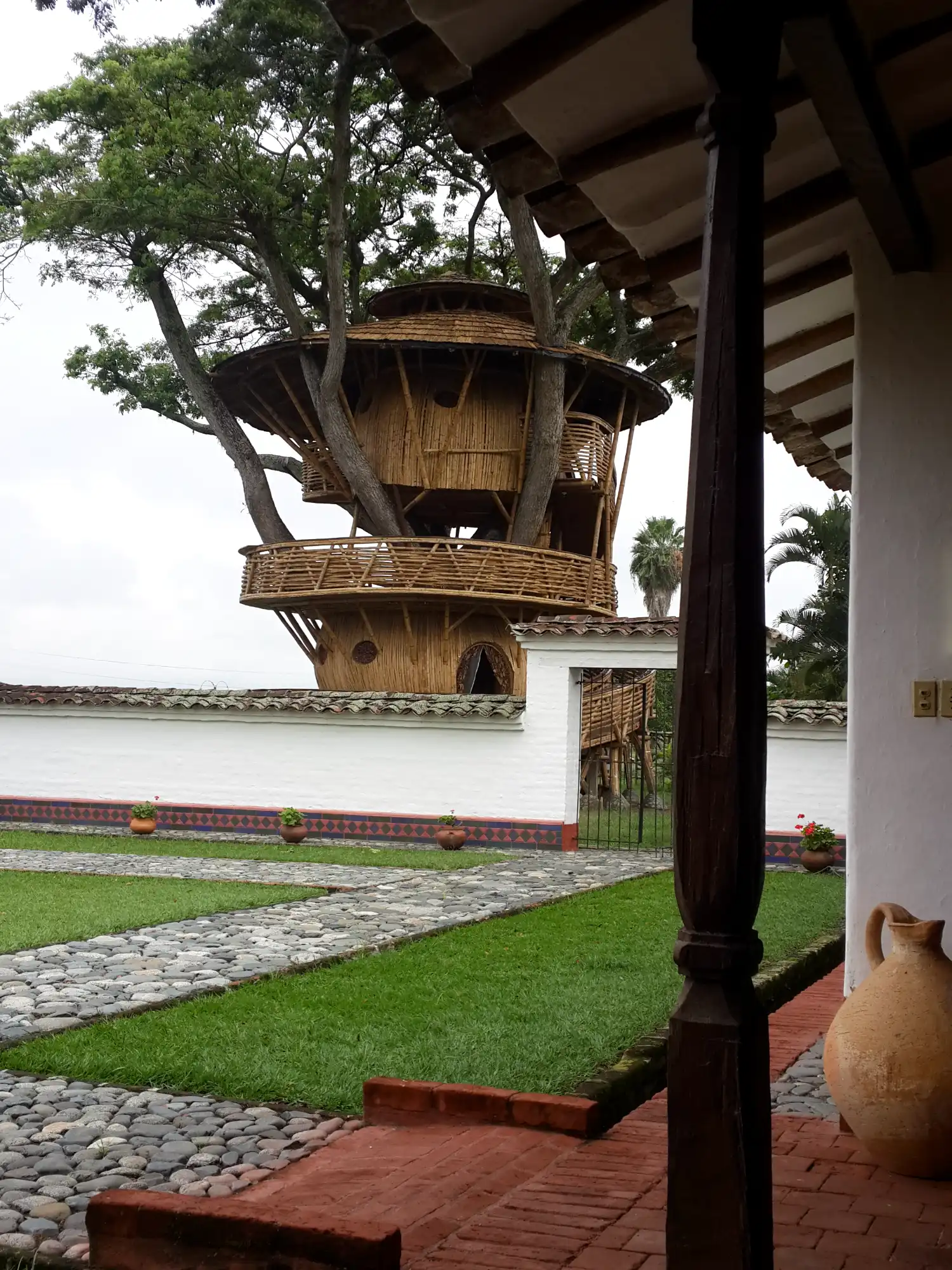
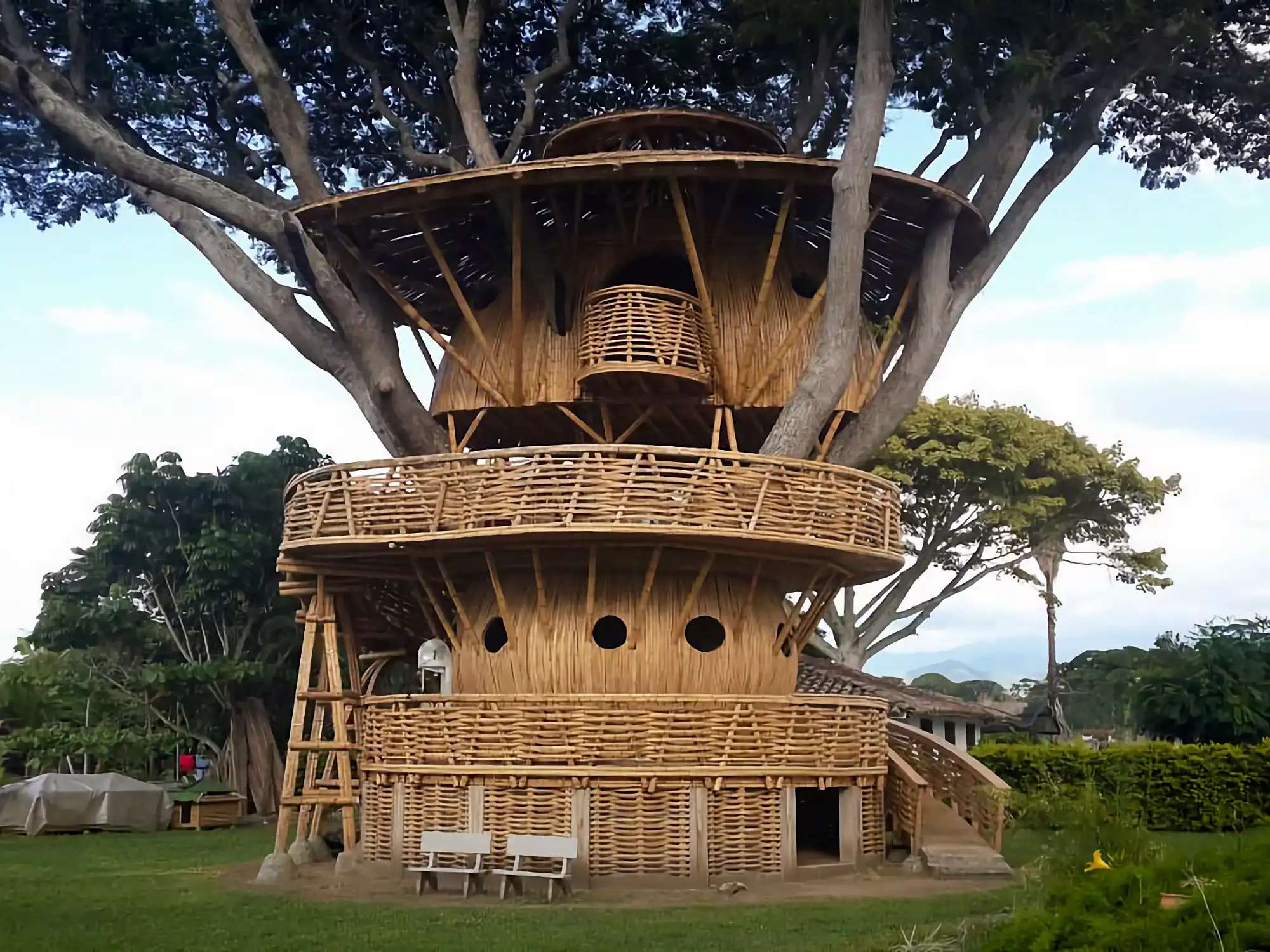
What started as a request for a small bamboo dollhouse ended up as a 3-floor family bamboo treehouse built around a century-old Ceiba tree on a hacienda in Buga, Valle del Cauca. Colombian architect Jaime Peña designed the structure in 2014, but it remains one of the most ambitious uses of Guadua Bamboo Slats in a residential project in Colombia.
From Dollhouse to Bamboo Treehouse
The clients had a clear idea when they approached the project: a small bamboo playhouse for their granddaughters, tucked into the shade of a large Ceiba tree that had stood on the property for generations. The location was already chosen. The tree did the rest.
Architect Jaime Peña had a different vision. A dollhouse was a nice idea, but a real bamboo treehouse built around the tree itself was something else entirely. The clients agreed, and the scope grew from there.
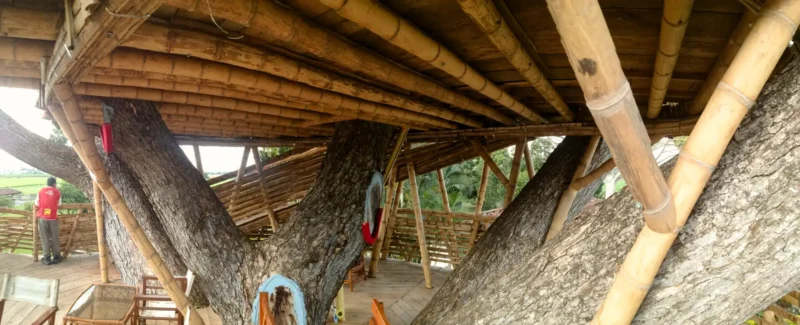
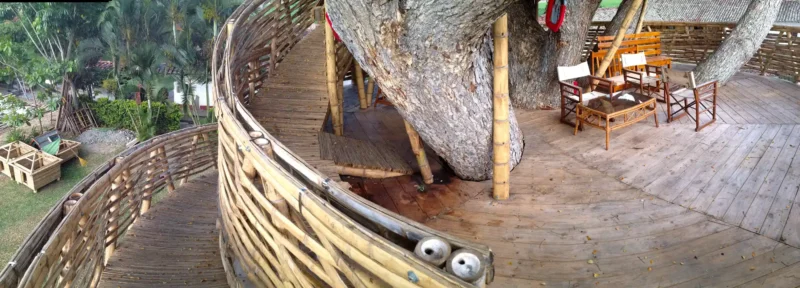
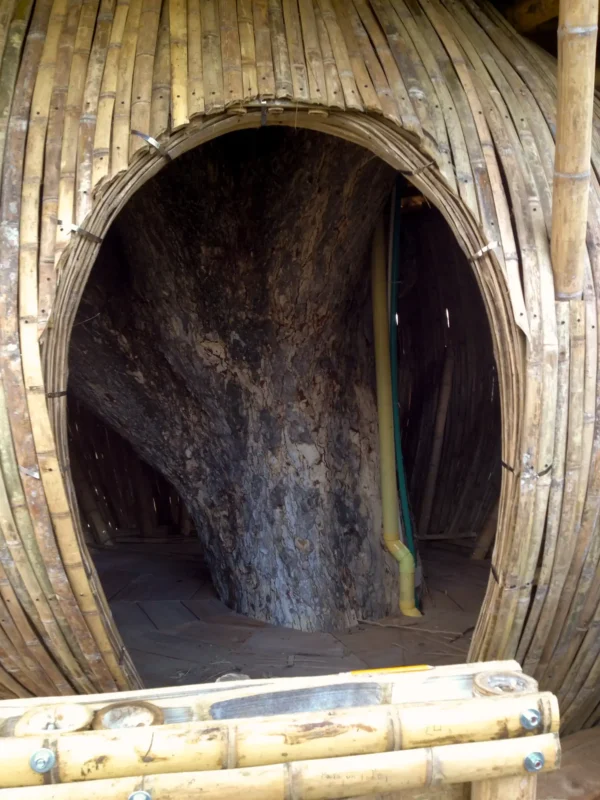
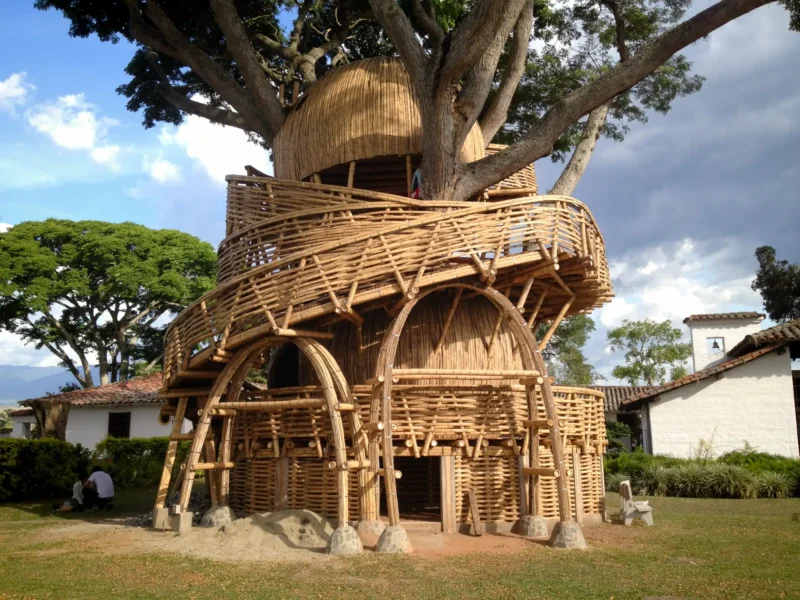
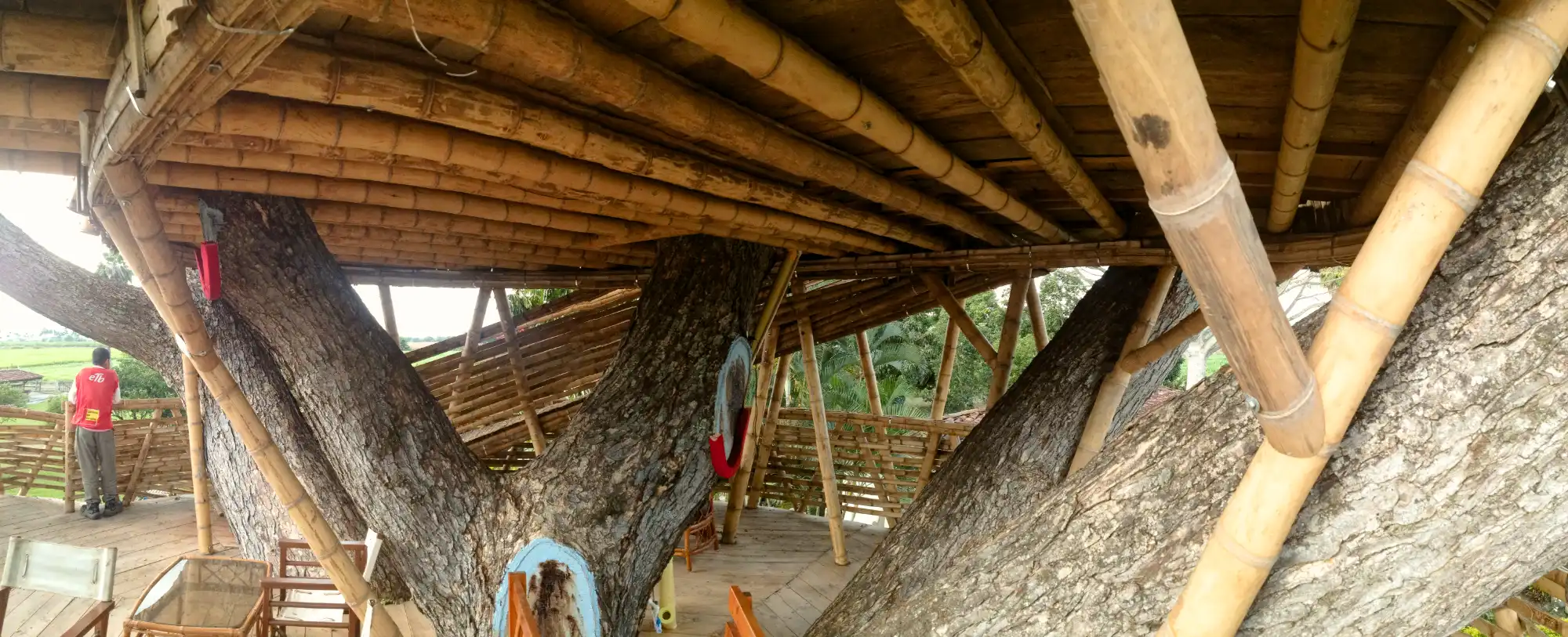
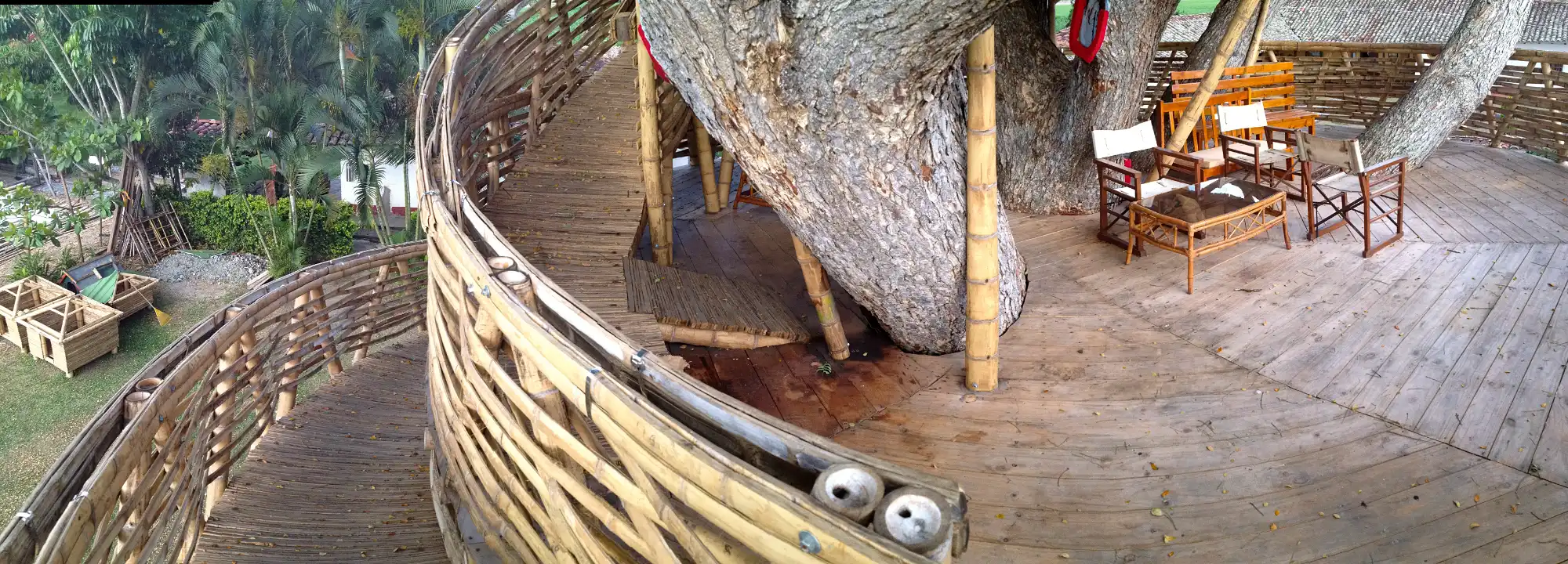
What was initially designed as a single platform eventually became 3 full floors. Each time the clients saw the updated drawings, they asked for more. The result is a structure that works for the grandchildren on the first floor, for social gatherings on the second, and for the grandparents on the third. The Ceiba tree runs through the center of all three levels, its trunk and canopy integrated into the structure rather than worked around.
Bamboo Treehouse Design: Curved Forms and Spiral Geometry
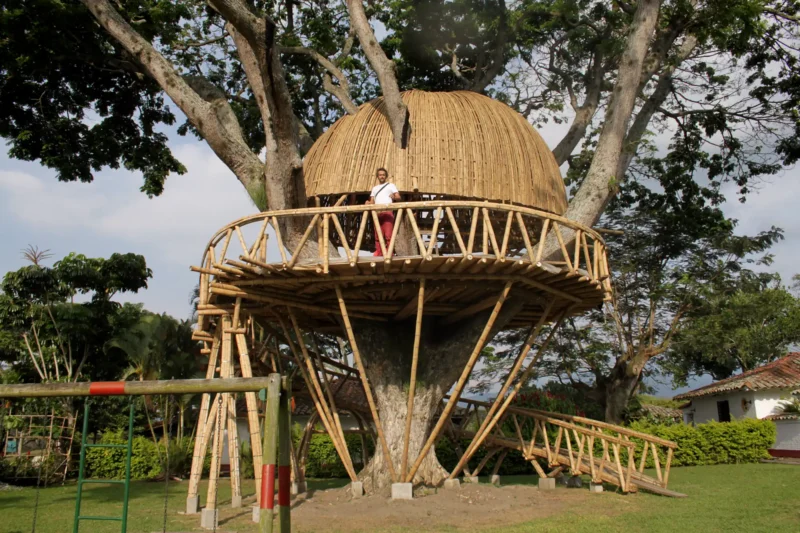
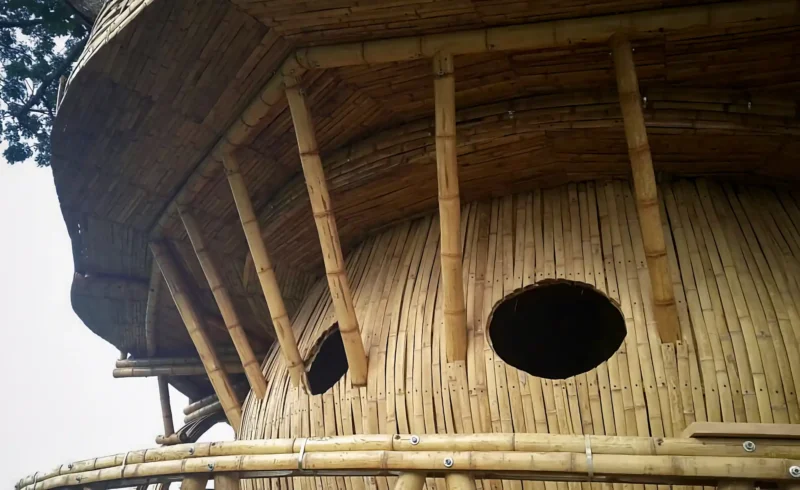
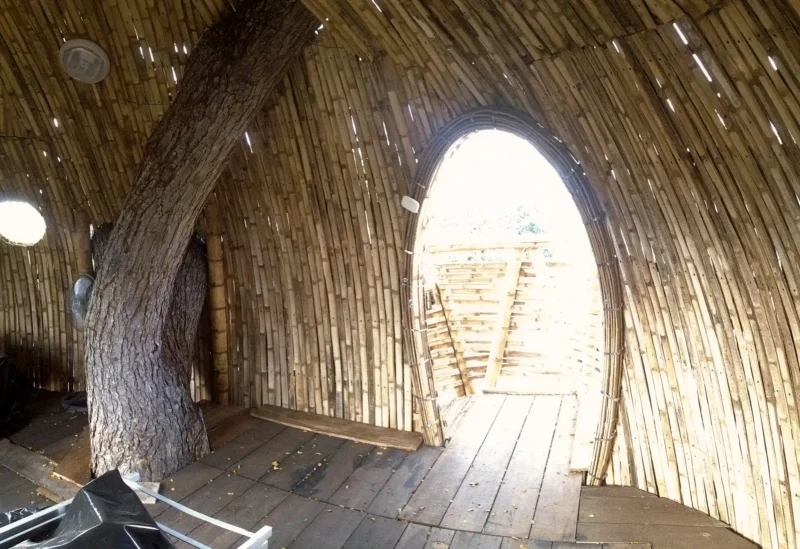
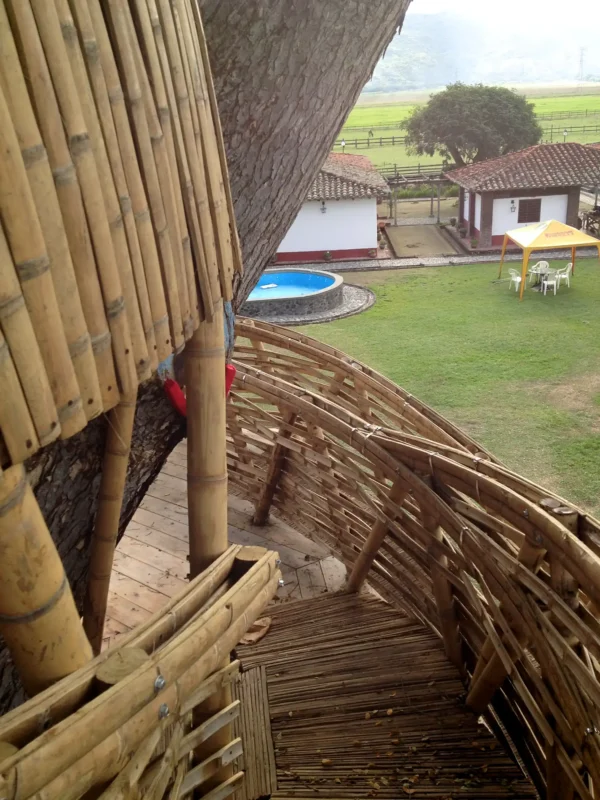
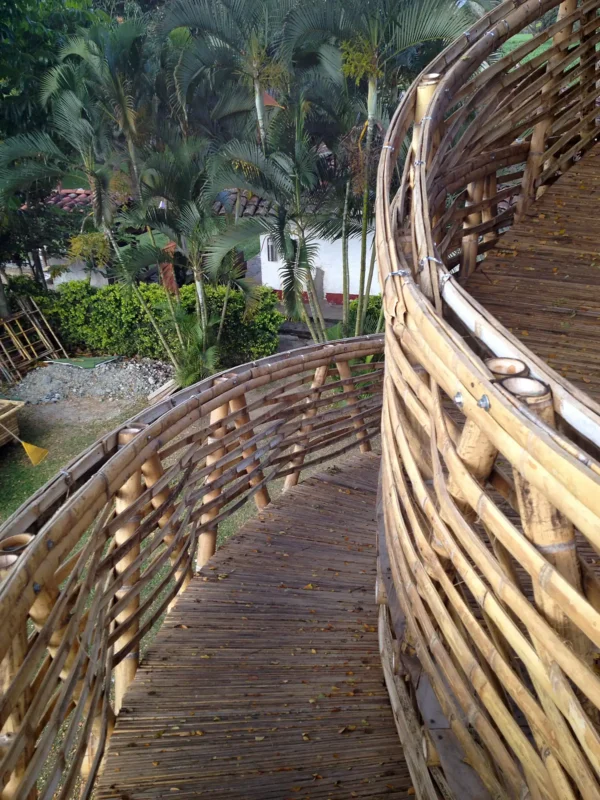
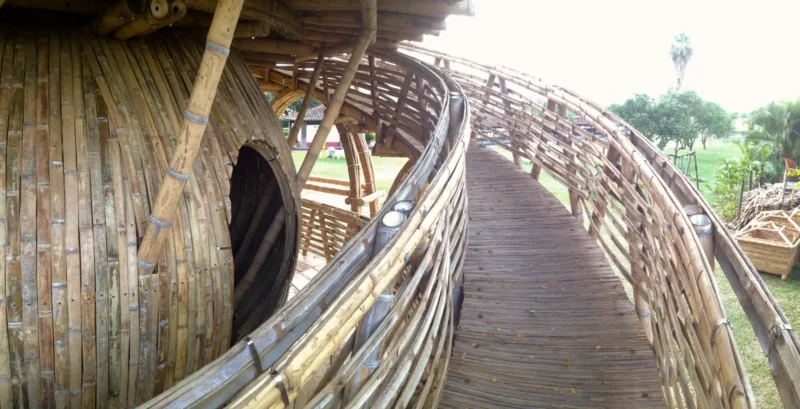
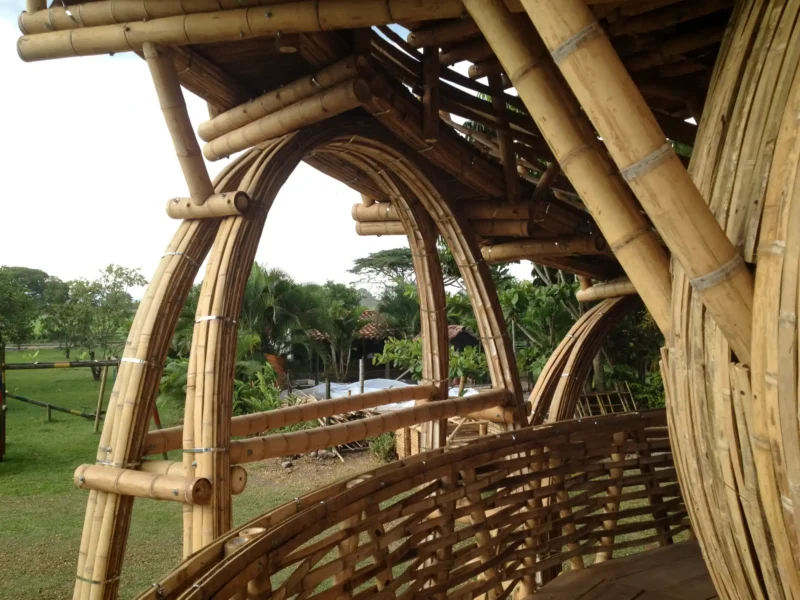
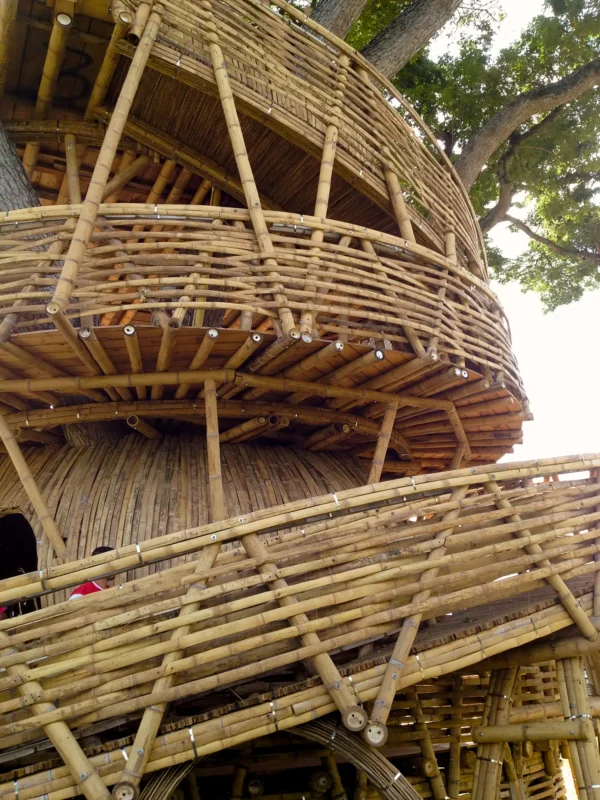
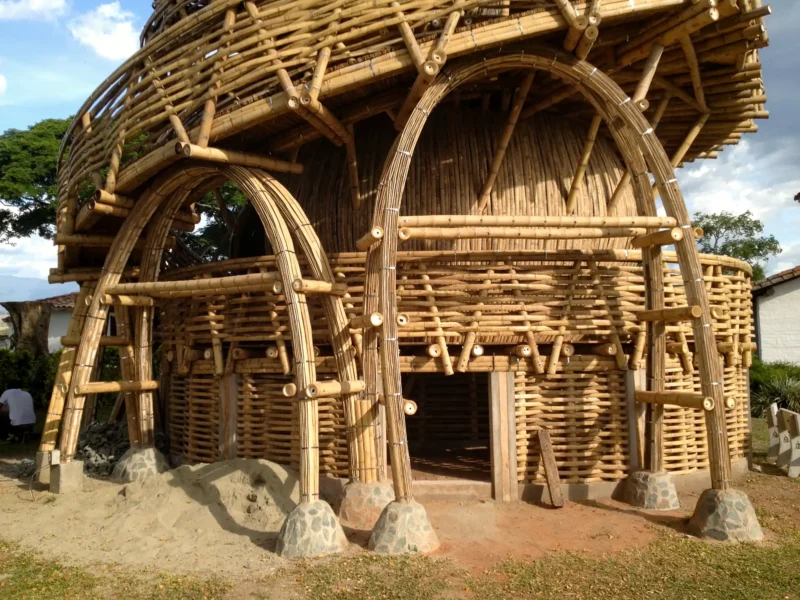
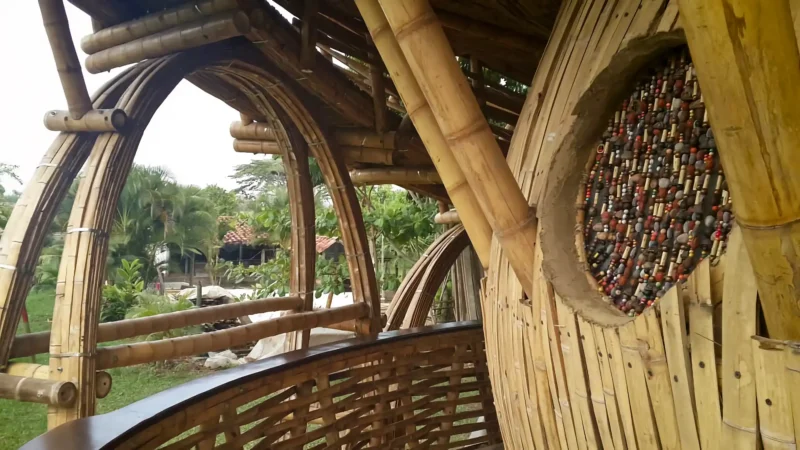
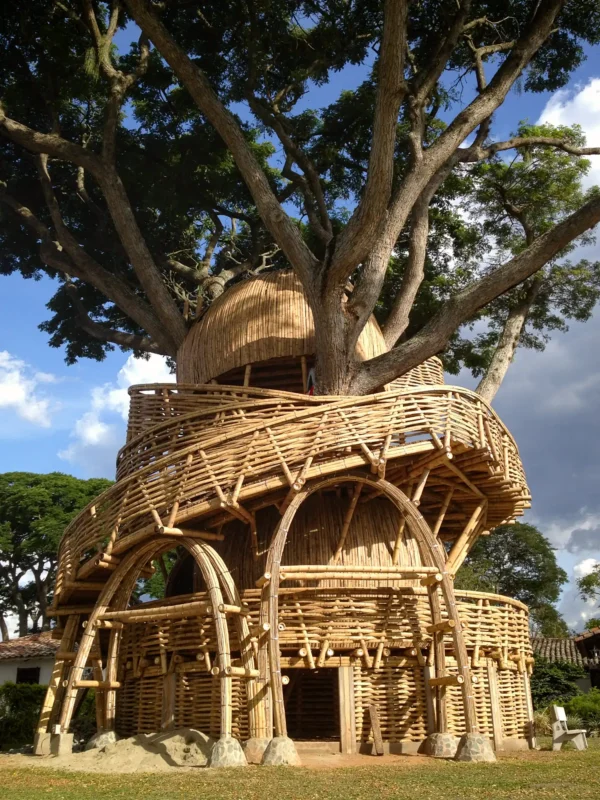
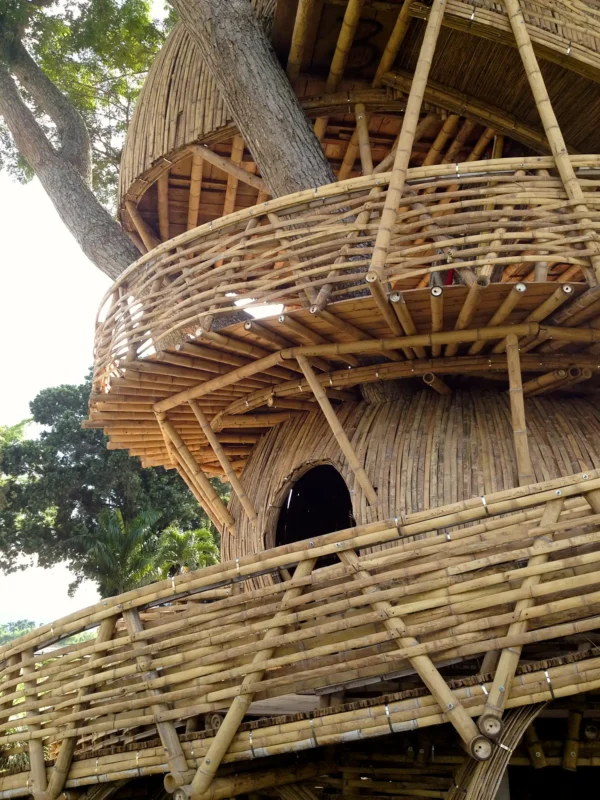
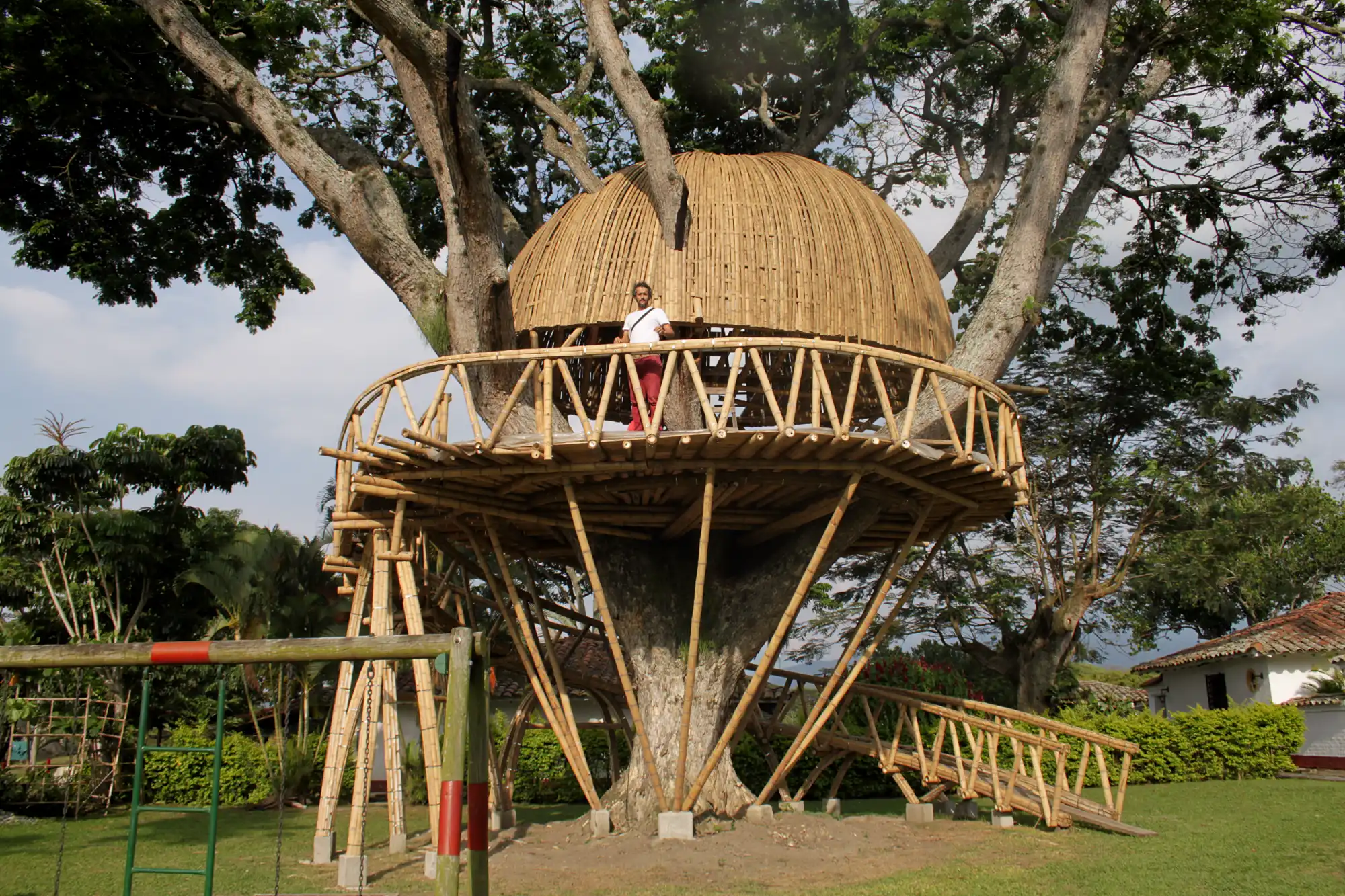
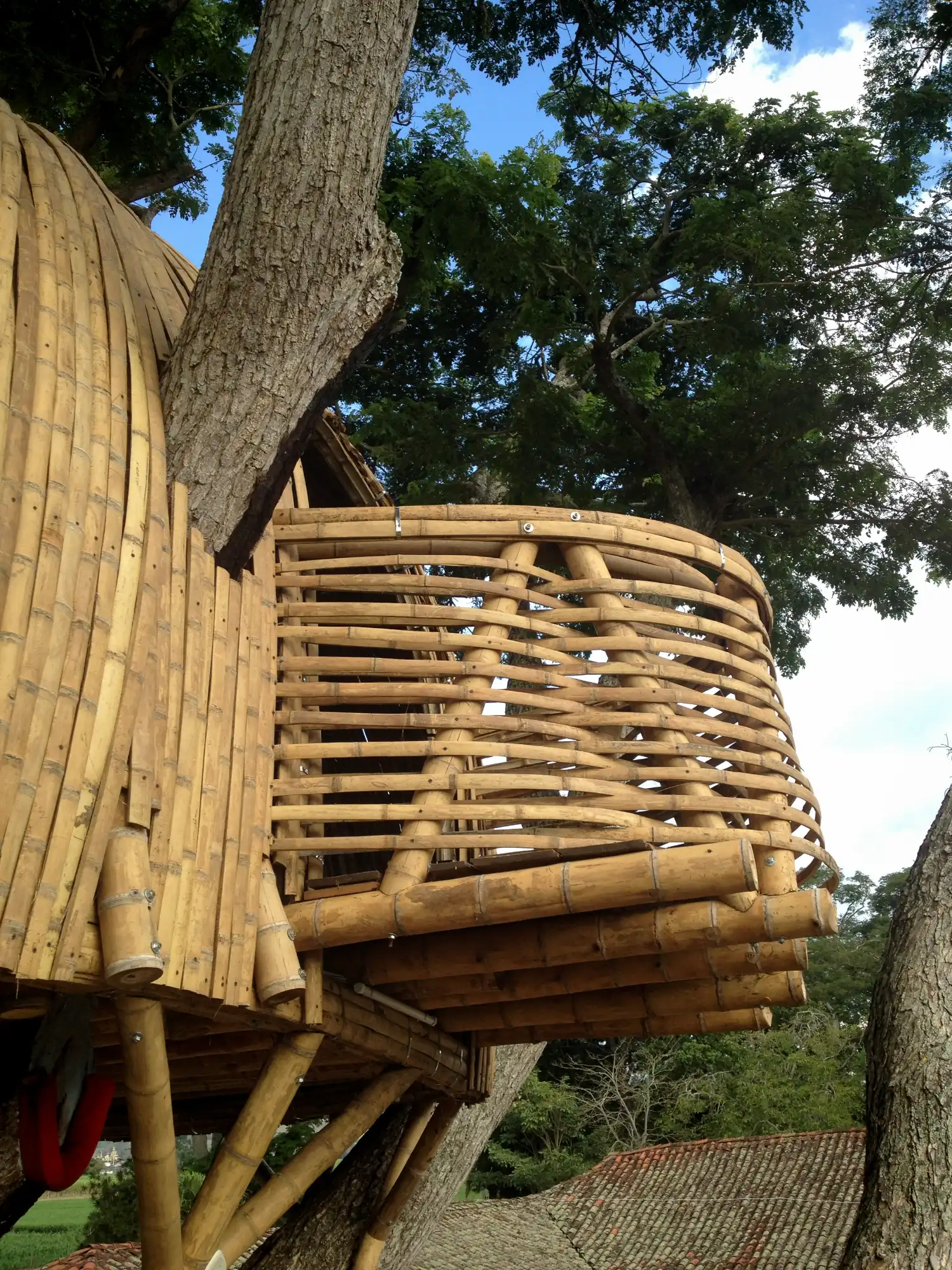
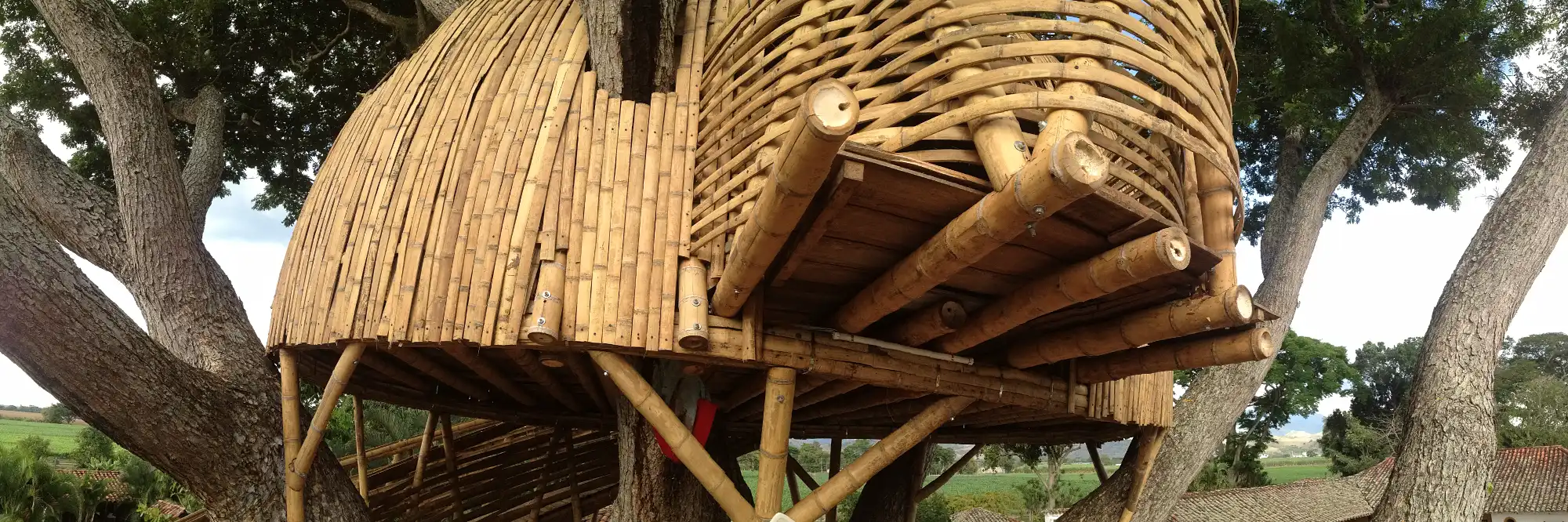
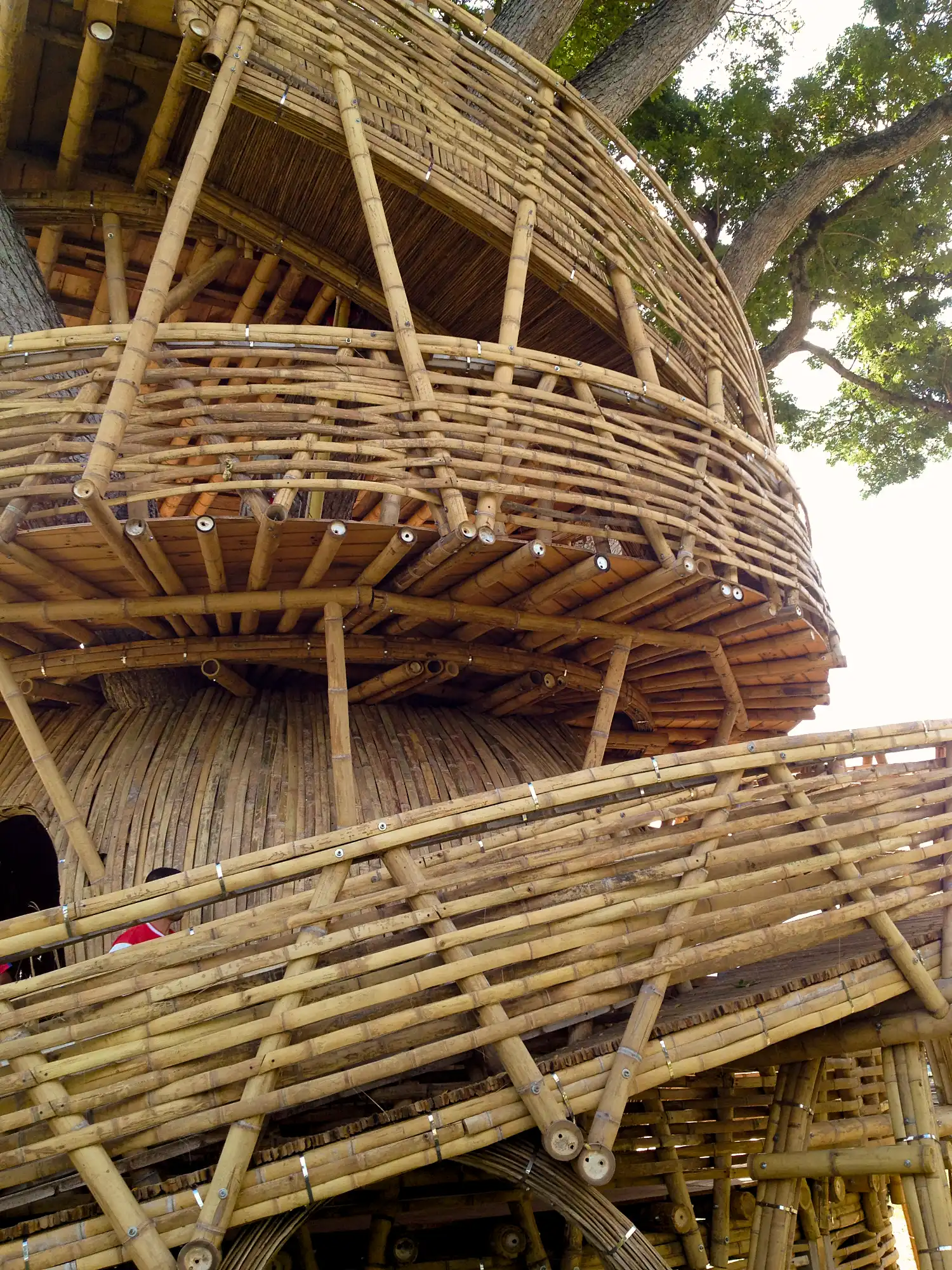
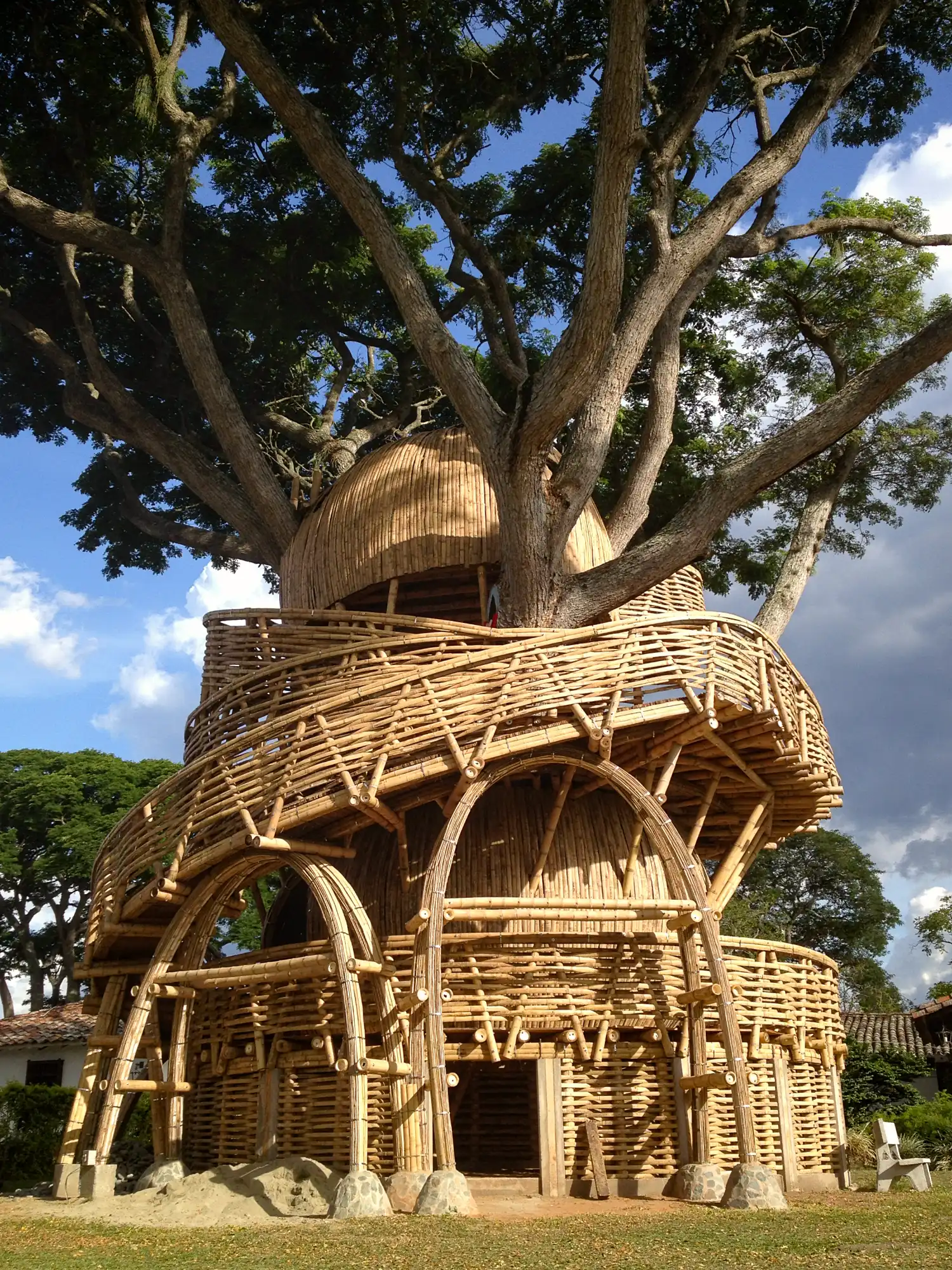
The treehouse stands roughly 12 meters tall with a diameter of approximately 8 meters at its widest point. The overall form is organic: egg-shaped enclosures at the first and third floors, an open circular terrace at the second, and a dome at the top. Arched split bamboo beams spiral around the tree trunk, supporting each floor level independently.
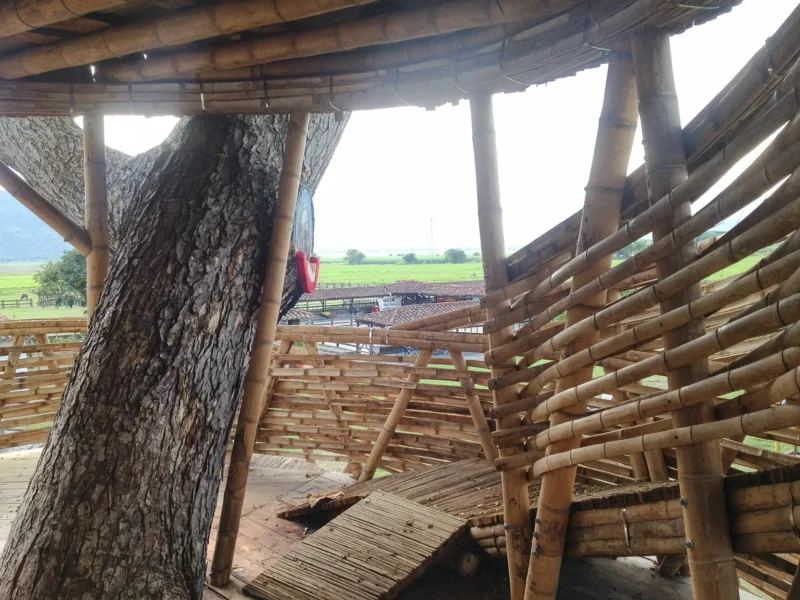
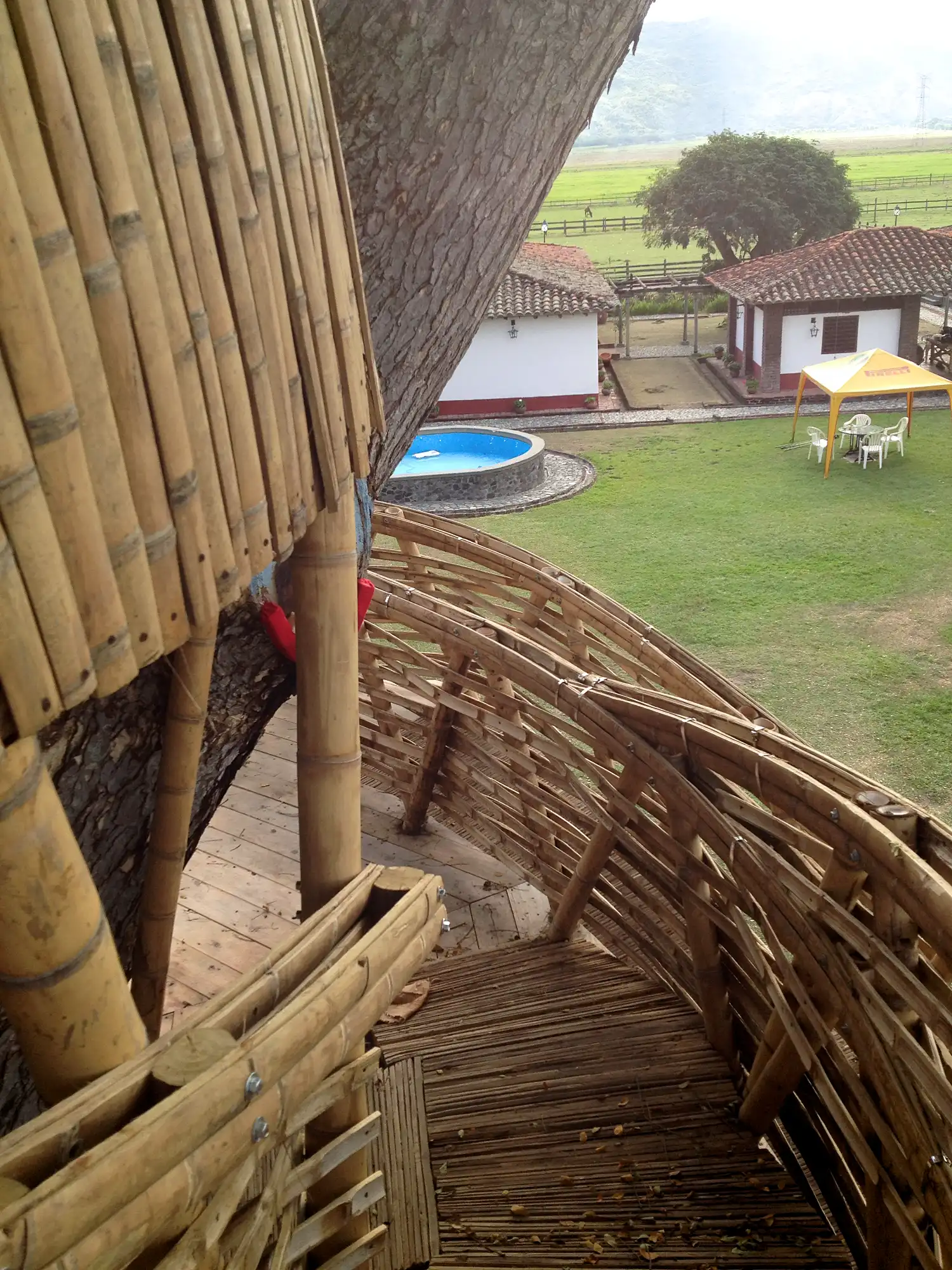
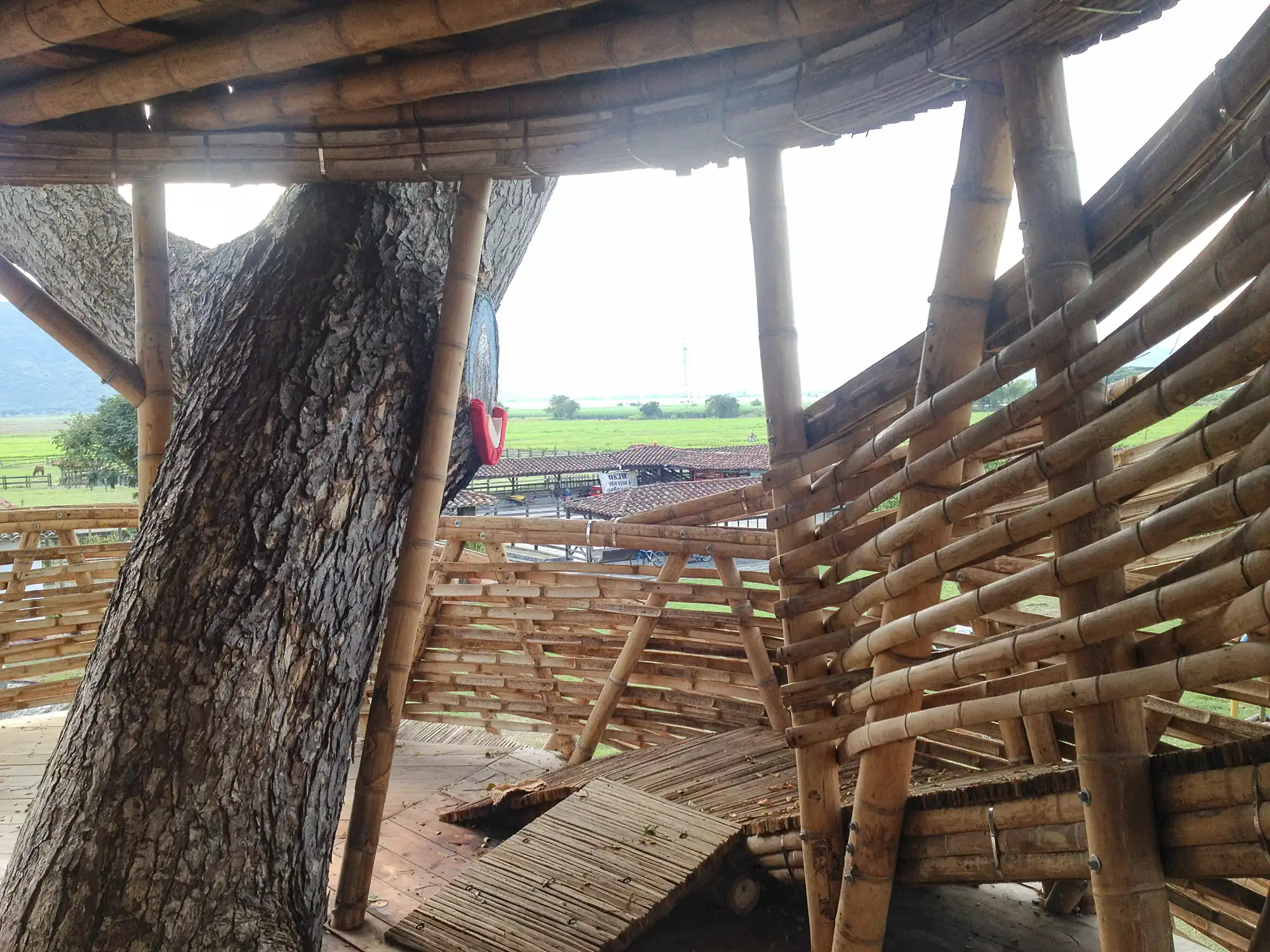
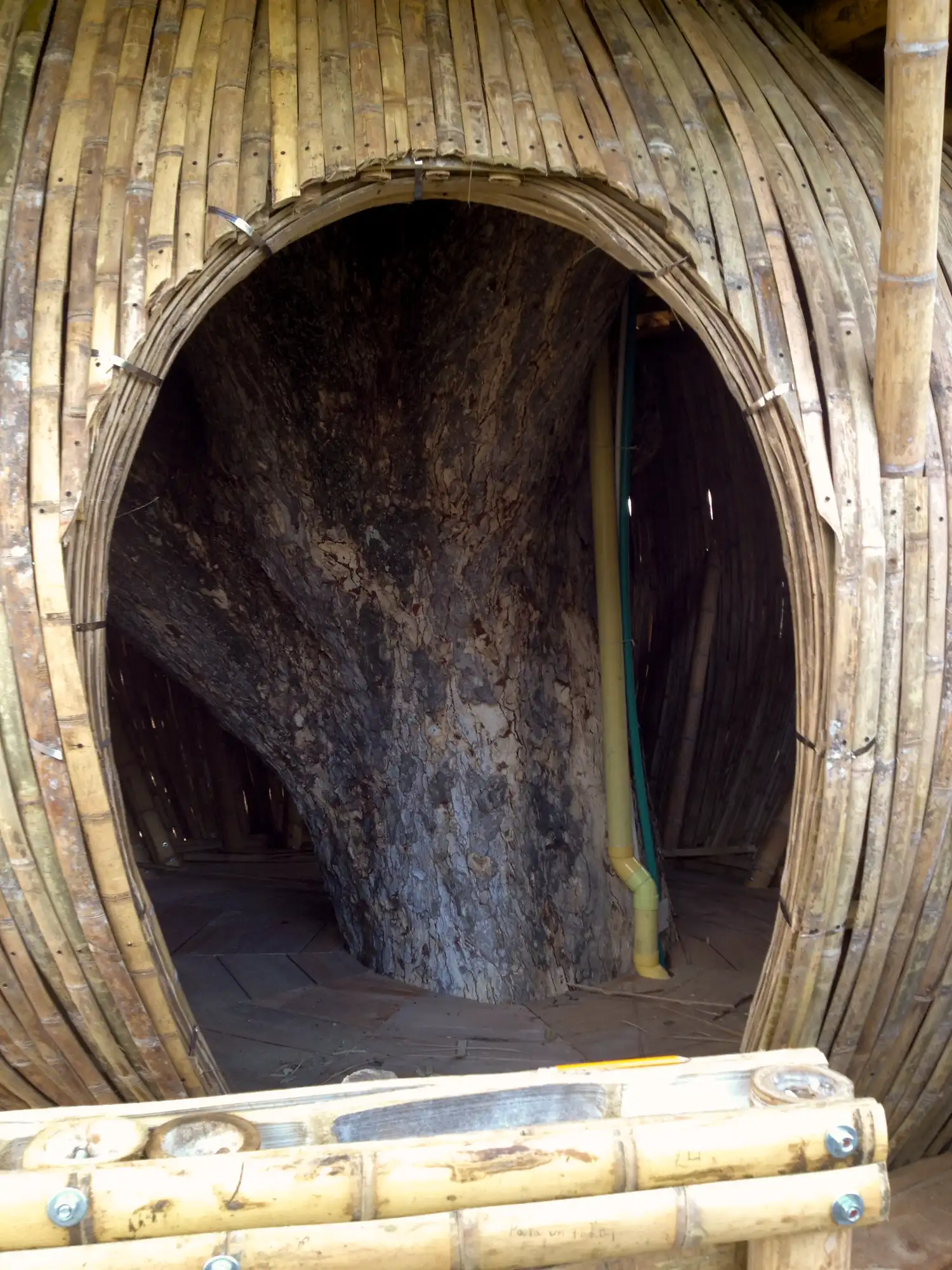
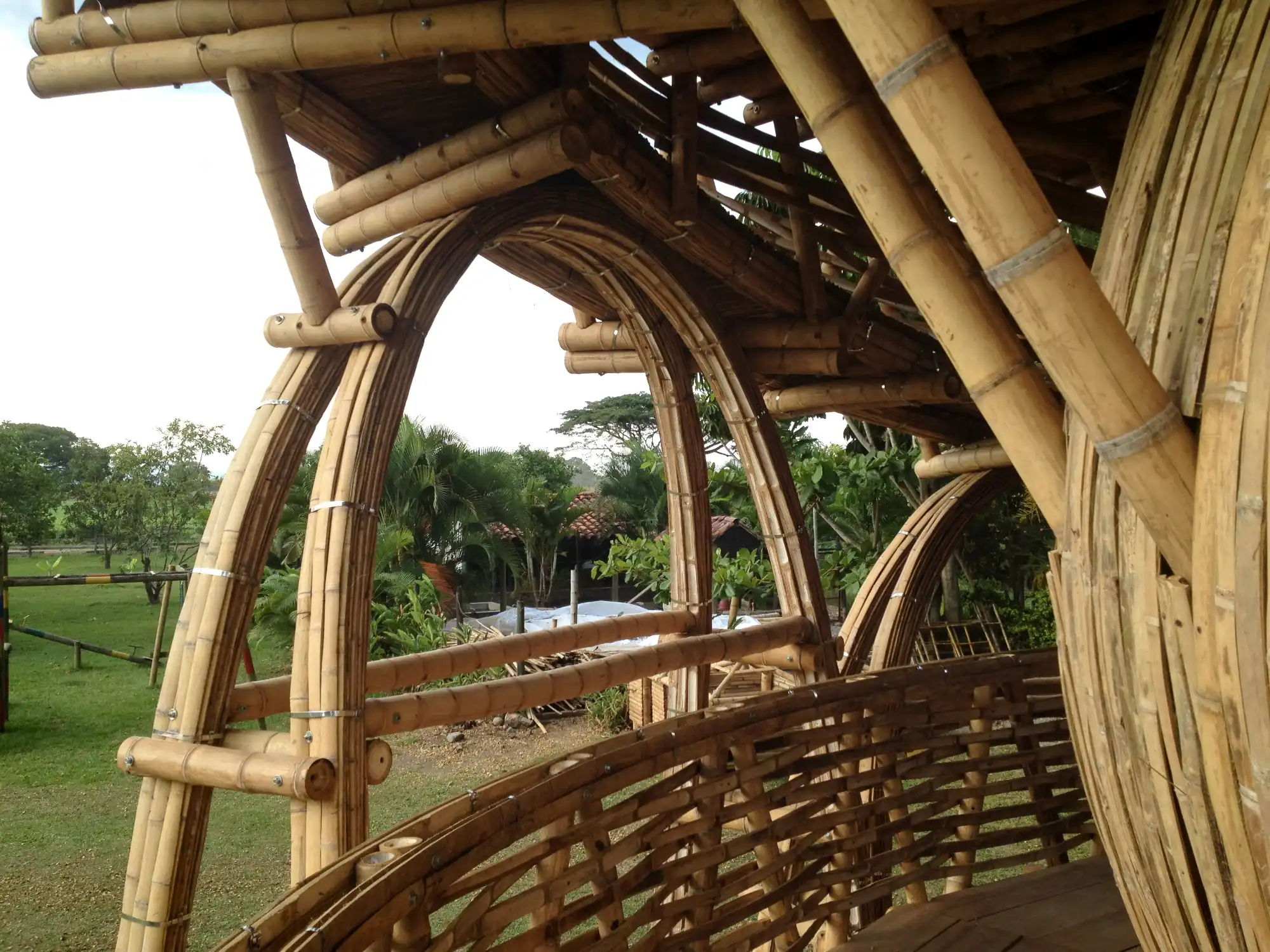
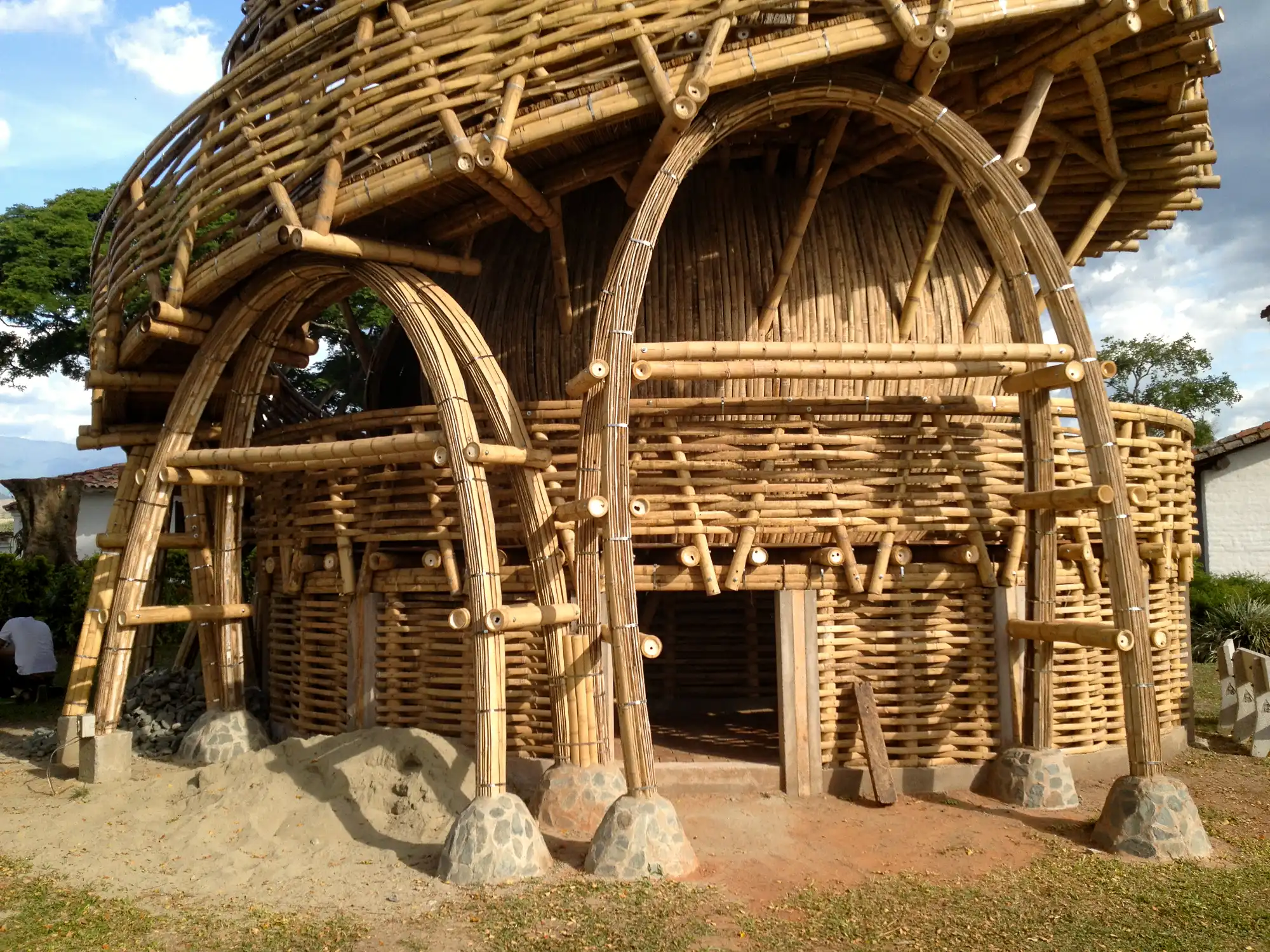
The geometry is not arbitrary. The arch structures follow elliptical and spiral forms that distribute load efficiently while allowing the living tree to move naturally with wind and growth. There are no rigid connections to the tree itself. The Ceiba is present inside the structure but carries none of the structural load.
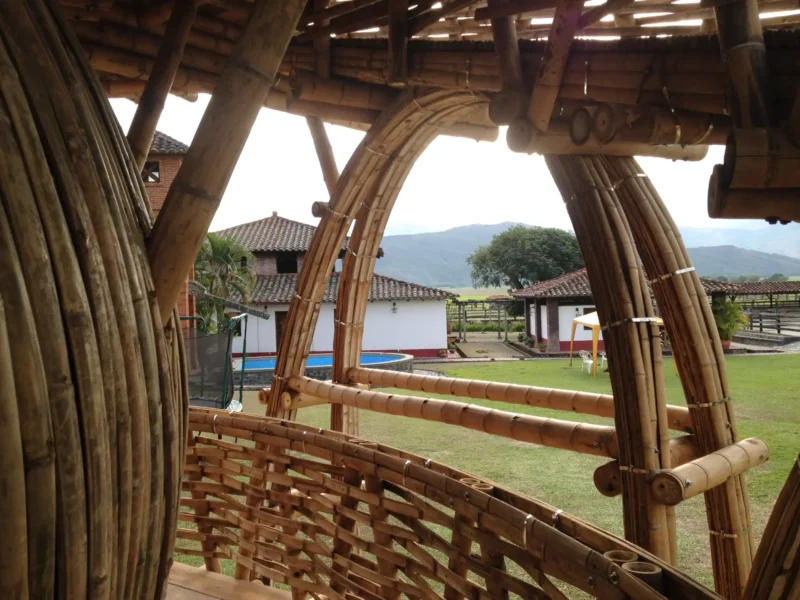
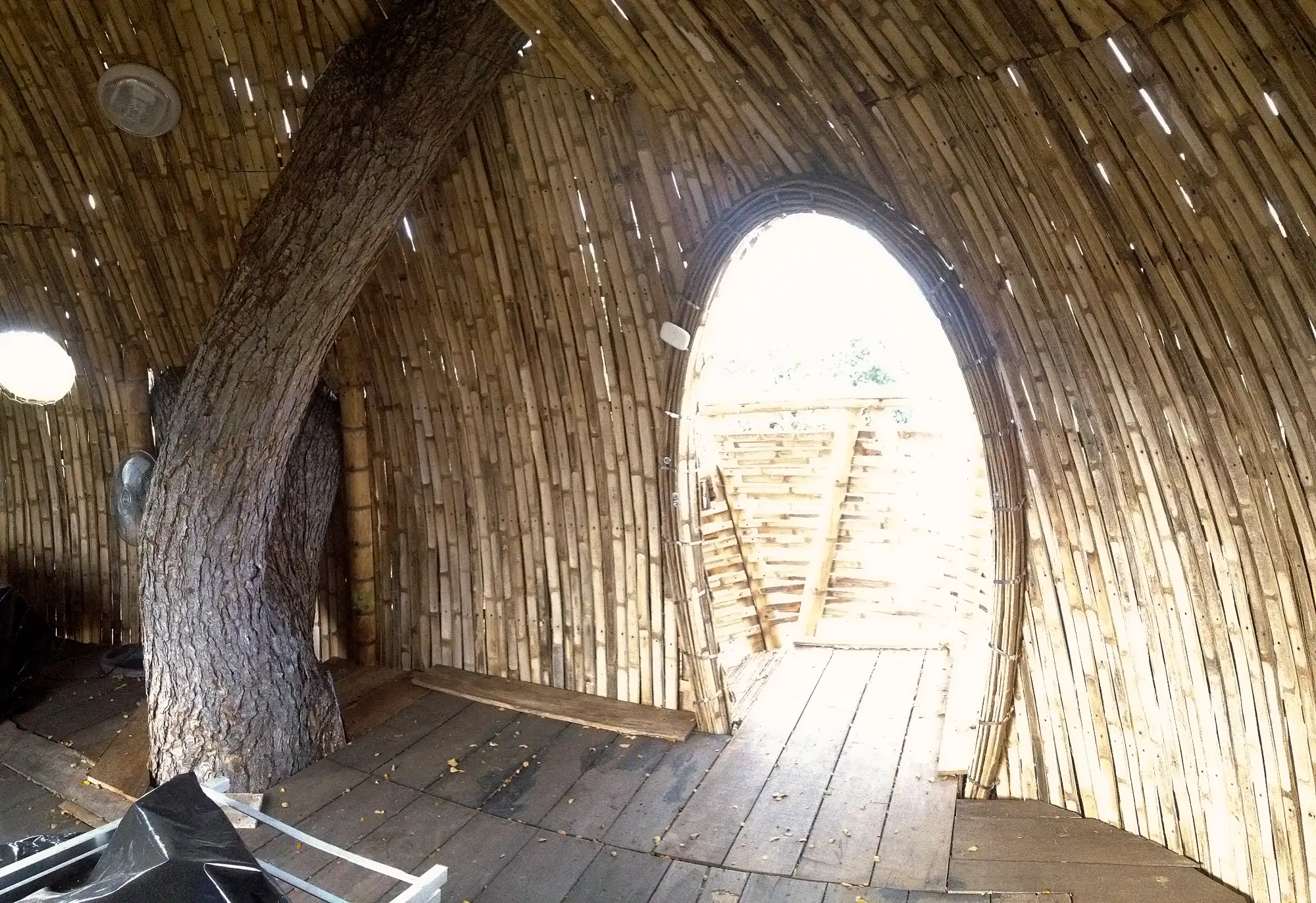
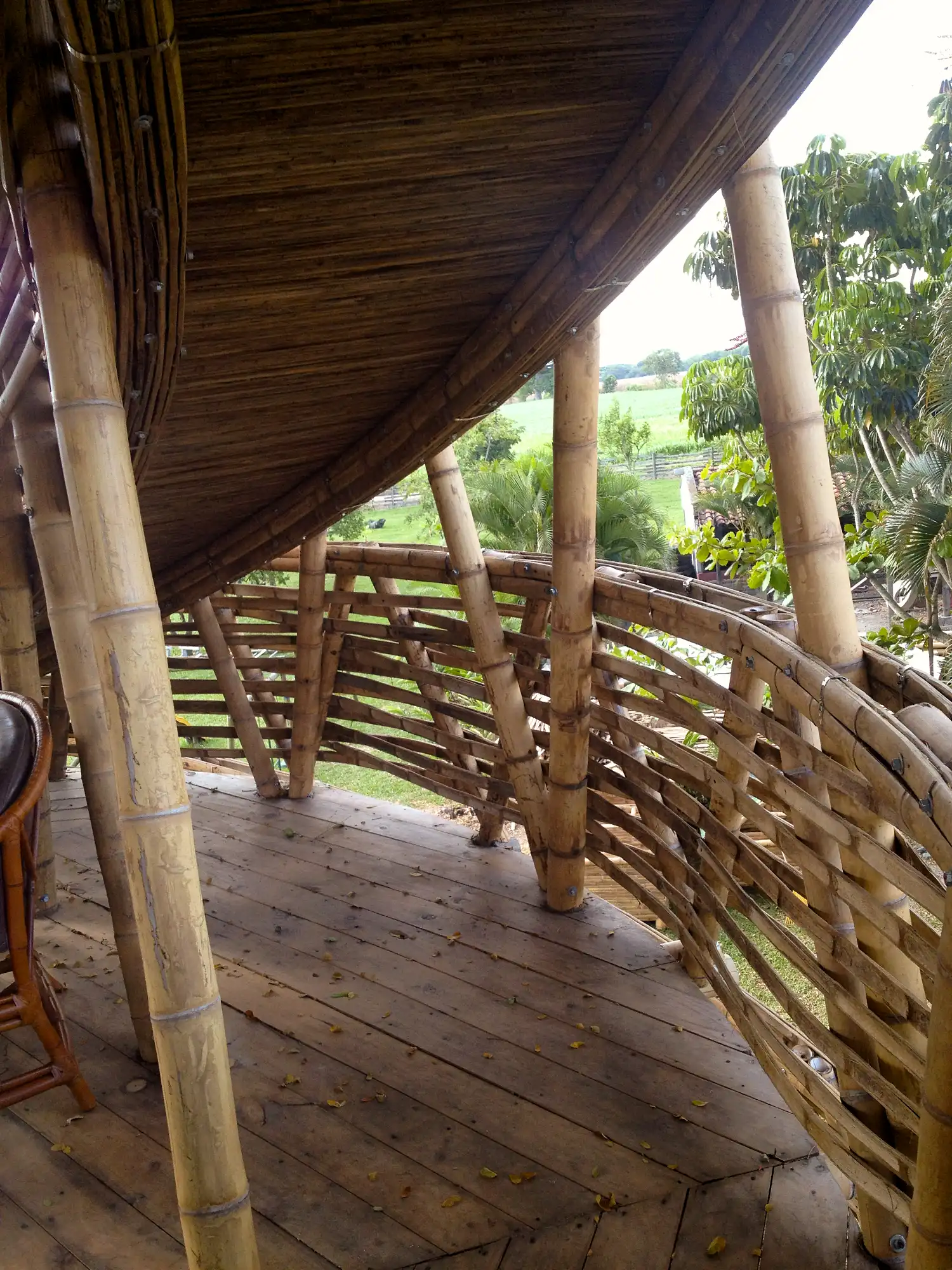
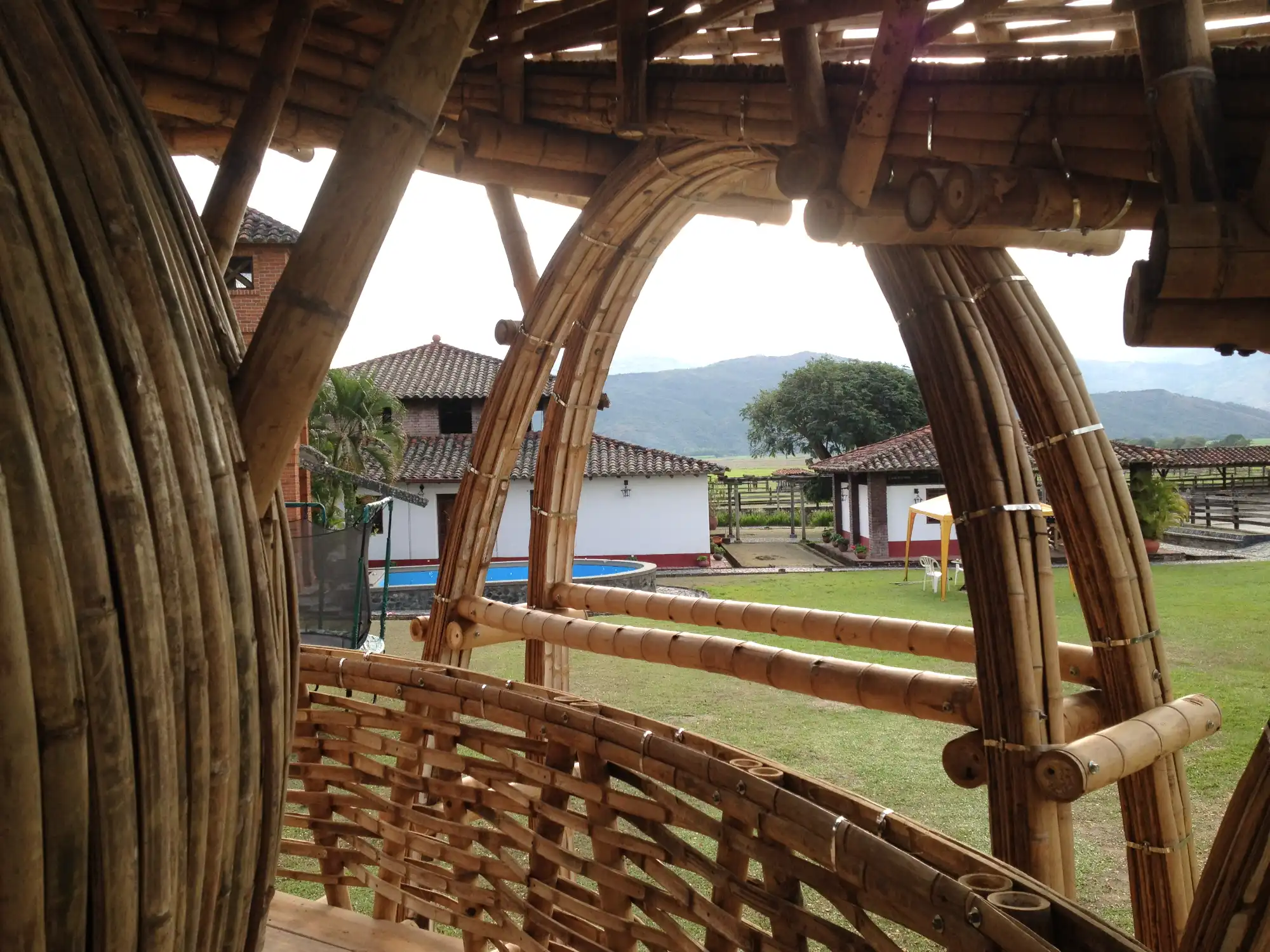
The first floor cocoon serves as the children’s sleeping space. The second floor opens onto a wide circular balcony and functions as the social area. The third floor dome is the master bedroom, sitting at canopy level with views across the hacienda.
Guadua Bamboo Construction: Materials and Techniques
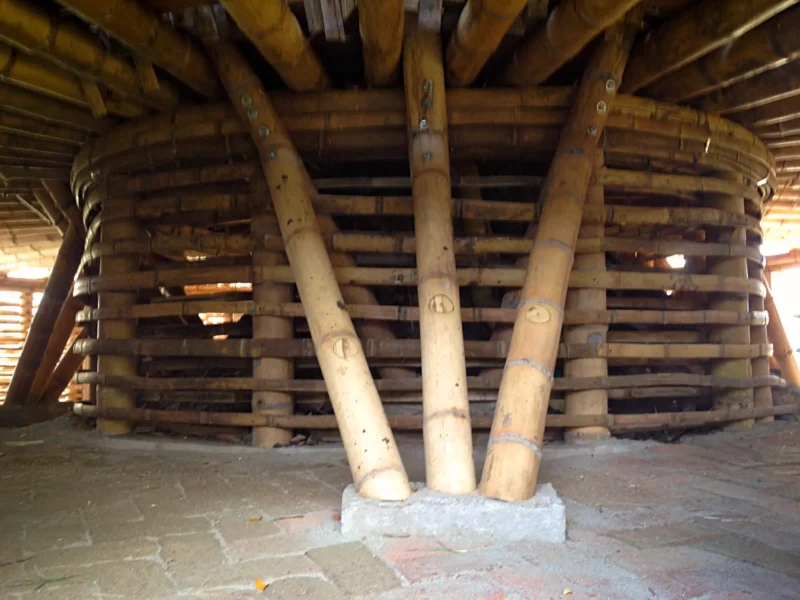
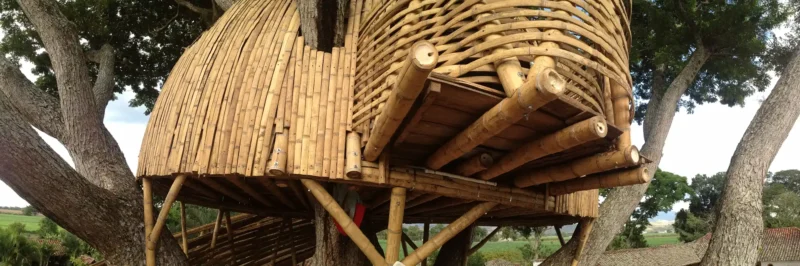
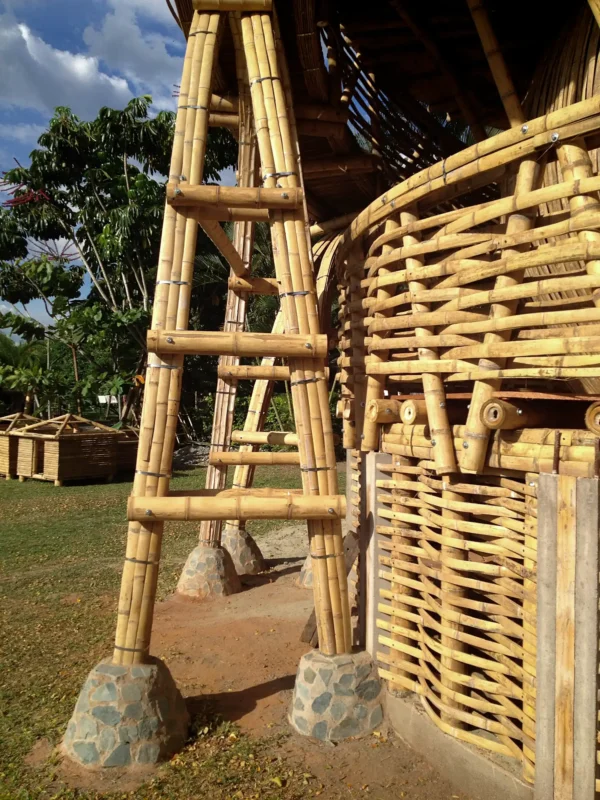
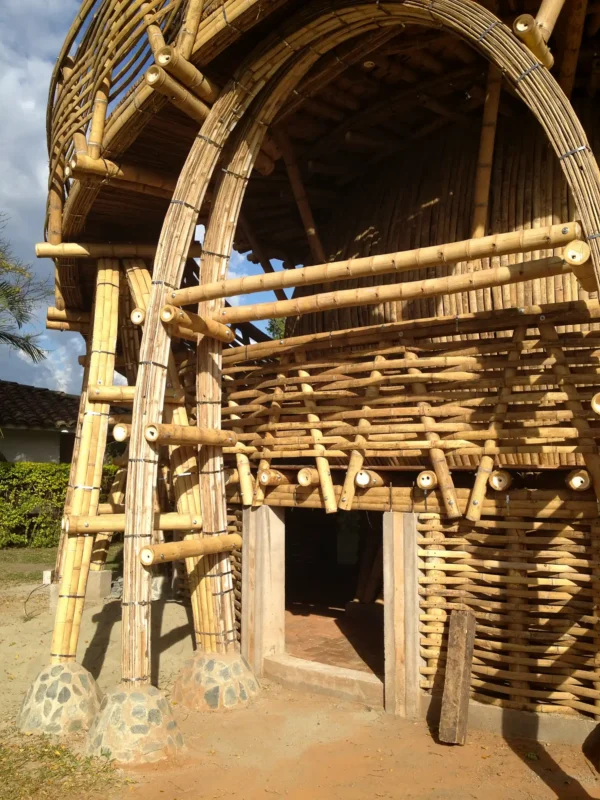
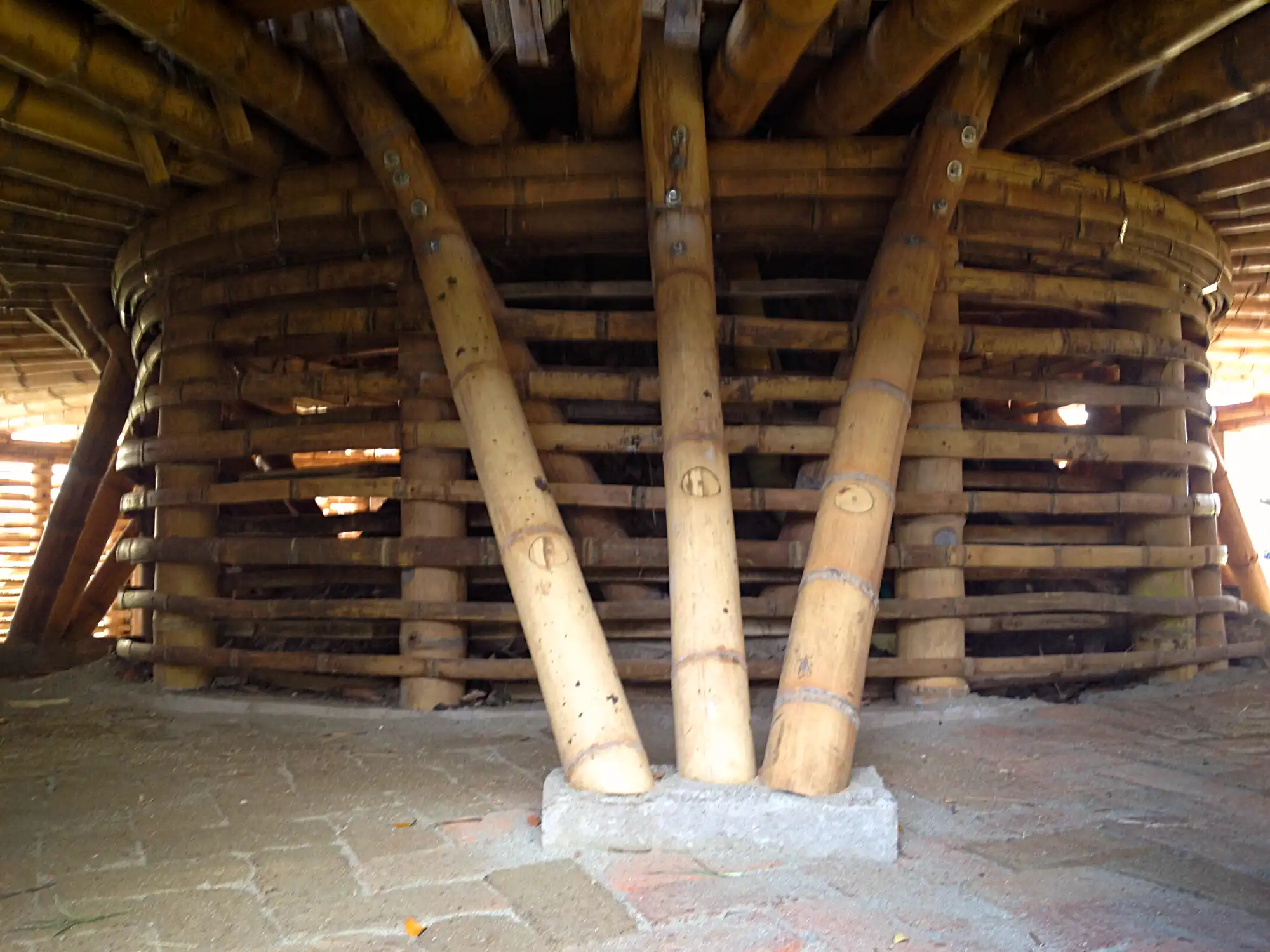
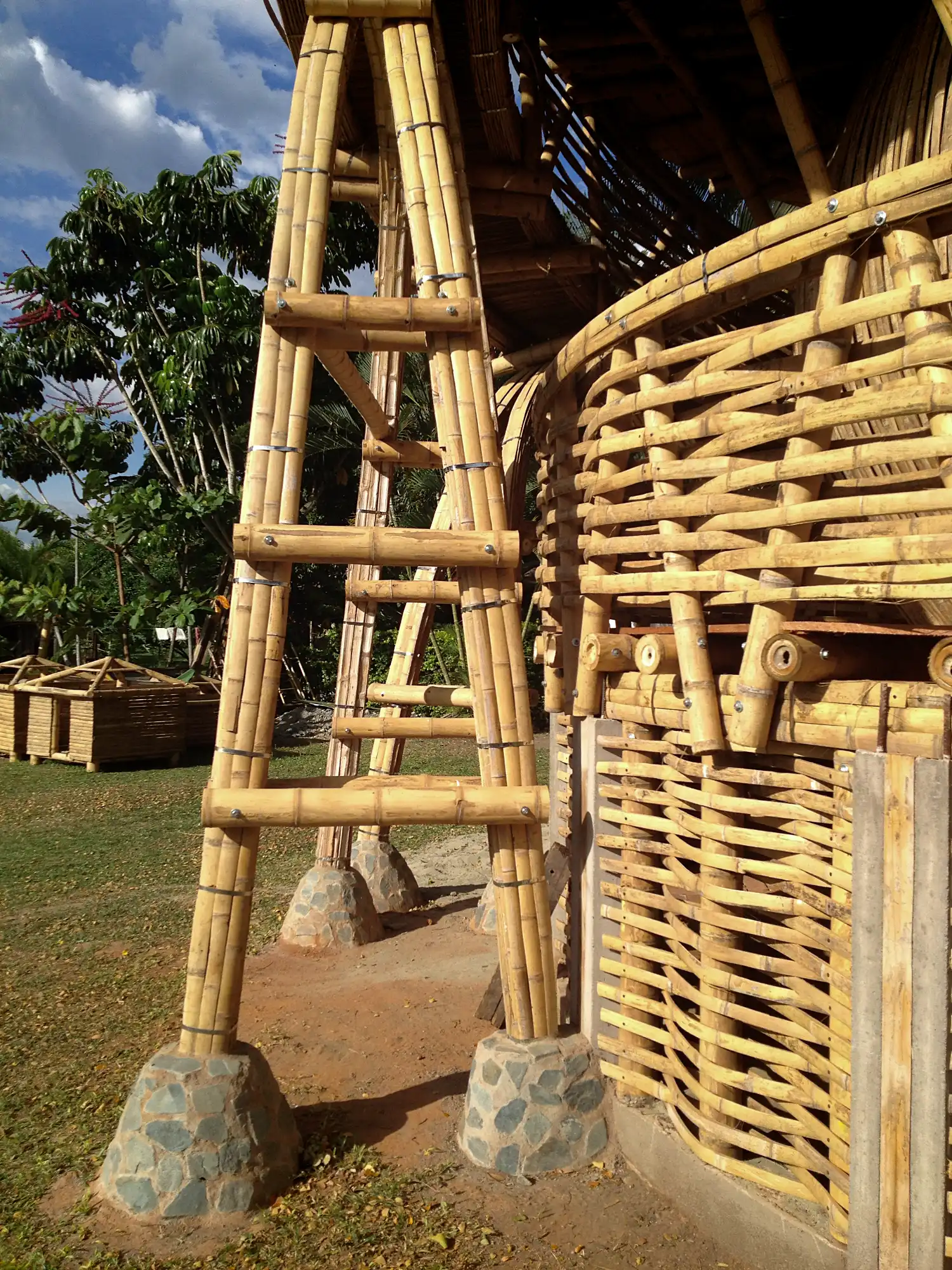
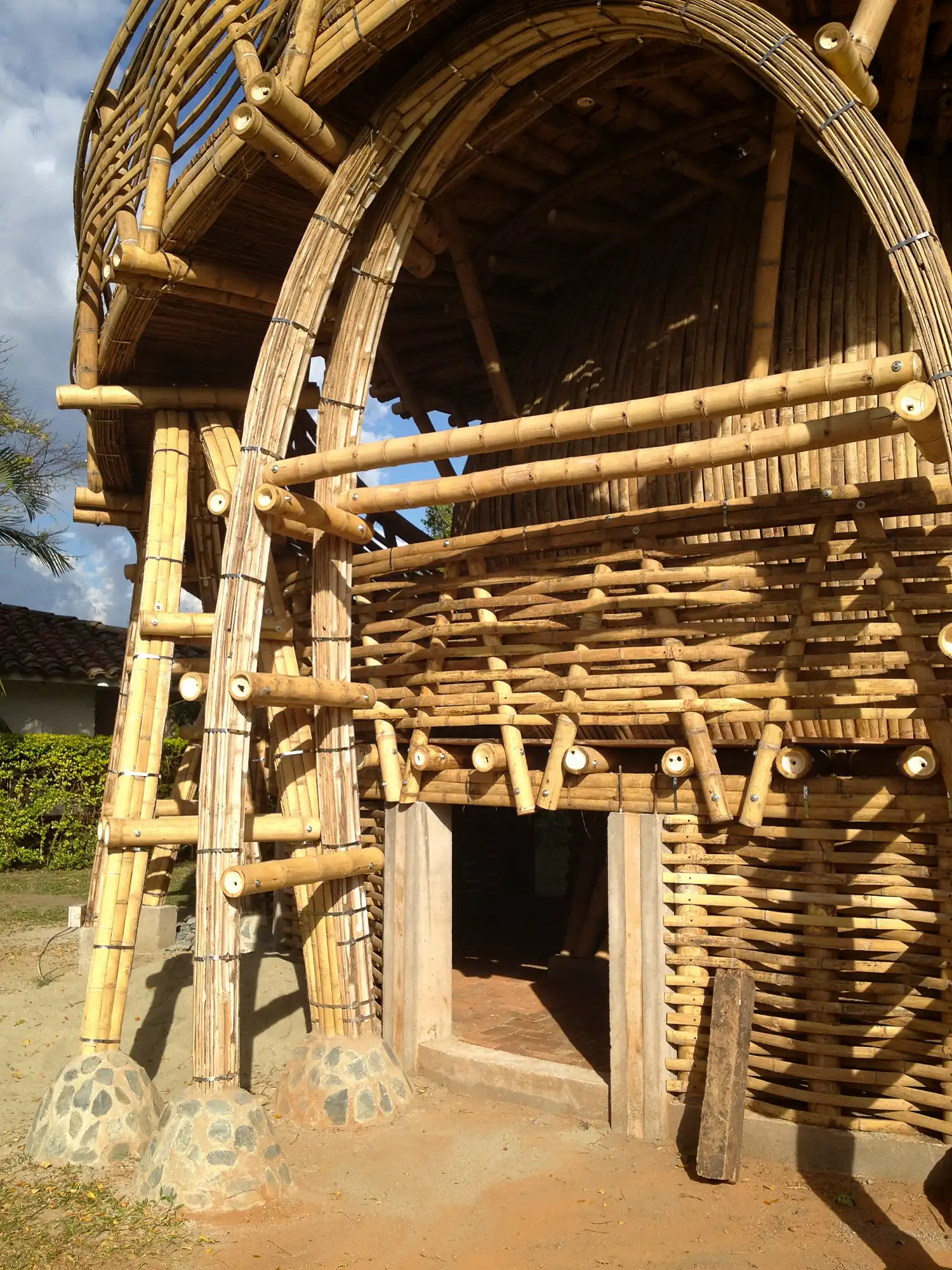
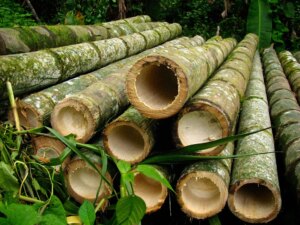
The structural logic of this bamboo treehouse is straightforward even if the result looks anything but. Everything load-bearing is full round Guadua, 11-12 cm diameter poles used for the foundation posts, floor joists, and diagonal framing. The round pole structure gives the building its rigidity.
The skin of the building is a different story, and it is where the project becomes genuinely interesting from a materials standpoint.
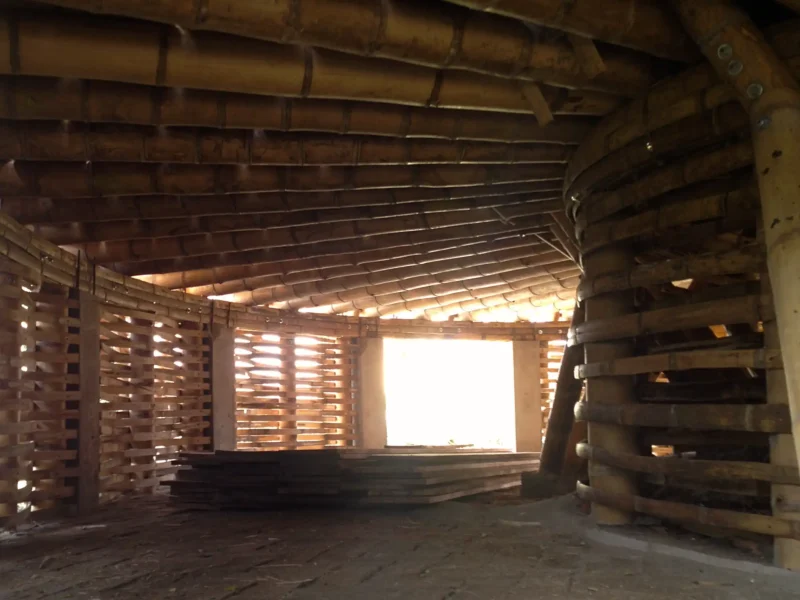
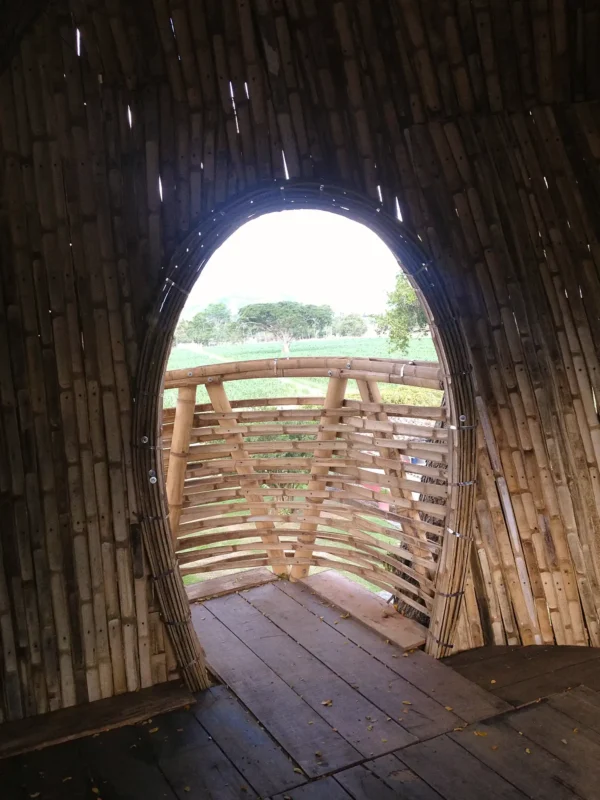
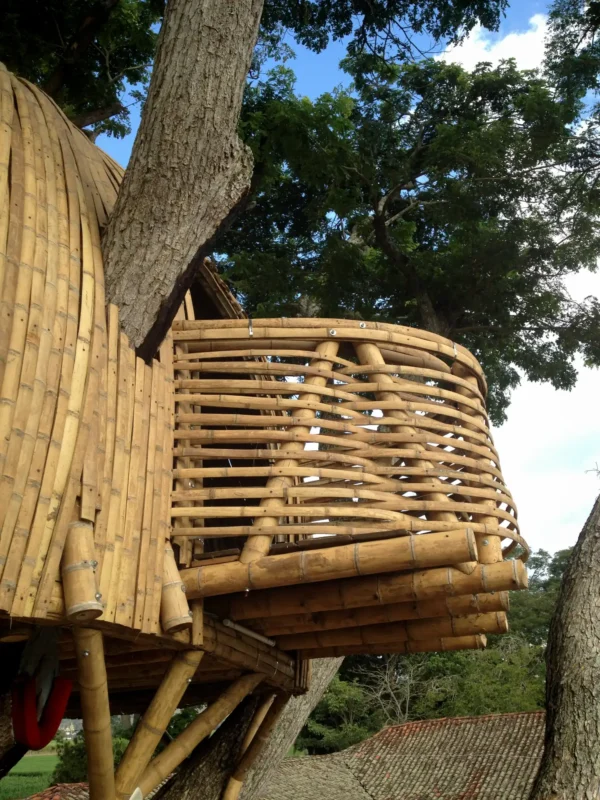
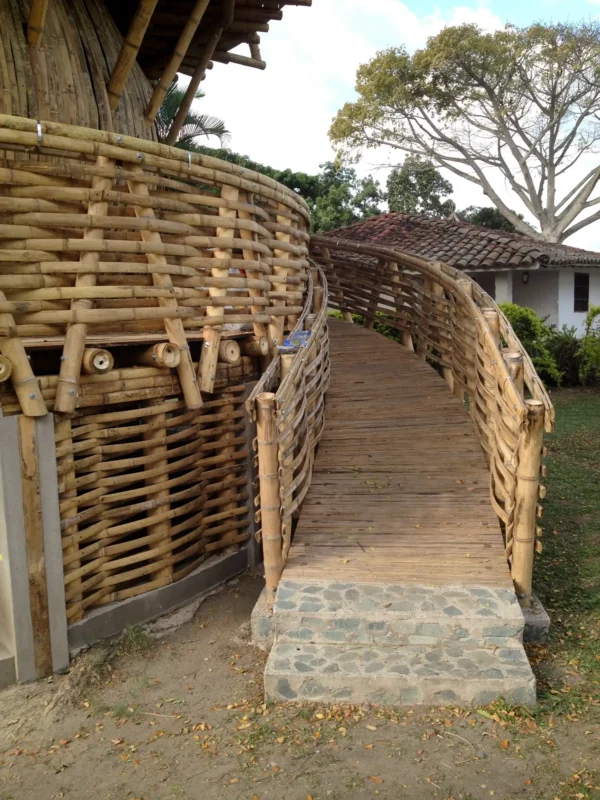
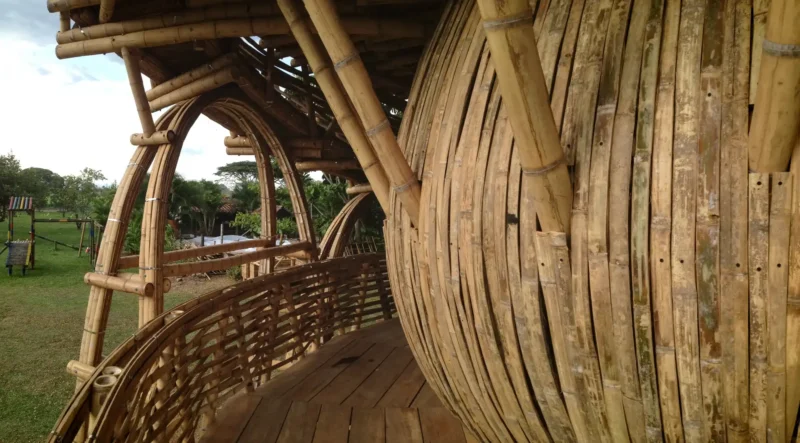
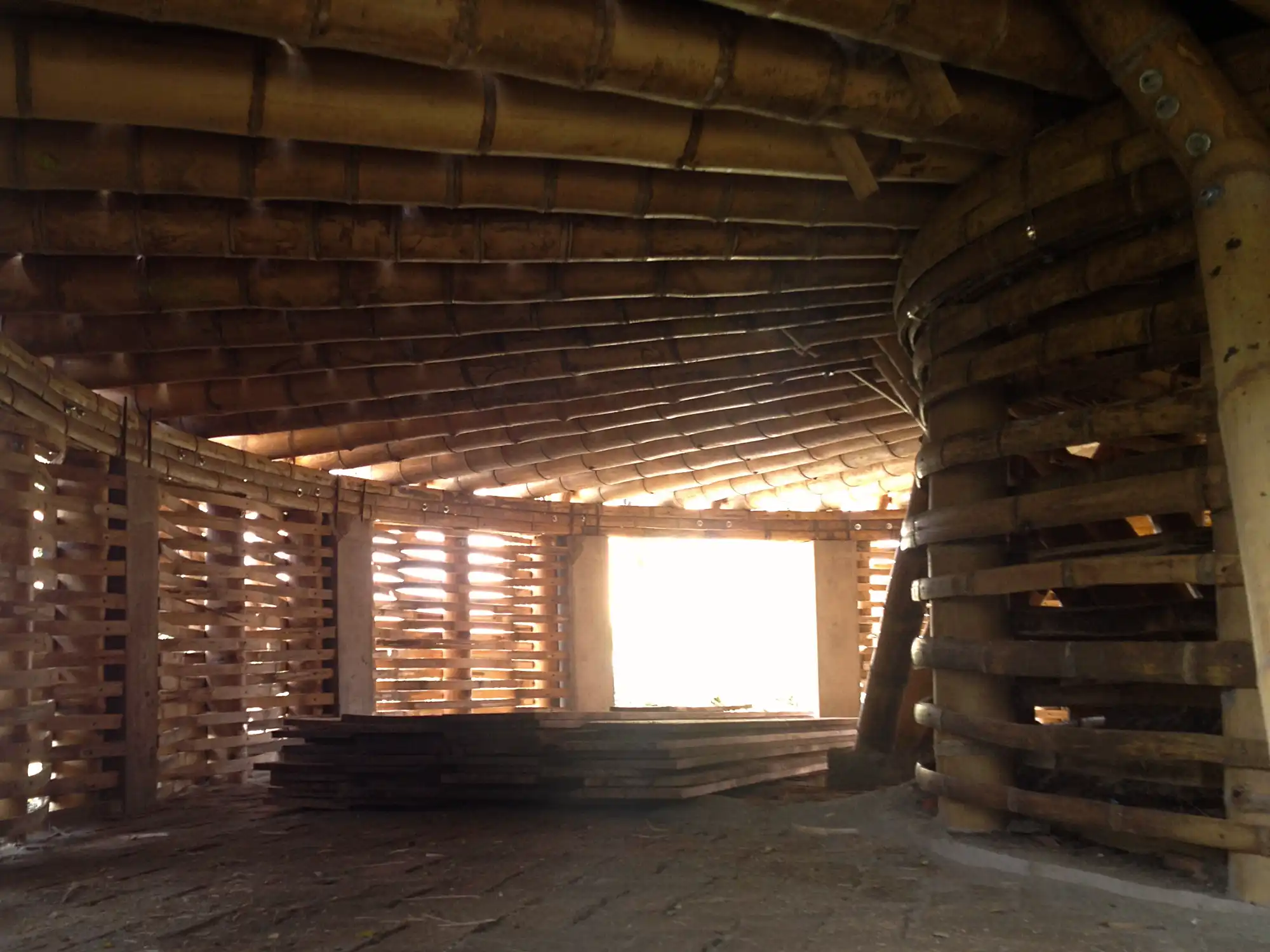
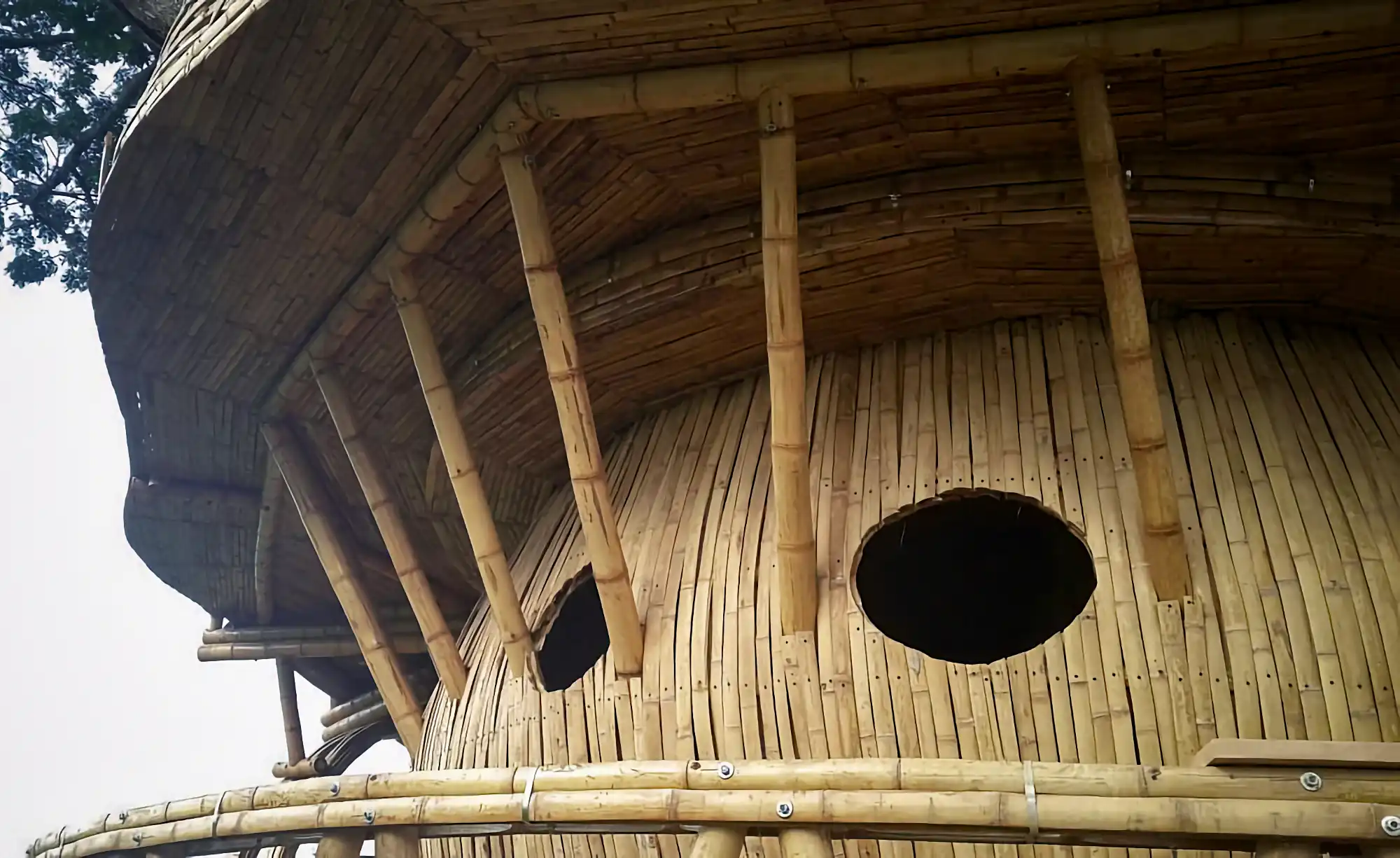
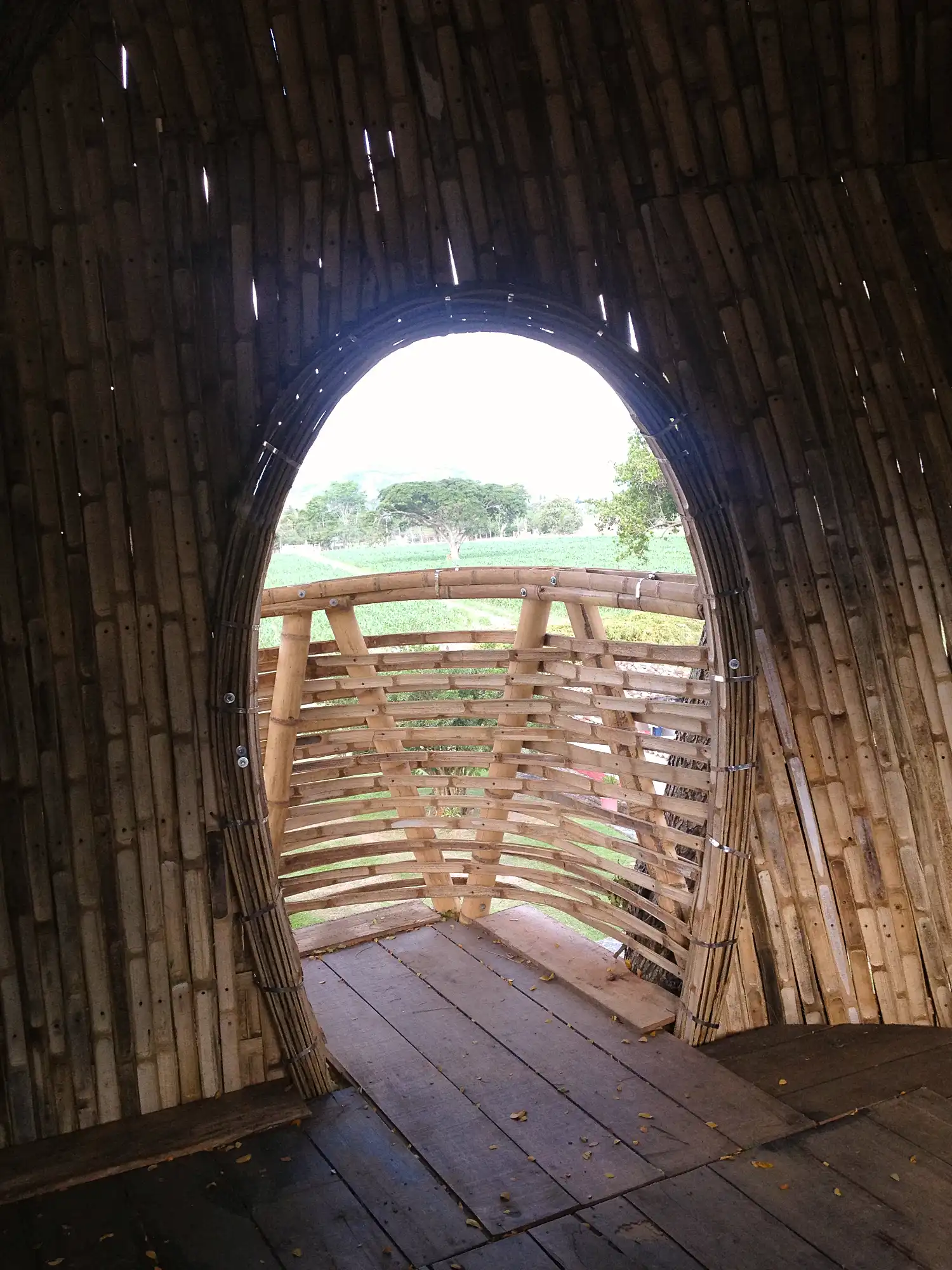
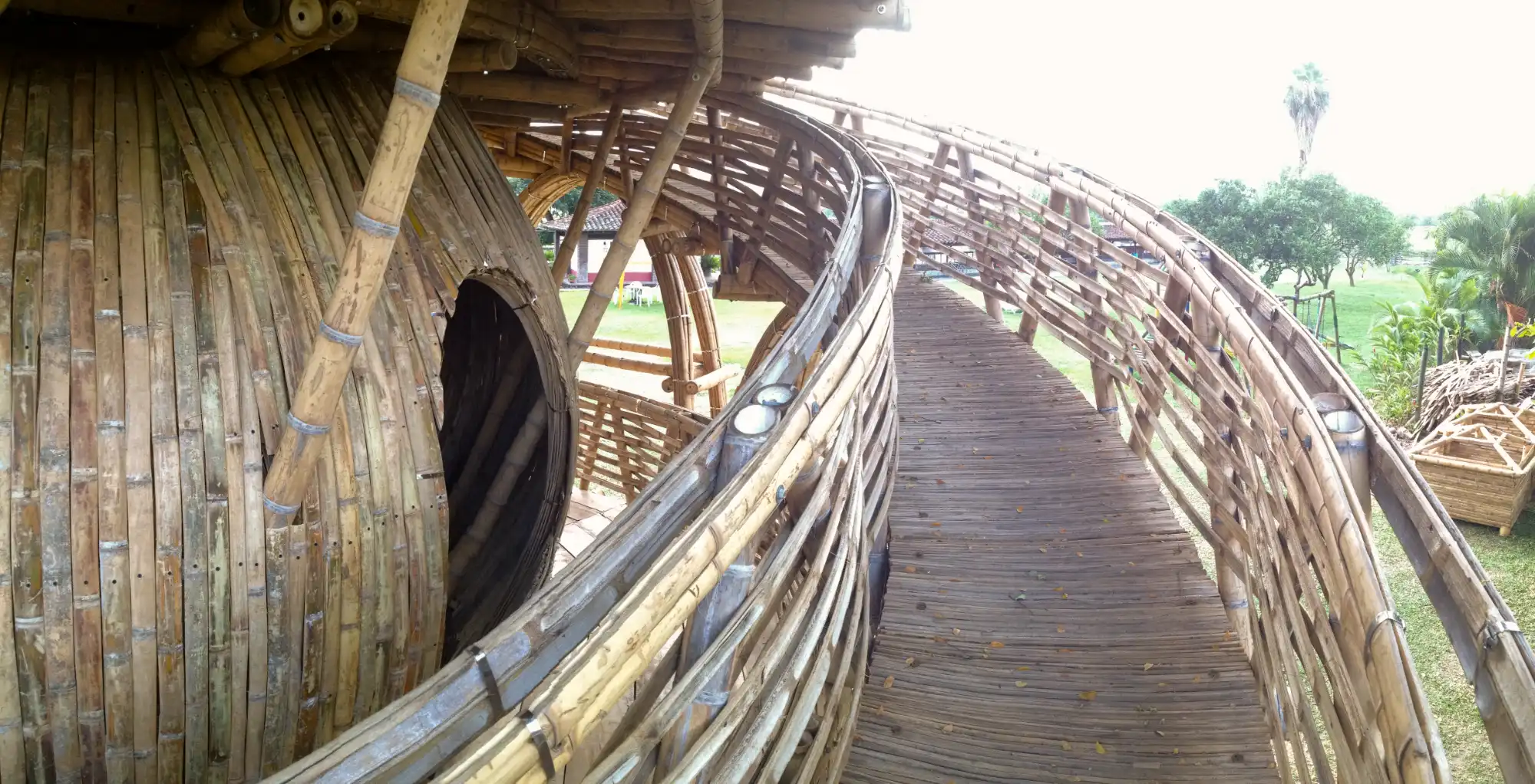
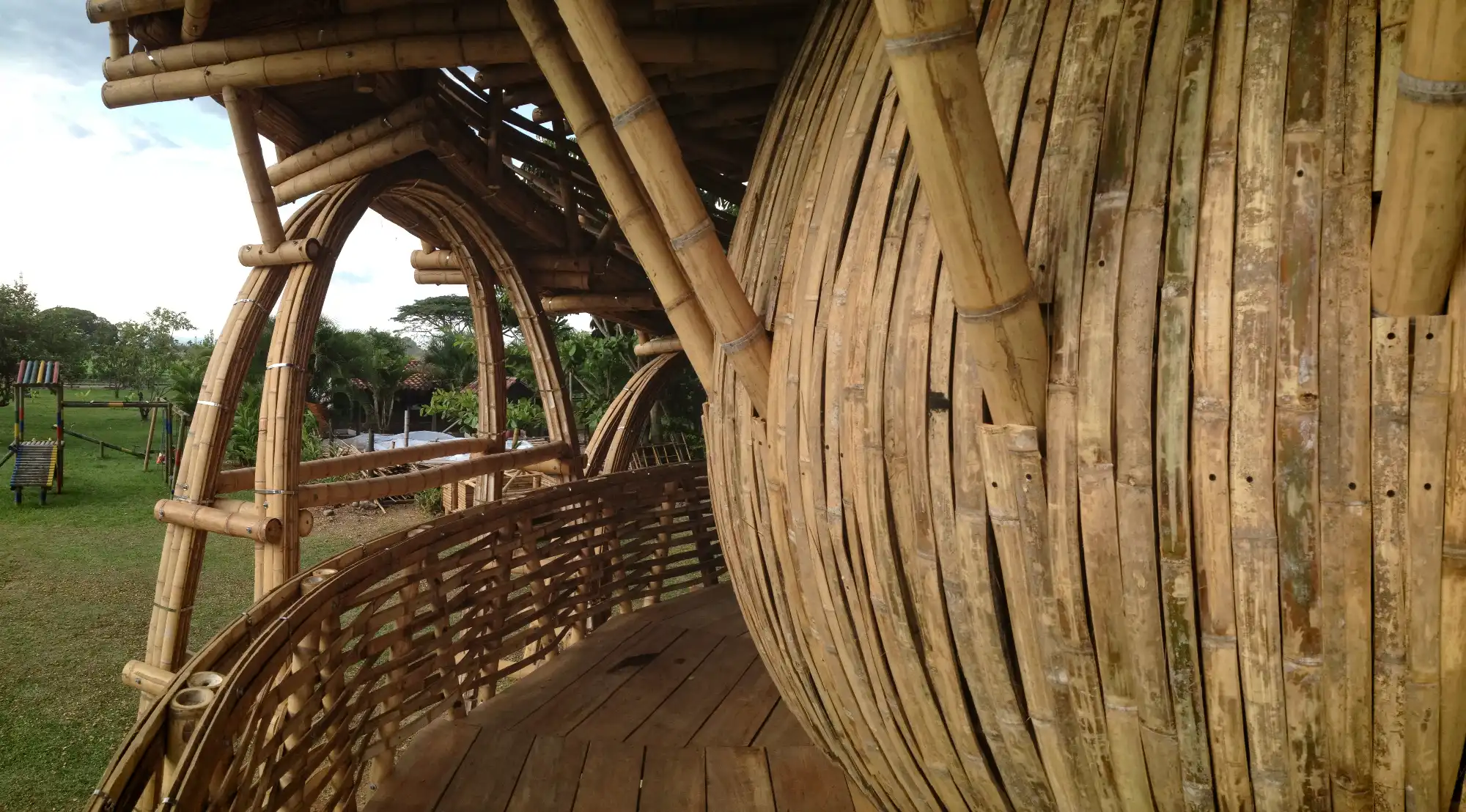
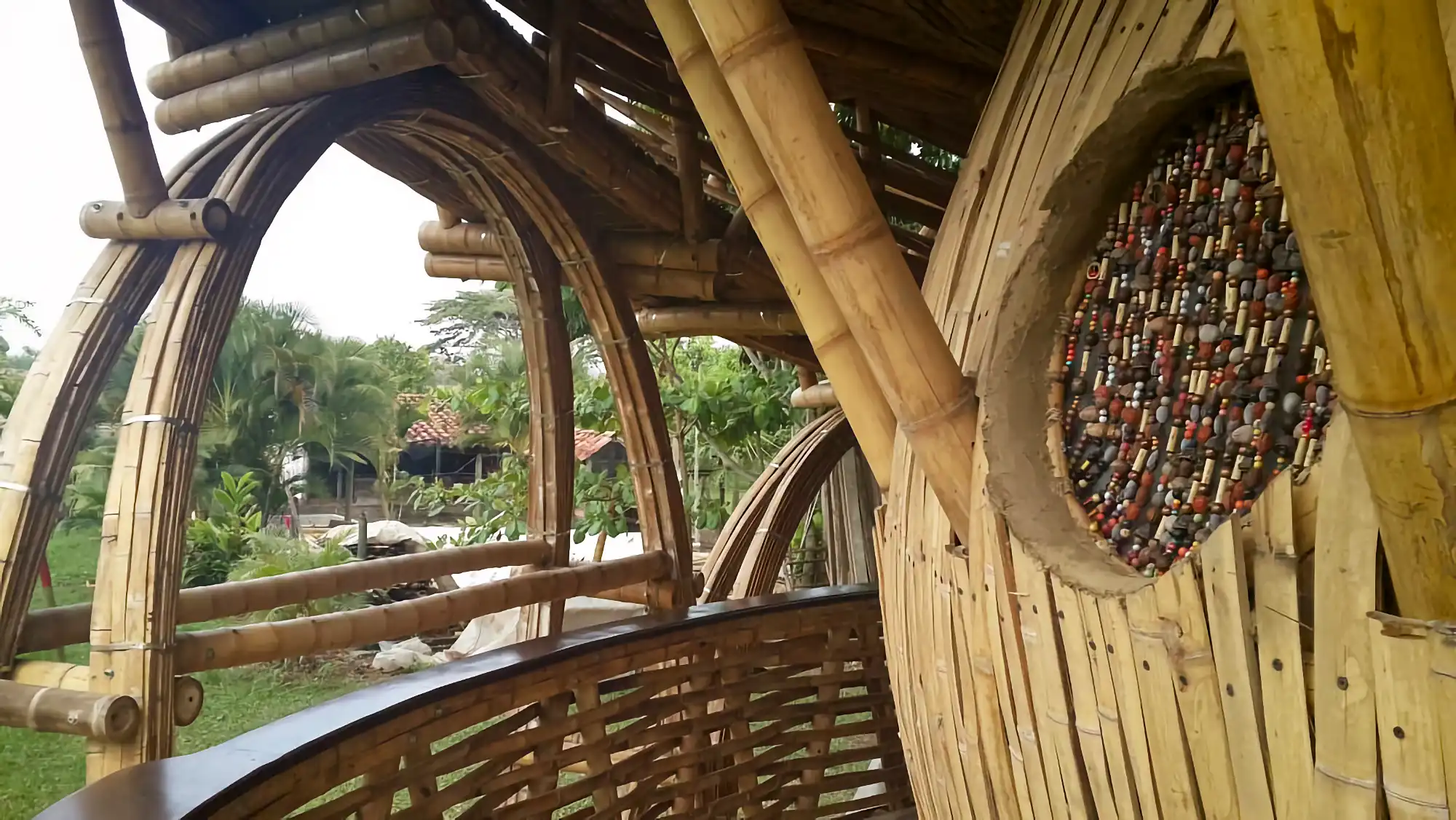
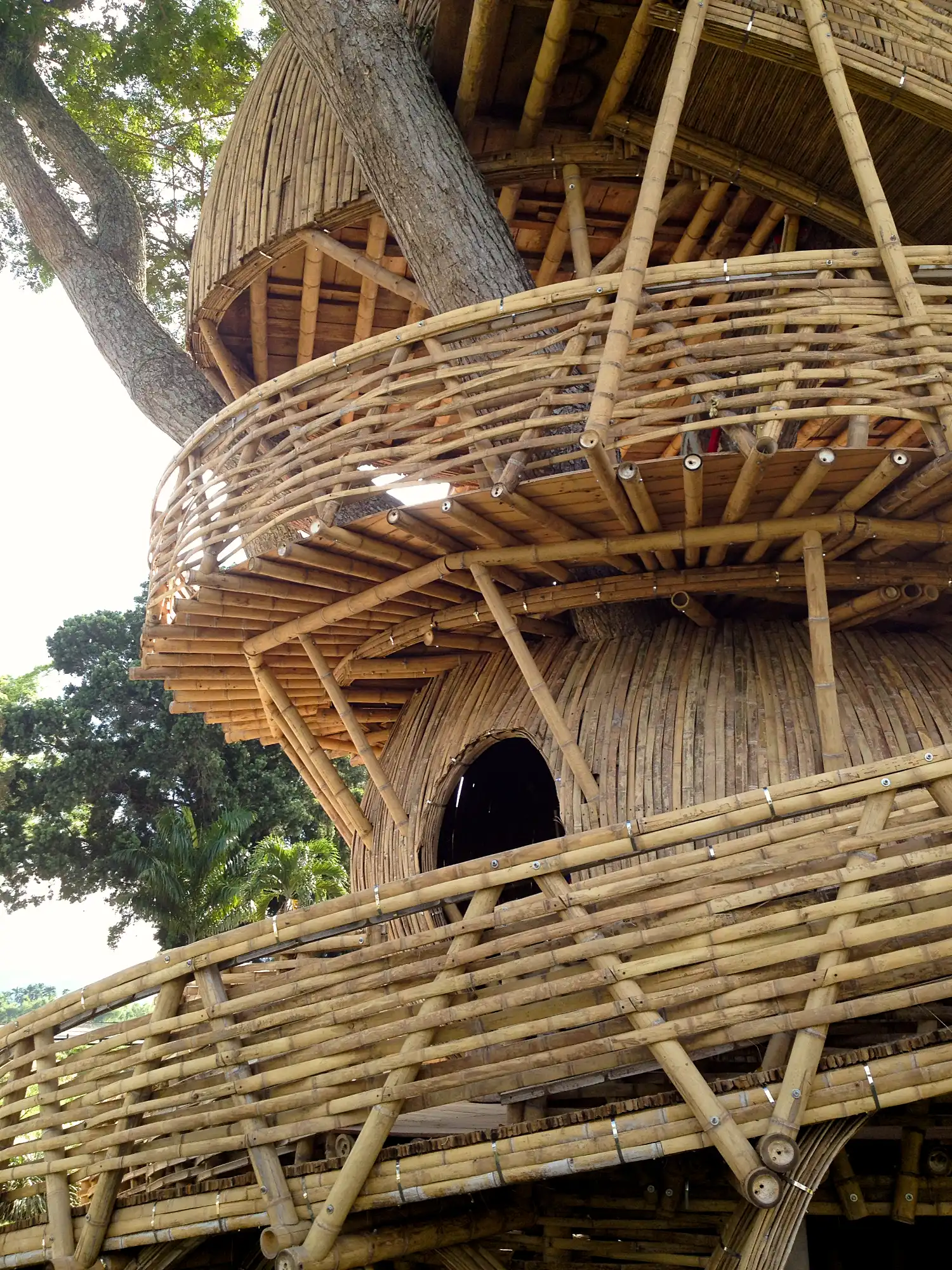
Slat Wall Cladding: The egg-shaped enclosures on the first and third floors are clad with individual Guadua Bamboo Slats laid side by side vertically, each approximately 4 cm wide, 1 cm thick, and 6 meters long. Placed tight against each other and following the curved formwork, they create a continuous surface that reads as a smooth shell from a distance but shows the individual slats clearly up close. This technique works because Guadua slats are long, consistent, and flexible enough to follow a curve without cracking.
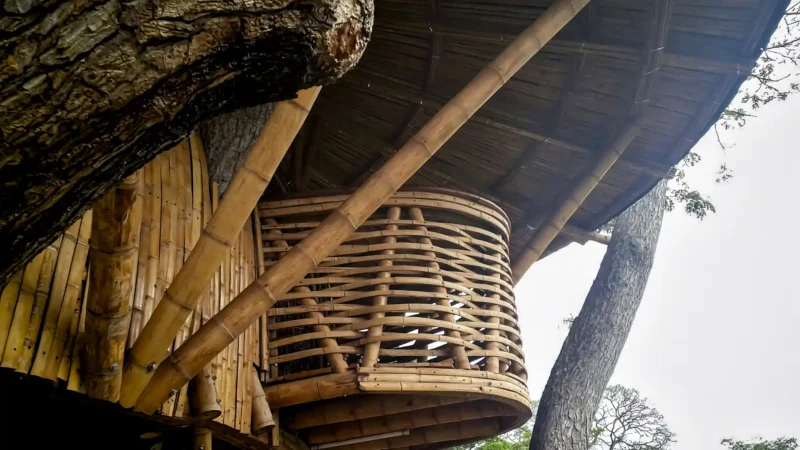
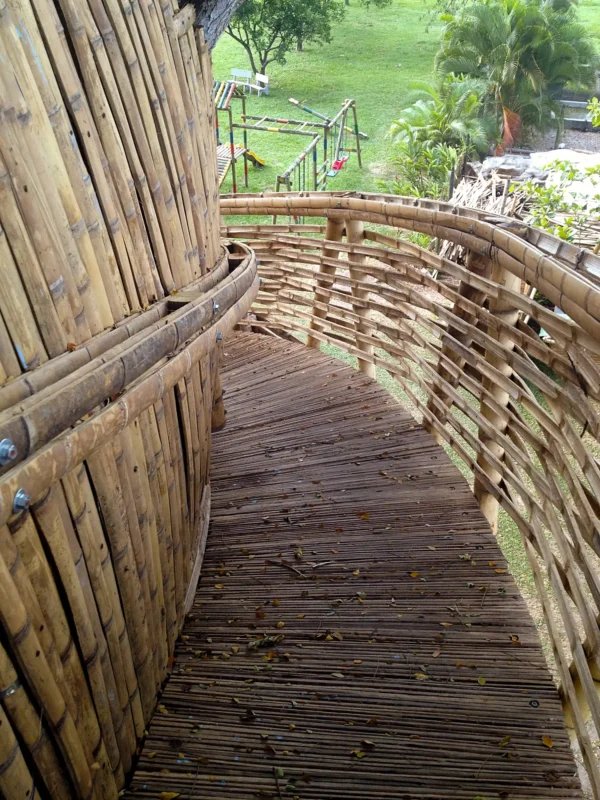
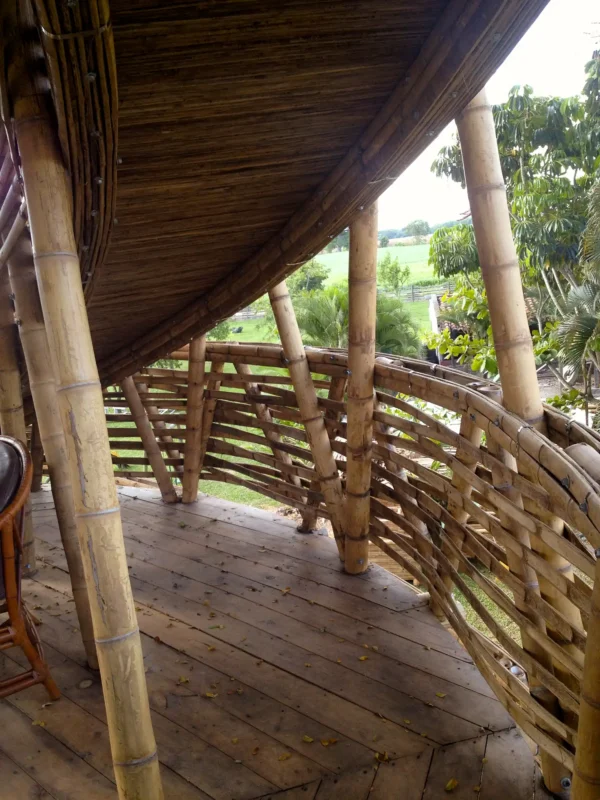
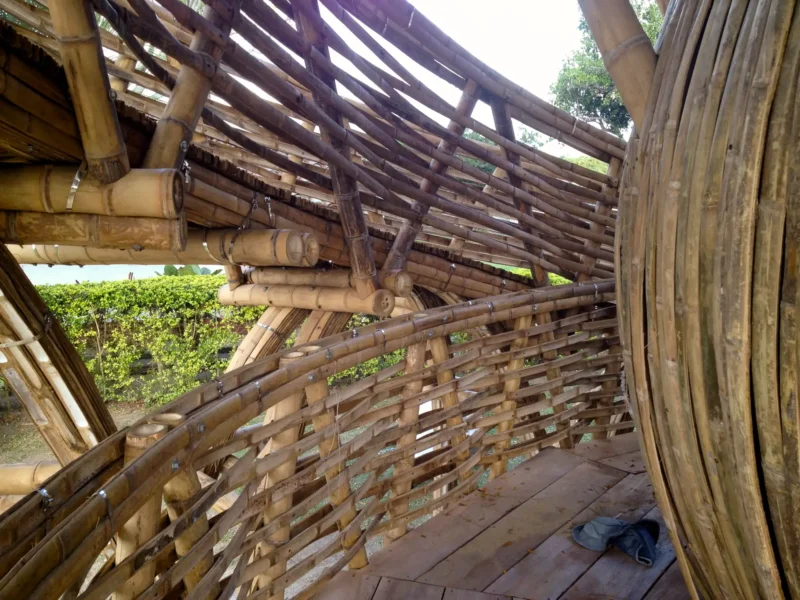
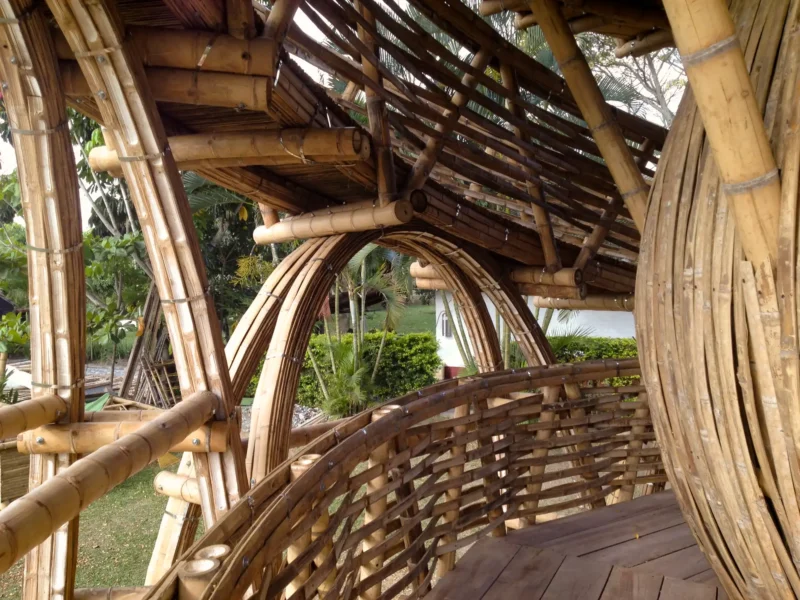
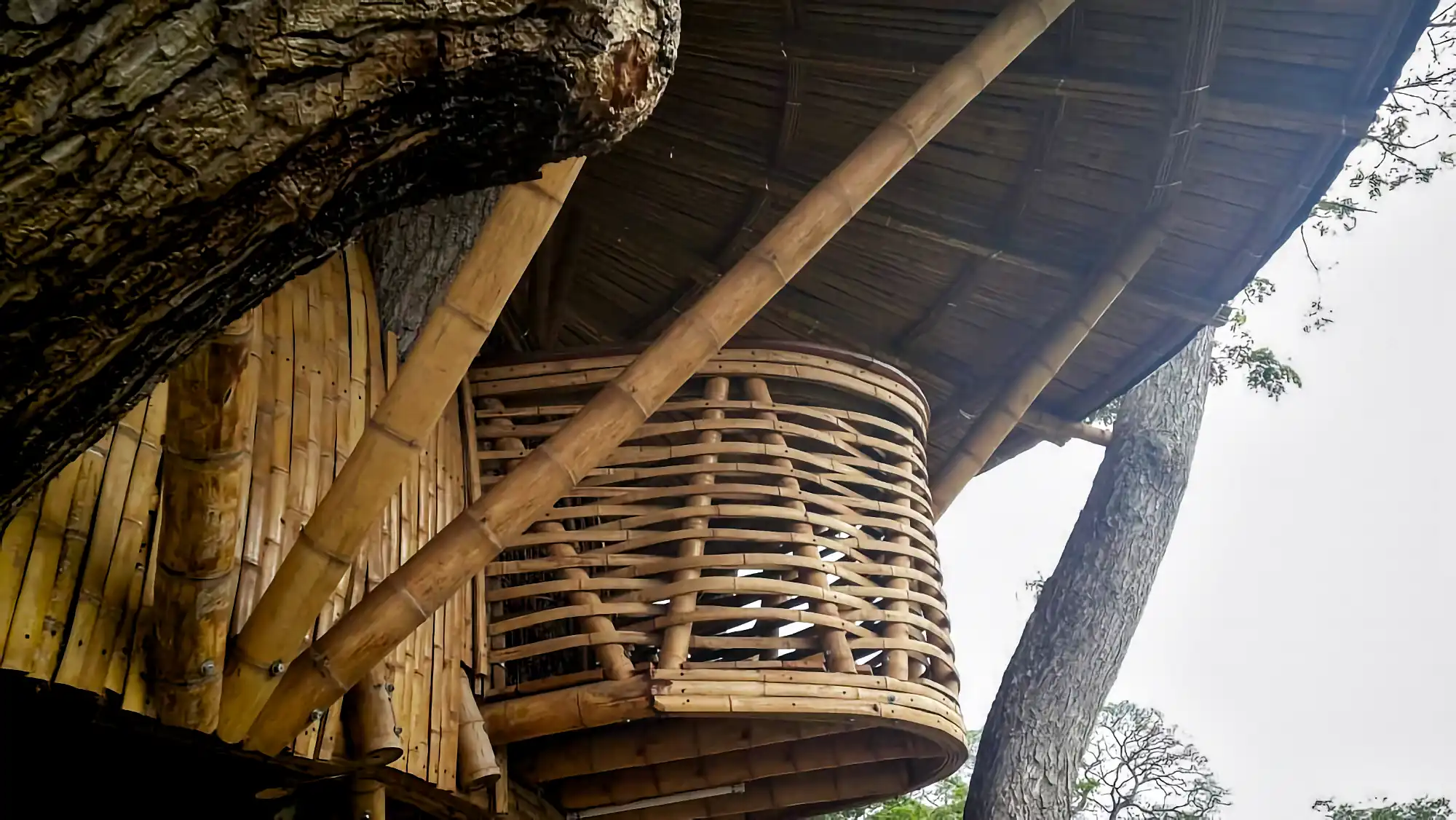
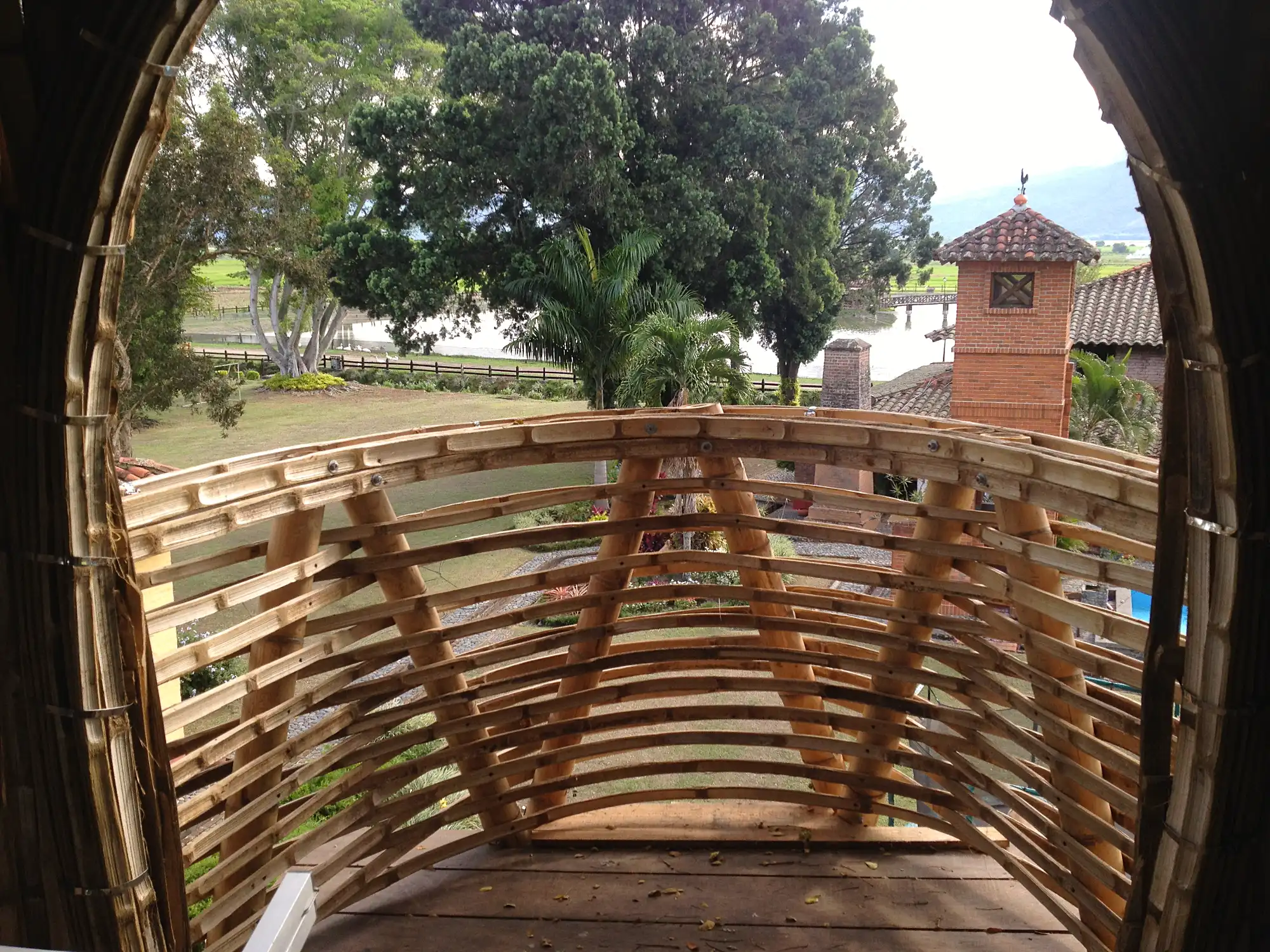
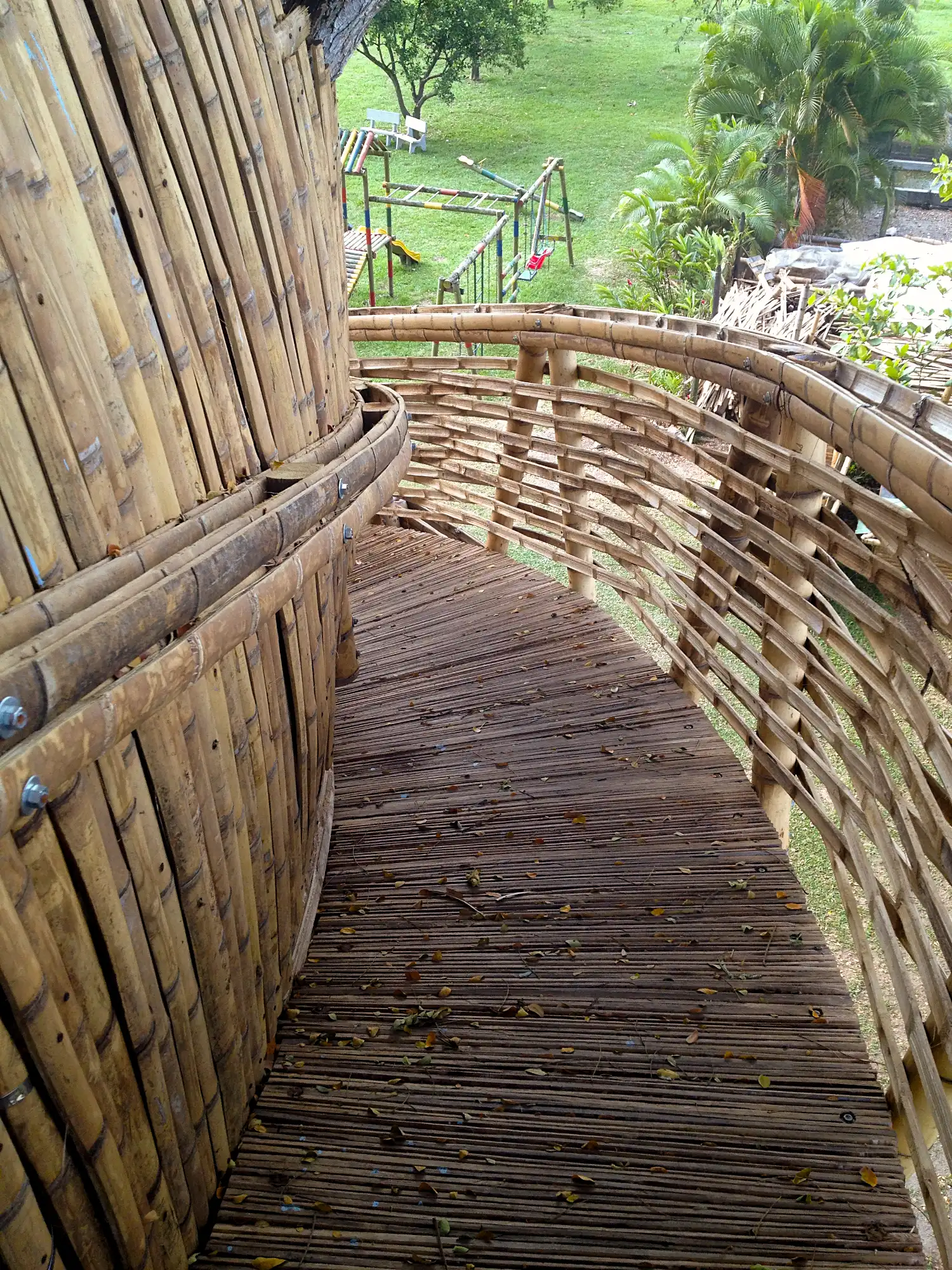
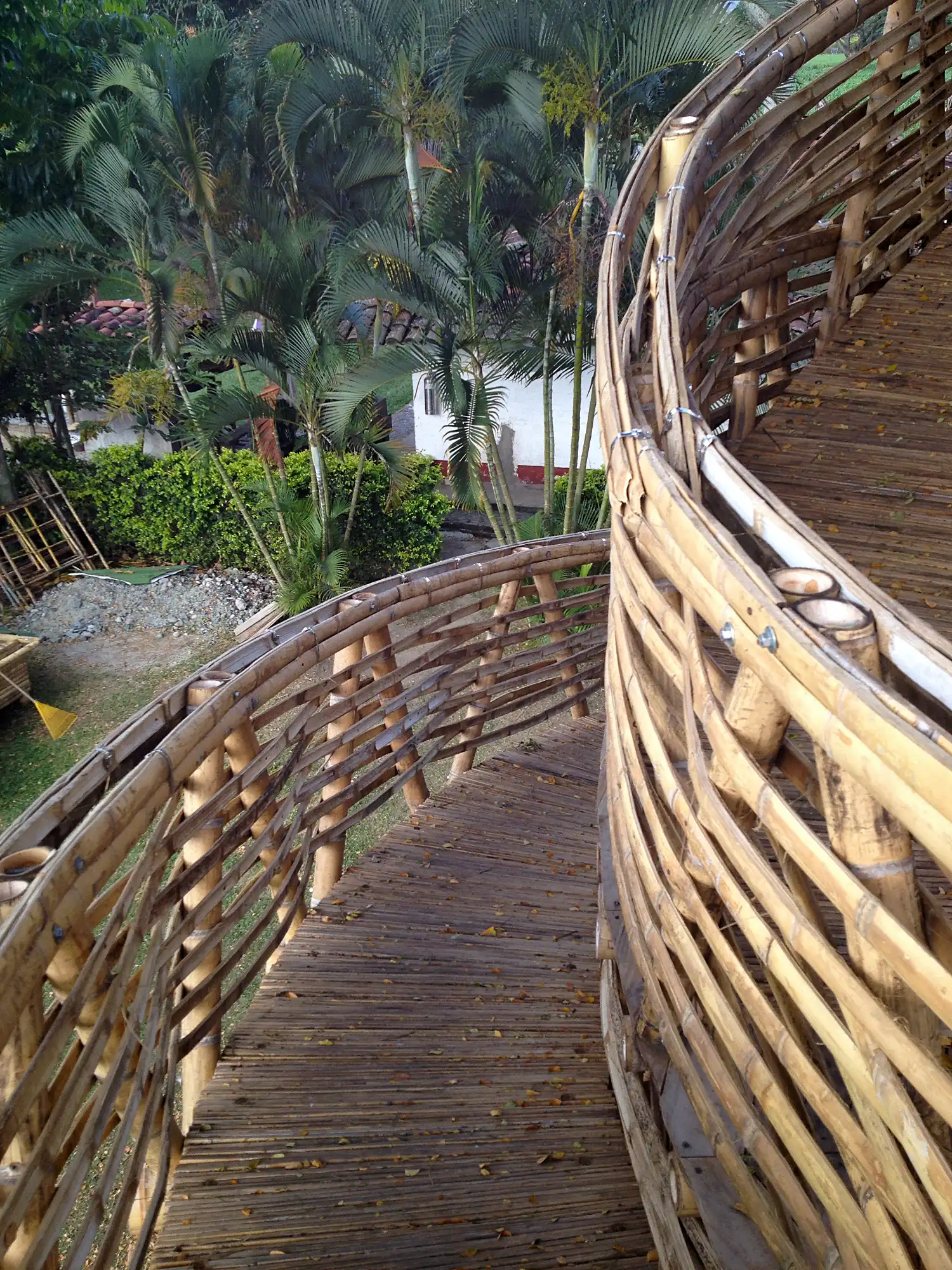
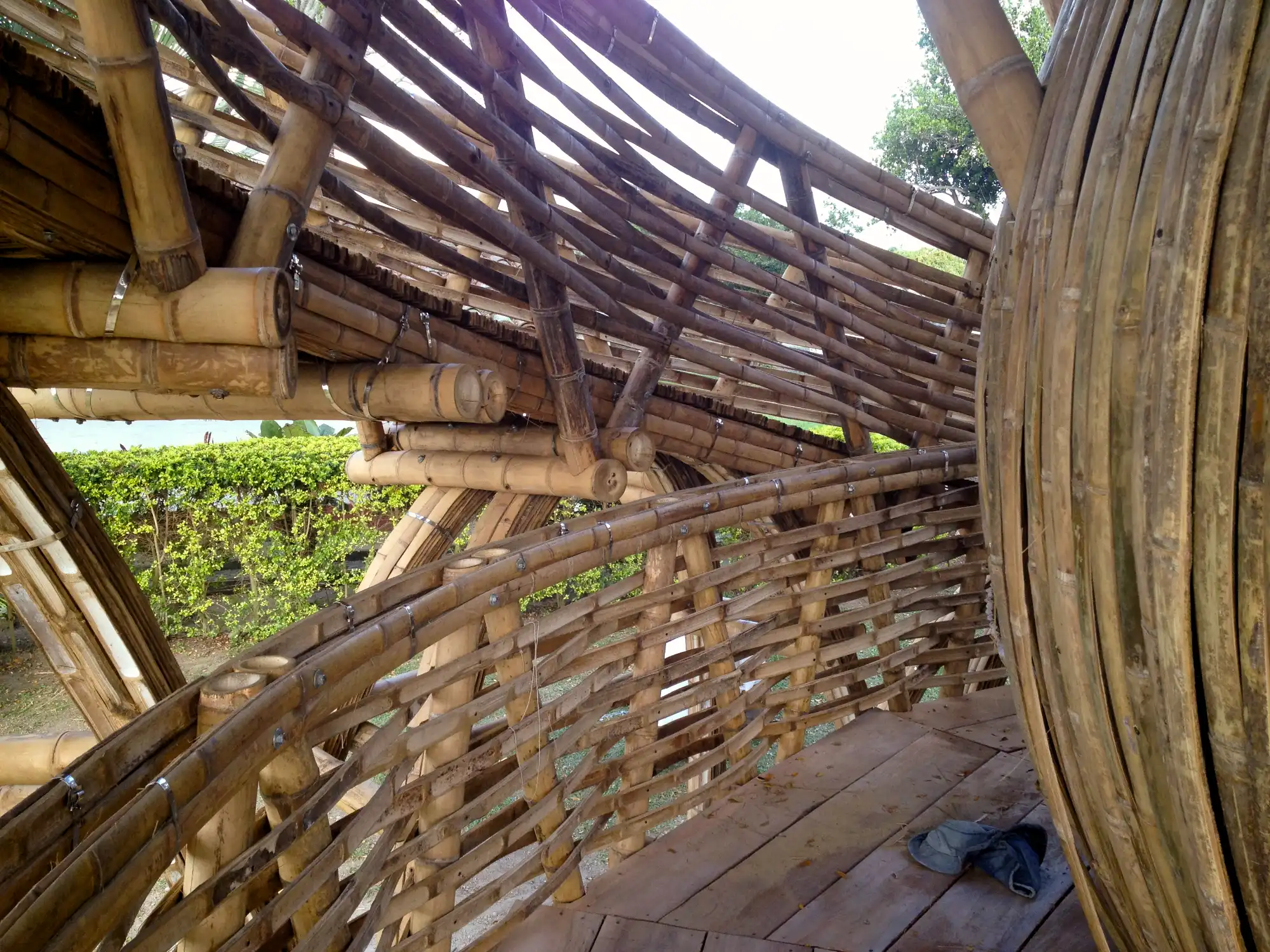
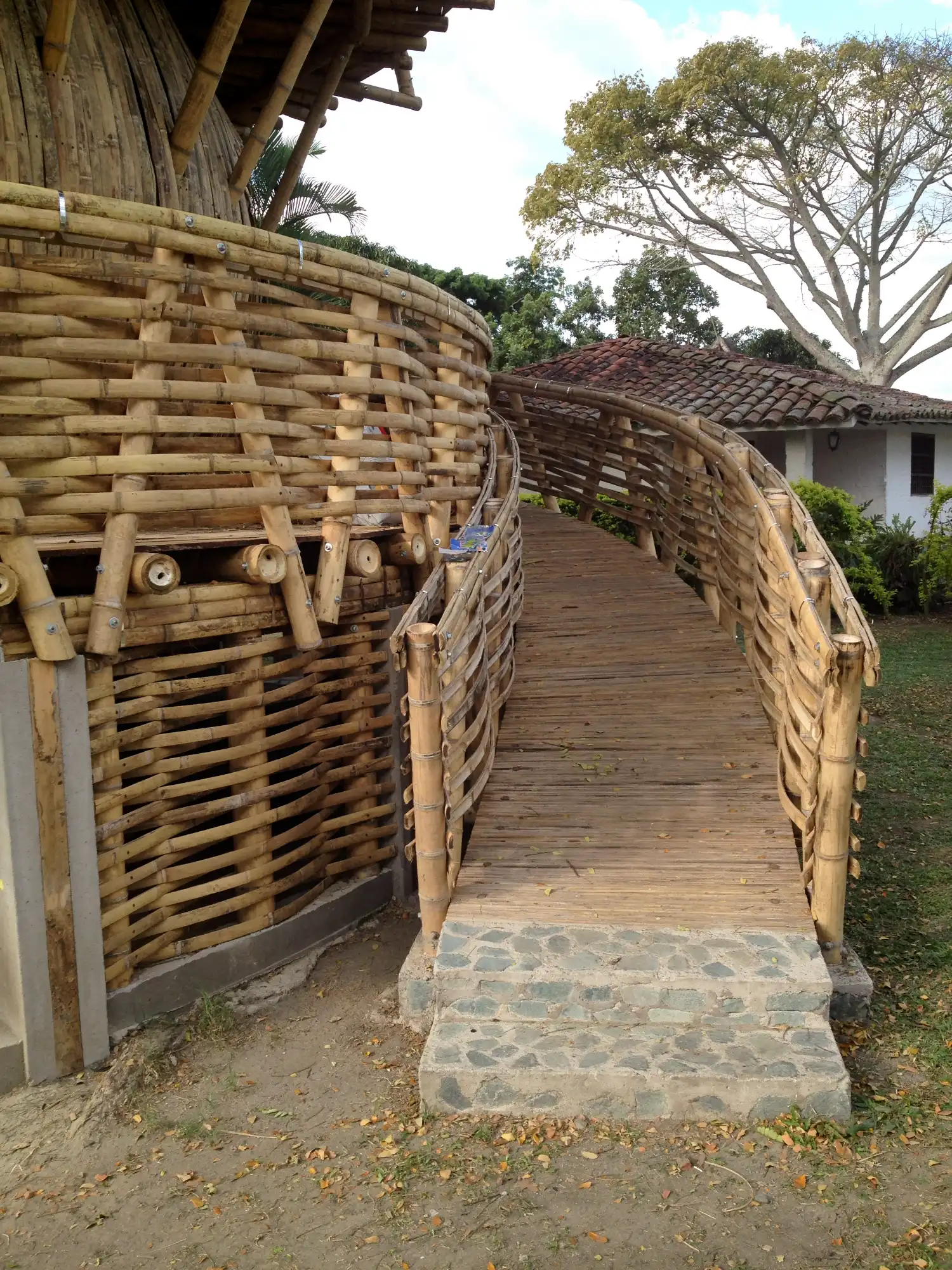
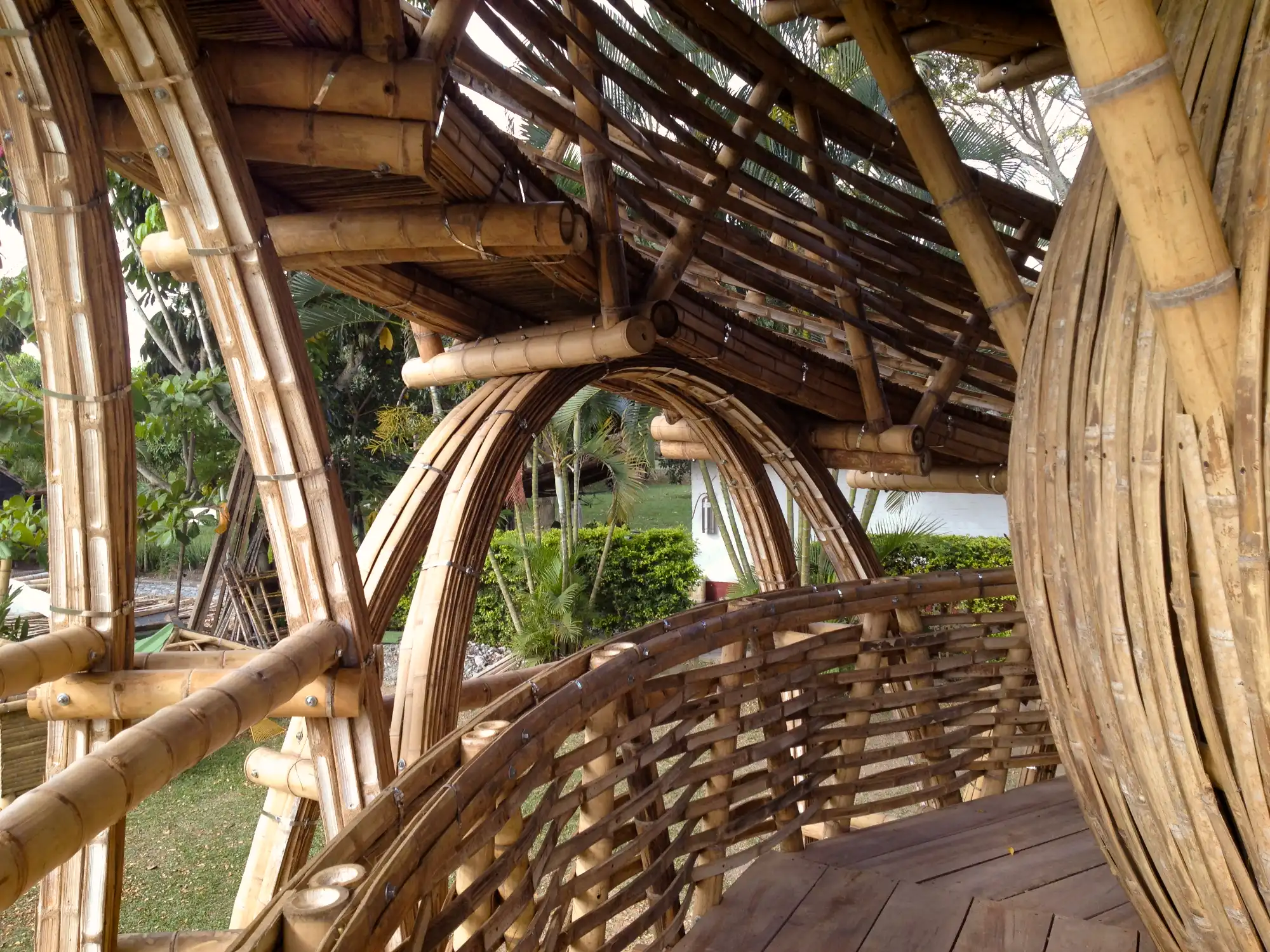
Woven Slat Balcony Railings: The second floor balcony railing uses the same slats woven horizontally around vertical round Guadua poles. The weaving locks the slats in place without additional fasteners and follows the circular curve of the balcony naturally, since the slats are flexible enough to bend around the poles without breaking.
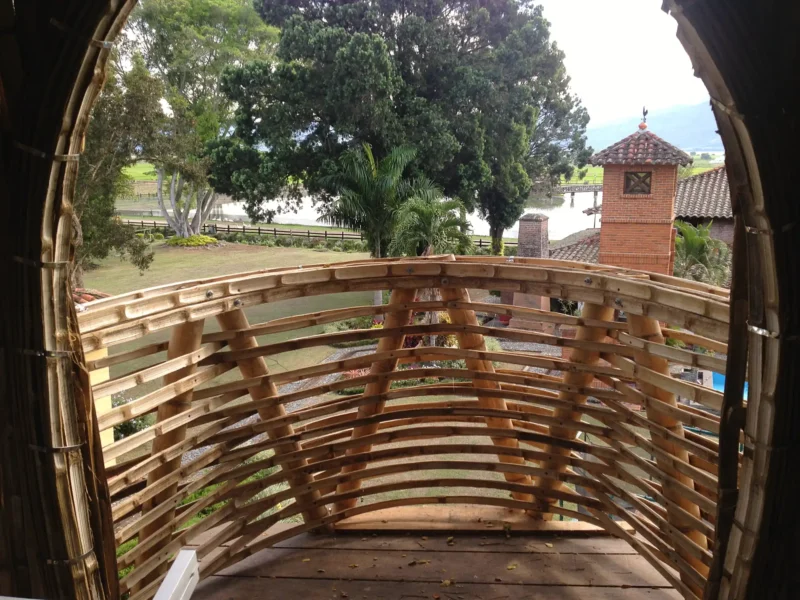
Guadua Bamboo Split Beams: The curved arches under the ramps and stair structures are built using a technique called bamboo split beams. Each beam is made from 24 bamboo slats clamped together with metal straps at regular intervals. The bundle acts as a single structural member but retains flexibility along its length, which is what allows it to hold a curved form. The metal straps keep the slats from separating under load. This is a low-tech but effective solution for producing curved structural elements without steam bending or lamination.
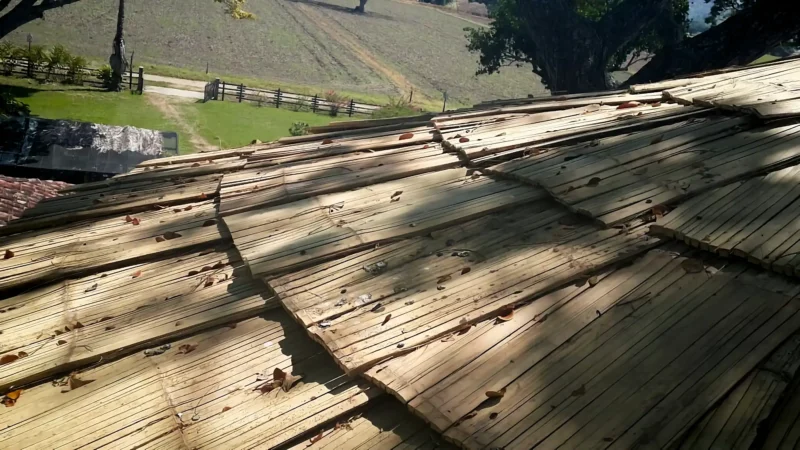
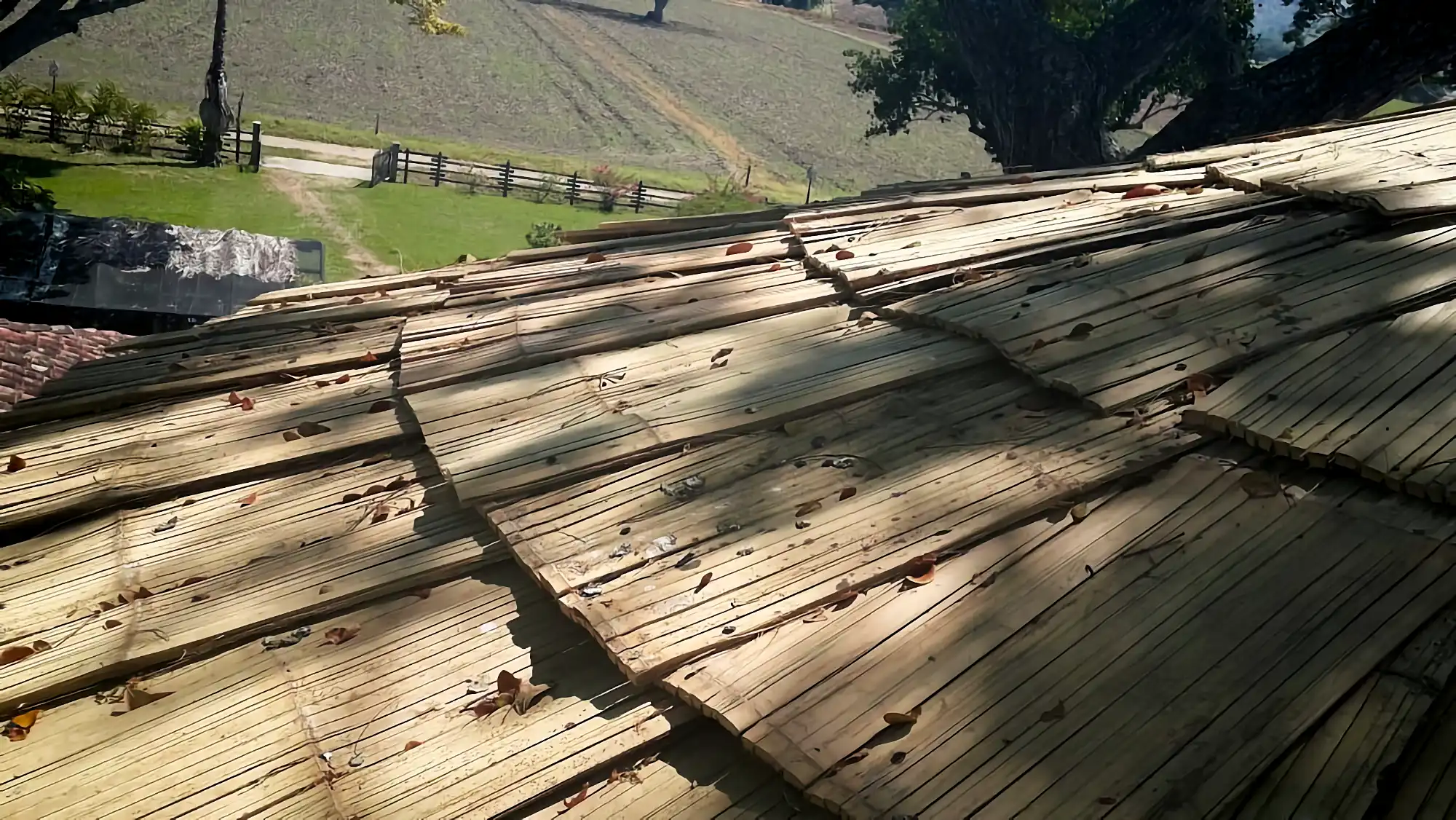
Esterilla Roof Cladding: The dome and upper roof surfaces are clad with esterilla, flattened bamboo mats made by splitting and opening full culms flat. Laid in overlapping courses like shingles, esterilla sheds water effectively and is a traditional roofing material across the bamboo-growing regions around the world.
This bamboo treehouse really looks amazing. In ancient day’s people are using bamboos and woods to build their house; as we well known with the fact that bamboos are strong, flexible and sustainable materials. Therefore the uses of bamboos are rapidly increases in different sections like furniture, house interiors, household products and now used in watches and smartphones. I would like to appreciate the design and architect that how much effort people are putting to build these kinds of bamboo treehouses.
Breathtaking. Simply magical, exciting and delicious to look at. Thank you, for sharing. How I wish, you lived in Australia or I was rich! x
Great job, it looks supreme, congrats.. i like it..
One of the best, most inspiring bamboo spaces ever… Congrats Jaime.