
In the construction industry, material consistency is everything. While concrete has slump tests and steel has mill certificates, our Guadua is governed by strict bamboo quality standards and technical classifications. To build a safe, durable, and legally compliant structure, you must source Structural Guadua Bamboo® that meets strict technical standards.
Quick Structural Qualification Checklist (NSR-10)
- Species: Guadua angustifolia Kunth
- Age: 4–6 years
- Moisture: ~12% (or adjusted)
- Treatment: NTC 5301 compliant
- Curvature: < 0.33%
- Conicity: < 1.0% (≤ 0.36% premium)
- Cracks: None critical
- Insects/Decay: Zero tolerance
- Legal: Certificate or origin required
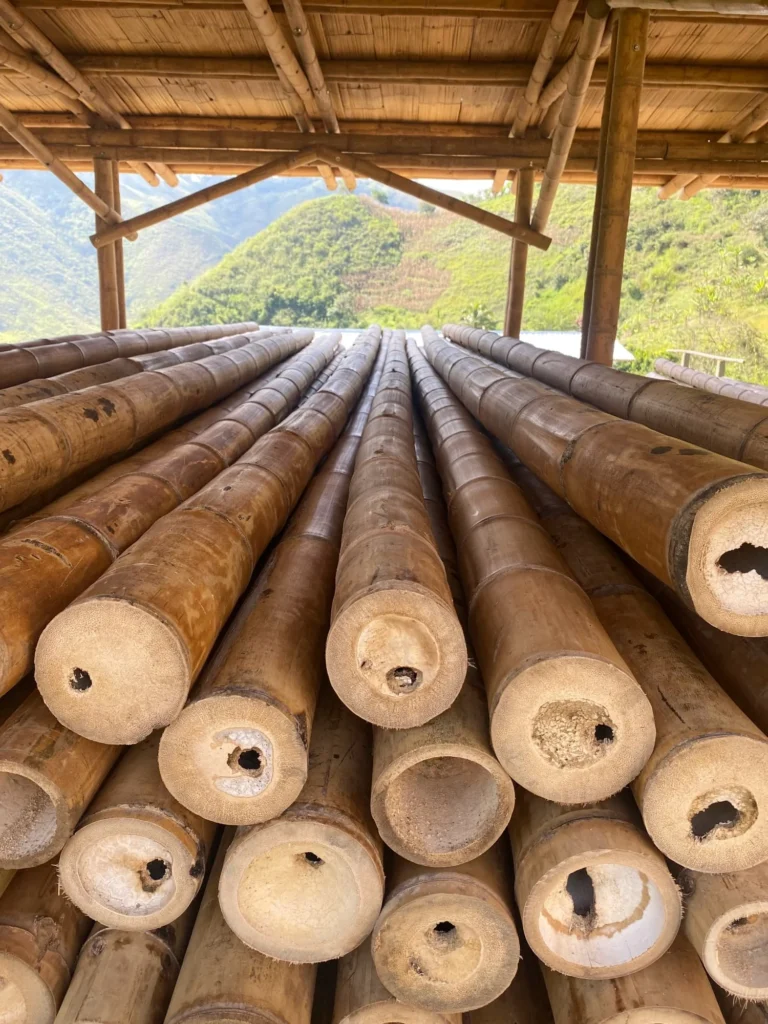
In structural engineering, quality is not accidental. According to official regulations, every bamboo pole must pass a visual and mechanical classification before it ever reaches the job site.
At Guadua Bamboo SAS, we distinguish between the “Legal Minimum” required by the NSR-10 (Colombian Building Code) and our own proprietary Guadua Bamboo® Standard. While the building code sets the baseline for safety, our internal quality protocols are even stricter than what the law requires, ensuring that every pole is not just legal, but premium. For structural calculations based on these quality criteria, see our Guadua Bamboo Design Values (NSR-10).
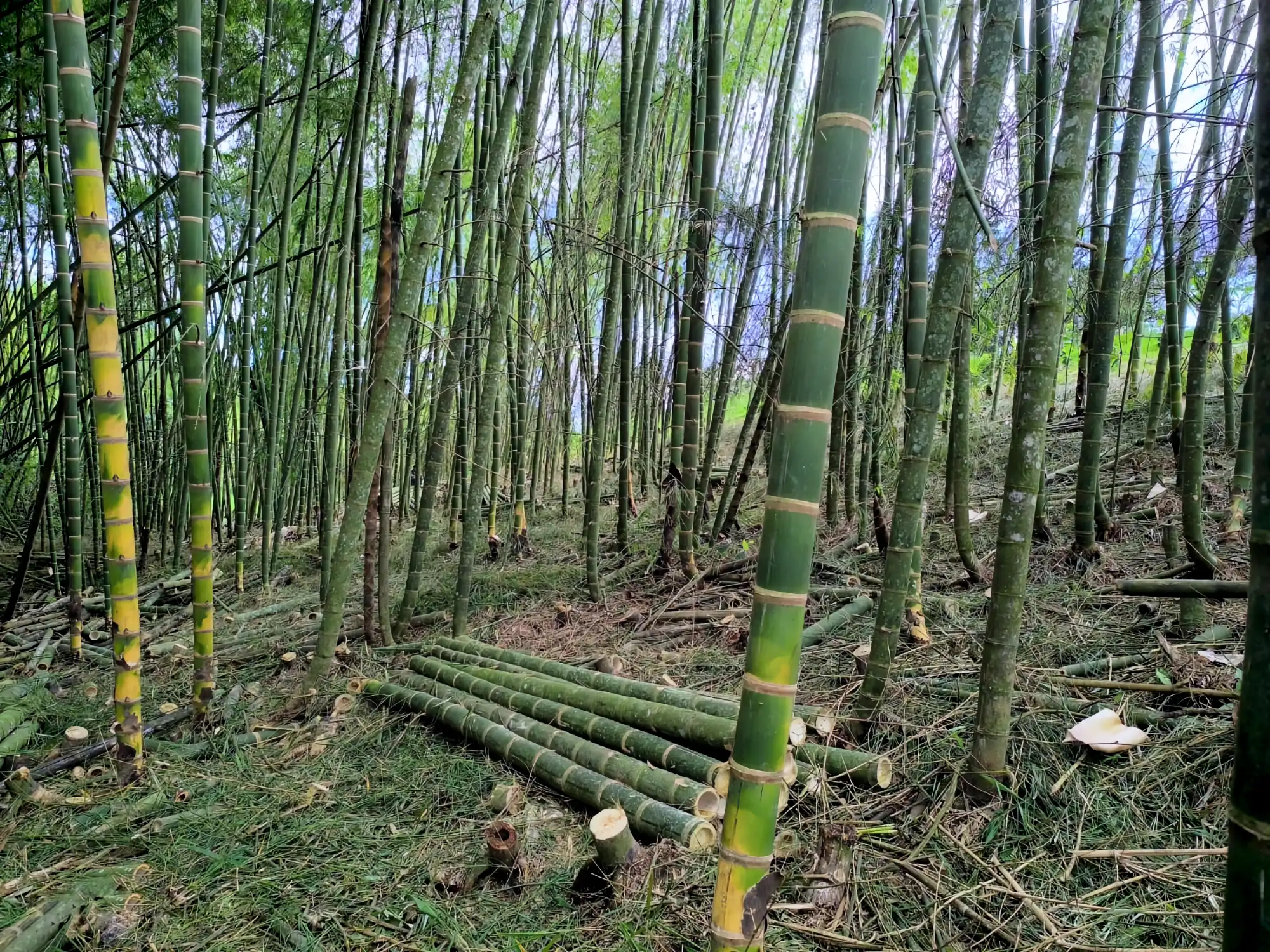
1. Bamboo Species and Maturity Standards
The “DNA” of your building material determines its structural lifespan. Before assessing a pole’s dimensions, you must verify its origin and age:
- The Structural Species: Only Guadua angustifolia Kunth is recognized for load-bearing structural use. Its unique fiber density and wall thickness make it the “vegetable steel” of the tropics.
- The 4 to 6 Year Harvest Rule: This is the most critical factor for strength. Harvested too early, the fibers lack the necessary density; harvested too late, the culm becomes brittle. Structural Guadua must be harvested at the peak of its mechanical strength.
- Moisture Content and Equilibrium: Bamboo must be dried to match the environment of the project’s location. Building with “green” or wet bamboo leads to unpredictable shrinkage and joint failure.
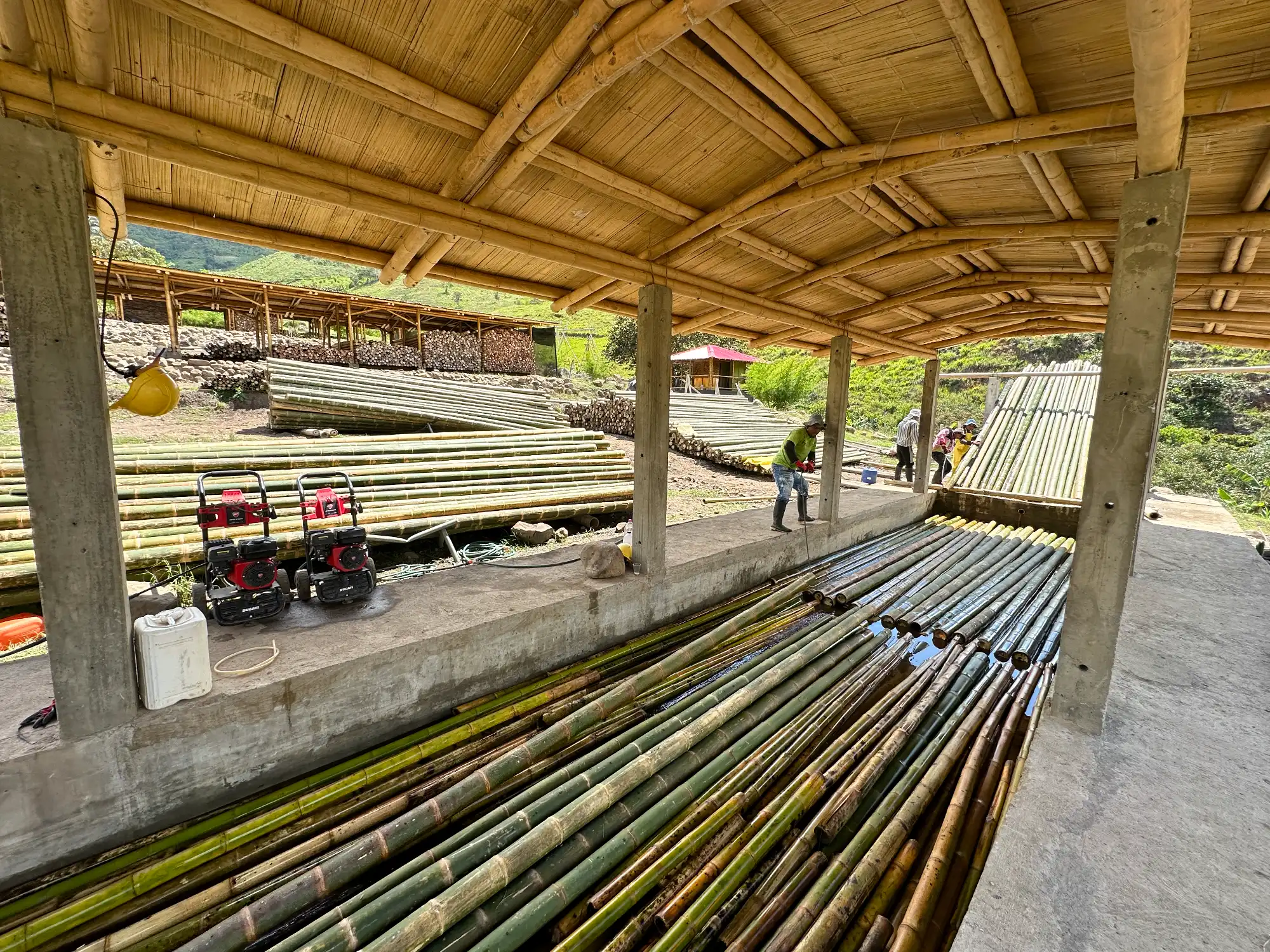
2. Bamboo Preservation and Treatment Standards (NTC 5301)
No untreated bamboo is structural bamboo. Professional engineering codes are absolute on this point:
- Mandatory Immunization: All structural Guadua must be treated against fungi and wood-boring insects following the NTC 5301 standard.
- Zero Tolerance for Decay: Any evidence of rot, decay, or active xylophagous insect perforations is an immediate cause for rejection. Structural integrity is only guaranteed when the culm is 100% free of biological attack.
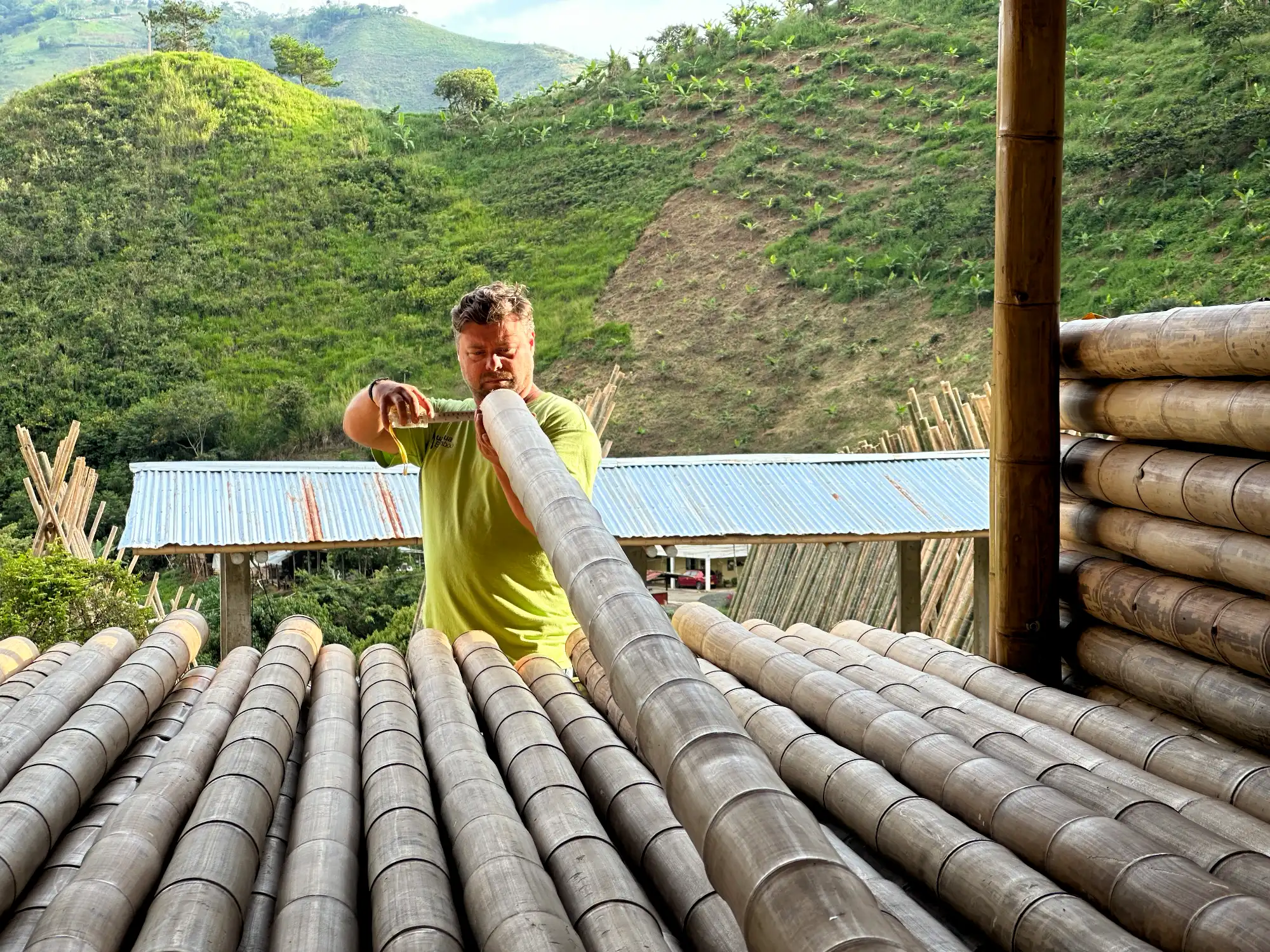
3. Visual Grading and Defect Inspection
An engineer must be able to visually “grade” every pole. Under the law, a pole is rejected if it fails any of these 3 physical benchmarks:
A. Straightness and Curvature Limits
The deviation of the axis cannot exceed 0.33% of the total length.
- The Test: Place the piece on a flat surface. For a 6-meter pole, the maximum “gap” between the pole and the surface is only 2 cm.
- Formula: Max deviation = L × 0.0033
B. Tapering and Conicity: The Guadua Bamboo® Standard
While the NSR-10 legal limit for conicity is 1.0% (a 1 cm diameter drop per meter), our Guadua Bamboo® Standard follows the much stricter GTC 270 guidelines.
- Our Standard: We reject poles that meet the legal minimum but fail our “Premium” threshold. We target “Normal” to “Optimum” conicity (under 0.36%).
- The Impact: This ensures that columns and beams maintain a uniform diameter, which is critical for precise joinery and the aesthetic consistency required for high-end architecture and prefab elements.
C. Fissures, Cracks, and Fiber Integrity
Cracks are the enemy of structural integrity. Under the NSR-10, a professional inspection disqualifies any pole with:
- Node Fissures: Cracks passing through the nodes are strictly forbidden.
- Neutral Axis Cracks: Cracks cannot run along the longitudinal “neutral axis” of the element. If a crack is present, it must be located on the external top or bottom fibers.
- Length Limits: Any longitudinal cracks exceeding 20% of the total length of the culm automatically disqualify it for structural use.
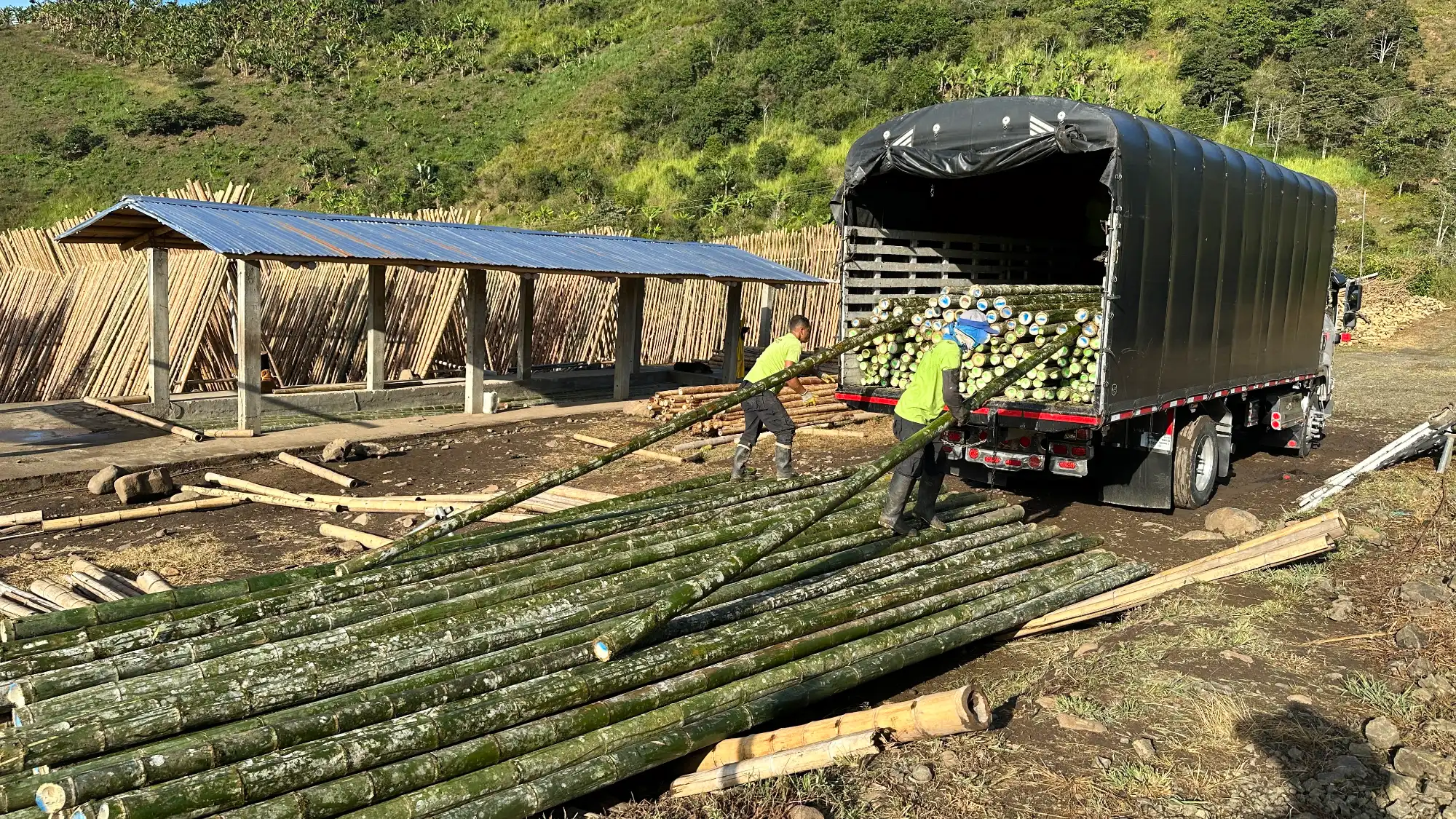
4. Environmental Permits and Legal Sourcing
Building with Guadua in Colombia is a regulated environmental act.
- Traceability: All commercialization and transport must be backed by official environmental permits (Salvoconducto) from local environmental authorities (like the CVC in Valle del Cauca).
- Legal Compliance: Sourcing legal bamboo ensures the harvest was managed technically and sustainably, which directly correlates to the maturity and fiber quality of the culms.
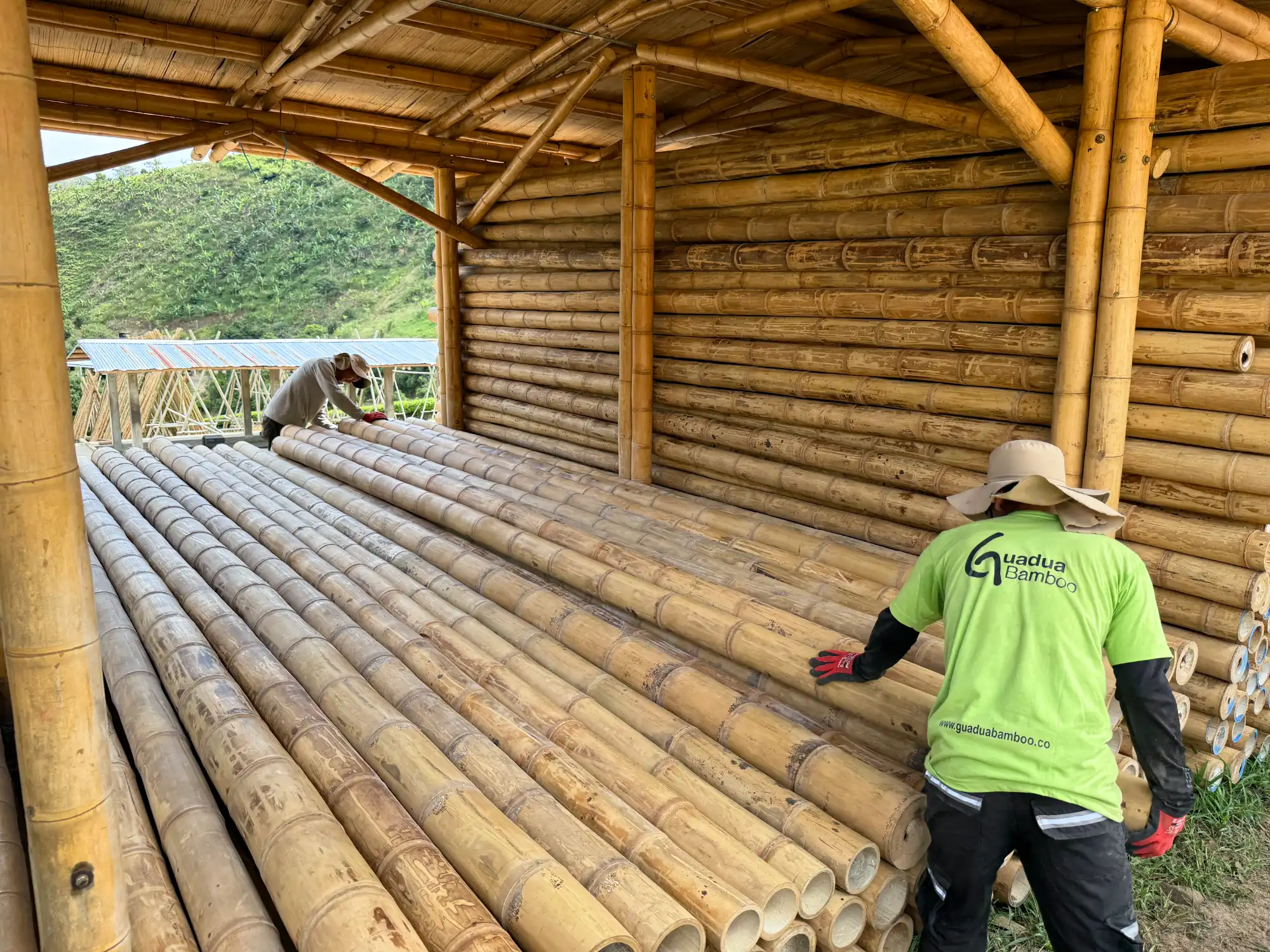
The Bottom Line: Is Your Bamboo Structural Grade?
- Species: Only Guadua angustifolia Kunth.
- Maturity: Harvested strictly between 4 and 6 years for maximum lignification.
- Treatment: Preserved according to NTC 5301 standards.
- Straightness: Curvature less than 0.33% and conicity under 1.0%.
- Fiber Integrity: No perimeter cracks and zero evidence of insect attack.
- Legality: Full traceability with official environmental permits.
At Guadua Bamboo, we don’t just harvest; we select and grade according to specific use. Every pole we process for structural applications undergoes a rigorous visual inspection to ensure it exceeds the legal minimum. When you specify our materials for your project, you are building with certified structural grade Guadua, not just random poles from a traditional supplier.