

Bamboo is becoming increasingly popular as a commercial crop. For centuries, it has played a crucial role in rural economies, serving as a material for construction, household items, farming tools, and even as a food source. Today, the value of bamboo as an industrial raw material is widely recognized. Its rapid growth makes it one of the fastest natural sources of wood-like biomass. This, coupled with its renewable and sustainable nature, has sparked a growing interest in utilizing bamboo for various applications, replacing conventional materials such as timber, steel, and plastic.
Industrial Uses of Bamboo
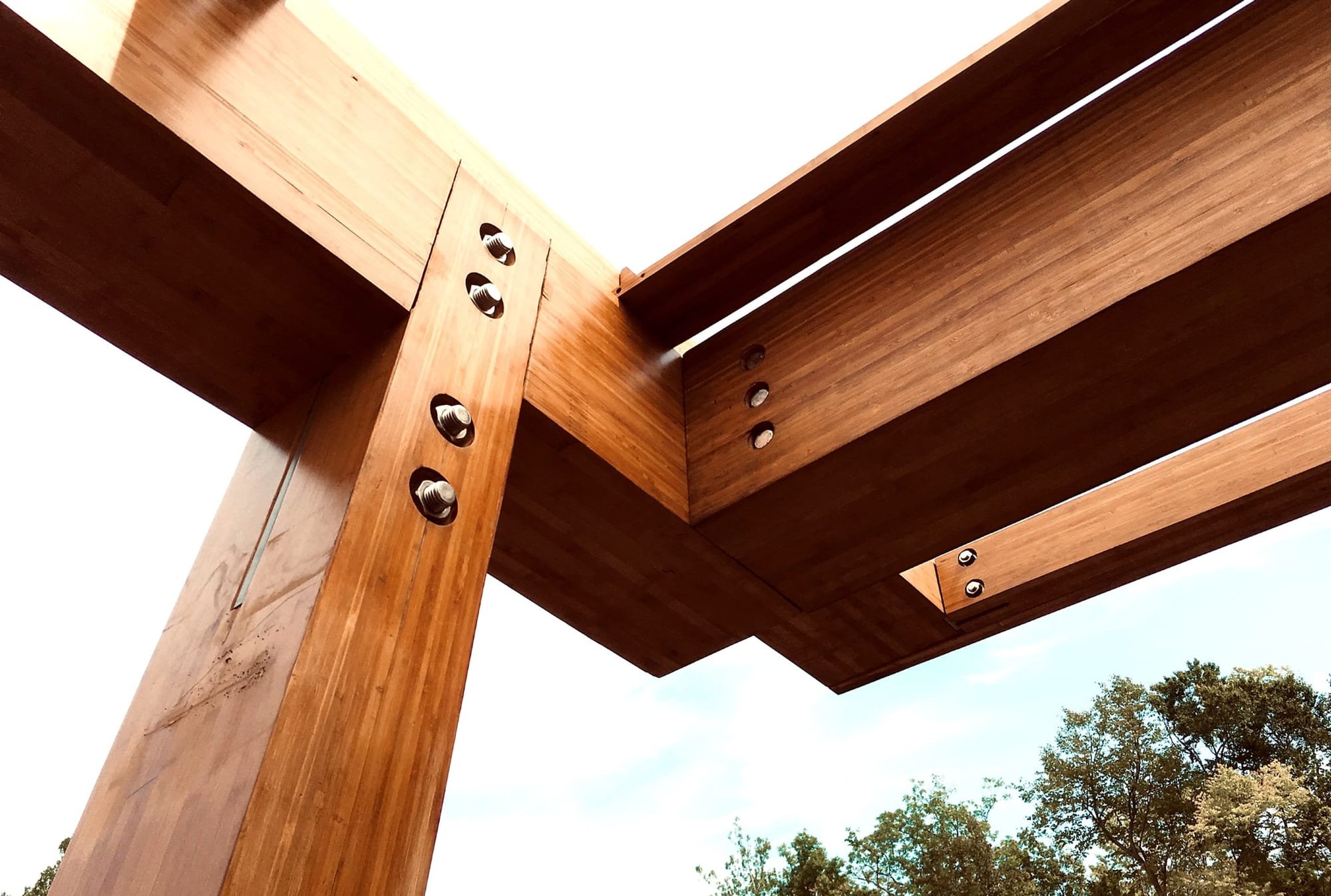
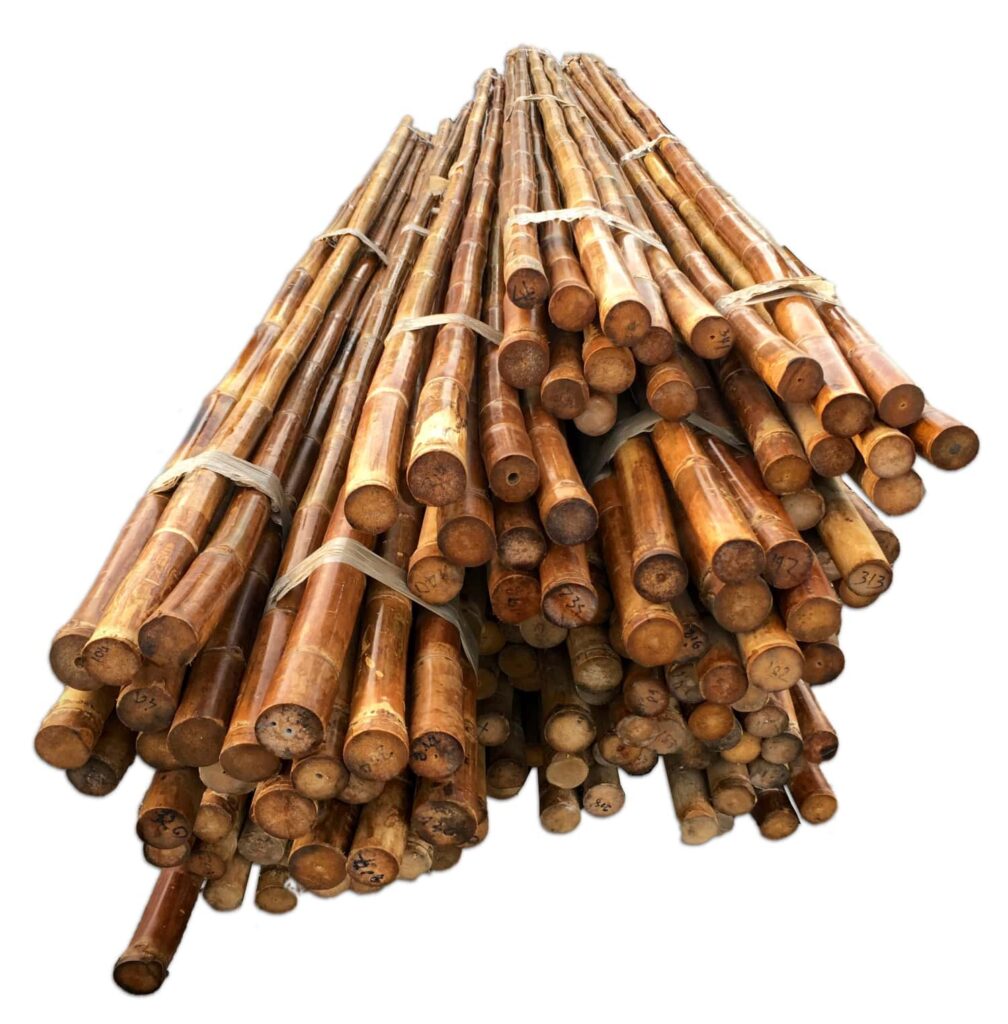
Bamboo finds its application in various forms, including whole culms, splits, and strips, which are used in house construction, furniture making, or in engineered bamboo products like laminates, particle boards, and bamboo lumber. Additionally, raw bamboo biomass is utilized for second-generation biofuels, valuable chemical by-products, and as a feedstock for paper pulp production or viscose (rayon).
The Environmental Impact of Bamboo
Bamboo plantations have a positive environmental impact, sequestering carbon both in aboveground biomass (culms, branches, and litter) and below the ground (rhizomes, roots, and soil). By converting bamboo into long-lasting products, it can act as a carbon sink.
Bamboo has also been utilized as a tool for forest landscape restoration and has proven effective in improving soil properties, stabilizing slopes, riverbanks, and areas prone to erosion. The root zone treatment technology, where bamboo’s extensive root system supports aerobic bacteria, has also shown promise for commercial wastewater treatment.
The Importance of Commercial Bamboo Cultivation
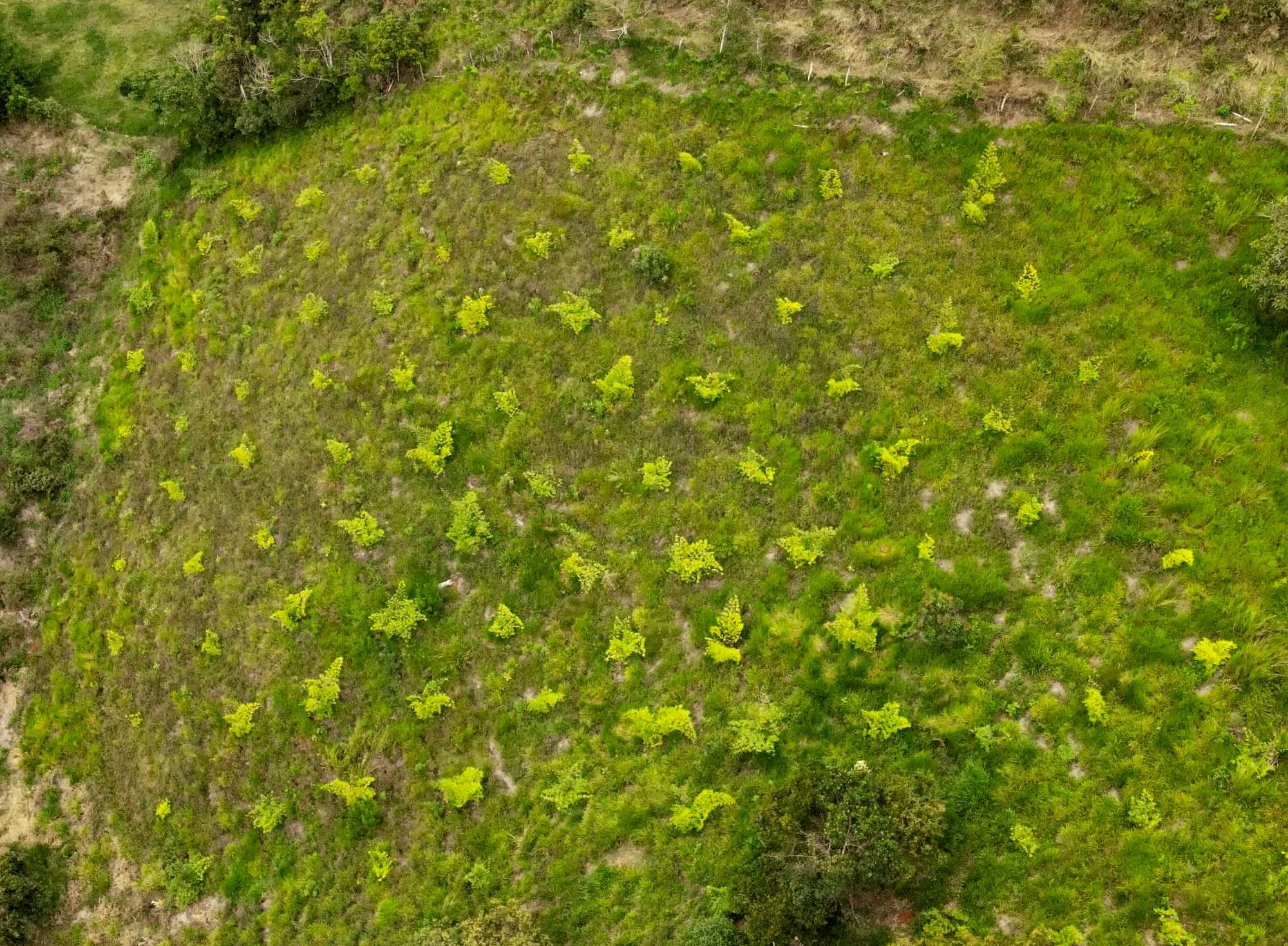
Traditionally, bamboo has been harvested on a small scale from forests and homesteads without the appropriate management or maintenance of the available bamboo resources. Collecting bamboo from forests, however, is no longer sustainable, as it leads to ecosystem degradation and a decline in genetic material. To ensure a sustained supply of bamboo for emerging industrial uses, cultivation in plantations, agroforestry systems, and homesteads is the most viable solution.
Given the diversity of bamboo species (1821), and the range of climatic conditions suitable for their cultivation across different regions worldwide, it is possible to increase the global bamboo supply. This includes areas where bamboo does not naturally grow but possess favorable climatic and other conditions for its growth.
Selecting the Right Bamboo Species
Modern industrial applications require considerably higher volumes of raw bamboo material compared to traditional practices. In determining which bamboo species to prioritize, the main focus is on their potential for large-scale cultivation and the ability to process them into a range of specific products. Culm dimensions, physical attributes, chemical composition, and mechanical properties differ among bamboo species, meaning that some applications are better suited for certain species.
Fortunately, a wealth of new information and research on bamboo has become available through scientific journals and technical reports during the past two decades. Having access to reliable data regarding morphological, climatic, and physicochemical parameters is essential for selecting the most suitable bamboo species.
The list below presents 40 of best bamboo species for large scale cultivation. These species have been selected based on their established and emerging uses across different product categories. Priority should be given to native bamboo species that fulfill the required end-use criteria. Native species adapt better to local climates and soil conditions, and sourcing planting material is usually easier.
The 40 Best Bamboo Species for Large Scale Cultivation
| Species | Construction | Vegetable | Fodder | Mass Timber | Pulping | Biofuel |
|---|---|---|---|---|---|---|
| Bambusa balcooa | ✔ | ✔ | ✔ | ✔ | ✔ | ✔ |
| Bambusa bambos | ✔ | ✔ | ✔ | ✔ | ✔ | |
| Bambusa nutans | ✔ | ✔ | ✔ | ✔ | ||
| Bambusa oldhamii | ✔ | ✔ | ✔ | ✔ | ||
| Bambusa polymorpha | ✔ | ✔ | ✔ | ✔ | ||
| Bambusa blumeana | ✔ | ✔ | ✔ | ✔ | ✔ | |
| Bambusa textilis | ✔ | ✔ | ||||
| Bambusa tulda | ✔ | ✔ | ✔ | ✔ | ||
| Bambusa vulgaris | ✔ | ✔ | ✔ | ✔ | ✔ | ✔ |
| Dendrocalamus asper | ✔ | ✔ | ✔ | |||
| Dendrocalamus barbatus | ✔ | ✔ | ✔ | |||
| Dendrocalamus brandisii | ✔ | ✔ | ✔ | ✔ | ✔ | |
| Dendrocalamus giganteus | ✔ | ✔ | ✔ | ✔ | ✔ | |
| Dendrocalamus hamiltonii | ✔ | ✔ | ✔ | ✔ | ||
| Dendrocalamus latiflorus | ✔ | ✔ | ✔ | ✔ | ||
| Dendrocalamus longispathus | ✔ | ✔ | ✔ | |||
| Dendrocalamus membranaceus | ✔ | ✔ | ✔ | ✔ | ||
| Dendrocalamus sikkimensis | ✔ | ✔ | ✔ | ✔ | ✔ | |
| Dendrocalamus strictus | ✔ | ✔ | ✔ | ✔ | ||
| Gigantochloa apus | ✔ | ✔ | ||||
| Gigantochloa atroviolacea | ✔ | ✔ | ✔ | |||
| Gigantochloa atter | ✔ | ✔ | ||||
| Gigantochloa levis | ✔ | ✔ | ✔ | |||
| Gigantochloa scortechinii | ✔ | ✔ | ✔ | |||
| Gigantochloa verticillata | ✔ | ✔ | ||||
| Guadua aculeata | ✔ | ✔ | ||||
| Guadua amplexifolia | ✔ | ✔ | ||||
| Guadua angustifolia | ✔ | ✔ | ✔ | ✔ | ||
| Guadua chacoensis | ✔ | ✔ | ✔ | ✔ | ||
| Melocanna baccifera | ✔ | ✔ | ✔ | |||
| Ochlandra travancorica | ✔ | ✔ | ✔ | ✔ | ✔ | |
| Oldeania alpina | ✔ | ✔ | ✔ | ✔ | ✔ | |
| Oxytenanthera abyssinica | ✔ | ✔ | ✔ | ✔ | ✔ | |
| Phyllostachys aurea | ✔ | ✔ | ||||
| Phyllostachys edulis | ✔ | ✔ | ✔ | ✔ | ✔ | |
| Phyllostachys reticulata | ✔ | ✔ | ||||
| Pseudoxytenanthera stocksii | ✔ | ✔ | ✔ | |||
| Schizostachyum pergracile | ✔ | ✔ | ✔ | |||
| Thyrsostachys oliveri | ✔ | ✔ | ✔ | ✔ | ||
| Thyrsostachys siamensis | ✔ | ✔ | ✔ | ✔ | ✔ |
Source: INBAR & IPGRI: Priority species of bamboo and rattan.
Legend:
- Construction = Structures or products made with whole round poles, slats, or mats. This includes, furniture, handicrafts, fencing,…
- Vegetable = Food source for humans.
- Fodder= Food source for animals.
- Mass Timber = Products that involve engineered bamboo boards or beams. This includes, veneers, plyboo, particleboards,…
- Pulping = Bamboo pulp can be used for either paper or textile production.
- Biofuel = Product such as bamboo charcoal, pellets, bioethanol,…
Your website is packed full of educative content and it would really take a long while to exhaust all the high quality information across the pages.
I am seriously considering going into bamboo farming somewhere in Ogun Stage, Nigeria with a tropical climate. My research so far has not shown that there is any sustainable bamboo cultivation going on in the country, and most are harvested from unmanaged wild sources.
There are two major problems with this situation, the first being that there is no established standard, regulatory oversight, or quality control as highly emphasised on your website. The second is that the supply is haphazard and quality is never guaranteed.
I am aware of the prevalent species in the country that grow in tight clumps, but I am keen to learn of any of the species that grow as individual culms, or that are not as tightly clumped as the local species that you can recommend. Of course there is the challenge of getting the seedling locally, but I would like to cultivate a species that grows in a more open form the the local breeds. Also, many of the species shown on your website have bigger diameters than the local breed.
The climatic condition in my region of the state can be described as follows:
Rainfall:
At 1,244–1,456mm, the area sits at the lower boundary of Guadua’s preferred range. I am open to dry-season supplementary irrigation, and the parcel has access to water (i.e. proximity to a stream or borehole).
Elevation:
At only 72m above sea level, it is significantly below Guadua’s typical Colombian habitat.
I would like to know your recommendation for a breed whose clumps are more open and the individual culms (canes) stand noticeably more spread out compared to the dense, broom-like clumping of Bambusa vulgaris that is native to my part of the world. I have 5 acres of land ready for the bamboo farming project.
In summary, my question is –
Given this climate profile, which bamboo species — whether Guadua or an alternative — would you recommend for a 5-acre commercial pole plantation targeting the construction sector, and what site modifications (irrigation, soil amendment) would improve our probability of success?
Thank you!
Thank you for the article and the website in general. I found it very informative. I’m based in Thailand and is just about to start a new plantation to grow and harvest culms. I’m deciding between i) Dendrocalamus giganteus vs. ii) Dendrocalamus strictus. There’s wide existing market (and growers) for Dendrocalamus strictus in the region, although less so with Dendrocalamus giganteus. Keen to hear if you have any views on commercial aspects of these two and whether there’s a greater need and application for one over the other? Many thanks and keep up the good work.
Why not grow both? In my opinion, diversification is one of the smartest long-term strategies in bamboo forestry, especially with markets constantly shifting between construction, biomass, engineered bamboo, paper pulp, furniture, and specialty culm applications.
You are essentially comparing two very different categories of bamboo:
• Dendrocalamus giganteus produces very large diameter, hollow culms with strong potential for structural construction, laminated products, high-end architecture and premium poles. Fewer growers also means less competition if demand increases.
• Dendrocalamus strictus, on the other hand, is a smaller diameter, predominantly solid bamboo with a long-established market in Asia. It is highly valued for durability, tools, scaffolding, handicrafts, fencing, biomass, pulp, and applications where solid walls are preferred over large hollow culms.
Commercially, I would look at them as complementary species serving different industries and price segments. One gives you volume and established local demand, the other gives you differentiation and access to higher-value niche markets.
If you have the land and conditions for both, go for it I would say.
I am a Kenyan and I have just come across a farm selling bamboo seedlings that produce solid bamboo trees. I have searched for more information and it has led me to your website which has inspired me more. In the next 1 or 2 months I plan to plant 150 seedlings of bamboo. I plan to produce poles for fencing and building purposes.
The bamboo concept is new in Kenya and I believe it will bring a lot of change in this country if it is embraced. According to the research I have done, I have learnt that bamboo can give me good returns.
I am however skeptical about the ability of bamboos to produce quality poles and timber. Kindly advise me on the ability of bamboos to produce quality poles. How many shoots can form a clump if planted in an ideal climate?
I will appreciate your input as I begin the journey of transforming our country. Kindly give me more information of how bamboo trees are used in your country.
Bamboo has the same uses as timber, it can be chipped and made into paper and boards. The fibres can be used and if one goes to woolworths one can see the socks, towels and other garments made from bamboo. It produces more cotton per hectare than regular cotton using less pesticides and weedicides, it uses less water than forestry and writings in china say that where it is planted the streams start flowing again!
A lot of scaffolding going up many storeys in the East are from bamboo. Houses can also be made from bamboo and furniture. Once planted bamboo can supply a yearly income since after 5 years culms or stems can be harvested yearly. I have planted a hectare to prove to myself that the yield is higher than I can achieve using forestry having heard that it can produce 200 ton annually.
Interested in farming bamboo for profit in Texas. But know very little about it. What resources are available, and are there and processors or distributor’s to sell it to in bulk?
What is the minimum area to at least have a profit for bamboo, especially if you only grow for poles? When can you expect income for pole production, in a small scale level? Yes, there is money in bamboo, but it is the flooring and other stuff already, which for sure small farmers can’t afford to set up such facilities. So, again what is the minimum area? Thanks. This site is very helpful.
Any size plantation can be profitable whether it is 1 ha or 10,000 hectares. The question you should ask is: How are you planning to sell the bamboo?
Will you (or a partner) be making value added products from the bamboo and what kind of product? Or will you be growing bamboo to target a specific market? The end use of the crop plays a crucial role. For the energy or biomass industry you would need large scale cultivation, but this is not the case for niche products such as handicrafts or furniture. Maybe there is a local need for a certain bamboo product such as fencing poles or props for tomato growers.
Whether you grow on a small or a large scale, there will always be a market for bamboo. The key is to find out who needs what (poles, pulp, chips, etc.) and at what quantity. Once you have pinpoint the potential market and what price they would pay for the product, you’ll have to calculate operation and transportation costs to determine your potential profit.
Always keep in mind the importance of location. Growing bamboo in remote areas with no road access and no available labor force could make your entire business plan go bust. You will also need to determine which species to grow. This again, depends on the end use for the bamboo and climate conditions of the area.
As you can see, it takes much more research and study before you can start planting bamboo for profit. So if I may give one advice, do not pursue bamboo just because of the potential financial rewards. As with any business, easy money doesn’t exist!
Indeed diversification is good tactics to maximize the revenue for a bamboo plantation. Using different parts of the culms for both low and high-end markets is common practice (keep in mind that every part of the bamboo culm can be utilized).
Culms could be used for light and temporary construction kits, such as pergolas or wedding arbors. Even the leaves could be used or sold as animal fodder while branches and culm tips could be chipped into mulch.
So many uses, so many opportunities with bamboo,… become passionate and you’ll surely find your niche.
Let’s assume a revenue of $1 per linear foot of pole, selling untreated poles directly to a buyer (there’s the key: find a buyer). There are 43500 sq ft in an acre. Assume an average total of one linear foot of pole per square foot of land. At $1/linft, that’s $43k/year. Let’s assume $0.10/linear-foot, and 4 square feet per linear foot: that’s $1k in revenue.
So there you have it: upper and lower bounds. You can imagine that for ever 4 square feet, a 4-year culm will produce a 20 foot cane. Harvesting every 4 square foot patch on a 4-year rotation would mean 2700 canes harvested per year. If those canes are 20′ long and sell for $0.10/foot, then you’ve got 20 * .1 * 2700 = $5400/acre/year, not even trying very hard! Just wait twenty years till you’ve got an acre of 60′ tall, 6″ diameter moso!
The simplest added-value projects in the US would be selling potted culms ($5-$30/gal plant) or making woven mats or privacy/garden screens ($1-$5/sqft). Other ideas: Selling edible bamboo shoots to a local co-op / health food store, raising a pig or ducks in the understory, or making bamboo bike frames ($100-$2k/frame) and trailers. Looks like you need reliable buyers, and multiple products, to make more than a thousand dollars per year.
Indeed diversification is good tactics to maximize the revenue for a bamboo plantation. Using different parts of the culms for both low and high-end markets is common practice (keep in mind that every part of the bamboo culm can be utilized).
Culms could be used for light and temporary construction kits, such as pergolas or wedding arbors. Even the leaves could be used or sold as animal fodder while branches and culm tips could be chipped into mulch.
So many uses, so many opportunities with bamboo,… become passionate and you’ll surely find your niche.
The 4 year cycle for harvesting, does that assume the growing of bamboo from seedlings, or from potted containers? I’m just trying to understand & obtain the most efficient & cost effective method for an initial grove up to 10 acres.
The 4 year-cycle refers to the harvesting cycle once the grove is established and is mature for harvesting. There is NO WAY you can start harvesting timber bamboo just 4 years after planting, not from seedlings, not from potted plants, and not even from large offsets. Giant tropical bamboo need at least 7 years to produce large diameter culms after which they have to mature for another 5 years. Most runners such as Moso can even take 12 years before producing large diameter culms after which they have to mature still. That is not to say that you can’t harvest your first poles 5-7 years after planting, but those will be small diameters sticks.
I am considering bamboo as a flooring material. Are some species better than others for bamboo flooring? Love your site. So informative. So readable. Keep up the good work!
Choosing the right species for bamboo flooring is crucial, because the strength and hardness of bamboo fibers varies greatly between species. Generally, the best timber bamboos come from the genera Guadua, Dendrocalamus, Bambusa, and Phyllostachys.
The most widely used species in Asia is Moso (Phyllostachys edulis), while in the Americas the preferred species is Guadua (Guadua angustifolia). Both are excellent flooring bamboos, but they differ in fiber density, growth habits, and availability. You can see a comparison of both species here.
It is also worth noting that Moso Bamboo is among the hardest bamboo species in the world, making it highly suitable for flooring applications where durability is critical.
What’s the best species of bamboo for flooring? It’s probably a lot like coffee in that many differing opinions are out there as to where the best coffee grows, but bottom line, all coffee beans can be roasted wrong. They can all be brewed wrong.
My guess is, it’s more critical how bamboo is handled and/or processed than where it comes from, i.e. fair trade practices, manufacturing environmental compliance, efficient and stable distribution. Am I right? Anybody else has a thought?
Bamboo hardwood flooring is quickly becoming the most popular exotic hardwood flooring option on the market. Many bamboo species like Guadua and Bambusa are popular. Appearance wise, bamboo’s light color and soft sheen is considered very trendy. It is important that when creating a structure made from bamboo, as well as a hardwood floor, that the wood is treated with certain solutions, so it does not crack from moisture.