
Fissures & Splits
Guadua Bamboo® Grading Standards
Understanding Bamboo Fissures, Splits and Cracks
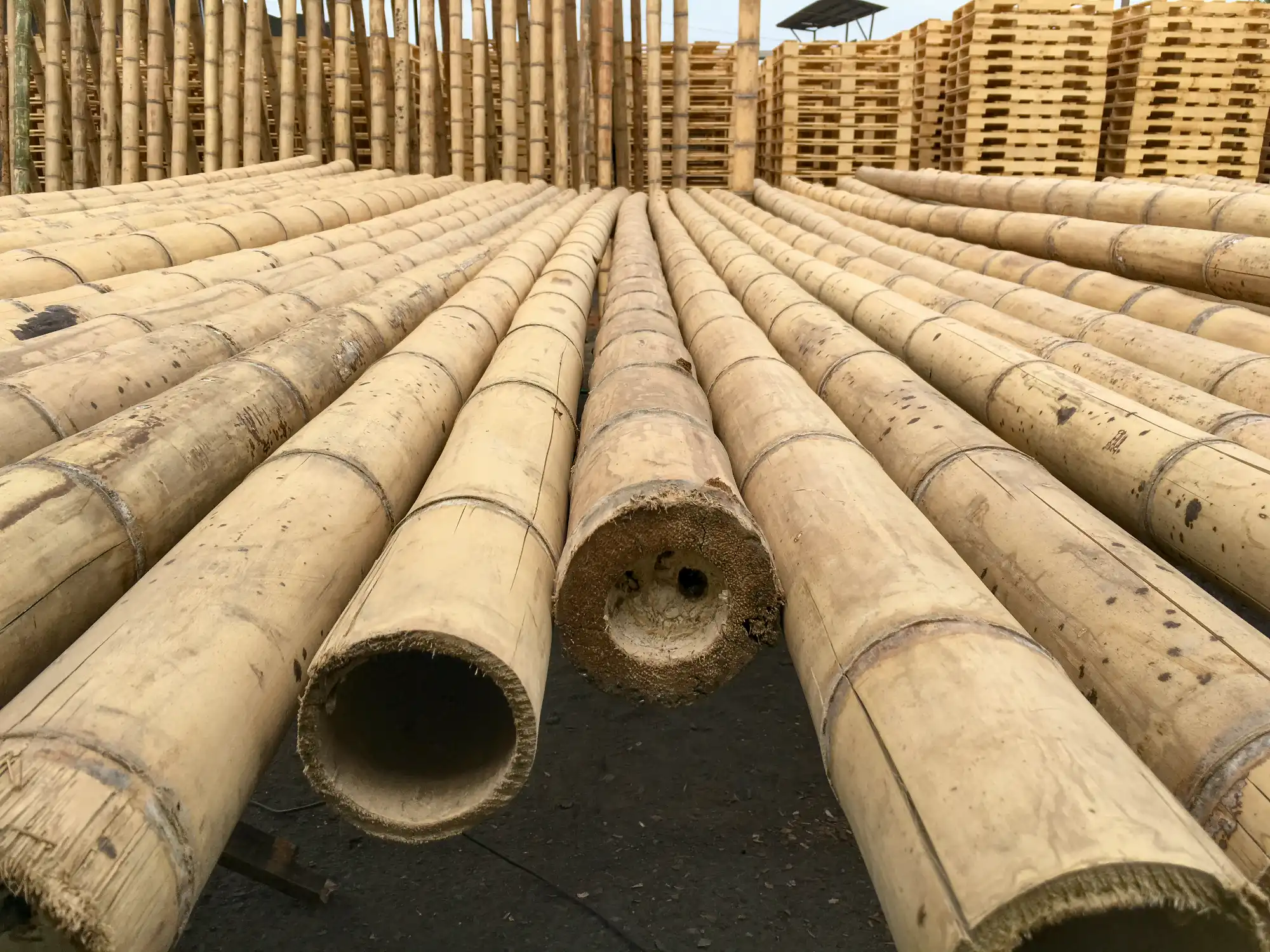
In bamboo poles, fissures are longitudinal splits or cracks that commonly develop during the drying process due to the material’s natural cellular structure. Unlike timber, which has an interlocking grain structure that limits how far a split can propagate, bamboo is essentially a bundle of parallel vertical fibers. These strong fiber strands are held together by a soft tissue known as parenchyma cells, which lacks the rigid lateral strength found in wood. Without horizontal cross-fibers to bind the strands together, bamboo is susceptible to splitting as it dries and releases internal tension.
Not all fissures are equal, however. We grade for fissures to ensure that natural cracks remain within defined limits and do not compromise the structural integrity of your project.
Factors that influence fissure development:
- Maturity: Mature culms have denser cell walls and greater resistance to splitting. Immature poles are significantly more prone to fissuring during drying.
- Growing conditions: Culms harvested at higher altitudes grow more slowly, resulting in higher fiber density and better resistance to splitting. Bamboo grown at lower altitudes or near constant water sources grows rapidly, producing lower fiber density and a higher risk of splitting.
- Handling: Rough handling during harvest, transport, or storage can induce micro-fractures that develop into fissures later. We apply careful handling protocols throughout our production process to preserve the fiber matrix.
- Anatomy: The outer layer of a bamboo pole has higher fiber density than the inner core. As the pole dries, the outer surface shrinks faster than the interior, creating tension that may lead to surface cracking.
Why Fissure Grading Matters
We evaluate fissures because they directly affect the mechanical performance of the pole:
- Structural integrity: Excessive splitting reduces the cross-sectional area available to resist loads, compromising bending, shear, and compression capacity.
- Durability: Open fissures allow moisture, fungi, and insects to penetrate the inner layers of the culm, accelerating degradation even in treated poles.
- Connection performance: Fissures near nodes or pole ends can cause localised failure in mechanical connections such as bolted joints, where stress concentrations are highest.
Defining Fissures and Indentations
The physical characteristics of fissures are classified as follows:
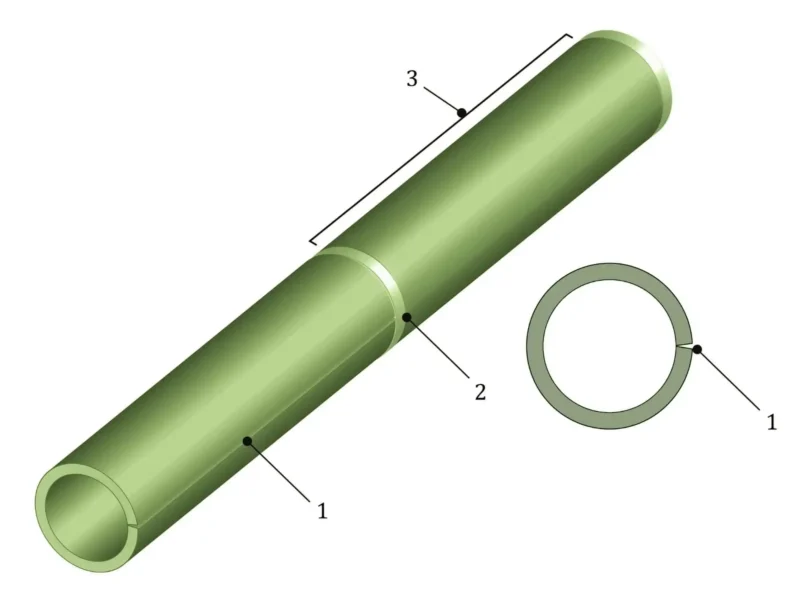
2. Node
3. Internode
Fissure: A longitudinally oriented separation or split of the bamboo wall running parallel to the fibers, which may or may not penetrate the entire wall thickness. Fissures originate on the outer surface and develop inward.
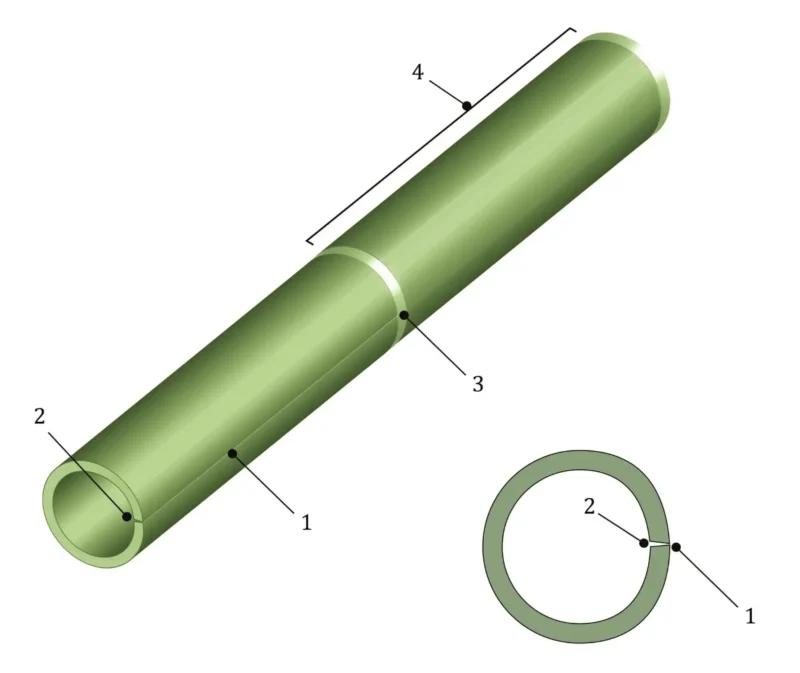
2. Internal fissure
3. Node
4. Internode
Longitudinal Indentation: A longitudinal depression running parallel to the fibers that may indicate the presence of an internal fissure referred to as “collapse” in some standards. These originate internally and may only be visible on the surface as a shallow groove.
How fissure extent is calculated:
Fissures must be equal to or greater than 5 cm. Shorter fissures in the same internode are added together until they reach 5 cm. The impact is determined by the percentage of internodes affected. We calculate this using the following formula:
$$\text{Range } \% = \left( \frac{\text{Affected internodes}}{\text{Total internodes}} \right) \times 100$$
Fissure Classification Ranges
We classify poles into 4 grades based on the percentage of internodes affected by fissures. The specific threshold values are part of the proprietary Guadua Bamboo® Grading Standard, available to registered members.
| Fissures | Grade | Range |
|---|---|---|
| Minimal | A+ | 🔒 |
| Normal | A | 🔒 |
| Medium | B | 🔒 |
| High | C | 🔒 |
* This technical data is reserved for our commercial partners. If you are already a partner, please log in here to view the full specifications. If you would like to access our professional resources, please request access here.
Grading Rules for Fissures
The tolerance table below translates fissure classification ranges into maximum allowable affected internode counts based on the total number of internodes per pole. This is what our graders count on every pole before it enters stock.
Poles classified as Grade C are excluded from structural applications and are not supplied.
| Number of Internodes | Minimal Fissures (Grade A+) | Normal Fissures (Grade A) | Medium Fissures (Grade B) | High Fissures (Grade C) |
|---|---|---|---|---|
| 6 | 🔒 | 🔒 | 🔒 | 🔒 |
| 8 | 🔒 | 🔒 | 🔒 | 🔒 |
| 10 | 🔒 | 🔒 | 🔒 | 🔒 |
| 12 | 🔒 | 🔒 | 🔒 | 🔒 |
| 14 | 🔒 | 🔒 | 🔒 | 🔒 |
| 16 | 🔒 | 🔒 | 🔒 | 🔒 |
| 18 | 🔒 | 🔒 | 🔒 | 🔒 |
| 20 | 🔒 | 🔒 | 🔒 | 🔒 |
| 22 | 🔒 | 🔒 | 🔒 | 🔒 |
| 24 | 🔒 | 🔒 | 🔒 | 🔒 |
| 26 | 🔒 | 🔒 | 🔒 | 🔒 |
* This technical data is reserved for our commercial partners. If you are already a partner, please log in here to view the full specifications. If you would like to access our professional resources, please request access here.
Inspection Process
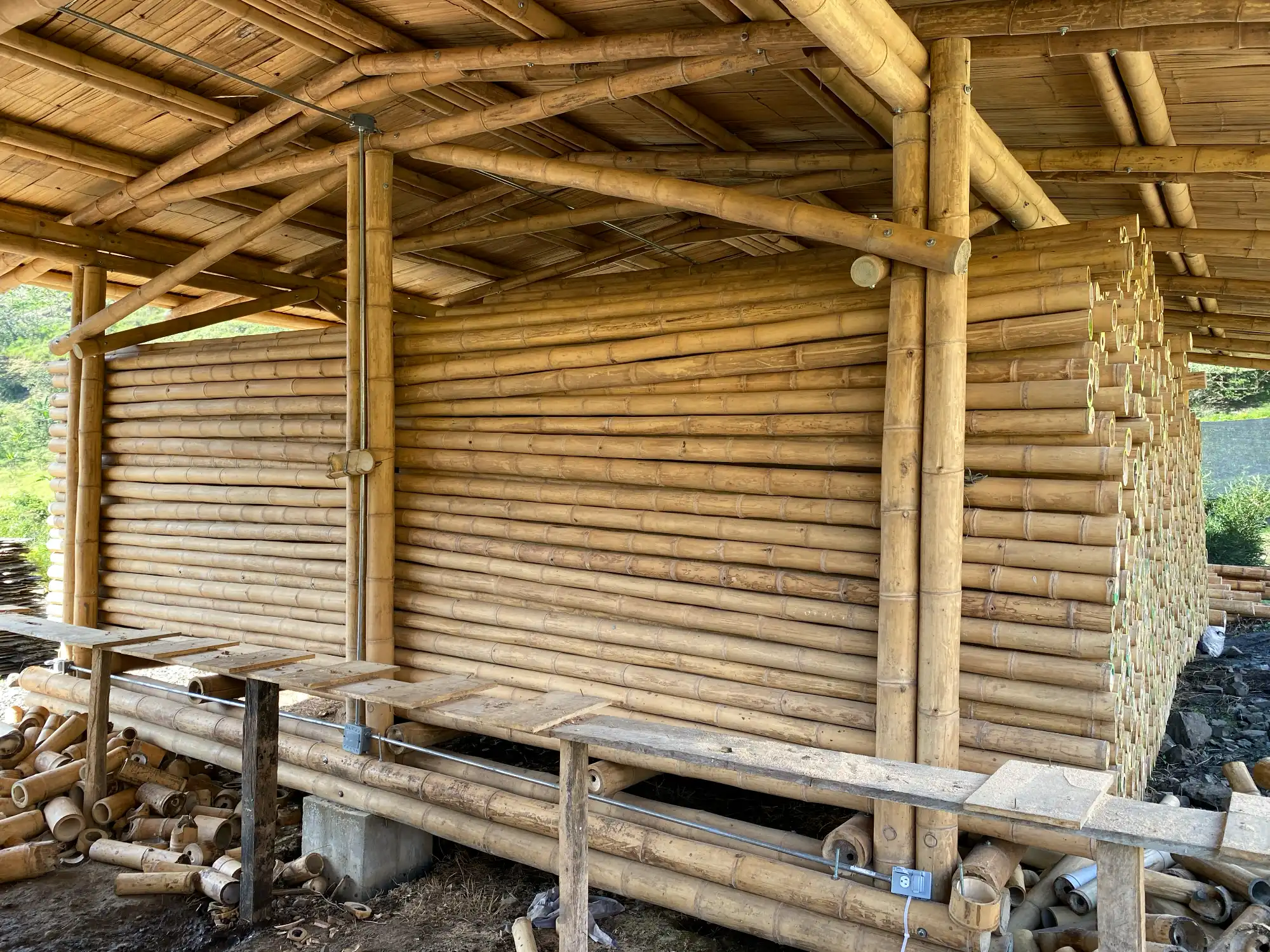
Every pole is inspected individually before it leaves our facility in Colombia.
- Full-length inspection: Each pole is checked 360° along its entire length for fissures and longitudinal indentations.
- Defect evaluation: Our graders assess the depth, length, location, and number of fissures present on each pole. Longitudinal indentations are also evaluated to determine whether they indicate internal fissures or are a natural surface characteristic.
- Fissure quantification: The number of affected internodes is counted and expressed as a percentage of total internodes.
- Classification: Poles are assigned an A+, A, B, or C grade based on the resulting percentage range.
Managing Fissures After Delivery
Our standard export stock meets the Grade A+ fissure specification as a minimum. Minimal surface cracking is not a premium option for us, it is our baseline.
That said, unlike taper or curvature, fissures are a characteristic that cannot be fully controlled even after grading. Bamboo continues to react to its environment after delivery, and rapid changes in humidity or temperature can trigger minor stress cracks in an otherwise well-graded pole. Our inventory is sun-bleached and seasoned for a minimum of 6 months before shipping to maximise dimensional stability, but no natural material is entirely static.
Under normal conditions the risk of significant post-delivery splitting is low. To maintain structural and aesthetic integrity over time, we recommend the following:
- Handling: Avoid dropping, dragging, or stacking poles without adequate support. Mechanical impact after delivery can introduce micro-fractures that develop into fissures as the pole continues to dry and settle in its new environment.
- Storage: Always store bamboo under a roof, elevated from the ground, away from direct sunlight and rain. Direct sun exposure is one of the most common causes of post-delivery fissuring, as rapid surface drying creates tension in the outer fiber layer.
- Surface protection: Apply a high-quality open-pore wood stain (Lasur) during installation, particularly for outdoor structures. This regulates moisture exchange and protects the fiber matrix from rapid drying or wetting cycles.
- Mechanical reinforcement: Use ring clamps or lashing at the ends of columns and beams to contain internal stress and prevent splits from propagating along the length of the pole.
If you have questions about fissure grading or post-delivery care for your specific project, contact our technical team.
Bamboo Grading Criteria
Explore all the technical assessment factors used in our Guadua Bamboo® Grading Standard to ensure structural quality.