
Age & Maturity
Guadua Bamboo® Grading Standards
Understanding Bamboo Maturity
In structural bamboo, maturity is the foundation of mechanical performance. As a Guadua angustifolia culm matures, its internal starch content converts into cellulose and lignin, progressively increasing fiber density and strength. Harvest too early and the pole lacks the structural capacity to bear load safely. Harvest too late and the culm has begun to deteriorate.
Under the Guadua Bamboo® Grading Standard, optimal maturity is reached between 5 and 6 years of age. This baseline applies to standard structural culms with an average diameter of 11 cm at breast height. Smaller culms mature faster, larger culms slower: the full maturity window for Guadua angustifolia runs from 4 to 7 years depending on pole diameter. Fertile soils accelerate this process. It is also worth noting that bamboo culms always mature from the top downward, which is why visual maturity indicators appear at the top of the culm first.
Why Maturity Matters
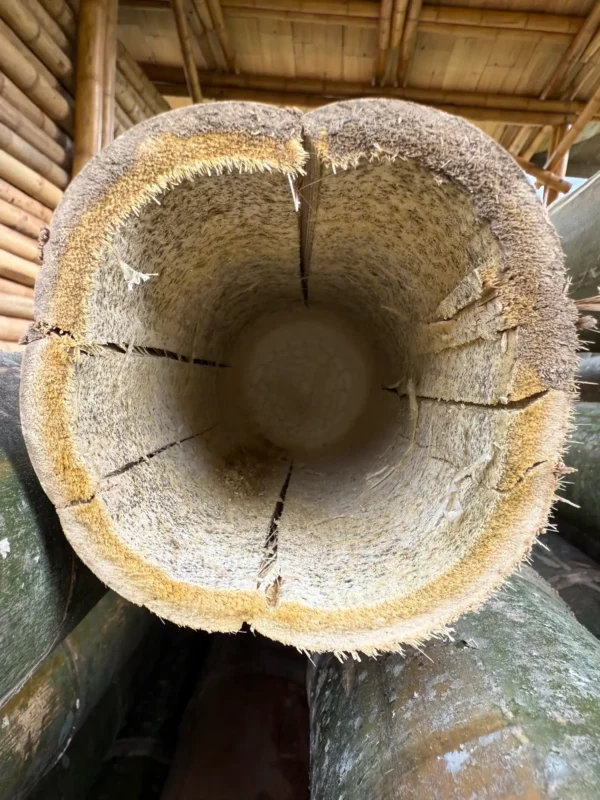
Using immature bamboo in construction causes structural failure. For average-diameter stems, culms harvested before the 4-5-year mark retain a high starch and water content. This causes excessive shrinkage, severe splitting, and deep cracks during the drying stage. It also means the fibers lack the density required to safely bear structural loads.
Furthermore, the high sugar content makes immature poles a prime target for wood-boring insects and fungal rot. To protect structural integrity, only mature culms that show a healthy phytosanitary state, free of fungal or insect damage must be selected.
Overmature culms present the opposite problem. Once a culm passes the 7 year mark it begins to yellow and deteriorate. The fiber matrix weakens and the culm becomes brittle. Both extremes are rejected under the Guadua Bamboo® Grading Standard.
The 6 Maturity Stages
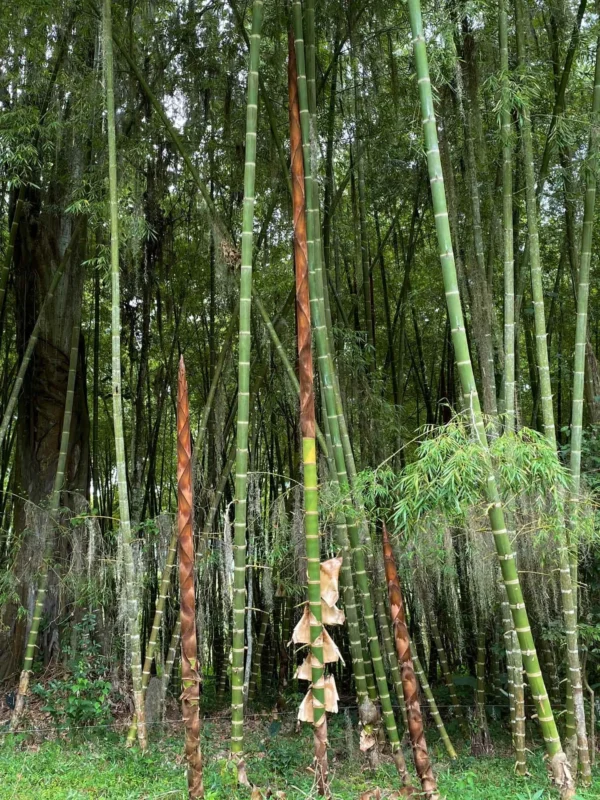
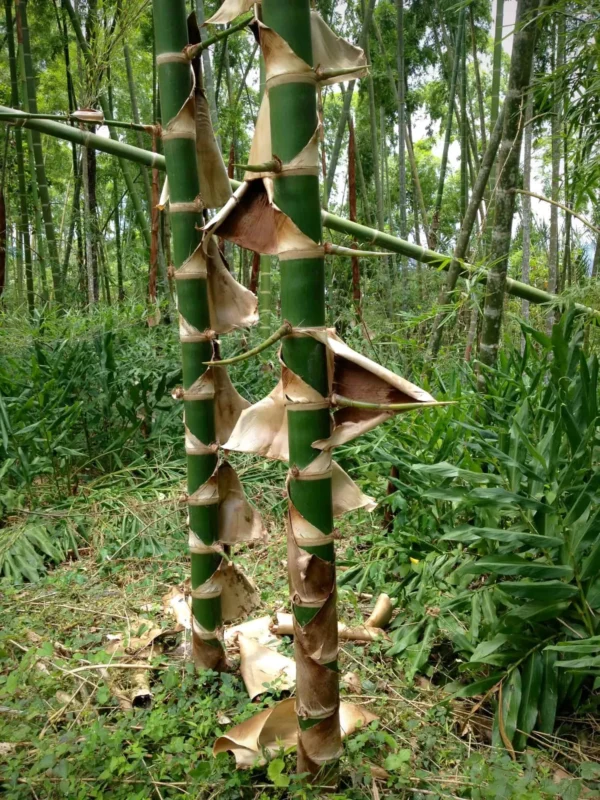
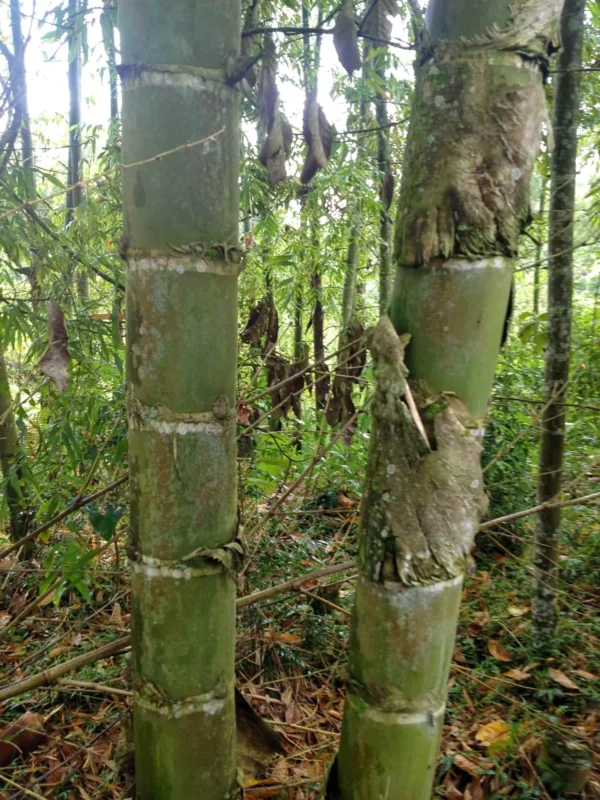
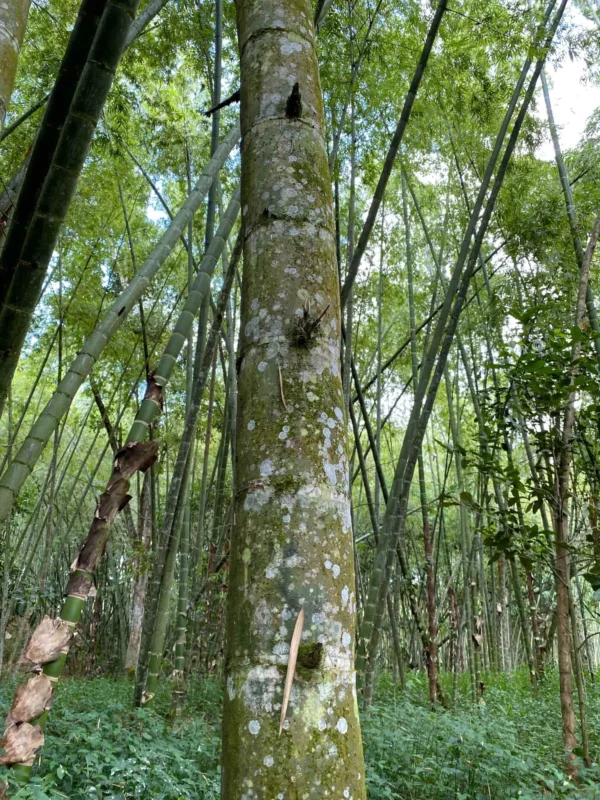
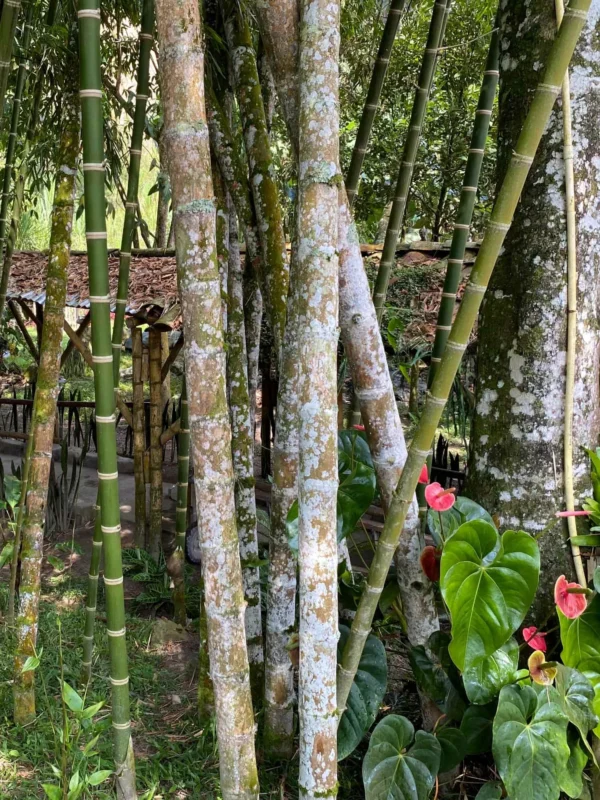
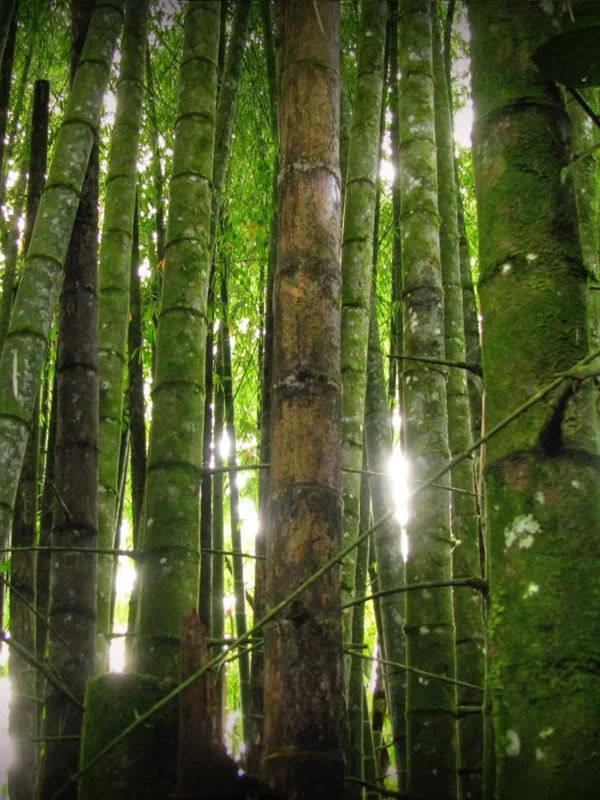
The Guadua Bamboo® Grading Standard classifies the full lifecycle of Guadua angustifolia across 6 stages. Our field teams use these stages to verify maturity standing in the plantation before any culm is marked for harvest.
| Age | Stages | Visual characteristics |
|---|---|---|
| < 7 months | Shoot | Shoots are always completely covered by culm sheaths. These protective leaves have a dark brown color and are covered with short stiff hairs. |
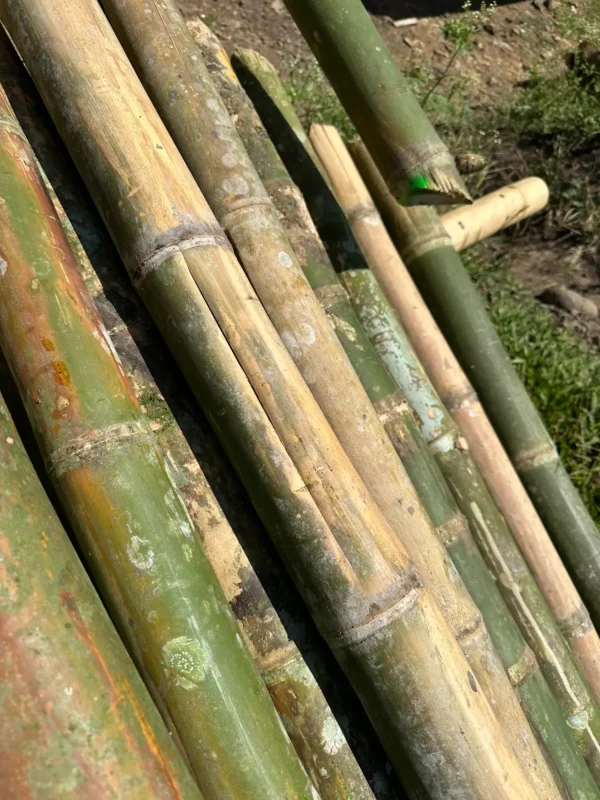
| 7 months – 2 years | Young | Young culms are characterized by their bright green color and intense white bands around the nodes. Culm sheaths are present, but are starting to fall off. Branches and foliage are starting to appear. Culms are covered with short stiff hairs. |
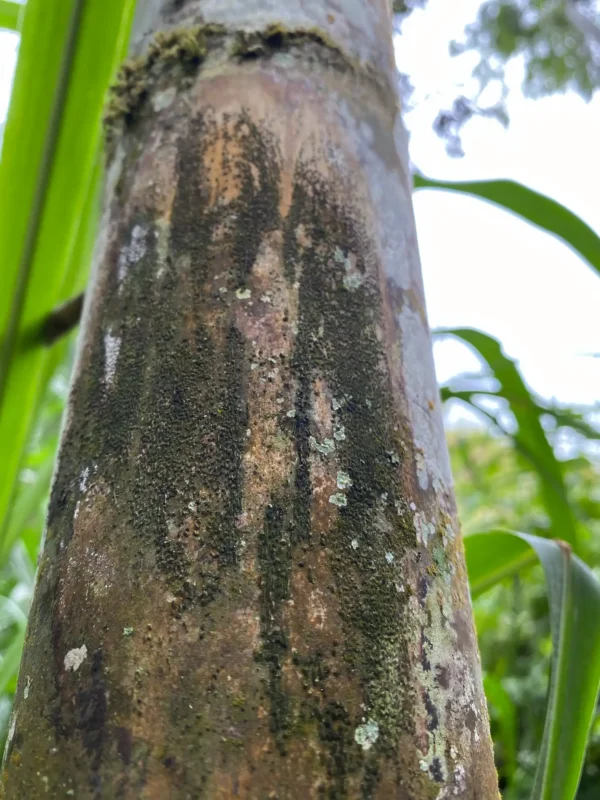
| 2 – 4 years | Adult | Adult culms are characterized by their dull green culms and white bands around the nodes. Culm sheaths are only present near the basal part of the culm. Some presence of lichens and mosses are starting to appear mainly at the internodes. Culms are no longer covered with short stiff hairs. |
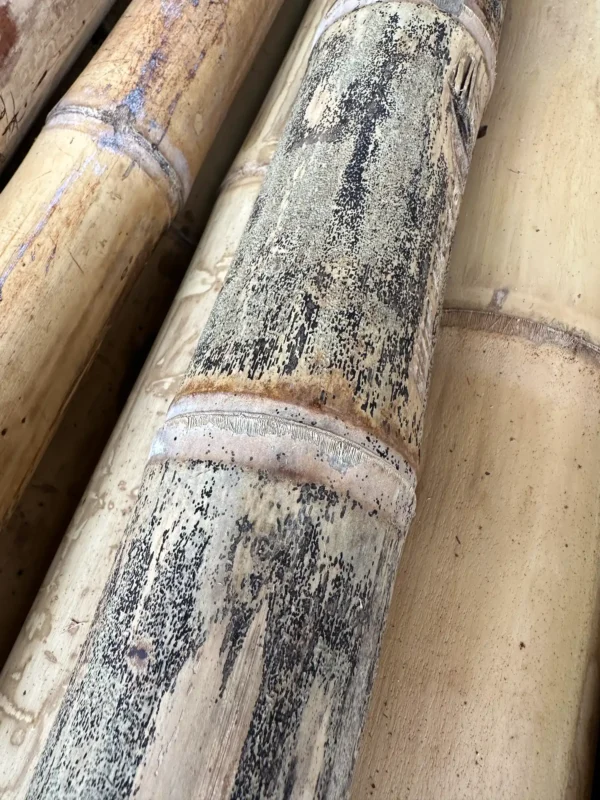
| 4 – 7 years | Mature | Mature culms are characterized by their whitish-green culms. The typical white bands around the nodes are no longer noticeable. The entire culm is covered with lichens and mosses. Culm sheaths near the base are no longer present. |
| 7 – 10 years | Overmature | Overmature culms are characterized by their yellowish color. The entire culm is covered with mosses and lichens which are turning into a pink color. |
| > 10 years | Dry | Dry culms are characterized their light brown color. These culms start to deteriorate and are biologically dead. |
Field Verification Protocol
Maturity must be confirmed standing in the forest before harvest. Our field team applies the following verification protocol for every culm marked for harvest:
- Culm Sheath Assessment: Graders verify that protective culm sheaths are completely absent at the base and that no epidermal hairs remain on the culm surface.
- Nodal Examination: We verify that the intense white bands around the nodes have faded and been replaced by a uniform whitish-green body tone across the entire culm.
- Lichen and Moss Mapping: Graders confirm an abundant distribution of mosses and lichens across both nodes and internodes. If a culm shows pink-hued lichens or a yellowish body, it is rejected as overmature.
- Measuring Moisture Content: Field testing is conducted to verify internal moisture content before the culm is cut.
- Sound Resonance Check: Striking the culm to audit acoustic resonance helps confirm density and fiber structural soundness. A dense, mature culm produces a clear, high-pitched ring. A dull or hollow response indicates immature or deteriorating wood.
- Marking: Only culms that pass all 5 checks are marked for technical harvesting.
Post-Harvest Requirements
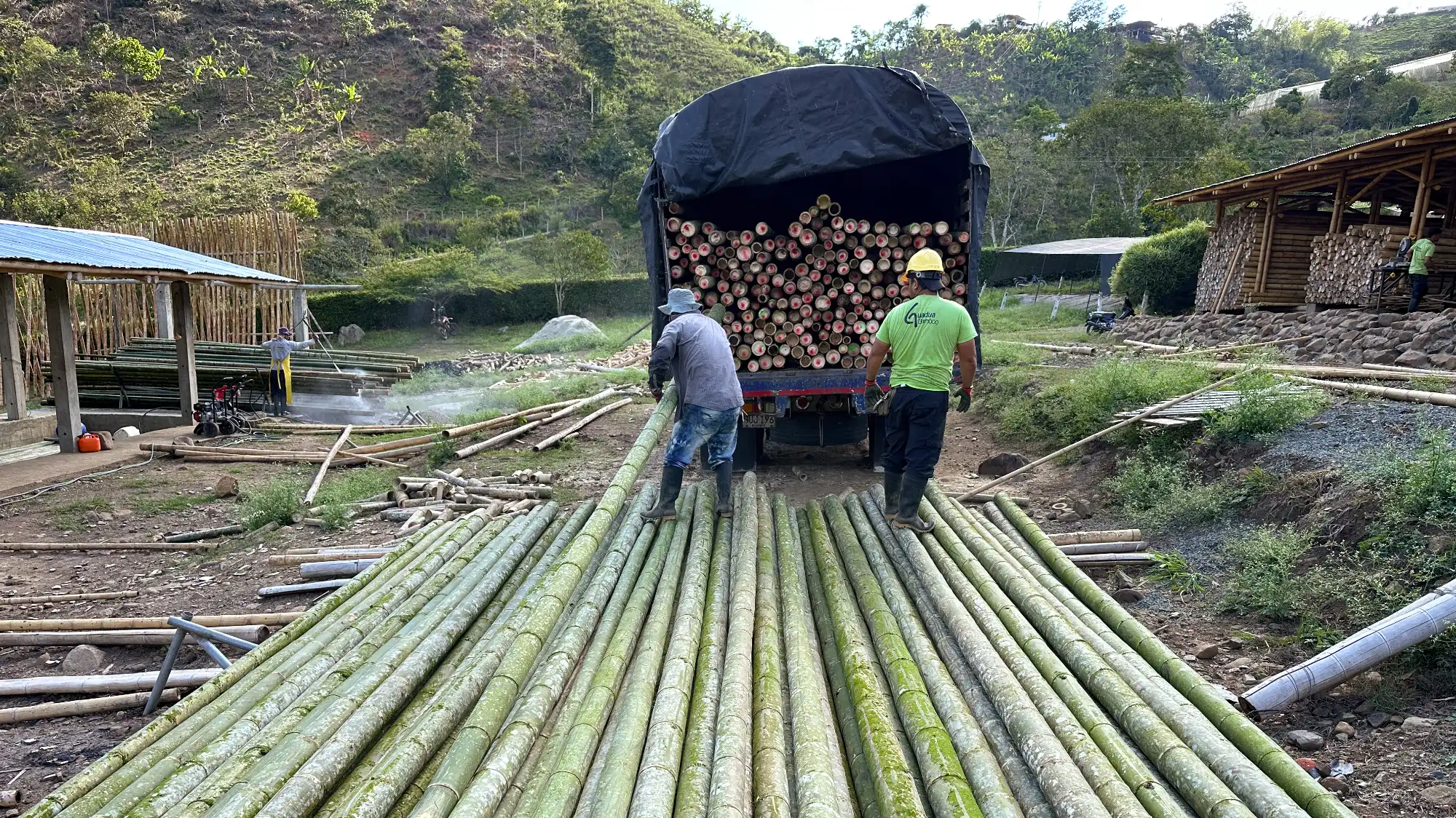
Maturity verification is the first step. What happens immediately after harvest is equally critical to preserving the structural quality of the material.
- Handling: From the moment of cutting, poles must be handled carefully to prevent surface damage, impact bruising, or stress cracks that compromise the grading assessment carried out later at the facility.
- Preservation window: Poles must be treated with preservative solution as soon as possible after harvest, ideally within weeks. Delaying treatment allows wood-boring insects to attack the starch-rich fresh culm before the preservative compounds have locked into the fiber matrix.
- Storage: Culms must be stored off the ground in ventilated areas protected from direct sunlight. Horizontal stacks must not exceed 1.70 m in height during storage, or 2.40 m during transport. Within each stack, culms must be alternated base-to-tip to maintain pile stability and prevent uneven loading.
Technical Advisory for Structural Design
Structural design values for Guadua angustifolia assume fully seasoned, mature material. Because maturity directly determines fiber density, it is the single parameter that most influences the flexural capacity and stiffness values you use in structural calculations. Specifying graded poles under the Guadua Bamboo® Grading Standard guarantees that maturity has been verified in the field before harvest, not estimated after the fact.
Need technical assistance for your specific project? Contact our structural advisory team.
Bamboo Grading Criteria
Explore all the technical assessment factors used in our Guadua Bamboo® Grading Standard to ensure structural quality.