
Guadua bamboo joints are the most critical component in structural bamboo design. While the culm itself has high strength along the fibers, the overall performance of a structure is governed by the quality of its connections.
This guide explains how to design structural guadua bamboo joints according to NSR-10, including load directions (P, Q, T), bolted connection requirements and allowable load capacities.
To make the standard practical, we include simplified tables and an interactive calculator, allowing you to quickly estimate joint capacity for real-world applications.
1. General Design Principles for Guadua Bamboo Joints
The code starts with a fundamental requirement that shapes all joint design: No element within a connection may fail due to tension perpendicular to the fiber or shear parallel to the fiber.
This reflects a key reality of bamboo behavior: its resistance is massive when you pull or push along the grain, but it is remarkably vulnerable to being split apart from the inside out. Any joint that introduces splitting forces, especially through poor detailing or incorrect fasteners, is structurally unsafe.
| Direction of Force | Structural Capacity | Risk Level |
|---|---|---|
| Parallel to fibers | Very high | Safe |
| Perpendicular to fibers | Very low | Critical |
| Shear along fibers | Moderate to low | Risky |
Why Nails Are Strictly Prohibited
NSR-10 explicitly forbids nailed connections in Guadua. The reason is not arbitrary; it is a matter of physics. Nails act as wedges. When driven into a hollow culm, they force the parallel fibers apart longitudinally. This creates micro-cracks that propagate rapidly under load, eventually causing the entire culm to split.
Engineering takeaway: If a joint relies on nails, it is not a structural joint; it is a failure waiting to happen.
2. Types of Structural Cuts in Guadua Bamboo Joints
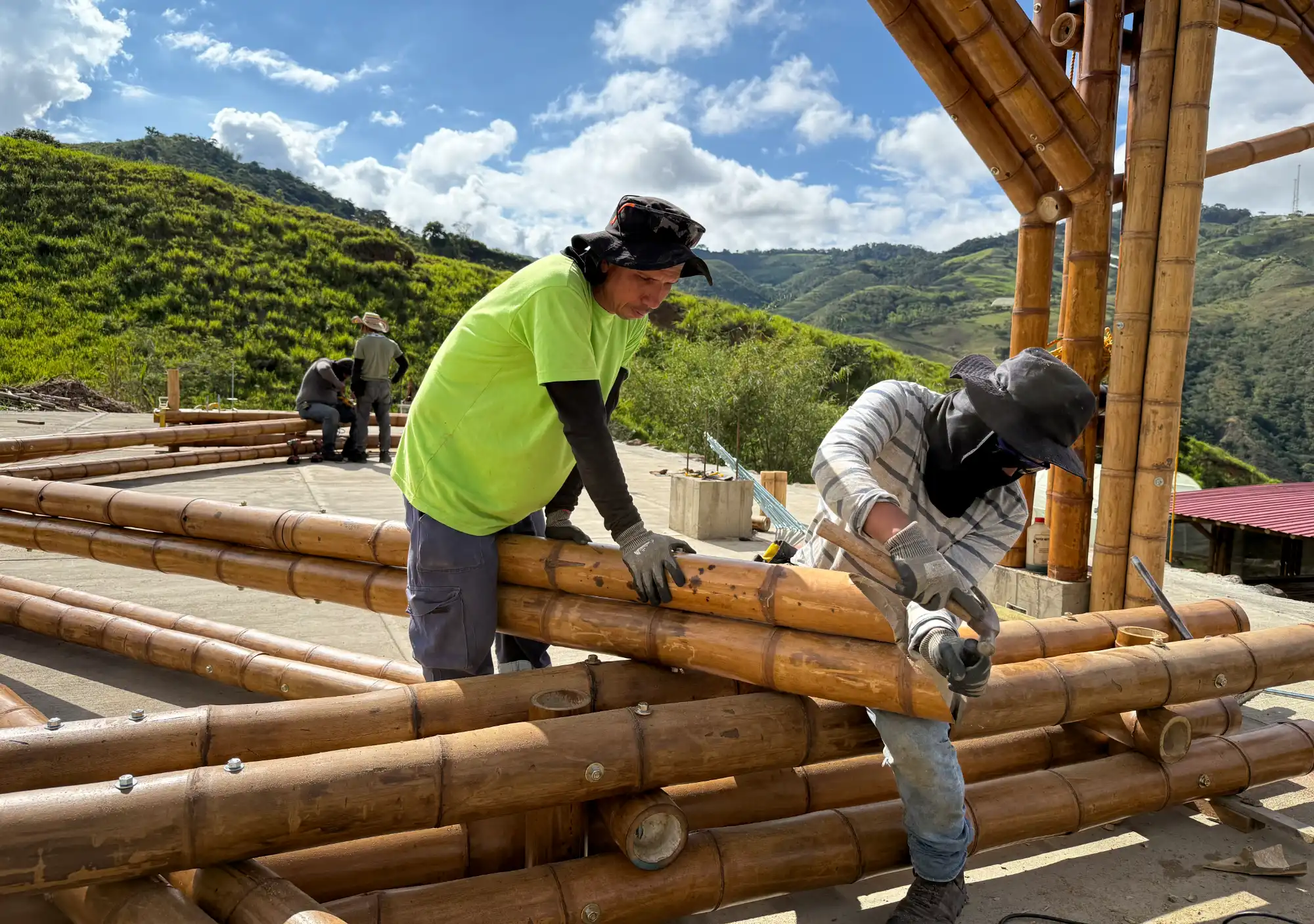
Joinery in Guadua is not only about fasteners. The geometry of the cuts plays a primary role in how forces are transferred from one member to the next. By shaping the bamboo correctly, you increase the surface area of the connection and reduce stress concentrations.
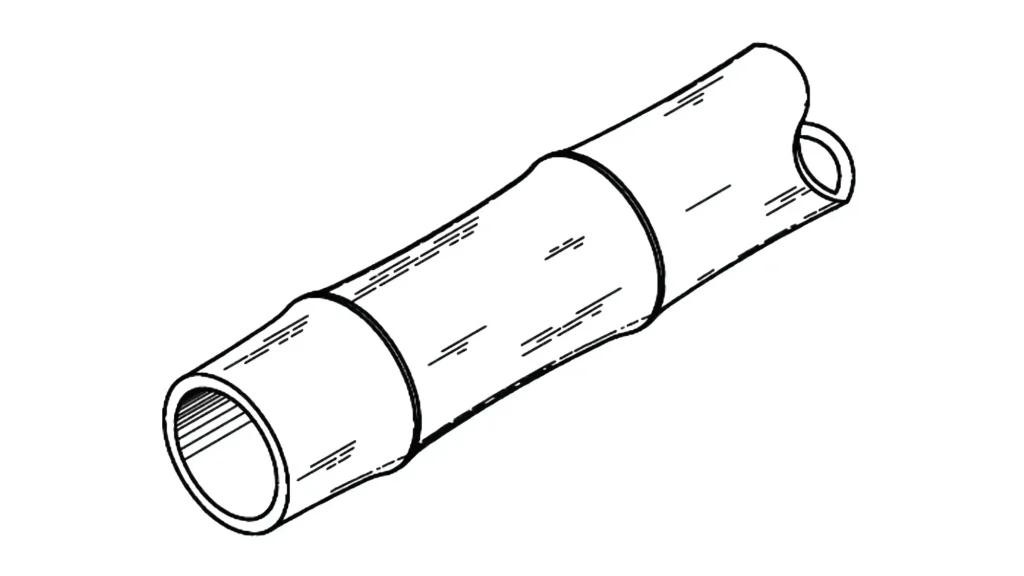
Straight Cut
A flat perpendicular cut across the culm axis. This is the simplest cut, used primarily for compression joints where the bamboo sits directly on a base support or a foundation. Because it has no interlocking capacity, it relies entirely on external connectors to stay in place.
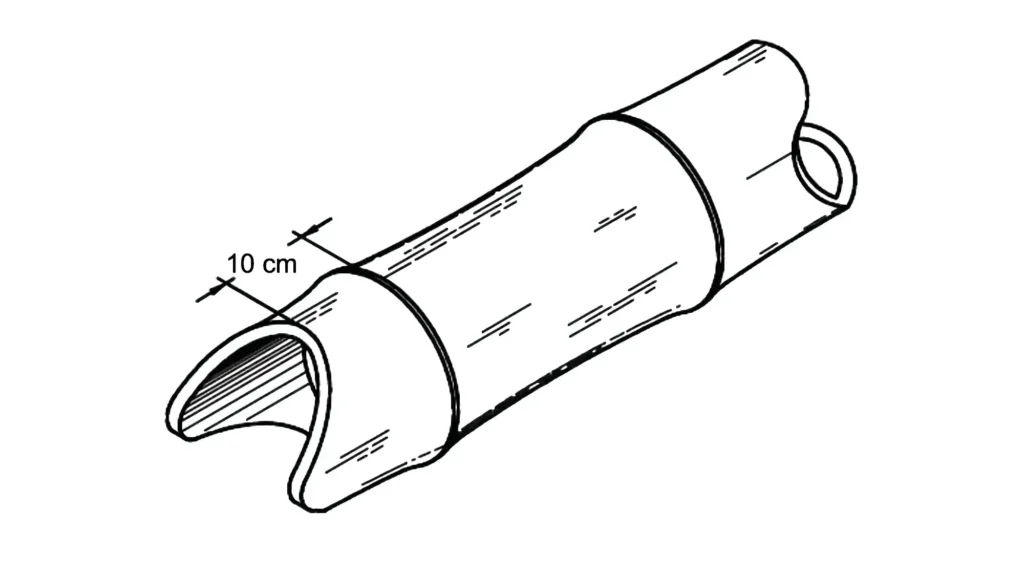
Fish-Mouth Cut
A transverse concave cut shaped to match the curvature of another culm. This is the “gold standard” for beam-to-column connections. It creates a mechanical cradle that improves load distribution, preventing the beam from rolling or shifting and significantly reducing the risk of the culm wall crushing.
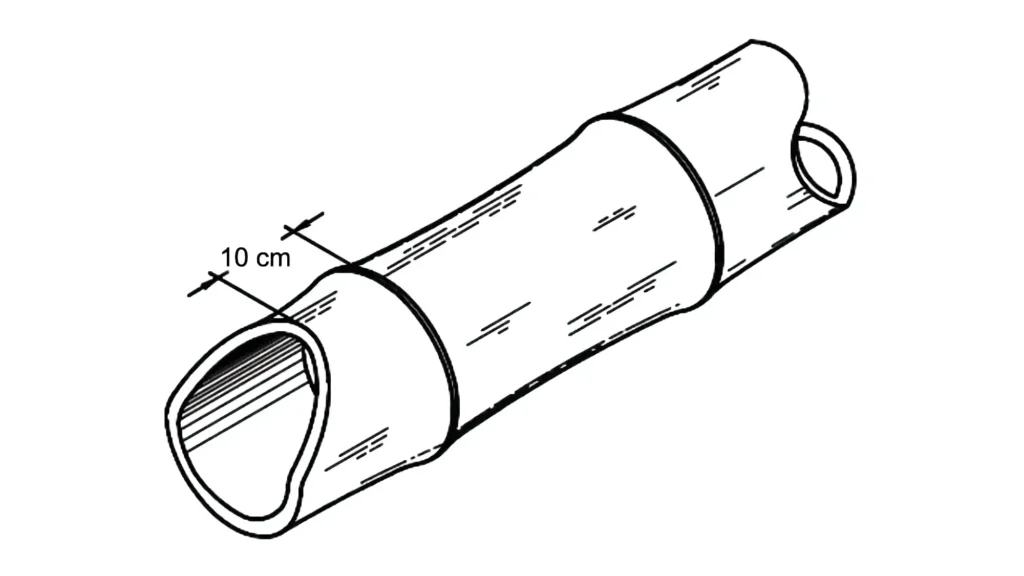
Flute-Mouth Cut
This specialized cut is used when elements meet at non-orthogonal angles (anything other than 0∘ or 90∘). It can be crafted as an inclined fish-mouth or a combination of two straight cuts. It is essential for complex spatial structures, such as trusses and triangulated roof geometries, allowing for smooth force redirection while maintaining fiber continuity.
3. Bolted Guadua Bamboo Joints
Bolted joints are the standard for high-performance connections where loads are significant. They typically involve structural steel bolts and plates to bridge the gap between bamboo elements or to anchor them to concrete foundations.
Minimum Bolt Diameter and Steel Plate Requirements
| Component | Minimum Specification |
|---|---|
| Bolts | Structural steel ≥ 240 MPa yield strength |
| Minimum diameter | 9.5 mm (3/8″) |
| Steel plates | ≥ 4.8 mm (3/16″) thickness |
Drilling and Perforation Guidelines
Precision is mandatory.
- Bolt Perforations: The hole diameter must exceed the bolt diameter by exactly 1.5 mm (1/16″) to allow for fitment without creating excessive play.
- Infill Access: Holes drilled for the purpose of filling the internodes with mortar must have a maximum diameter of 26 mm. This limit ensures that the access point does not compromise the structural continuity of the element.
- Alignment: All holes must be perfectly aligned with the axis of the bolt; poor drilling leads to “eccentric loading,” which creates bending moments that the bamboo was never designed to handle.
Corrosion Protection Requirements
Since Guadua often operates in humid environments, anti-corrosion treatment for all metal parts is mandatory. This is especially critical when the bamboo’s moisture content is >30% or in saline environments.

4. Mortar Filling of Guadua Internodes
Because Guadua is hollow, a bolt passing through an empty culm will eventually crush the thin walls under high pressure. To prevent this, NSR-10 requires filling the internodes adjacent to the joint with mortar.
- Specification: Use a 1:3 cement-to-sand mortar mix (Type M or S).
- Best Practice: Add a plasticizing additive to ensure the mixture is fluid enough to fill the entire cavity without leaving air pockets.
| Without filling | With filling |
|---|---|
| Local crushing | Load distribution |
| Bolt instability | Structural continuity |
| Premature failure | Increased capacity |
5. Washers and Load Distribution
When your design does not include steel plates, washers are your only defense against the bolt head sinking into the bamboo. NSR-10 makes metallic washers mandatory for every bolted joint.
Minimum washer dimensions
| Bolt Diameter | External Washer Diameter | Washer Thickness |
|---|---|---|
| 9.5 mm (3/8″) | 45 mm | 4 mm |
| 12.7 mm (1/2″) | 50 mm | 5 mm |
| 15.9 mm (5/8″) | 65 mm | 6 mm |
Design Tip: Using concave washers that match the culm’s natural curve can increase allowable loads by 25% (excluding Load Q), provided the internode is filled with mortar.
6. Load Directions in Guadua Bamboo Joints (P, Q, T)
The direction of the load relative to the fiber orientation is the single most important factor controlling joint capacity.
Engineering relies on precise calculations rather than guesswork. The following values represent the allowable loads for single-bolt joints in double shear, specifically assuming the internodes are filled with a cement-sand mortar.
The NSR-10 defines three fundamental load scenarios based on the direction of the force relative to the natural fibers of the Guadua culm.
Understanding Load Scenarios
- Load P (Parallel): Force applied parallel to the fibers. This is the strongest configuration because it utilizes the bamboo’s maximum longitudinal tensile and compressive strength.
- Load Q (Mixed): Force applied parallel to the fibers of the central element but perpendicular to the fibers of the lateral elements (or vice-versa). This occurs frequently in beam-to-column connections.
- Load T (Transversal): Force applied perpendicular to the fibers of one element and parallel to the other while they are in the same plane. This is typically the lowest-capacity configuration and requires careful detailing to avoid splitting.
Load directions relative to fiber orientation in guadua bamboo joints
Allowable Load Capacity of Bolted Guadua Joints (Double Shear)
Allowable loads are determined by the external diameter (De) of the Guadua and the diameter of the bolt (d). Below are the engineering values in Newtons (N) for double shear joints with mortar-filled internodes.
| Bolt Size | External Diameter De (mm) | Parallel Load P (N) | Perpendicular Load Q (N) | Transversal Load T (N) |
|---|---|---|---|---|
| 9.5 mm (3/8″) | 80 | 7,212 | 2,885 | 2,000 |
| 90 | 8,008 | 3,203 | 2,100 | |
| 100 | 8,804 | 3,522 | 2,200 | |
| 110 | 9,601 | 3,840 | 2,300 | |
| 115 | 10,041 | 4,016 | 2,400 | |
| 120 | 10,481 | 4,193 | 2,500 | |
| 125 | 10,922 | 4,369 | 2,600 | |
| 130 | 11,362 | 4,545 | 2,700 | |
| 135 | 11,802 | 4,721 | 2,800 | |
| 140 | 12,242 | 4,897 | 2,900 | |
| 150 | 13,039 | 5,216 | 3,000 | |
| 12.7 mm (1/2″) | 80 | 9,710 | 3,884 | 2,000 |
| 90 | 9,916 | 3,966 | 2,100 | |
| 100 | 10,943 | 4,377 | 2,200 | |
| 110 | 11,970 | 4,788 | 2,300 | |
| 115 | 12,521 | 5,009 | 2,400 | |
| 120 | 13,072 | 5,229 | 2,500 | |
| 125 | 13,623 | 5,449 | 2,600 | |
| 130 | 14,174 | 5,670 | 2,700 | |
| 135 | 14,725 | 5,890 | 2,800 | |
| 140 | 15,276 | 6,110 | 2,900 | |
| 150 | 16,303 | 6,521 | 3,000 | |
| 15.9 mm (5/8″) | 80 | 11,540 | 4,616 | 2,000 |
| 90 | 12,806 | 5,122 | 2,100 | |
| 100 | 13,250 | 5,300 | 2,200 | |
| 110 | 14,515 | 5,806 | 2,300 | |
| 115 | 15,185 | 6,074 | 2,400 | |
| 120 | 15,855 | 6,342 | 2,500 | |
| 125 | 16,525 | 6,610 | 2,600 | |
| 130 | 17,195 | 6,878 | 2,700 | |
| 135 | 17,865 | 7,146 | 2,800 | |
| 140 | 18,535 | 7,414 | 2,900 | |
| 150 | 19,800 | 7,920 | 3,000 |
Structural Insight: Notice how the load capacity for P is significantly higher than Q or T. Designing your structure to keep primary loads parallel to the fibers is the most efficient way to utilize Guadua’s natural properties.
Interactive Guadua Joint Load Calculator (NSR-10)
To simplify your design process, use the tool below to determine the allowable load capacities for your specific configuration. This calculator applies the official NSR-10 Chapter G.12.11 values for single-bolt joints in double shear with mortar-filled internodes. Simply select your bolt diameter and culm size to see the maximum safe loads for parallel (P), mixed (Q), and transversal (T) force directions.
7. Angular Load Behavior and the Hankinson Equation
In real-world structures, loads rarely arrive at perfect 90∘ angles. When forces are applied at an angle (α) to the fiber direction, the capacity of the joint decreases rapidly. To calculate this “mixed” capacity, the code applies the Hankinson formula:
This formula ensures that you never overestimate the strength of a diagonal brace or a complex roof joint.
8. Multiple Bolt Connections and Group Reduction Factor (Cg)
Adding more bolts does not increase capacity in a simple linear way. When you place multiple bolts in a line, they begin to “share” the load unevenly. Therefore, a Group Reduction Coefficient (Cg) must be applied to Load P. The loads Q and T cannot be modified.
Group Reduction Coefficient for Guadua Joints
| Type of Connection | 2 Bolts | 3 Bolts | 4 Bolts | 5 Bolts | 6 Bolts |
|---|---|---|---|---|---|
| Connections with Guadua elements | 1.0 | 0.97 | 0.93 | 0.89 | 0.82 |
| Connections with Steel elements | 1.0 | 0.98 | 0.95 | 0.92 | 0.90 |
9. Bolt Spacing and Edge Distances
Proper spacing is the final step in preventing the bamboo from splitting between bolts or at the ends of the poles. Nodes act as natural reinforcement points and must be strategically used.
| Parameter | Requirement |
|---|---|
| Bolt spacing | 150 to 250 mm |
| Distance to end (tension) | >150 mm |
| Distance to end (compression) | >100 mm |
| Between bolts | At least one node |
10. Influence of Internode Position on Joint Capacity
The positioning of nodes relative to the joint has a measurable impact on safety. If more than one internode exists between the bolt and the culm end, the allowable Load P can be increased by 30% (Modification Coefficient 1.3). Note that Loads Q and T remain unchanged. This highlights the structural importance of strategic node positioning in architectural design.
Conclusion
NSR-10 establishes one of the most advanced regulatory frameworks for bamboo joinery worldwide. By respecting fiber direction, utilizing mortar reinforcement, and ensuring rigorous corrosion protection, you ensure your project meets true engineered performance standards.