

Identifying different types of bamboo rhizomes can feel complex and overly technical. Most people encounter a confusing mix of terms: Clumping vs. Running, Sympodial vs. Monopodial, or the taxonomist’s favorites, Pachymorph vs. Leptomorph.
While these terms are often used interchangeably, they actually describe different aspects of how bamboo grows underground. To make this easy to understand, we are going to translate this botanical jargon into plain, practical language based on how the plant actually behaves above ground.
What Exactly is a Bamboo Rhizome?
The first thing to understand is that rhizomes are not roots.
A bamboo rhizome is an underground extension of the stem (culm). Just like the bamboo you see above ground, a rhizome has nodes and internodes. True roots grow downward from the rhizome to find water and stability. The rhizome itself is the vital organ that stores nutrients and decides when and where a new bamboo shoot will emerge.
Shape vs. Behavior: Clearing Up the Confusion
To make sense of bamboo literature, you need to separate the physical shape of the rhizome from its growth behavior. Most of the terminology confusion comes from mixing these two things together.
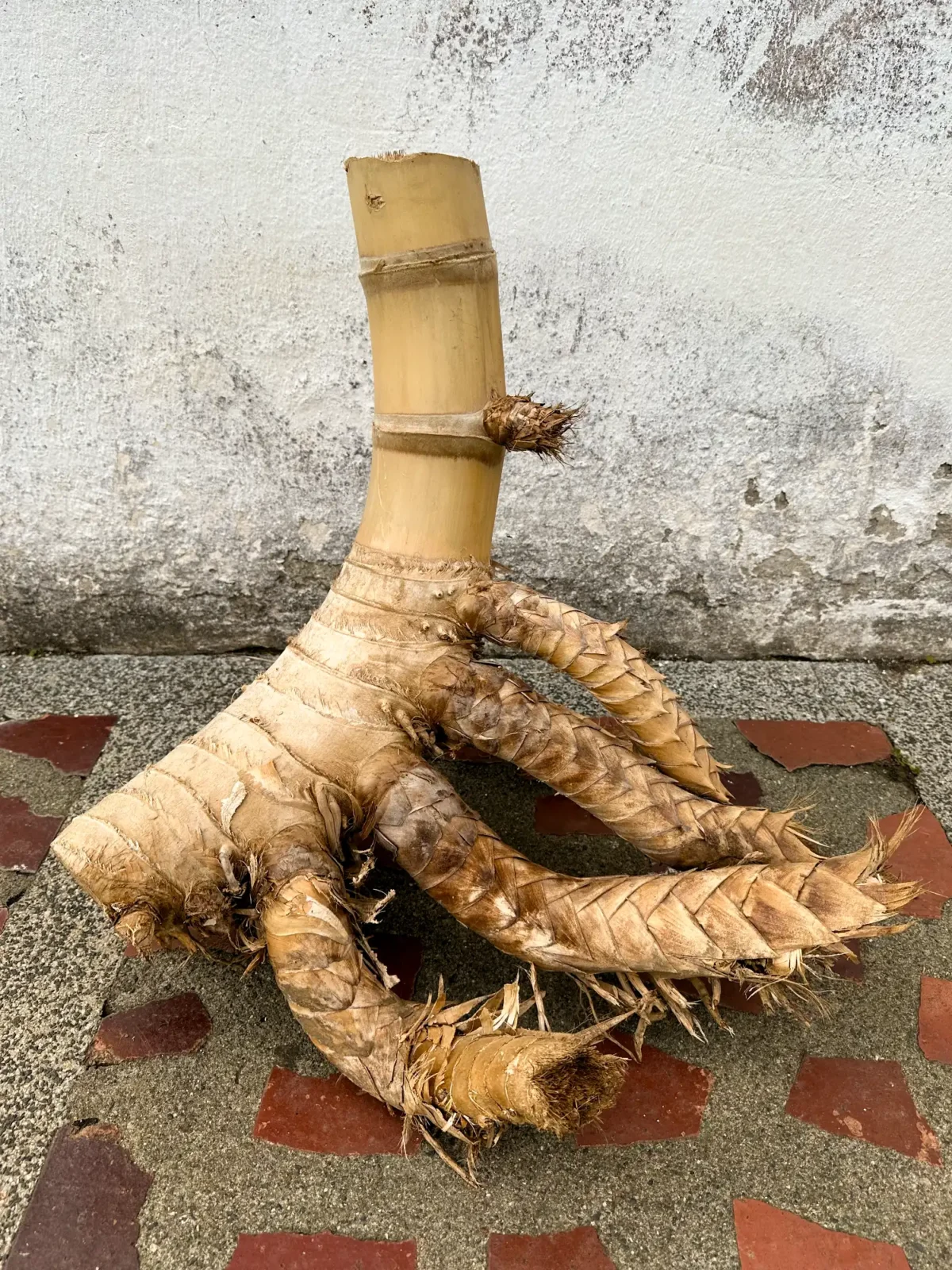
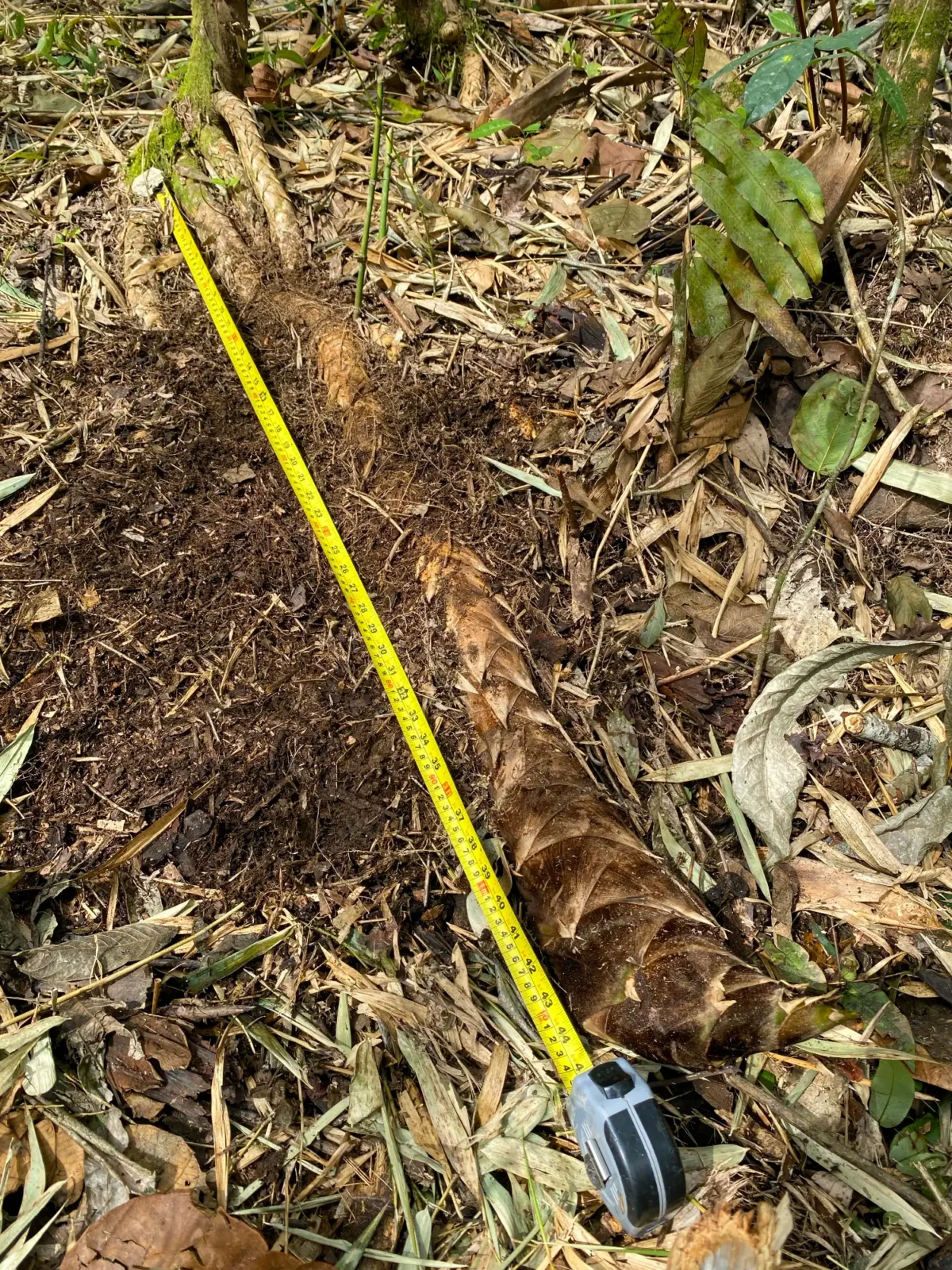
Shape (morphology): Pachymorph means “thick form” (short, wide, and curved). Leptomorph means “thin form” (long, narrow, and cylindrical). These terms describe what the rhizome physically looks like underground.
Behavior (branching habit): Sympodial means each rhizome tip turns upward to form a culm. Monopodial means the rhizome continues growing horizontally, throwing up culms from side buds along the way.
In practice: pachymorph = sympodial = clumping. Leptomorph = monopodial = running. This post uses the common terms, but you will encounter all of them in the literature.
The 4 Types of Bamboo Rhizomes
1. Monopodial (Running Bamboo)
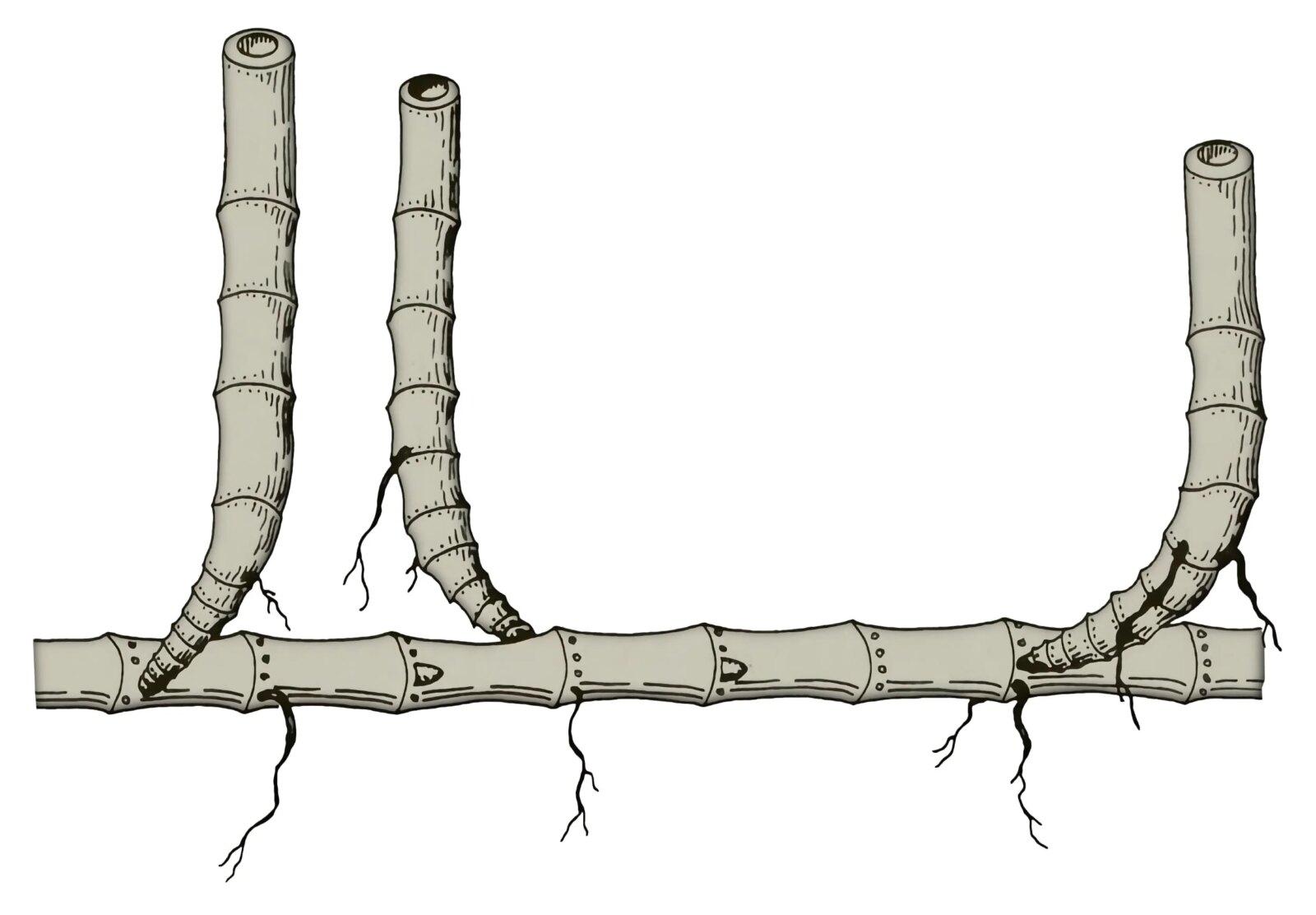
Monopodial bamboos have long, slender rhizomes (leptomorph) that grow horizontally underground, sometimes extending several meters per year. Every node along the rhizome carries one bud and a ring of roots. Each bud can either extend as a new rhizome or turn upward into a culm. The result above ground is a diffuse, widely scattered distribution of individual culms.
Large-culm running species like Phyllostachys bambusoides can extend their rhizome network 4 to 6 meters per growing season. Most of this growth happens in the top 10 to 30 cm of soil. The rhizome tip is wrapped in hard, layered sheaths that form a sharp point, allowing it to push through compacted soil and gravel. If the topsoil becomes entirely impervious, the rhizome tip can breach the surface, grow exposed for a short distance, and then re-enter the soil where conditions are softer. Without a root barrier, a running species will become invasive and cross property lines within a few years of establishment.
Because the rhizome network concentrates in the shallow topsoil and forms a dense interlocking mat, running bamboos are highly effective at stabilizing riverbanks and preventing erosion on slopes. This is one of the reasons bamboo has been planted for bank protection in Japan since the 16th century. Running bamboos are predominantly native to temperate zones with cold winters. Common genera include Phyllostachys, Pleioblastus, and Pseudosasa.
2. Sympodial-tufted (Dense Clumping Bamboo)
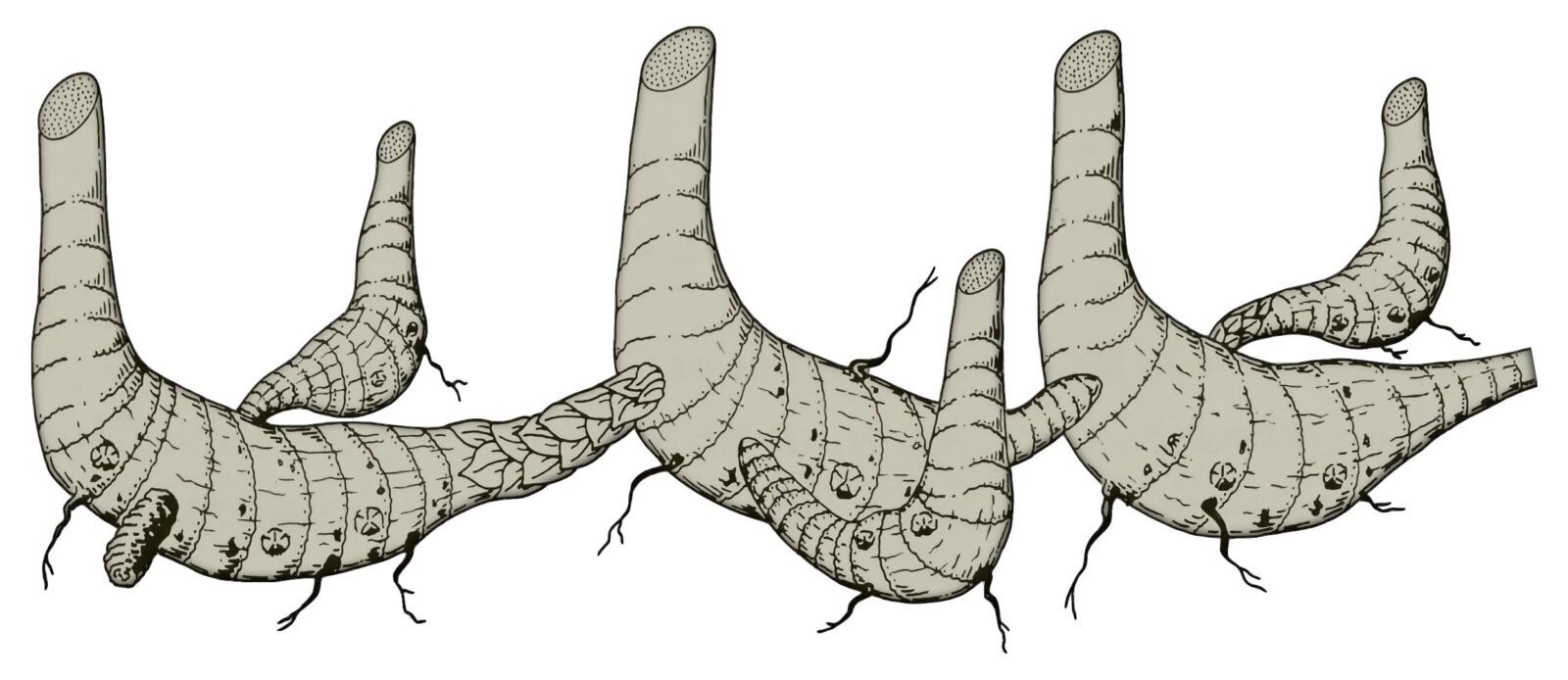
This is the classic clumping behavior. The rhizome is short and thick with a very short connecting neck (pachymorph). The rhizome tip curves upward almost immediately to form a new culm right next to the parent plant, producing a tight, dense clump where culms are packed closely together at the base.
This type is common in tropical and subtropical zones. Genera like Bambusa and Dendrocalamus grow this way. The clump has a clearly defined perimeter and never requires a root barrier. It is the preferred type for privacy screens and windbreaks where you want a solid wall of culms.
3. Sympodial-Scattered (Open Clumping Bamboo)
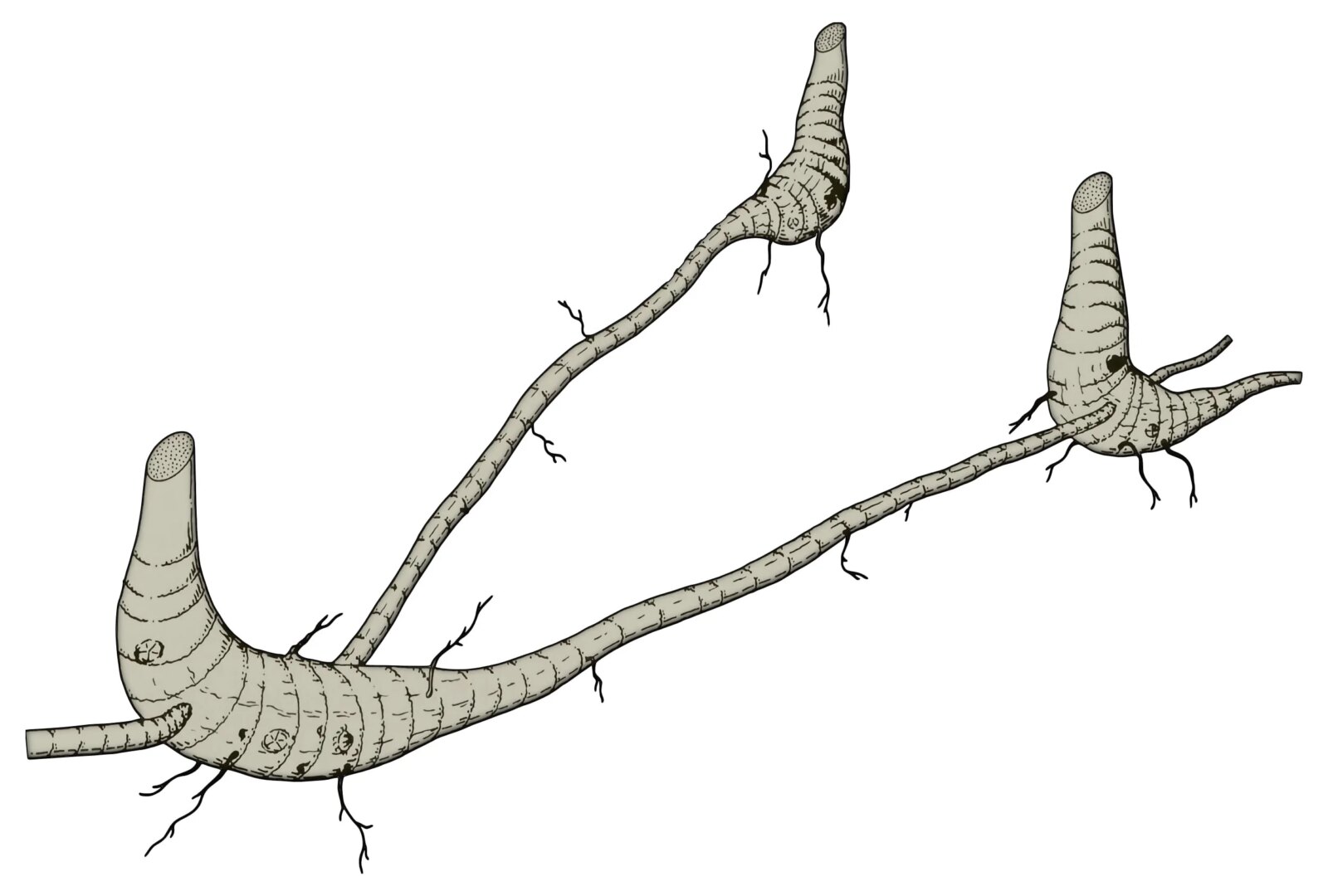
This is where things get interesting. The rhizome is still short and thick (pachymorph), but it features an elongated neck that grows horizontally before turning upward to form a new culm. From above ground, this pattern can look very similar to a running bamboo. The difference is that it still maintains a defined clump perimeter rather than spreading indefinitely.
Guadua angustifolia is the clearest example. The recorded distance between a mother culm and a new culm shoot in a Guadua clump ranges from 0.85 to 1.70 meters. This spacing is exactly why Guadua groves are walkable and why the species works so well as a plantation crop: you get clean separation between culms without losing control of the perimeter. The shallow, interlocking rhizome system of a mature Guadua stand also makes it an effective tool for erosion control and slope stabilization in tropical conditions. All sympodial rhizomes stay shallow, rarely going deeper than 60 cm below ground.
4. Mixpodial (Mixed Habit)
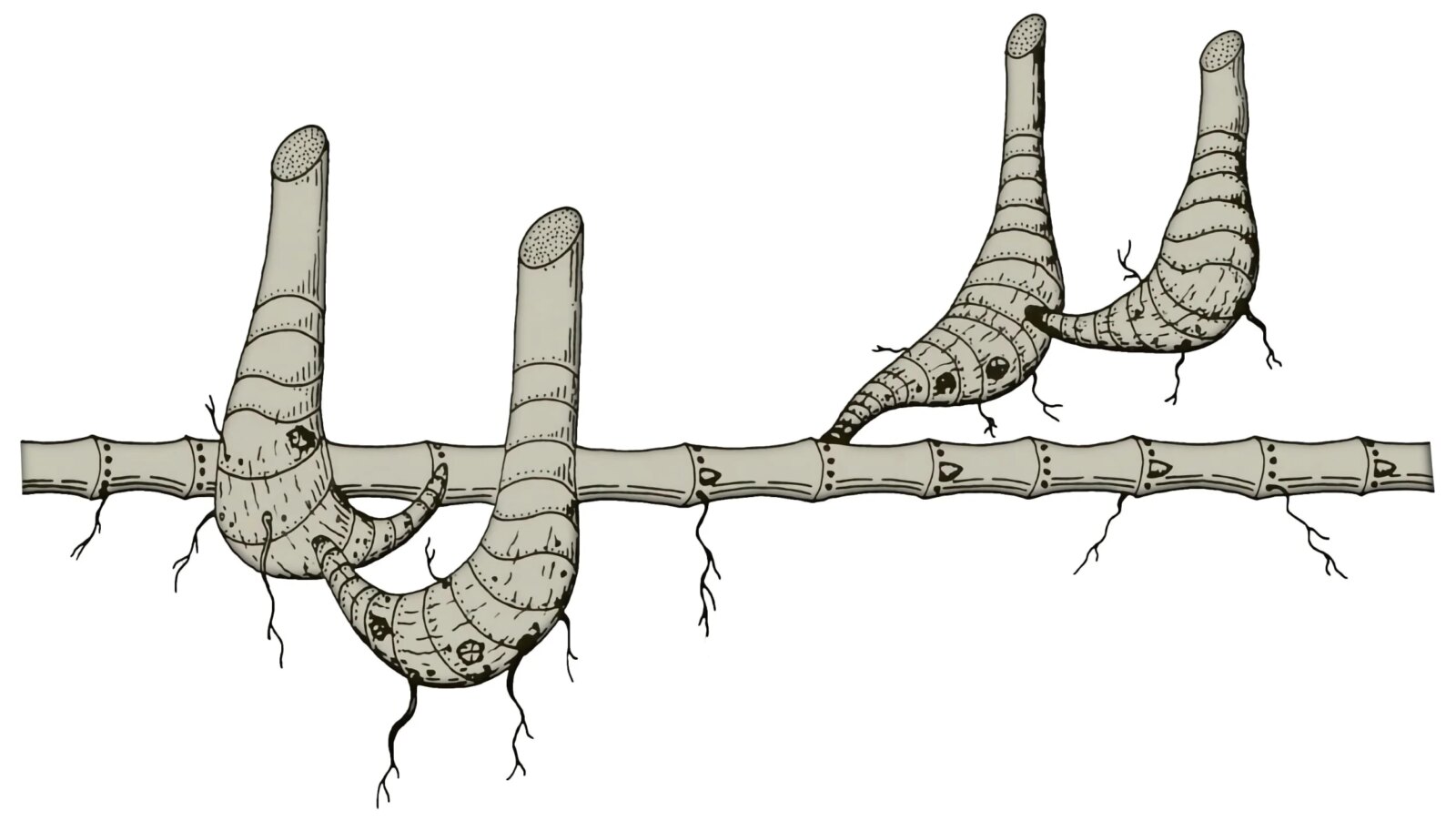
Mixpodial bamboos combine traits of both systems. The culm base produces rhizomes that extend horizontally like a runner, while the buds on those rhizomes produce culms that tiller like a clumper, forming small dense brushes at intervals along the running rhizome. This type is sometimes called amphimorph or amphipodial in the literature. Chusquea species display this behavior.
Why Rhizome Type Is the First Thing to Check Before Planting
The rhizome type of any bamboo species is fixed and the main indicator for taxonomic identification. It does not change with climate, soil, or management. This makes it the single most important factor when selecting a species for a specific purpose.
A running species planted without containment will spread into neighboring land. An open clumper like Guadua will produce a harvestable grove with predictable culm spacing and defined boundaries. A dense clumper will build a solid privacy screen without ever needing a root barrier.
Understanding rhizome behavior before you plant is not optional. It determines long-term management, harvesting strategy, and the entire above-ground structure of the grove.
Summary: Comparing the Rhizome Systems
| Feature | Clumping / Sympodial | Running / Monopodial |
|---|---|---|
| Rhizome shape | Short, thick, curved (Pachymorph) | Long, thin, cylindrical (Leptomorph) |
| Typical depth | Top 60 cm of soil | Top 10 to 30 cm of soil |
| Spreading habit | Defined clump, tight or open | Spreads widely without containment |
| Primary climate | Tropical and subtropical | Temperate |
| Typical genera | Guadua, Bambusa, Dendrocalamus | Phyllostachys, Pleioblastus |
Source: American Bamboos


very clear diagrams and explanation. thanks Stephane