

6 genera, 42 species
Ecuador, for its size, possesses an impressive diversity of woody bamboos. Up to the present, 6 genera and 42 species have been identified (11 endemics ones), with about 15 species remaining to be described.
It is difficult to evaluate the contribution that the rural communities have made to the country’s economy because their productive effort has been statistically underestimated. Unlike other Latin American countries, Ecuador has included some bamboo species of the Andean forest (2,000 m above sea level) in its natural resources management program.
The Ecuadorian woody bamboos are largely montane, with half of the species found at an altitude of 2,500 to 3,500 m. The greatest diversity in Ecuador is found in the eastern Cordillera, with 74% of the total species, followed by the western Cordillera with 38%.
The provinces of Loja, Napo, Pichincha, Azuay and Chimborazo have the greatest woody bamboo diversity. Although the Pacific watershed has the least bamboo species diversity, it is where bamboo has primary importance in terms of economy and applications.
Among the 6 woody bamboo genera, Chusquea claims the vast majority (41%) of the species. Arthrostylidium, Aulonemia, Rhipidocladum, Neurolepis and Guadua are also present, but with lower diversity.
Native Bamboo Species of Ecuador
| Species | Diameter | Height |
|---|---|---|
| Arthrostylidium ecuadorense | ∅ 2,5 mm | ⇑ 6 m |
| Arthrostylidium simpliciusculum | ∅ 10 mm | ⇑ 12 m |
| Arthrostylidium youngianum | ∅ 15 mm | ⇑ 12 m |
| Aulonemia haenkei | ⇑ 2 m | |
| Aulonemia hirtula | ∅ 50 mm | ⇑ 10 m |
| Aulonemia longiaristata | ∅ 18 mm | ⇑ 4 m |
| Aulonemia patula | ∅ 15 mm | ⇑ 5 m |
| Aulonemia queko | ∅ 30 mm | ⇑ 15 m |
| Chusquea albilanata | ∅ 15 mm | ⇑ 5 m |
| Chusquea exasperata | ∅ 25 mm | ⇑ 12 m |
| Chusquea falcata | ∅ 15 mm | ⇑ 6 m |
| Chusquea lehmannii ssp. lehmannii | ||
| Chusquea lehmannii ssp. farinosa | ||
| Chusquea leonardiorum | ∅ 25 mm | ⇑ 4 m |
| Chusquea londoniae | ||
| Chusquea loxensis | ||
| Chusquea maclurei | ∅ 25 mm | ⇑ 8 m |
| Chusquea neurophylla | ∅ 4 mm | ⇑ 1 m |
| Chusquea perligulata | ||
| Chusquea polyclados | ||
| Chusquea scandens | ∅ 25 mm | ⇑ 6 m |
| Chusquea serpens | ∅ 10 mm | ⇑ 20 m |
| Chusquea simpliciflora | ∅ 10 mm | ⇑ 25 m |
| Chusquea subulata | ∅ 80 mm | ⇑ 10 m |
| Chusquea tessellata | ∅ 10 mm | ⇑ 3 m |
| Chusquea uniflora | ∅ 4 mm | |
| Guadua angustifolia | ∅ 150 mm | ⇑ 30 m |
| Guadua superba | ∅ 150 mm | ⇑ 20 m |
| Guadua weberbaueri | ∅ 120 mm | ⇑ 20 m |
| Neurolepis aperta | ||
| Neurolepis aristata | ∅ 10 mm | ⇑ 3 m |
| Neurolepis asymmetrica | ∅ 7 mm | ⇑ 1,5 m |
| Neurolepis elata | ||
| Neurolepis fimbriligulata | ∅ 18 mm | ⇑ 6 m |
| Neurolepis nana | ∅ 4 mm | ⇑ 1 m |
| Neurolepis nobilis | ||
| Neurolepis rigida | ∅ 8 mm | ⇑ 2,5 m |
| Neurolepis stuebelii | ||
| Neurolepis villosa | ∅ 4 mm | ⇑ 1,2 m |
| Neurolepis weberbaueri | ⇑ 4 m | |
| Rhipidocladum harmonicum | ∅ 60 mm | ⇑ 20 m |
| Rhipidocladum racemiflorum | ∅ 10 mm | ⇑ 15 m |
Guadua angustifolia, because of its economic importance, occupies a prime position in the economy of the country. Species of Chusquea, Aulonemia and Rhipidocladum also have several reported uses among the highlands communities.
The area of Guadua angustifolia in the Ecuadorian natural forest is estimated to be 24,000 ha, of which 18,792 ha occurs in the five provinces of the Coastal Region. The total area of natural Guadua forest in the Coastal Region represents approximately 75% of the national total, with 93% of the Guadua stands below 0.5 ha in size.
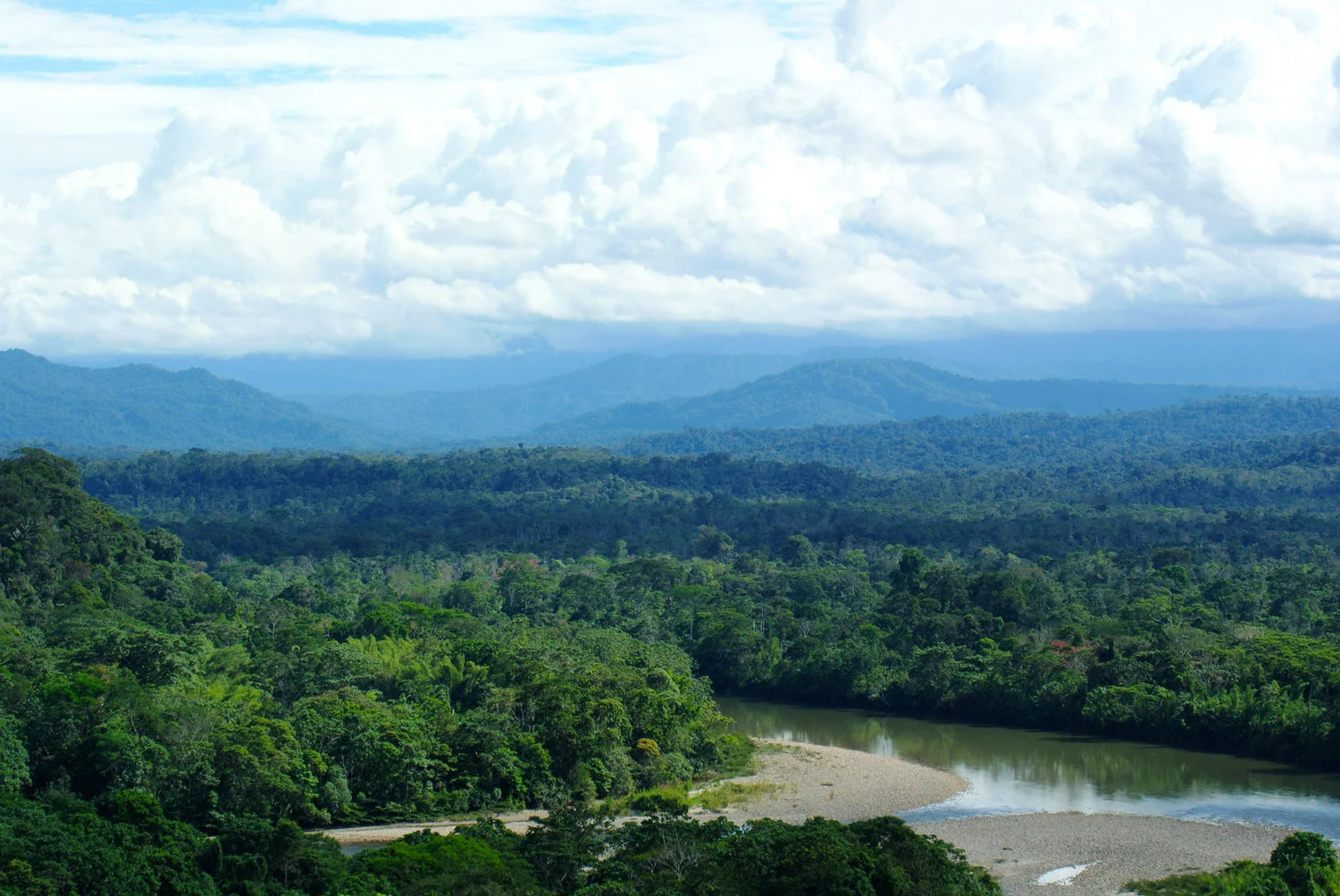
With an estimated average production of 1,376 culms/ha/year, the total amount of Guadua culm production for this region is 25.86 million of green culms per year, equivalent to 814,500 tons/year in green conditions (43.3 T-m/ha in green condition).
The banana producers have selected Bambusa vulgaris as the most recommended bamboo for the production of “cujes” (props) because of its ease of reproduction, rapid growth, greater growth of culms per unit area and smaller culm size (which facilitates harvesting and use).
Source: INBAR




Last year I started a forest restoration project in the Andes of southern Ecuador. Recently, this idea came to my mind to try to include bamboo into the project as it is very productive, improves the soil, increases structural diversity and attracts wildlife.
However, with only about 800 mm of precipitation and a more or less 6 months dry season, the region is pretty dry… and we are between 1.500 and 2.000 m above sea level. Additionally, I would allow only native drought tolerant bamboo species to be planted… at least a neotropical species!
Does anyone know a suitable species for these conditions? It doesn’t have to be very productive under these conditions – the most important thing is that it survives by itself…
Thanks a lot for any help!
Hello. I just discovered your site, and it is what I want. Currently, I am trying to identify a genus of bamboo of Ecuador. Initially the genus, then I will try the specie. Thanks to your site I have all the genera of the country.I am French, and this little bamboo, climbing genus, was harvested at 3000 m altitude, in the Zamora province. It grows very well, the clump is in a greenhouse, but it is now spreading outside. I have to spend a few hours now to note all botanical details, with pictures, and then I will try to identify. It seems very widespread and common, has small leaves and a thin culm. The inner side of the new leaves is dark red. It seems to me a rare detail in bamboo. The leaves are small. Culms are now around 1 cm diameter. It’s a climbing species.
I am looking for any precise locality records for naturally occurring bamboos in the east Ecuador lowlands (< 500 m). In particular, I am looking for a species of climbing bamboo, which I have seen at only two localities (Yasuni Research Station and Lorocachi village) – I don’t know the name but I have photos if anyone would like to help me identify it… Naturally occurring Guadua, in large stands inside forest, would also be very interesting. These plants are eaten by caterpillars of butterflies that I study – often these are very rare species of butterflies, or even new to science.
We have land in Ecuador 20k East of Quito, on the North side of Mt. Ilalo on a West facing slope of about 35 degrees of inclination at 9000ft elevation. Soil is volcanic mix over congowa stone. Will Guadua grow there or is there a better specie for the area?
No, this place is to high and too dry to grow Guadua.