

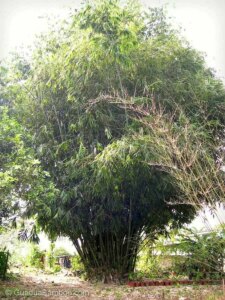
Gigantochloa atter, also known as Giant Atter or Sweet Bamboo, is a dense tropical clumping bamboo native of Malaysia. Young shoots are consumed as a vegetable while the stems are used for making furniture and musical instruments.
Plant Info |
|
|---|---|
Height |
15 – 22 m |
Diameter |
5 – 10 cm |
Growth Habit |
Dense Clumper |
Climate |
Tropical – Subtropical |
Hardiness |
-2°C |
Origin |
Malaysia |
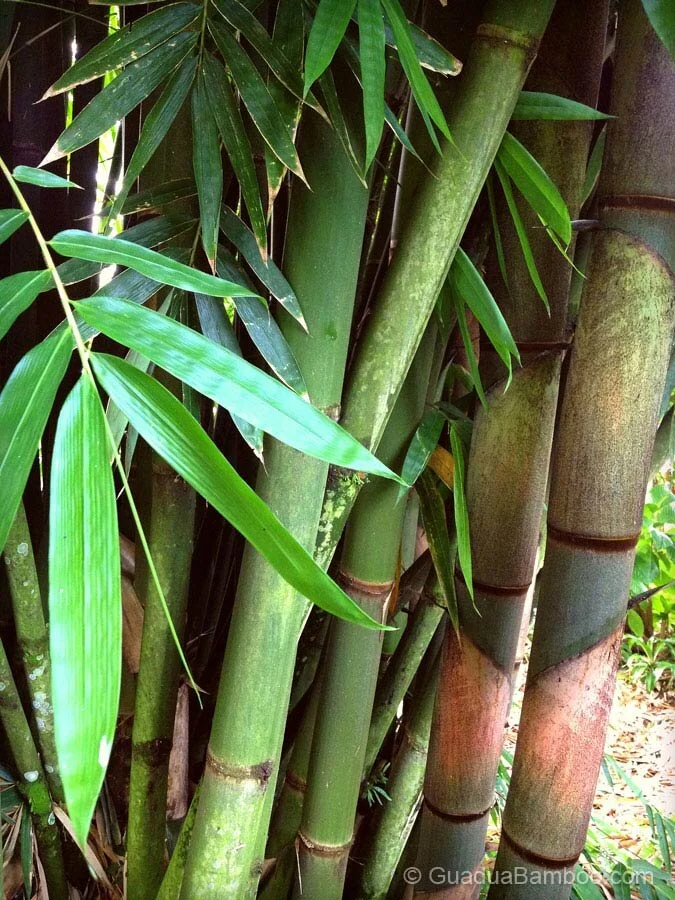
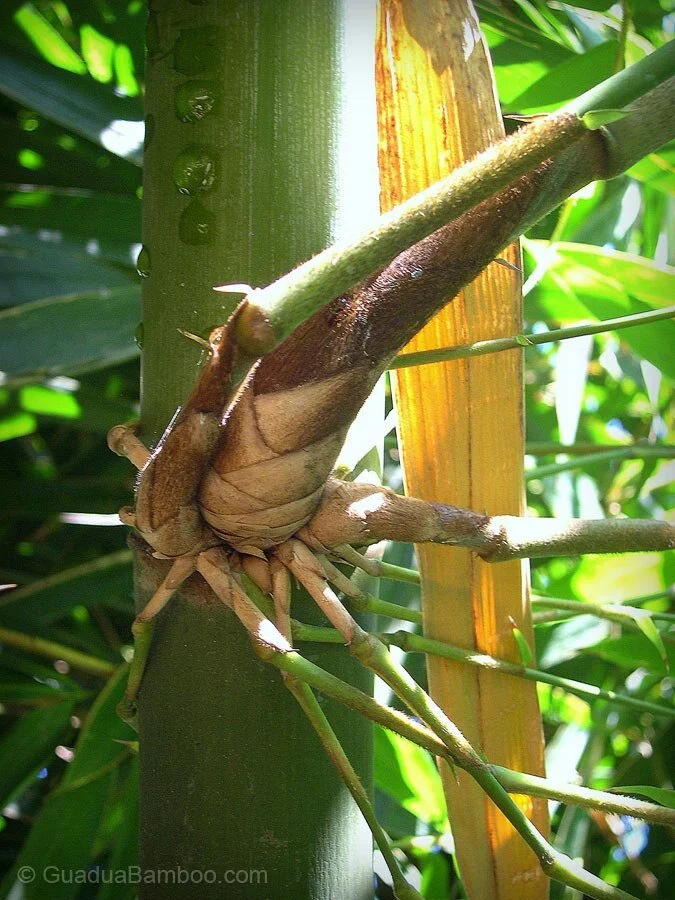
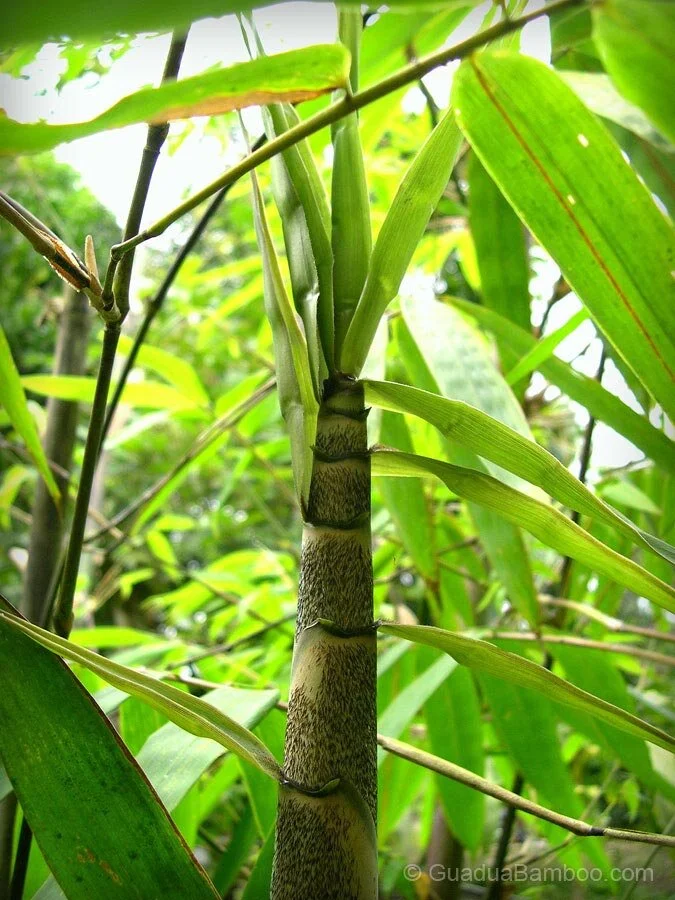
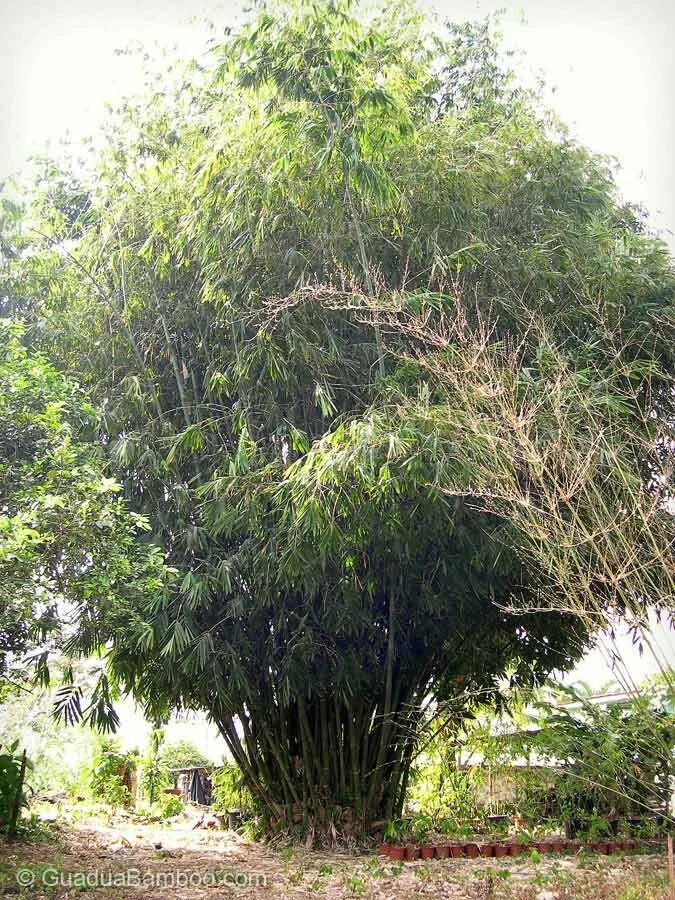
Culms
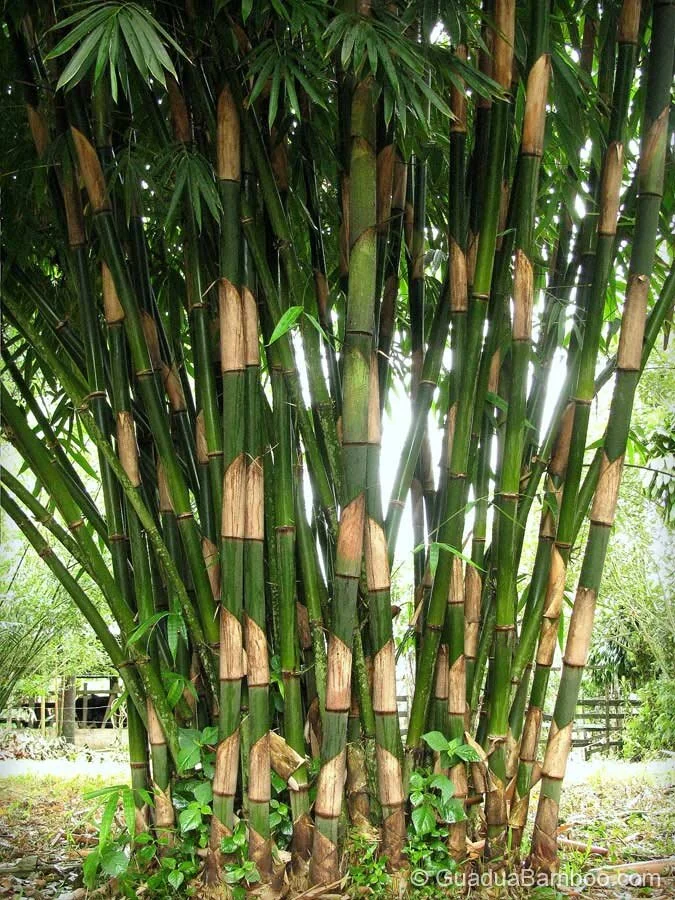
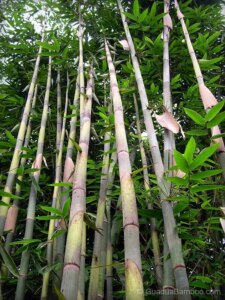
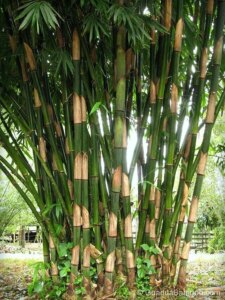
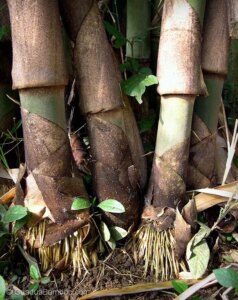
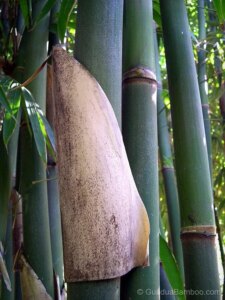
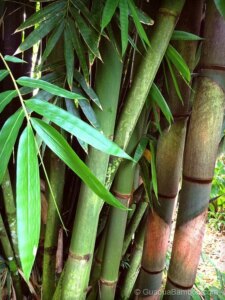
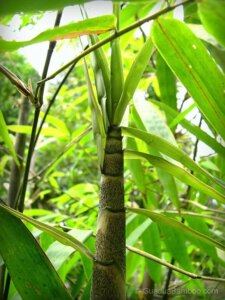
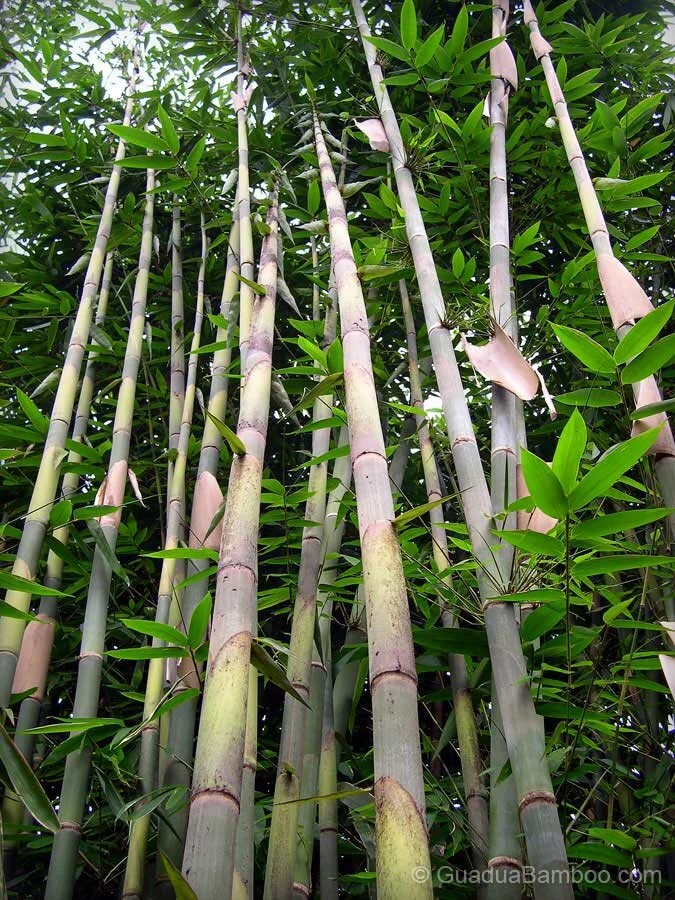
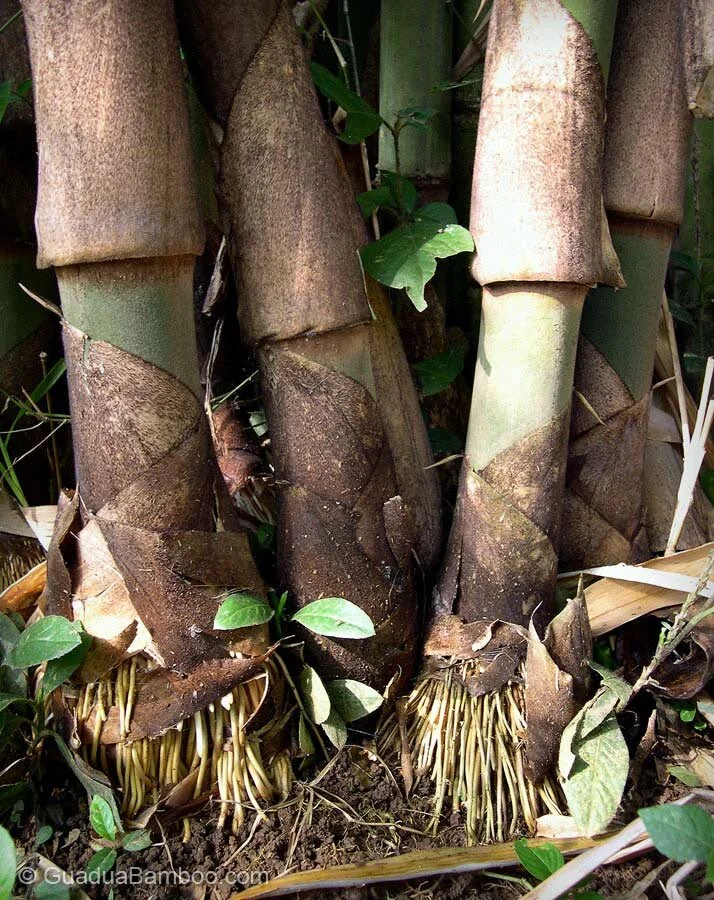
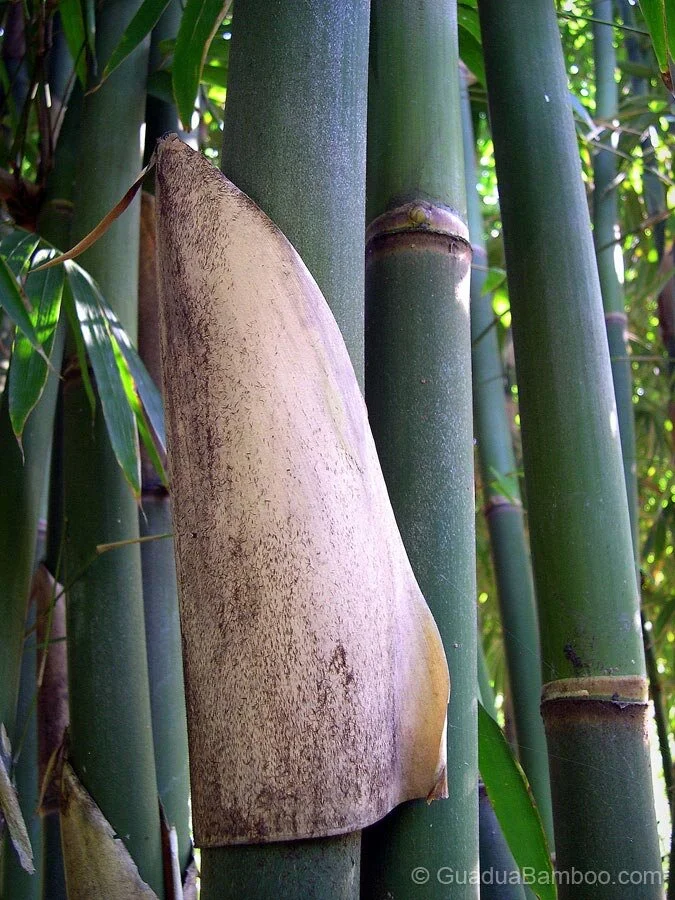
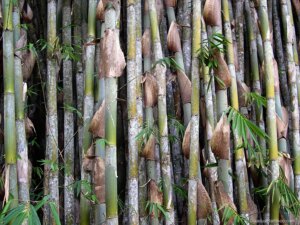
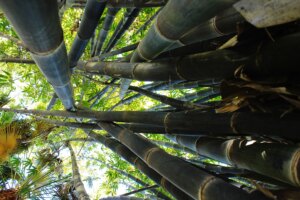
Large tufted woody bamboo with dark green culms of 15-22 m high and 5-10 cm in diameter. Culm internodes are thin-walled and are on average 40–50 cm long. The lower part of the culms develop aerial roots from the nodes.
Branches
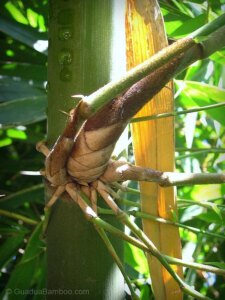
Many clustered branches at the nodes with 1 larger dominant branch.
Leaves
Leaves are lance-shaped and are on average 20-44 cm long and 3-9 cm wide.
Habitat
This bamboo is found in the low land and it has been observed growing from near the coast to about 1400 m above sea level.
Uses
In Central Java, people call this species bambu legi which means sweet bamboo. Young shoots of this bamboo are consumed as a vegetable and as delicious as those of Dendrocalamus asper. The culm of this species is very useful for building material. It is also used for making musical instruments and other handicrafts.
Origin
This species is native of Malaysia. In Indonesia (Java and Sumatra), it is commonly cultivated in village areas.
Is there a difference in the level of sturdiness or hardness between Gigantochloa atter and Gigantochloa apus?
I am currently doing a project and need to decide on the specific bamboo species to be used. The project is investigating on which type of bamboo is a strong and sturdy bamboo that can withstand impacts during vehicle crashes.
I searched on the web and found that Gigantochloa atter and Gigantochloa apus are two commonly used bamboo species for construction purposes as they are strong. Is it possible to determine which of them is stronger than the other?
I did some quick research online and found the following data in regards to the physical and mechanical properties of Gigantochloa apus and Gigantochloa atter:
The strength properties of Gigantochloa atter were tested in green (Moisture content 72.3%) and in air dry (M.C 14.4%) condition.
– Average MOR varied from 87.9 to 108.1 N/mm2 from base to top in green and 117.7 to 127.7 N/mm2 in air dry.
– Compression strength parellel to grain 24.77 to 27.97 N/mm2 in green, 32.87 to 30.98 N/mm2 in air dry.
– Average tensile strength was 299.8 to 273.0 N/mm2 from base to top in green and 33.15 to 24.70 N/mm2 in air dry.
– Average shear strength was 5.8 to 10.8 N/mm2 in green and 9.5 to 10.8 N/mm2 in air dry.
The strength properties of Gigantochloa apus were tested in green (Moisture content 54.3%) and in air dry (M.C 15.1%) condition.
– Average MOR 102.0 in green and 87.5 N/mm2 in air dry, maximum crushing stress varies from 21.73 to 26.50 in green and 27.29 to 48.64 kN/mm2 in air dry.
– Average tensile strength was 294.1 in green and 298.9 kN/mm2 in air dry.
– Average shear strength in green varied from 5.99 to 7.68 whereas in air dry it was 7.47 to 7.65 kN/mm2.
Sorry, but with the conversions I had difficulty understanding which was stronger (in terms of its tensile strength)? I’m currently trying to build a hoop greenhouse using bamboo poles and would very much like any advice on the type of bamboo I should use. Thanks for any info you can pass along.
Additional Info: The poles need to be approximately 20ft in length, a maximum of 2 inch in diameter at the base and a minimum of 3/4 inch diameter at the tip.
Currently at R&D stage of proposed relief structures constructed using bamboo. Location of site is Leyte where I understand the local bamboo species is Gigantochloa atter (Kayali). As such was wondering, as the above information was ascertained through ‘quick research online’, where the best research material can be found; particularly with regard to mechanical strength properties. I look forward to hearing from you.