

An Untapped Opportunity for Latin America
Imagine if all Central and South American homes, offices and sheds would use corrugated roofs made from bamboo instead of metal or plastic, and imagine if all these roofs were produced from locally available native bamboo forests and plantations…
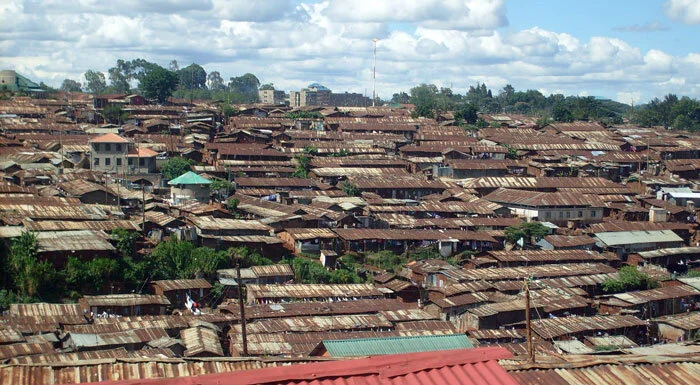
Anybody who is familiar with Latin America knows that almost every single house uses corrugated roofing sheets. Yes even the luxurious mansions with clay roof tiles usually have corrugated sheets hidden under them as an extra layer of protection in case of earthquakes.
Although the potential market is enormous, and bamboo proves to be the better and cheaper resource, very few people know about the existence of corrugated bamboo roofing sheets. Why?
The answer to that question may be partially explained by the lack of bamboo knowledge in the Western world and the lobby work of traditional construction industries and manufacturers to keep consumers unaware of alternative building solutions. We believe this has to change!
What are Corrugated Bamboo Roofing Sheets?
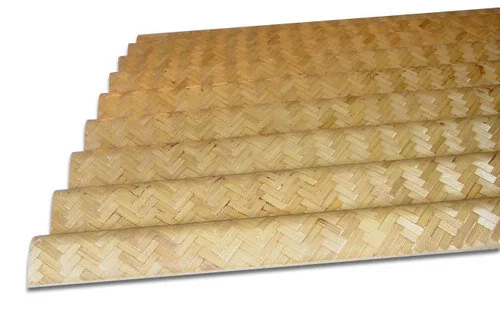
Corrugated bamboo roofing sheets (CBRS) are an excellent alternative to corrugated metal, plastic or fibre cement roofing sheets. They are produced from a natural and sustainable resource and can be used to cover homes, storage facilities, animal pens and many other temporary or permanent structures.
Main Advantages:
- Bamboo roofing sheets are environmentally friendly and a safe alternative to plastic, metal or corrugated fibre cement roofing panels.
- They have the same standard measurements as conventional corrugated roofing sheets.
- Bamboo roofs are quieter in the rain and cooler in the sun than conventional metal or plastic sheets. A study has shown that cows in sheds roofed with bamboo yield more milk than those under corrugated metal sheets because of the cooler environment.
- Bamboo sheets are durable and strong with excellent internal bond strengths and a high resistance to weathering, fire or insect attacks.
- They have an attractive and natural appearance and are easy to work with (cutting, drilling,..)
How are Corrugated Bamboo Roofing Sheets Made?
CBRS is made from several layers of woven bamboo mats. These woven mats are impregnated with an adhesive resin and pressed together between two specially designed corrugated pressing plates. The sheets can be produced in a range of sizes to suit particular requirements and can easily be trimmed for special applications.
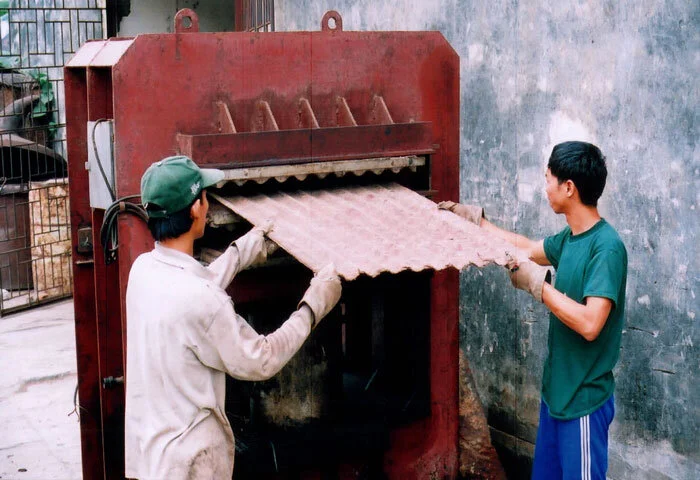
The main materials used are bamboo slivers to produce the mats, and adhesive resin in which to soak the mats. A resin applicator is needed, and a drying chamber is optional. Corrugated pressing plates for the hot press are of course essential.
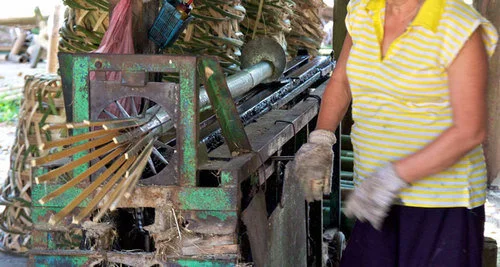
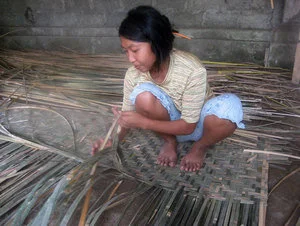
The process of producing corrugated bamboo roofing sheets involves 6 steps:
- Bamboos are split into thin slivers.
- Slivers are woven into mats.
- Mats are soaked in adhesive resin.
- Mats are allowed to drain and dry.
- Mats are glued together under high temperature and pressure.
- Sheets are trimmed to shape.
Essentially the process is identical to the production of bamboo mat board, except that the sheets are formed by pressing the mats between corrugated rather than flat pressing plates.
Comparing Corrugated Roofing Sheet Materials
How do bamboo corrugated roofing sheets compare to metal, plastic or fibre cement roofing sheets? The following study compares the mechanical properties and performance differences between the four different materials.

1. Thermal Transmission Performance
Bamboo has the highest thermal resistance and the lowest thermal transmission coefficient, therefore, bamboo has the best thermal isolation properties compared to the other three materials.
| Material | Thermal resistance m²K/W | Coefficient of thermal transmission W/(m²K) |
|---|---|---|
| Bamboo | 0.030 | 5.6 |
| Metal | 0.012 | 6.2 |
| Plastic | 0.007 | 6.4 |
| Fibre Cement | 0.019 | 5.9 |
2. Noise Transmission Performance
Plastic composite corrugated sheets have the worst sound insulating performance (using the sound obstructing data of the plastic board as the reference, and setting its sound insulating at 0 dB).
Corrugated bamboo sheets have good noise insulating properties. Its sound obstructing data is 9 dB higher than that of the plastic sheet and therefore better than the metal sheet (which is only 4 dB better than the plastic sheet). The dB scale is logarithmic which means that the sound insulation of the bamboo sheet is ten times greater than the plastic sheet.
| Material | The data of noise obstructing comparing with the reference board (dB) |
|---|---|
| Bamboo | 9 |
| Metal | 4 |
| Plastic | 0 (benchmark) |
| Fibre Cement | 15 |
The fibre cement corrugated sheets have the best sound insulating performance. Its sound obstructing performance is 15 dB higher than that of plastic composite sheets.
3. Combustion Proof Performance
Only bamboo and plastic corrugated sheets were tested as metal and fibre cement are non-burning materials.
The peak heat release rate of bamboo roofing sheets is nearly half of the plastic sheets and the peak heat release time appears later than that of the plastic when the two materials burn. At 180 second burning time, the plastic sheet has no heat release, revealing its faster burning speed.
| Concept | Bamboo | Plastic |
|---|---|---|
| Peak heat release rate (kw/m²) | 230.91 | 502.97 |
| Peak heat release time (sec.) | 98.90 | 13.00 |
| Average heat release rate [kw/(m² thickness)] | 35.83 | 114.48 |
| Average heat release rate at 60 sec (kw/m²) | 112.61 | 138.27 |
| Average heat release rate at 180 sec (kw/m²) | 136.31 | 0.00 |
| Average heat release rate at 300 sec (kw/m²) | 107.49 | 0.00 |
| Total heat release (MJ/m²) | 24.81 | 9.27 |
| Average effective HOC (MJ/kg) | 14.29 | 23.69 |
For the average heat release rate and the average effective HOC (heat of combustion), the bamboo sheet is much lower than that of the plastic. The total heat release of bamboo is higher than that of plastic because it is much thicker (the thickness of corrugated bamboo sheets is 3 mm and that of the plastic sheet is 0.5 mm).
The results have shown that corrugated bamboo roofing sheets have better combustion-proof properties. They show a slower burning speed, smaller combustion heat and lower heat release rate compared to the plastic corrugated sheet.
4. Density and Water Absorption Properties
Bamboo has the lowest density and the highest water absorption ratio compared to plastic and fibre cement which may influence its durability in exterior use. However, this characteristic is easy to overcome when using better resins in the production process or by applying a coated outer layer.
| Material | Density (g/cm³) | Water absorption ratio (%) |
|---|---|---|
| Bamboo | 0.71 | 36.7 |
| Plastic | 1.56 | 1.7 |
| Fibre Cement | 1.60 | 21.1 |
5. Bending Strength
Because metal and plastic sheets are too thin to determine its strength properties, the determination was done with bamboo and fibre cement sheets only.
| Material | Flexural strength (MPa) |
|---|---|
| Bamboo | 39.72 |
| Fibre Cement | 31.91 |
The results have shown that bamboo has a higher bending strength than corrugated fibre cement board, and would be greatly superior to plastic sheets. This means that corrugated bamboo roofing sheets can endure larger long-time loads in employment.
6. Impact strength
Corrugated bamboo roofing sheets have an excellent impact strength. They bare a much higher instant striking force compared to fibre cement sheets.
| Material | Impact strength (MPa) |
|---|---|
| Bamboo | 9.39 |
| Fibre Cement | 2.55 |
Huge Opportunities for Latin America
Metal roofing sheets are used in any type of construction in Latin America, from low-cost housing to office buildings, luxury homes and animal pens. However, many people dislike the use of metal roofing sheets as prices are high (metal roofing is imported and world metal prices continue to increase) and because metal sheets corrode very fast if used unpainted.
Corrugated bamboo roofing sheets on the other hand are cheaper, stronger, more durable, eco-friendly, and have better thermal and sound isolation. For all those reasons, bamboo proves to be a superior substitute for metal roofing with an enormous market potential.
The development of corrugated bamboo roofing sheets doesn’t only make commercial sense, it also has a long term environmental and social impact as it offers income generating opportunities for rural communities involved in all stages of the production.
A unit producing 500,000 m2 of roofing sheet per year will create direct and indirect employment for more than 200 people. Most of the labor will be required for harvest, pre-processing and weaving of the bamboo mats, but also for the cultivation and maintenance of bamboo plantations, transport, marketing and sales of the finished product.
A corrugated bamboo roofing sheet unit is labour oriented and develops small-scale industries in rural and mountainous bamboo growing regions which could improve the social and cultural conditions of the communities. Opportunities for family members, particularly women, to spend their time weaving bamboo mats at or near their homes for income generation is a mayor advantage.
The need for a sustainable supply of raw materials will also encourage the proper management of bamboo forests, and the establishment of new plantations and homestead farms. The environmental benefits of growing bamboo are considerable because bamboo is beneficial for soil conservation, rehabilitation of degraded land, water regulation and of course capturing huge amounts of CO2.
* We do not produce or sell corrugated bamboo roofing. This article is for informational purproses only.
A nice one but how long will it last and how much will it cost to produce a sheet of it?
Wow…I would be ready to be your distributor in Indonesia. Please, let me know when your selling this products.
But where is it available and how much per sheet of what size does it cost?
Is this being produced commercially anywhere and where ? Can it be used in the deserts as roofing where temperatures are 55 to 60 degree centigrade and winds and dust fly at 150 to 175 kms per hour ? I want to use it in North African desert. Give details of resins used and coatings, and their lifespan please.
What is the life span in a rainy environment?
What about mold and fungi damage?
Really interesting concept. But, please. Who the heck uses asbestos roofing?????
This product seems innovative , can I know the reflectance, far infrared emissivity, absorption and far infrared refection of this roofing sheet?
In India corrugated bamboo roofing sheets are already in use. They are mainly used in restaurants to give it a nicer look. They can last a descent amount of time.
Bamboo is the most versatile building material in southeast asia. Timber trade as a result of western Colonialism had replaced bamboo with timber like ayinee, teak and rosewood in construction. The tiled roofs are enormously enregy consuming and not viable these days as clay is at short supply. So I hope this new concept can be introduced to government officials at the Earth summits, BRICS, NAM and WEF meetings. This technology needs to be promoted locally in south Asia and southeast Asia. Bamboo is used almost everywhere in Indonesia even to mark ground for games and as roofing frame due to its tensile and light properties.