

Untreated bamboo, just like almost any other wood, has a high chance of being attacked by insects. Bamboo insect infestation occurs due to the presence of starch and other carbohydrates. Insects obtain their food supply from the bamboo and degrade it, therefore bamboo should be chemically treated to avoid infestation.
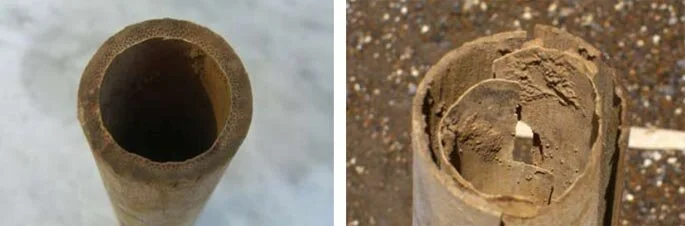
Beetles and termites are the most commonly occurring insects in bamboo. They do not require any specific conditions, except for warm and moist climate conditions.
The life cycle of an insect is divided into four stages: egg, larva (caterpillar), pupa and adult. Eggs hatch into minute larvae, which penetrate by gnawing through the tissue by mechanical and chemical action. The particles are digested in the gut of the larvae and the frass is pushed out as pellets at the rear end. The larva pupates and finally the adult beetle chews its way out of the bamboo culm leaving exit holes on the surface. The adult may again lay eggs before dying resulting in multiple attack of the same stock or culms freshly added.
Powderpost Beetles
Some hardwoods are naturally immune if they have low starch content or if their pore diameters are too small for the female beetle’s ovipositor to lay her eggs in. Unfortunately, bamboo has large pores and contain high concentrations of starch. Boron based wood preservatives can be used to prevent beetle infestation in bamboo.
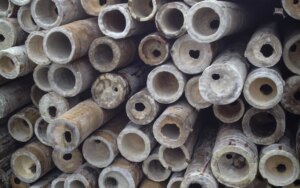
Powderpost beetles, may consume the whole bamboo culm leaving only a thin outer shell on exiting. Larvae of beetles nourish on the starch and sugars in the parenchyma cells in the culm and the intensity of attack will depend on the amount of starch available. Thus culms with higher starch content, for example, those harvested during shooting or the rainy season, are more prone to attack. Once the larvae grow, they can consume other cell wall components as well.
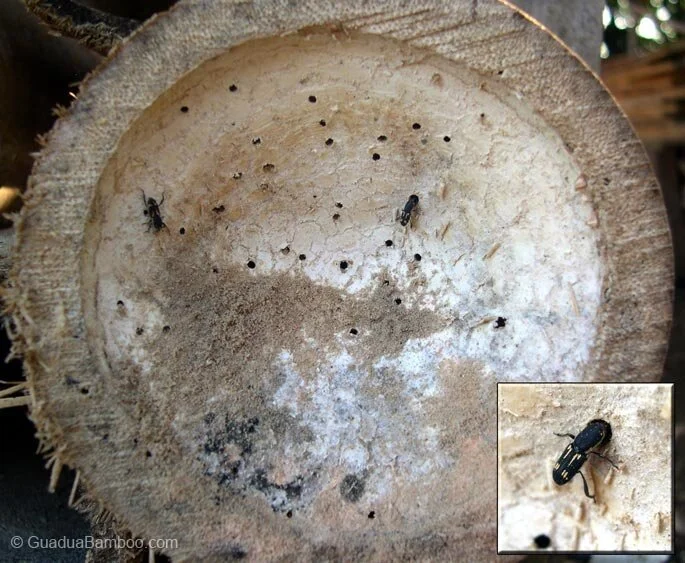
Powdery dust falling out of holes indicates ongoing bamboo insect infestation. The beetle larvae can tunnel through the entire inner tissue leaving behind only a thin surface of the hard cortex which may give a false impression when evaluating the significance of damage for repair work.
Termites
Termites live in well-organized colonies having a population of several thousands to a few millions of individuals. They are among the few insects capable of using cellulose as a source of food. Some varieties of termites (subterranean) need high humidity and access to water for survival. Other types (drywood type) survive without ground contact, obtaining moisture from the culm.
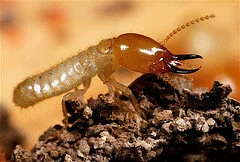
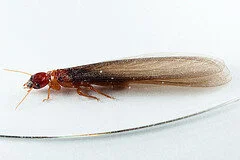
Subterranean termites attack bamboo on ground contact by extending above the ground in tube-like runways made of soil and faeces. The gnawing takes place inside the bamboo culm. Using termite-resistant concrete, steel, or masonry foundation with appropriate barriers, is a basic bamboo construction technique to avoid contact between bamboo and the ground.
Drywood termites build their nests inside the bamboo culm parts that they are eating. Often attack becomes visible only at a late stage of deterioration.

I’m having a problem with these powder post beetles when making small crafts, could I use a garbage can or container and try soaking the small pieces of bamboo with the boric acid solution?
Yes you can soak them in a boric acid / borax solution usually sold under the commercial name Timbor.
Termites are always hovering around my bamboo chairs and I have often noticed small heaps of sawdust on the floor. I have now bunged up all the holes with plasticine and the problem has gone away.
I have tons of bamboo that’s been sitting in my apartment porch closet and I just noticed all these tiny little holes all around. As I inspected it closely I noticed some sort of tiny insects coming out and there seems to be a lot of saw dust from it. What should I do? Should I throw them away for fear of infesting the apartment or is there a way to rescue this beautiful bundle that was a gift? Thanks for any recommendation.
My kids got a gift of bamboo cups from Jamaica. I had to throw them away because they were infested with these tiny critters.
Yes, unfortunately many bamboo handicrafts aren’t treated which can cause insect attacks.
I just came back from the Philippines I was impressed with the bamboo furniture they have. I will be going back down there this winter and planning to ship some back to Canada. The powder Post Beetle and other bamboo pest will they survive the harsh Canadian climate and if so what is the best way to cure bamboo products to prevent importing them up here.
Here’s a new one: Has anyone had any experience with a possible powder beetle/larve in bamboo window blinds purchased here in the US? While cleaning today I notice two piles of bamboo colored sawdust on the surface where the blind had been in the up position. I called the company and reportedly, they have never heard of this issue. I do not see any indication that there are bugs in the bamboo but because I purchased the blind with a blackout liner on the back, I can’t really examine all sides of the bamboo.
I have noticed dime-size piles of black specks (looks like coffee grounds) on my bamboo floor twice in the same place. Anybody know what kind of bug does this? There are no beetle holes. It’s coming between boards. Thanks!!!
I have a rattan piece which has some holes and powder. Is it infested? How can I get ride of it? Was the treatment not done properly while being produced? Is there any solution for it?
Damn termites ate my flute.
I have a serious problem with my bamboo furniture being attacked by beetles. I would be very appreciative if anyone can give me a solution…
Drill small holes in the bamboo near the nodes and inject an insecticide (Timbor). You can drill the holes under the arm rests or other hidden places so that it won’t affect the aesthetic qualities of the furniture.