

Bending bamboo, isn’t that difficult. In case of freshly cut, green bamboo you could even dry bamboo in a mold to adjust the shape, or by applying heat. However, once dry, bamboo cannot be bend anymore (in a permanent lasting shape that is), unless you apply a special technique that we explain at the bottom of this page!
In some case you would also want to “un-bend” bamboo, because bamboo poles aren’t always straight, and when working on a particular project, bends may cause technical difficulties or are just unwanted for aesthetic reasons. In bamboo furniture construction, fencing, artisan works, bends are often corrected with a cut, and this technique works for either round bamboo canes or split bamboo.
Making Bend Bamboo Straight Again!
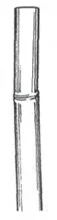
Make a V-shaped cut just below the node, try to make the cut as close as possible towards the node, this will make the correction less visible! Make the cut relatively narrow, when the bamboo is not that heavily bended. When the bend is more dramatic you will need to make the cut a little wider to have enough space to make the correction. Make the cut as deep as two-thirds of the total diameter so that the bend can be corrected appropriately.
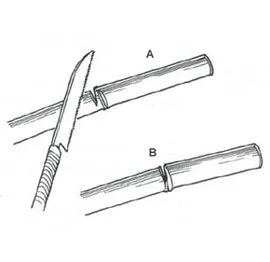
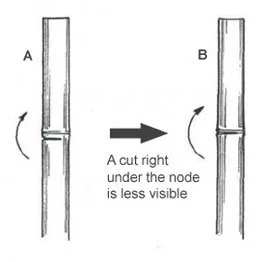
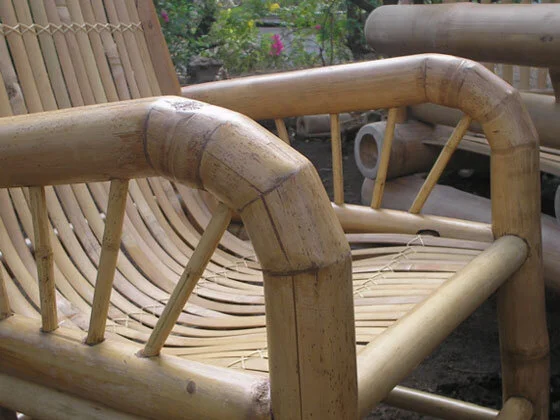
This technique not only works for correcting bends it is also suited to make arc shapes or round edges, as in this bamboo chair example.
Watch this video for instruction on how to bend bamboo in a 90 degree angle.
Bending Bamboo by Applying Heat
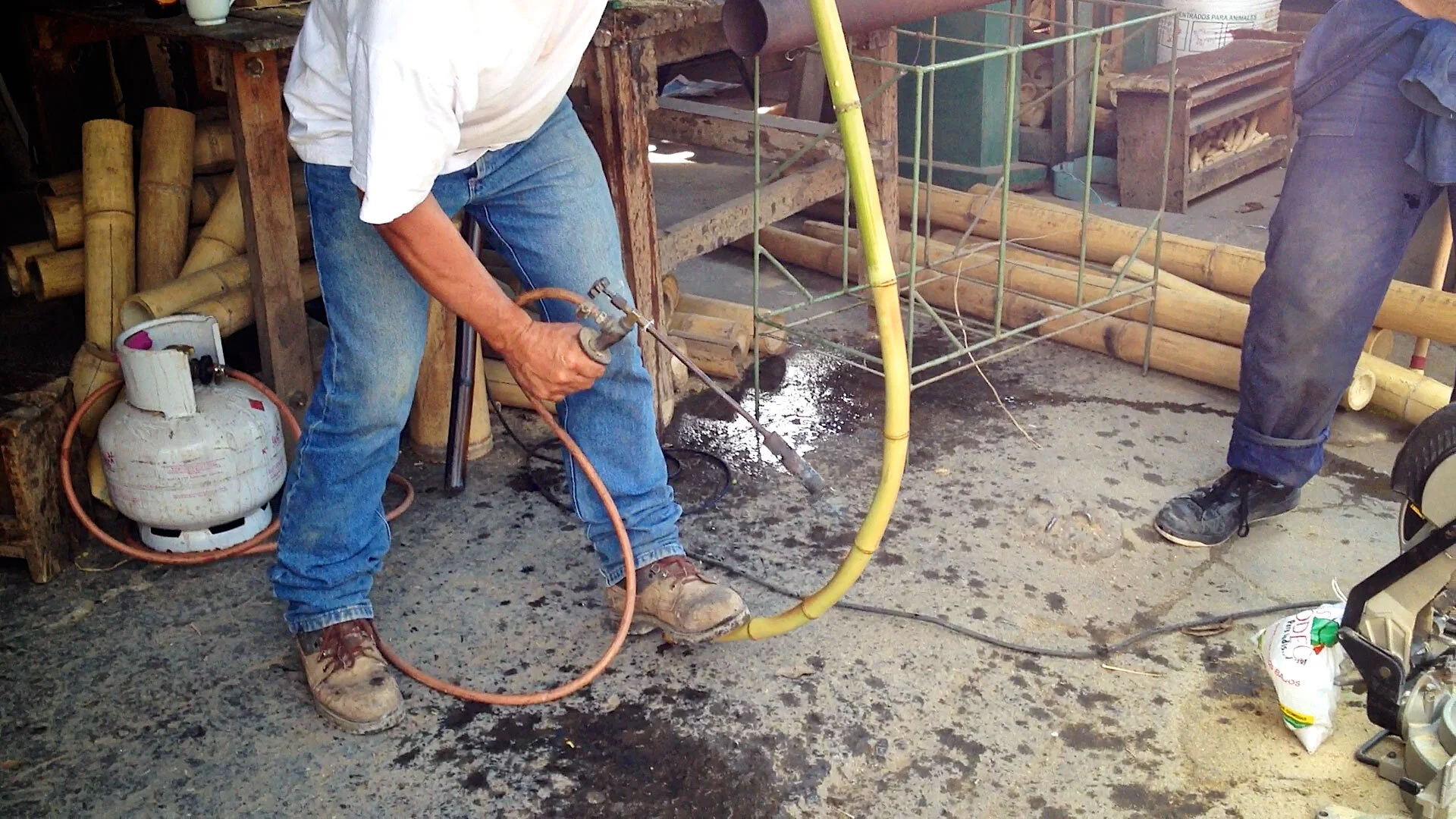
The next video demonstrates how to bend bamboo by applying heat on freshly cut, green bamboo. This technique is also used to stain bamboo furniture and to give it a caramel or dark brown finish.
There are a few tricks to prevent the bamboo canes from splitting when applying such high temperatures to the bamboo.
Perforate the nodes with a rod and fill the bamboo with sand (to prevent it from breaking).
- Drill small holes closely to the nodes so excessive vapor from inside the bamboo internodes can escape easily.
- Always try to move the flame torch in the direction to which the bamboo grows. In other words move from the thickest end towards the narrower end.
- Perforate the nodes with a rod and fill the bamboo with sand (to prevent it from breaking).
Bending Dry Bamboo Poles
Bending dried bamboo poles requires another approach than green bamboos. Dry bamboo will flex back into it original shape, therefore, once under tension the nodes should be heated with a flame torch. The heat will cause the bamboo to set and will therefore maintain its shape.


I have been experimenting with fresh cut bamboo to make various iterations of grapevine trellises, and I haven’t had much luck. Mind you, I’m new to all this and so I do not treat my poles with boron or anything else. As such, after about six months or one growing season here in zone six in the United States (New England) I typically find that my bamboo has come down with excessive, mold, and so forth. However, I am very much into recycling, so I will take vacuum cleaner parts like the metal or hard plastic ends of the hose attachments, stick them in the ground, and then place the large end of my pole into that space, and then either bend the pole in an arc, or allow it to stand up straight so I can attach a cross pole. It’s important to find one and the attachment that is sealed and that’s the part that goes into the ground first the overall effect is that the pool has some protection from the soil, and does not disintegrate quite as rapidly as if I just stuck the pole in the ground.
Good luck!
What do you use to glue the notched bamboo when making cuts for bending?
Can dry bamboo be put into water for it to be able to bend. I am also building a grapevine trellis, am I able to cement the bamboo poles into the cement, would it last?
Jorge, I want to suggest that you join bamboo to cement by embedding bolts into wet cement or if cured, drilling holes for bolts then epoxy bolt into hole. Once the bolt is solidly secured, the sky is the limit on how you attach bamboo to bolt! Another example would use sections of rebar bent into "L" shape then embed into cement with rebar pointing up. Drill bamboo just behind a joint and slide onto rebar. No limit to how many bamboo can be used side by side.
I’m trying to picture what you are describing, but I think I’m missing something. If the rebar is vertical and you are attaching it to vertical (hollow) bamboo, the bamboo would just flop over. What am I missing?
Adding concrete to the boo is normal, to bond it to the rebar.
No, unlike rattan or willow, bamboo has a hard, lignified outer layer. Once it has dried, its cell walls are set. Water absorption will not restore the pliability of fresh bamboo.
Dry bamboo can be bend by applying force (to a certain extent) but once the force is removed the bamboo will bend back to it’s original shape. Therefore it is always best to bend bamboo when it is still green (recently cut).
For agricultural use and support sticks I wouldn’t bother using cement as foundations. Exposed to sun and rain the bamboo will weather anyways. A trellis like this could have a lifespan of 2 years (depending on the species, when it was harvested, etc).