

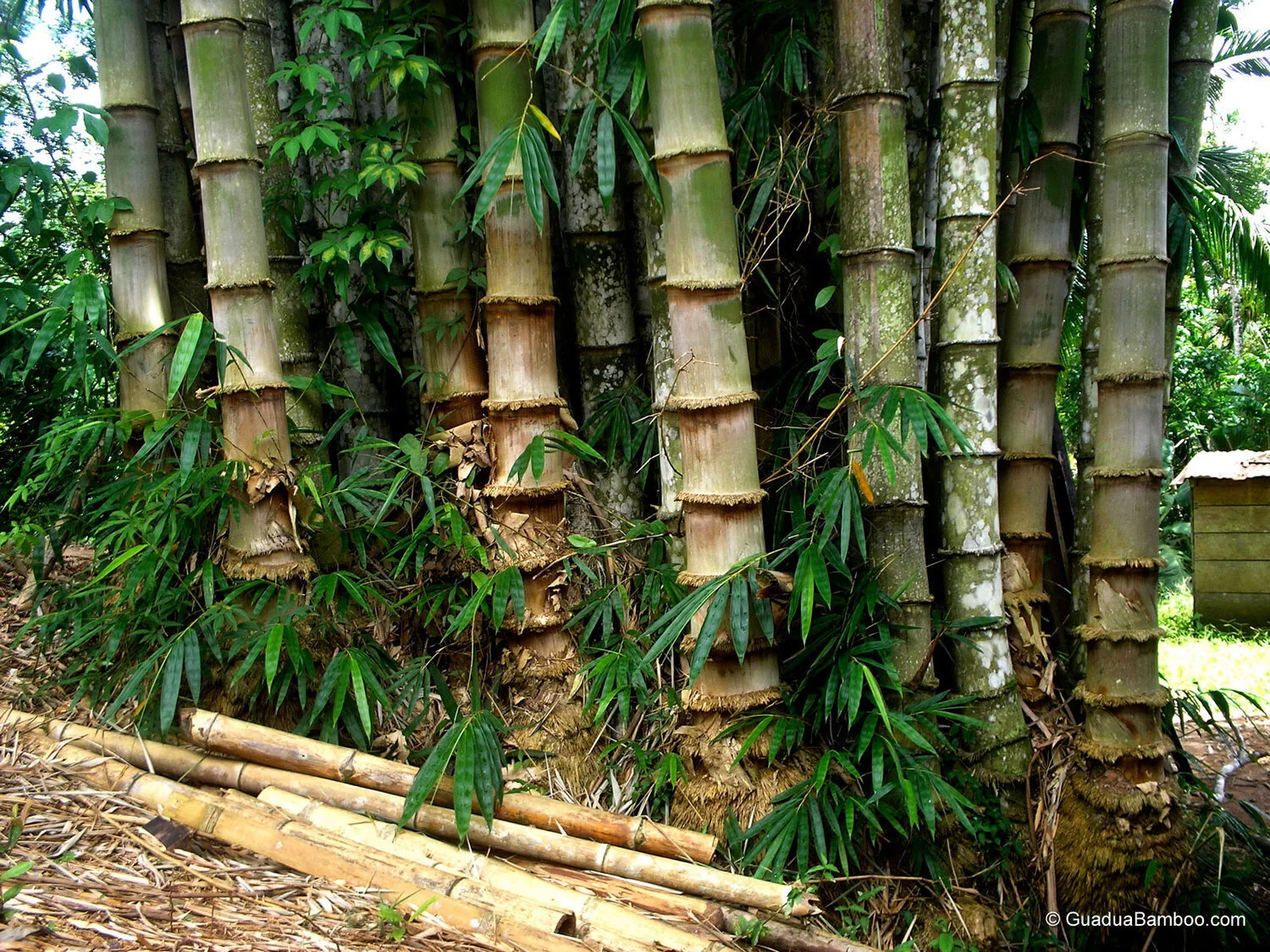
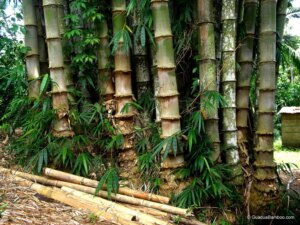
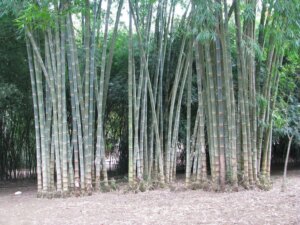
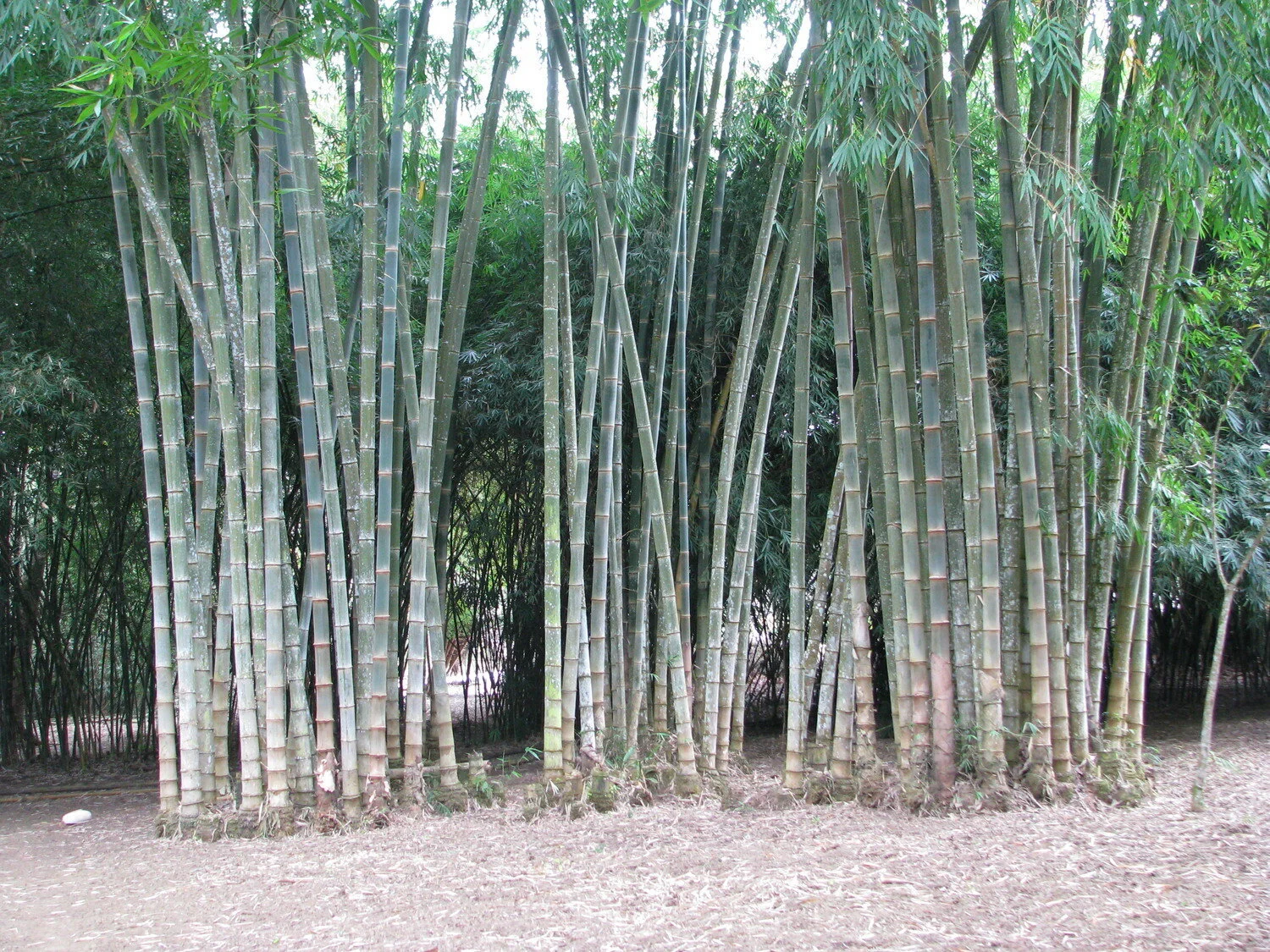
Dendrocalamus asper also known as Rough Bamboo or Giant Bamboo is a giant tropical and subtropical dense clumping species native to Southeast Asia. This timber bamboo is used as a building material for heavy construction, and shoots are consumed as a vegetable.
Plant Info |
|
|---|---|
Scientific Name |
Dendrocalamus asper |
Synonyms |
Bambusa aspera, Gigantochloa aspera |
Common Names |
Rough Bamboo, Giant Bamboo |
Family |
Poaceae |
Tribe |
|
Genus |
|
Height |
15 – 30 m |
Diameter |
8 – 20 cm |
Growth Habit |
Dense Clumping |
Climate |
Tropical – Subtropical |
Hardiness |
-4°C |
Edibility |
(4 of 5) |
Flowering Cycle |
|
Origin |
Bangladesh, China, Indonesia, Laos, Myanmar, Philippines, Taiwan, Thailand, Vietnam |
Uses |
Construction, Furniture, Water Containers, Cooking Pots, Laminated Boards, Handicrafts, Musical Instruments, Food |
Culms
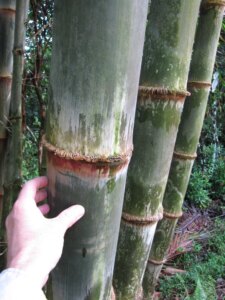
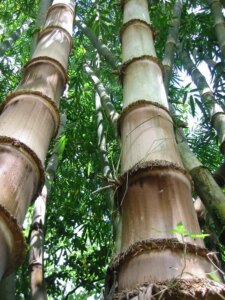
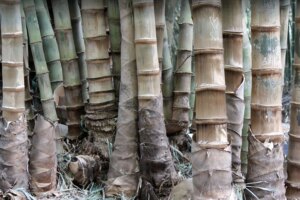
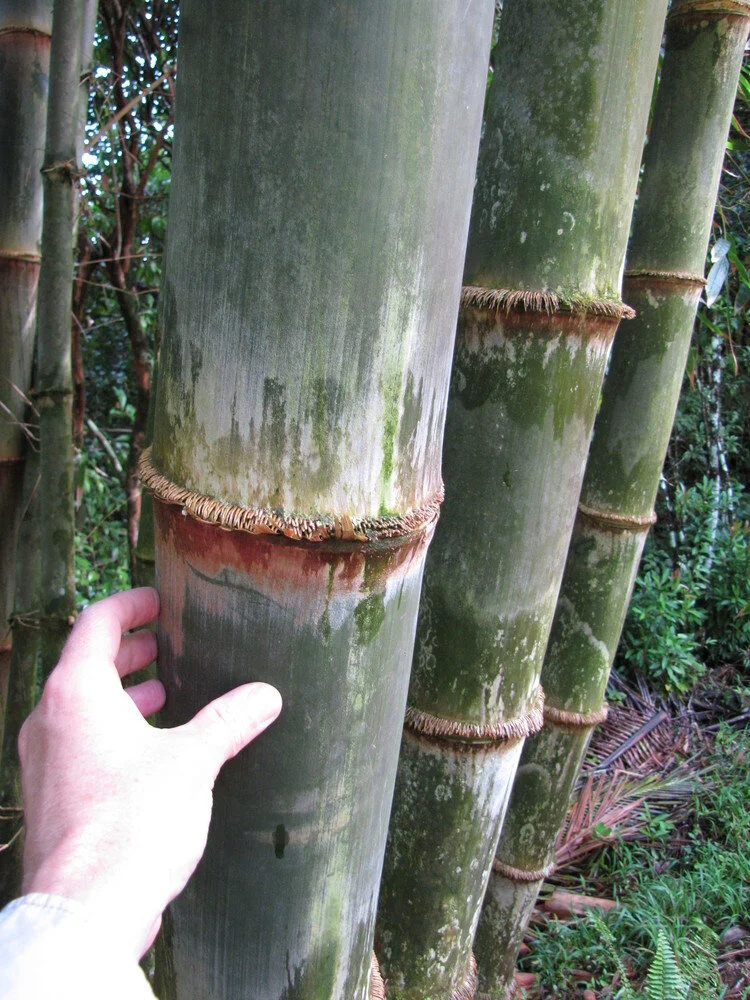
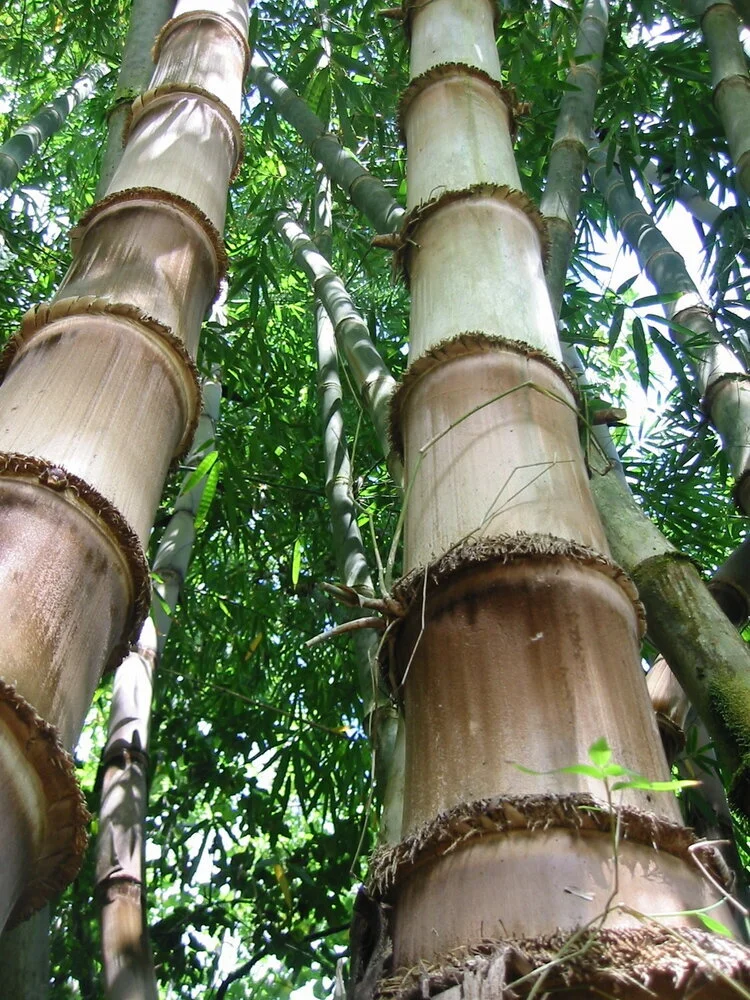
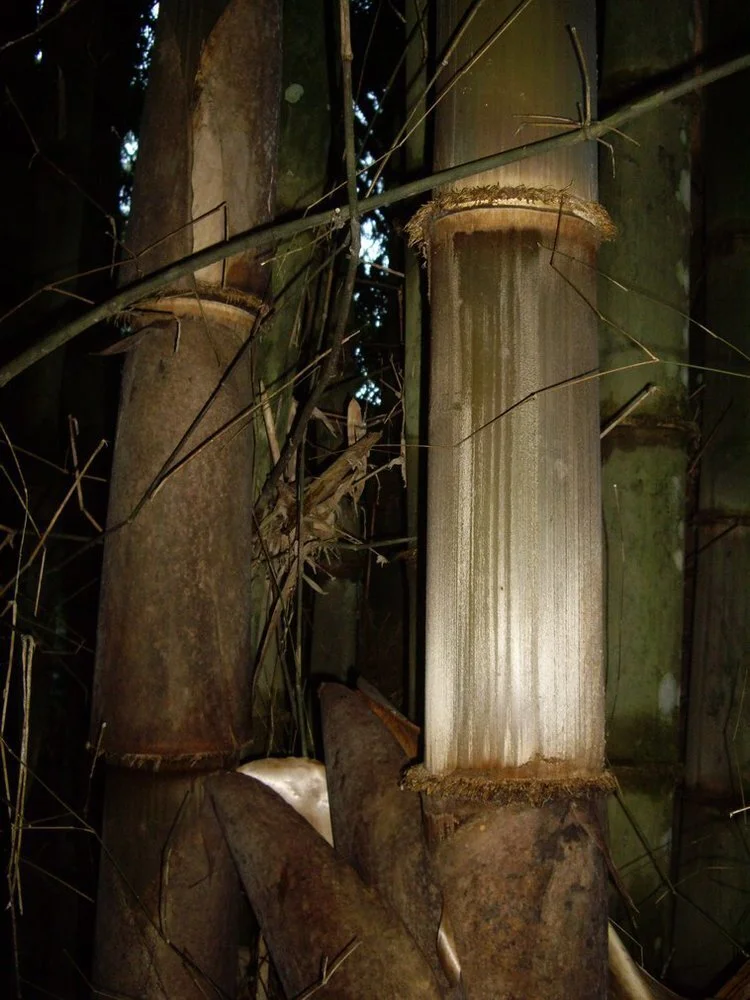
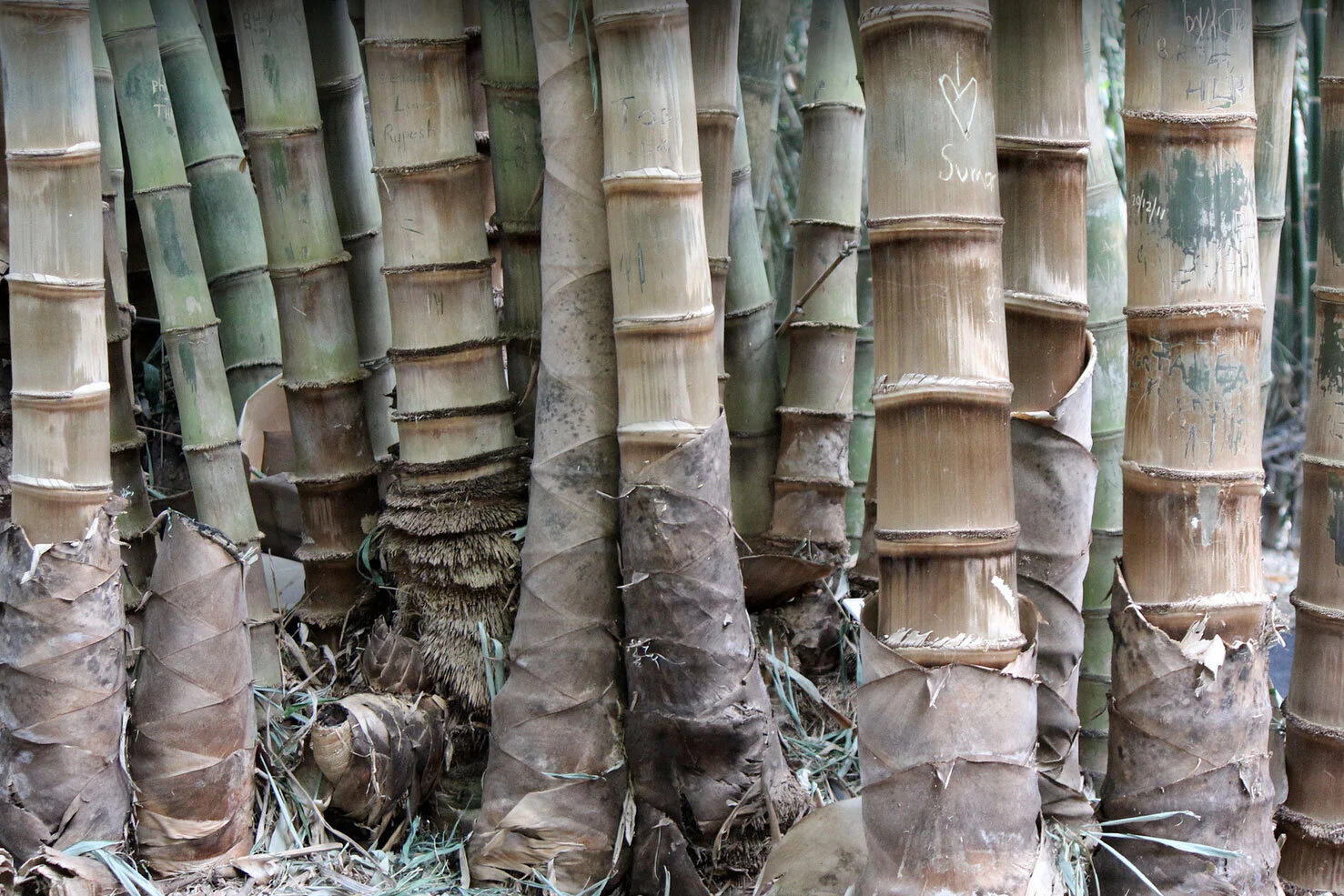
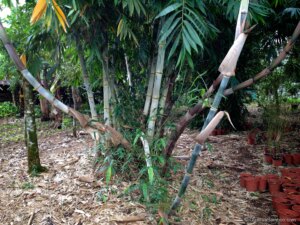
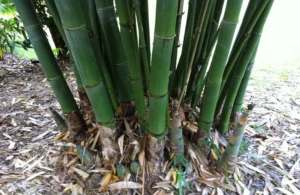
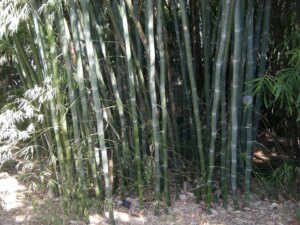
Dendrocalamus asper has large woody culms between 15-30 m tall and 8-20 cm in diameter, and has relatively thick walls (11-20 mm) which become thinner towards the top of the culm. The lower culms show aerial roots (rootlets) from the nodes. Culm internodes are 40-50 cm long, pale green and covered with short brown hairs.
Branches
Many clustered branches with 1 larger central dominant branch usually occur from ca. 9th node up.
Leaves
Leaf-blades are lance-shaped and between 15–30 cm long and 10–25 mm wide.
Flowering
Flowering cycle and seed-setting is reported to be about every 30-120 years. Dendrocalamus asper flowers gregariously although sporadic flowering has been reported.
Habitat
Planted or naturalized from low elevations up to 1,500 m. Dendrocalamus asper thrives best at 400-500 m altitude in areas with average annual rainfall of about 2,400 mm. They grow well on various soil types, even on sandy and rather acidic soils, but prefers well-drained heavy soils.
Uses
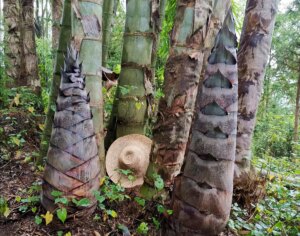
Dendrocalamus asper poles are used as a building material and structural timber for heavy construction such as houses and bridges. The culm internodes used as containers for water and other fluids, and as cooking pots. This bamboo is also used for making laminated boards, furniture, musical instruments, chopsticks, household utensils and handicrafts. Young shoots are sweet and considered a delicious vegetable.
Origin
Andaman Is., Bangladesh, Borneo, China, Jawa, Laos, Lesser Sunda Is., Malaya, Maluku, Myanmar, New Guinea, Philippines, Sulawesi, Sumatera, Taiwan, Thailand, Vietnam
I’m curious to know which bamboo produces more biomass in a per hectare basis: Dendrocalamus asper or Guadua angustifolia?
Dendrocalamus asper averages 44%, per culm, of carbon in its biomass, e.g. 100kg of D. asper stores 44kg of carbon in its oven dry weight. At 10x10m spacing per hectare and an average of 15 culms per clump, that’s 66 tons of carbon sequestered per hectare if my math is right. Not included is the below ground biomass which is estimated at 30% of its above ground biomass.
To be honest, I can’t compare because I only have scientific studies for Guadua angustifolia. A Guadua plantation with a planting density of 5m x 5m (400 plants) can produce 862 tons biomass per hectare in 7 years (from the time of planting until year 7). In other words, an average biomass production of 123 ton per hectare per year.
Theoretically Dendrocalmus asper (being a very dense clumping bamboo) could produce even more biomass per hectare when the planting density is very high. But in practical terms, it would be impossible to manage a Dendrocalamus plantation if all bamboos are planted so close together. Guadua is an “open clumper” so there is always space between the stems which makes it much easier to sustainably harvest the stems and manage the plantation.
A lot of different variables have to be considered when talking about biomass production, but since Guadua angustifolia is a giant tropical bamboo, I think it would be safe to say that it is one of the largest biomass producing species in the world (both among bamboo species or any other high yielding crop).
Hi Stephane, could you show us a chart breaking down the “sustainable” biomass yield/production of Guadua angustifolia in tons, per hectare, per year of growth? In addition, do you happen to have any studies showing the Calorific value of Guadua angustifolia (Average 4000 k cal./kg)?
I’ve read D. asper does well in Florida. I’m looking for something to completely overwhelm (thick and tall) a lot I have in Lake Placid Florida (zone 9b). Something invasive and aggressive that does not easily die. My soil is sandy and often moist. Something so dense it would be hard to penetrate. Anything that grows well and fast from seeds? If not Dendrocalamus asper, how about Bambusa vulgaris?
Bambusa vulgaris would be the better choice, much faster spread. I take it you have neighbor issues?
You are in luck that I have the starts you will need as well. I am in Fort Pierce Florida. No charge, but you will need a saw. PM if interested.
Are you speaking of creating clones? If so I’d love to hear your method… Peace, love and cheer!
The method I use, for clumping bamboos, is to simply cut a culm, lay it flat and drill 1″ holes at every internode. Dig a shallow ditch, deep enough to just cover the culm with about 1″ of soil when done. Lay the drilled culm into the slot and fill each hole with water, flooding the ditch at the same time. Cover with soil and wet area well. Keep the area wet and in a few weeks new shoots appear all in a line. Once rooted well enough I pull up the entire culm and with a saw, cut each new plant off the culm and pot up. About two months or so.
I don’t know much about Bambusa vulgaris. I have a D. asper and it’s been in the ground for about 5 years and is doing awesome. We just cut a baby shoot today and will cook it later this evening. It’s gorgeous tall, thick, and just awesome to look at on a nice windy day.
How many meters in diameter is the footprint of a fully grown Asper?
Is this "guod" bamboo? The way they call it in visayan dialect in the Philippines.
I have been looking for the scientific name of the bamboo that I have planted more than about twenty five years ago, and now I know. It is Dendrocalamus asper! The local name here in Leyte, Philippines is "Patung". I planted three of this kind of bamboo and it is growing vigorously. I also planted another type about three years ago and I still cannot identify it. It is a thin walled type, slightly smaller in diameter than the D. asper but it grows about as tall.