

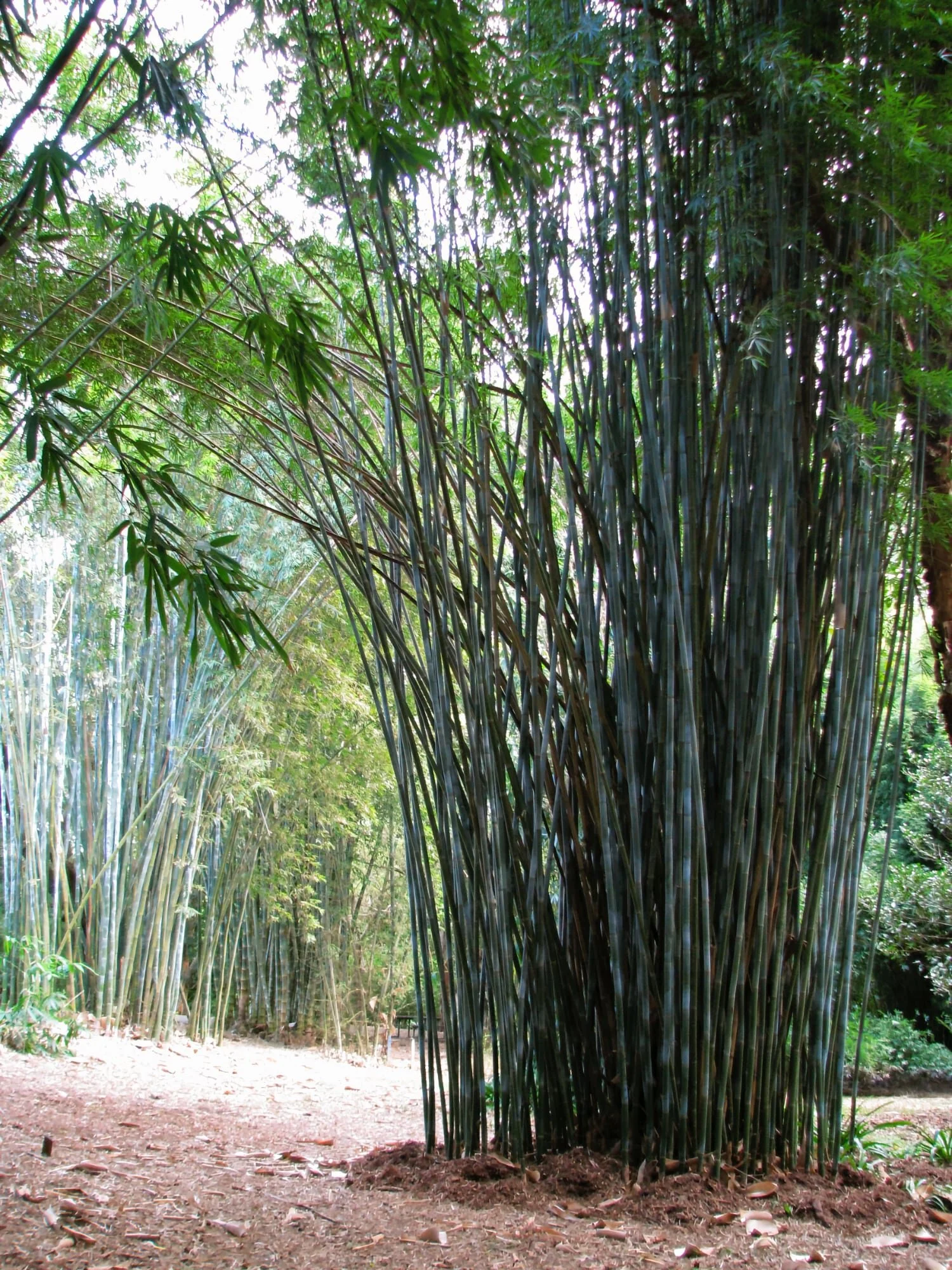
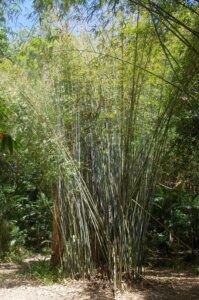
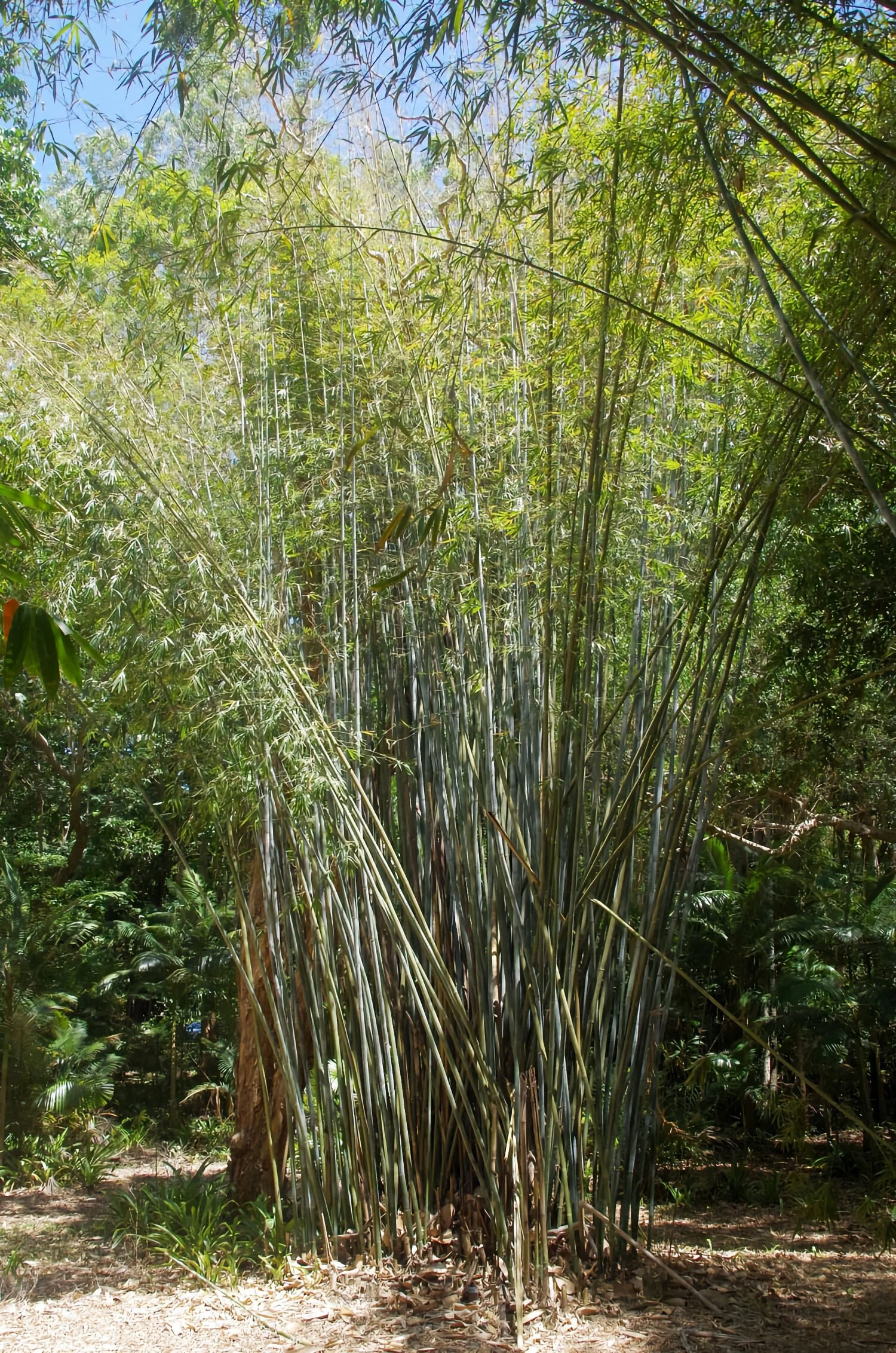
Bambusa tulda, commonly known as Bengal Bamboo or Indian Timber Bamboo, is a fast growing medium-sized tropical clumping bamboo native to the Indian subcontinent, Indochina, Tibet, and Yunnan.
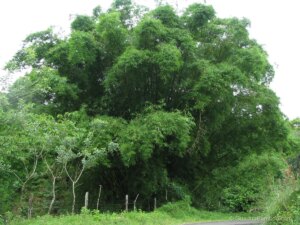
It is considered to be one of the most valuable multipurpose bamboo species, which usually grows up to a height of 20 m with culm diameters between 5-10 cm. In India it is used extensively by the paper pulp industry, but due to its nearly solid culms it is also an excellent and strong timber that can be used in construction and scaffolding.
| Attribute | Description |
|---|---|
| Scientific Name | Bambusa tulda |
| Synonyms | Dendrocalamus tulda, Bambusa macala, Bambusa trigyna |
| Common Names | Bengal Bamboo, Indian Timber Bamboo, Spineless Indian Bamboo |
| Family | Poaceae |
| Tribe | Bambuseae |
| Genus | Bambusa |
| Height | 6-20 m |
| Diameter | 5-10 cm |
| Growth Habit | Dense Clumping |
| Color | Light green or greyish white when young. |
| Internodes | 40-60 cm |
| Wall thickness | 10-20 mm. Occasionally solid near the base. |
| Branches | Several or many clustered branches with 1-3 larger branches. |
| Leaves | 7-17 cm long, 7-12 mm wide. |
| Climate | Tropical – Subtropical |
| Exposure | Full Sun – Partial Sun |
| Hardiness | -1°C |
| Soil | Loamy and alluvial soils, fertile and well drained. |
| Water Needs | Average. |
| Planting Distance | • Every 3 m for screening. • 5 x 5 m for culm production. |
| Edibility | ★★★☆☆ (3 of 5) |
| Flowering Cycle | 15-60 years |
| Origin | Bangladesh, Bhutan, China, India, Laos, Myanmar, Nepal, Pakistan, Thailand, Vietnam |
| Uses | Construction, Scaffolding, Furniture, Basketry, Mats, Household Utensils, Handicrafts, Paper Pulp, Wind Break |
Rhizomes
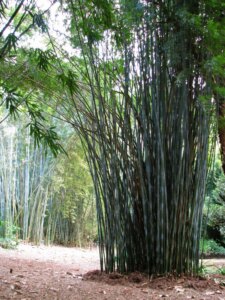
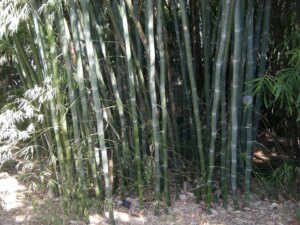
Bambusa tulda has short pachymorph rhizomes which means that it grows in densely tufted clumps.
Shoots
The young shoots are yellowish green in color with a powdery top. Shoots are slightly bitter and are suited to be pickled prior to being eaten.
Culms
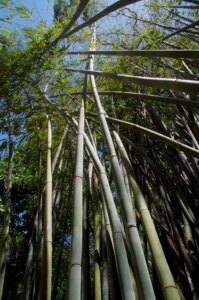
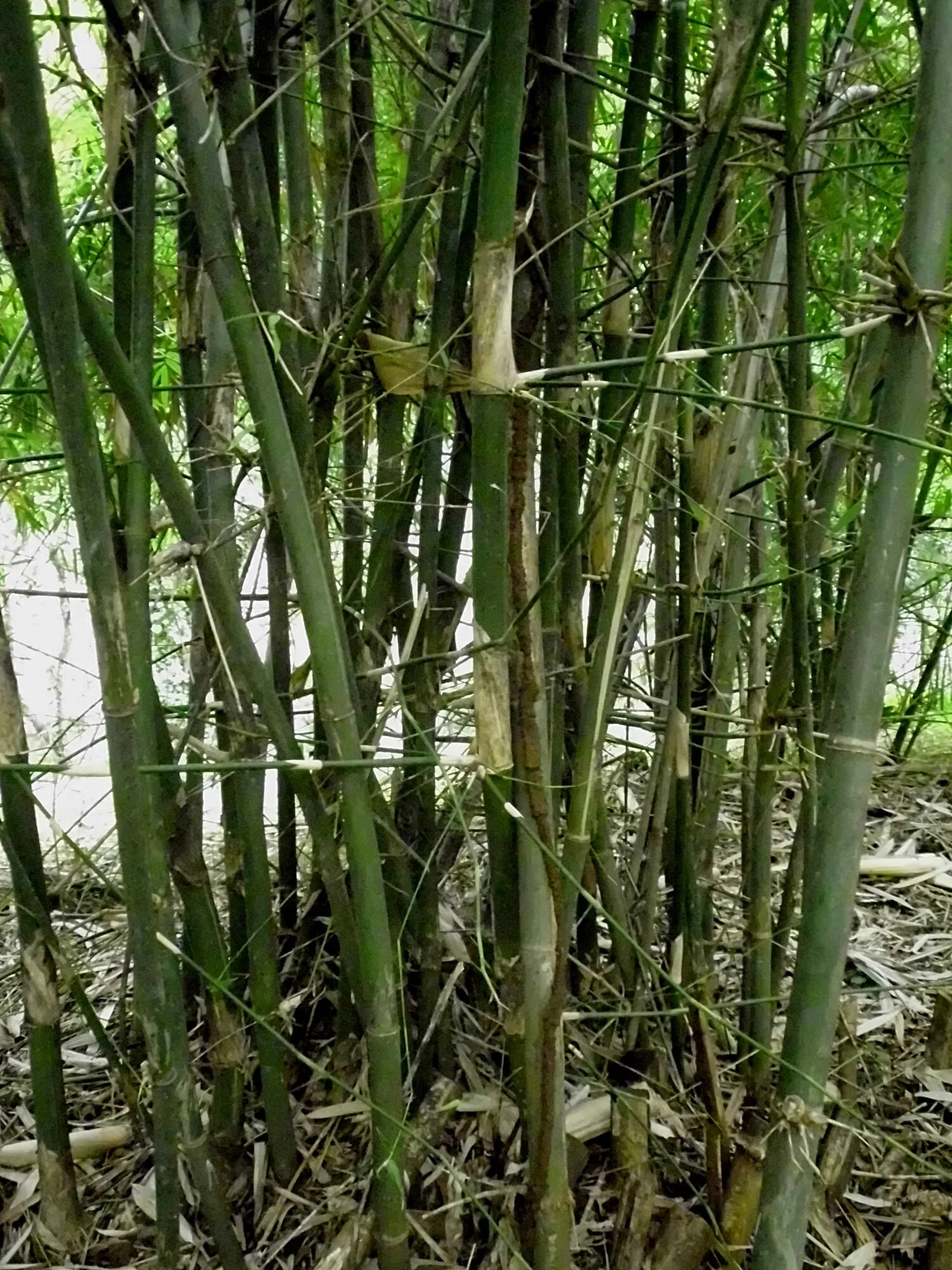
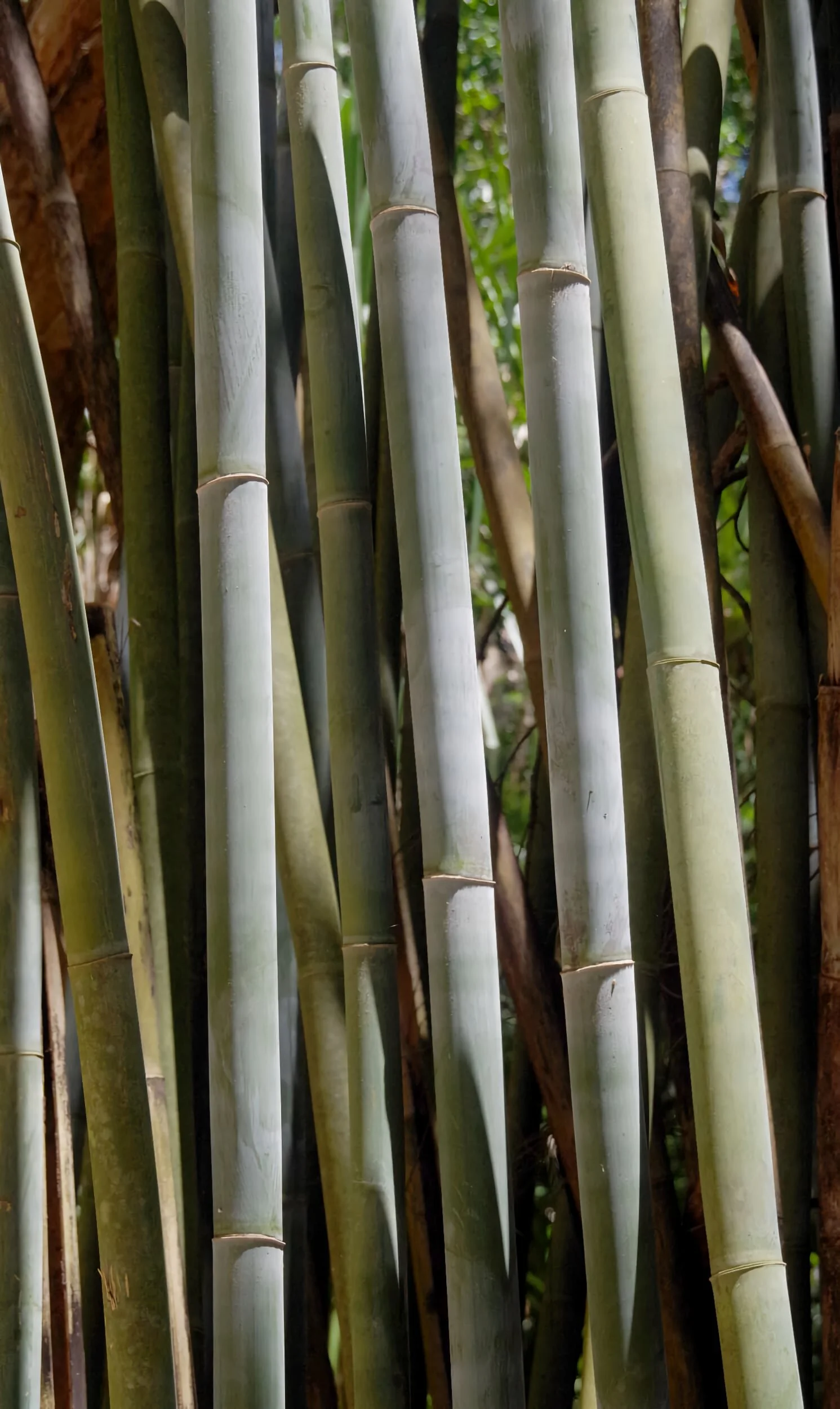
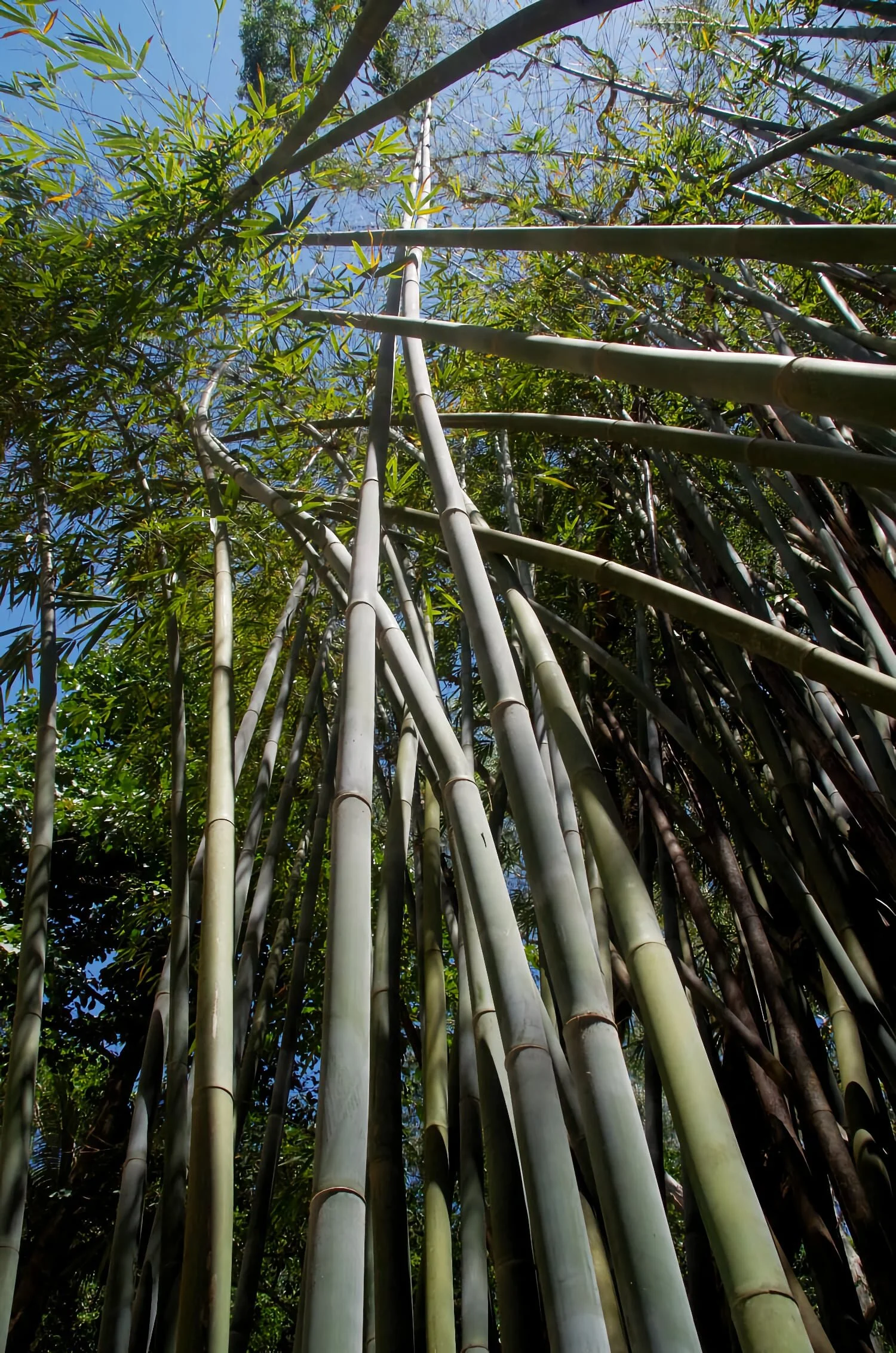
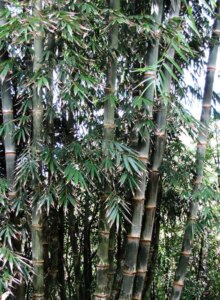
The slightly drooping culms of Bambusa tulda are usually between 6-20 m tall with an average diameter of 5-10 cm. The culms have 36-60 cm long internodes which are very thick walled (1-2.5 cm at breast height and nearly solid at the base).
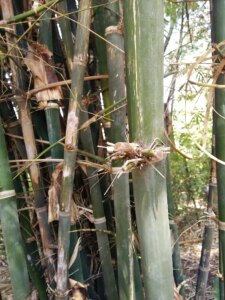
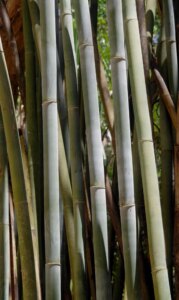
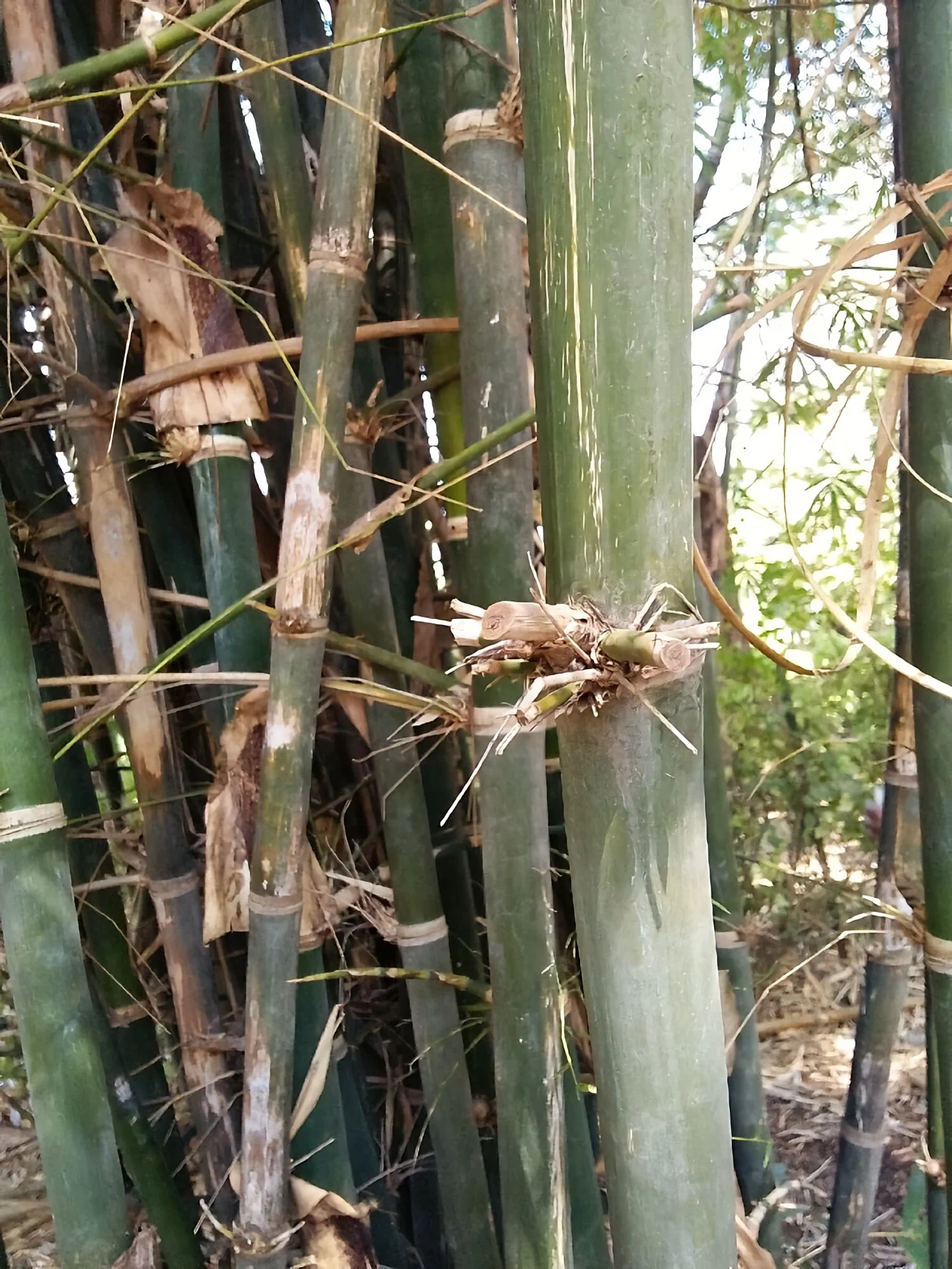
Young culms are covered with white blooms which gives them a dull green color. Mature culms have a mid-green or greyish green color and sometimes present 2 or 3 faint yellow stripes at the internodes near the base.
The nodes of this bamboo are slightly swollen, with bands of white silky hairs above and below the sheath scar. Basal nodes have short aerial roots.
The triangular culm sheaths of Bambusa tulda are on average 15 cm long by 25 cm wide, with a conical blade of around 5–10 cm length. Culm sheaths are straw-colored and covered with appressed blackish-brown hairs on the upper surface. The sheaths fall off early.
Branches
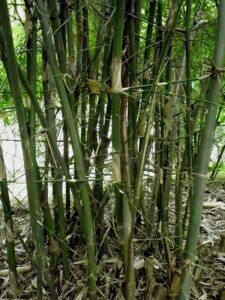
Bambusa tulda develops many clustered branches per node, usually with 3 larger dominant branches. The lower parts of the culm (ca. from the 4th node up) are characterized by very predominant side-branches.
Leaves
The lance-shaped leaves of Bambusa tulda are 15-25 cm long by 2-4 cm wide. The midrib of the leaf-blade is visible and has 12-20 secondary veins.
Flowering
Bambusa tulda normally flowers gregariously for a period of 2 years in a cycle of 15-60 years, and produces viable seed. However, it also often flowers sporadically or in small groups, without an obvious cycle.
Habitat
Bambusa tulda is a tropical lowland bamboo. In its natural range it commonly occurs as an undergrowth in mixed deciduous forest, in moist alluvial flat land, valleys, and along streams or river banks up to an altitude of 1500 m. In moist areas, it often grows together with Schizostachyum pergracile, in drier parts with Dendrocalamus strictus.
Bambusa tulda grows best in moist areas with a mean annual rainfall between 1,200 – 2,500 mm (tolerates 700 – 4,500 mm) and with average daytime temperatures between 22°C to 28°C (tolerates 4°C to 37°C). It prefers semi-shade areas but also succeeds in full sun. Soils should be loamy, fertile and well drained with high reserves of organic matter, nitrogen, calcium, potassium and phosphorus. Optimal pH is in the range of 5 – 6.
Mechanical Properties
- Density 722 kg/m3 at a moisture content of 12% (air dry).
- Fiber stress at elastic limit 26.2 N/mm2 (green) – 38.1 N/mm2 (air-dry).
- Modulus of rupture 51.1 N/mm2 (green) – 66.7 N/mm2 (air-dry).
- Modulus of elasticity 10.0 N/mm2 (green) – 12.3 N/mm2 (air-dry).
- Compression strength parallel to grain 40.7 N/mm2 (green) – 68 N/mm2 (air-dry).
Uses
Bambusa tulda is one of the most useful Bambusa species because of its near solid culms and very strong timber. In India and Bangladesh it is a major commercially exploited bamboo.
As a raw material, Bambusa tulda is extensively used by the Indian paper pulping industry. It is suitable for the manufacture of wrapping, writing and printing paper.
The culms are also used for reinforcing concrete, scaffolding, as a structural timber in construction, furniture, basketry, mats, household utensils, fishing rods, handicrafts, and bamboo lacquer ware. In Arunachal Pradesh, the species is used for Bansuri flute making, locally called “Eloo”. During the Dree festival priests belief that the sound will keep the evil spirits away.
The shoots of Bambusa tulda are edible, but taste slightly bitter and are therefore often pickled. Fermented shoots are rich in phytosterols and can be used for the production of sterol drugs to lower cholesterol levels.
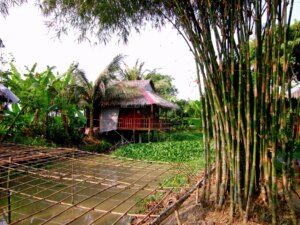
In agroforestry, Bambusa tulda is often planted as a wind-break around farms and fields.
Origin
Bangladesh, Bhutan, China, India, Laos, Myanmar, Nepal, Thailand, Vietnam
The Value of Elastic modulus and modulus of rupture are inappropriate, or the units are inappropriate or you have missed a 10^3